By Jule Harnack
Every year on June 20, the World Refugee Day mobilizes global solidarity around refugees, those who are by definition forced to flee their own country and cross an international border. Yet, the current architecture of international law continues to neglect the vast majority of the world’s displaced population who remain trapped inside their countries of origin. Known technically as Internally Displaced Persons (IDPs), these millions endure the exact same horrors of war, famine, and terror as refugees, but without the legal status, international protections, or cross-border escape routes. Despite being the numerical majority, IDPs exist in a legal vacuum. They fall completely outside the scope of the 1951 Refugee Convention. They possess no binding international protection framework, no dedicated UN agency with a specific statutory mandate, and no legal recourse when their rights are violated. They remain subject to the domestic sovereignty of their own state, the very state that may be targeting them.
Based on the latest data of the Global Report on Internal Displacement (GRID) 2026 report, for the first time in a decade, the global number of individuals uprooted within their own national borders has registered a decline. At the end of 2025, the Grid 2026 Report counted 82.2 million people internally displaced across 104 countries, driven by protracted conflicts in hotspots like Sudan and the DRC.
While a slight decline in the total number of IDPs has been registered, compared to the previous year’s historic peak, this trajectory doesn’t reflect full success. This drop in numbers does not signify an expansion of peace, but rather a contraction of capacity to monitor, coupled with the broadening push for forced returns.
Anatomy of the Data: The Surging Toll of Conflict
The latest GRID report delivers an important analysis on human mobility. For the first time on record, conflict and violence have overtaken natural disasters as the leading cause of internal flights. Conflict-driven displacement spiked by an unprecedented 60 percent, unleashing 32.3 million new individual movements in 2025 alone. Meanwhile, disaster-induced displacement dropped by 35 percent to 29.9 million. However, this shift points to temporary climate variations rather than a genuine, systemic reduction in environmental vulnerabilities.
Beyond the numbers, the anatomy of modern warfare is changing. Internal displacement is becoming deeply entangled with the internationalization of localized wars. In fact, the number of countries experiencing internal flight directly tied to cross-border or international armed conflicts has doubled, proving that internal displacement is no longer just a domestic crisis, but a symptom of interstate aggression.
Regional focus
IDPs in Lebanon
Israeli military operations triggered more than 41,000 displacements in Lebanon in 2025, despite the November 2024 ceasefire. The figure is highly conservative, as funding constraints sharply reduced monitoring and reporting in the country. By early 2026, intensified attacks, including massive evacuation orders covering 14% of the country, led to a surge exceeding 1.1 million self-registered displaced people, approximately one in five of Lebanon’s population.
IDPs in Palestinians
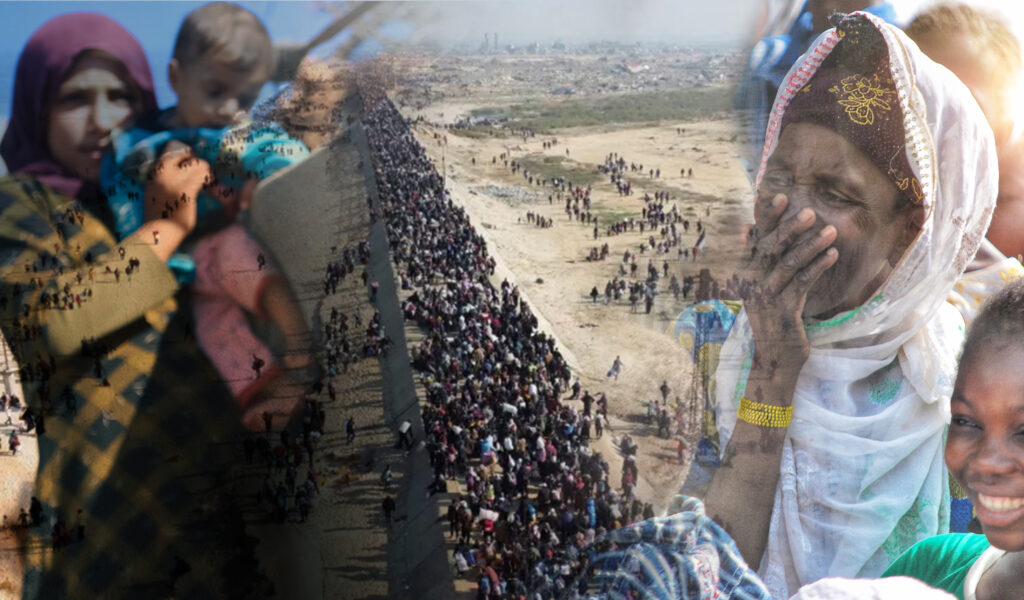
Persistent attacks triggered nearly 2.8 million displacements across the Palestinian territories in 2025. In the Gaza Strip, return remains impossible for over two million people, trapped behind a newly imposed ‘yellow line’ that effectively cut civilians off from more than half of their own territory. Simultaneously, in the West Bank, including East Jerusalem, displacements surged to 51,000, the highest figure on record since 1967. This unprecedented escalation was driven by intensifying Israeli military operations in refugee camps, widespread home demolitions, and systemic settler violence.
IDPs in Syria, Yemen, Sudan
In Syria, with the fall of the Assad’s regime in December 2024, the number of IDPs fell from 7.4 million to 6 million as people returned to rebuild their lives. Yet, localized insecurity still triggered new displacement movements during the year, the largest wave in Suweida governorate in July and August 2025. With widespread housing destruction and missing basic services, durable return remains fragile.
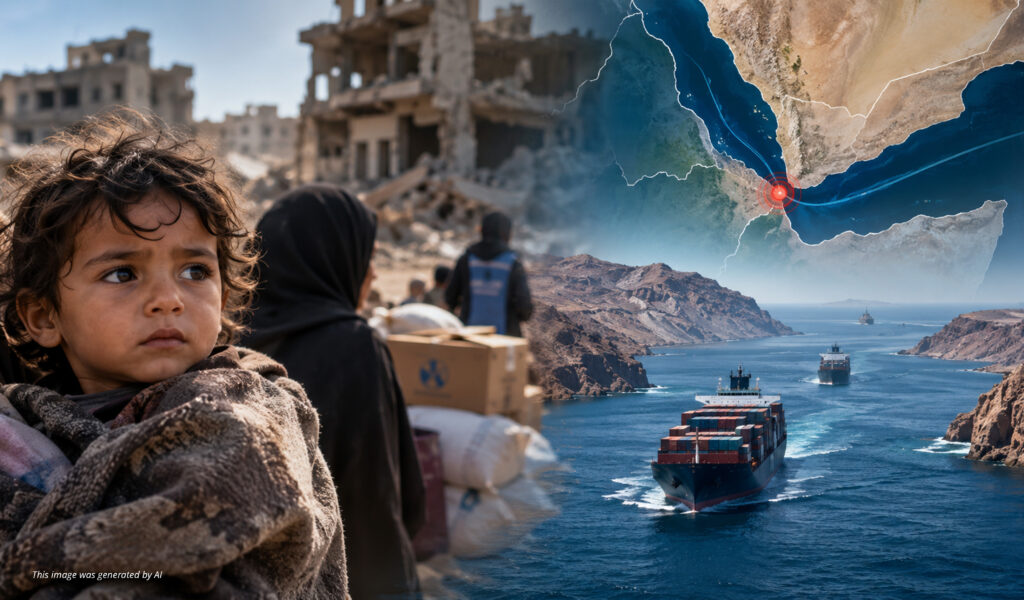
Yemen closed the year with approximately 4.8 million people living in internal displacement, representing the fourth-highest total globally. Concurrently, climate-driven disasters, particularly severe seasonal floods and storms that directly compounded the implications of the protracted war, triggered additional displacements.
Sudan remained the epicenter of global displacement for a third consecutive year, with 9.1 million people still uprooted at the end of 2025, around 62 per cent of them in Darfur. Despite some returns in certain areas, violence against civilians has intensified elsewhere, with more than 713,000 movements in North Darfur alone.
Why Fewer Movements Mean Worse Outcomes
While global figures show a general decline in the total number of IDPs, the reduction of displaced populations in active war zones rarely signals genuine stabilization. Instead, it is frequently driven by forced, unsustainable returns that compel civilians back into highly insecure territories where their homes are either destroyed or occupied. The UN Refugee Agency (UNHCR) Mid-Year Trends report confirms this dangerous trajectory, warning that returnees across multiple theaters face coercive pushbacks resulting in premature repatriation to areas entirely devoid of physical security, basic administrative services, or minimal humanitarian infrastructure.
Additionally, there is a secondary, more subtle reason for the statistical drop: we are rapidly losing the infrastructure required to monitor. The year 2025 witnessed an unprecedented funding crisis for humanitarian operations, which directly crippled field-level data collection. The proportion of countries suffering from severe gaps in data availability tripled over the year. By the end of 2025, nearly three-quarters of countries and territories hosting people displaced by conflict and violence had no up-to-date data.
A sharp decline in global humanitarian funding between 2024 and 2025, driven by a massive reduction in U.S. aid, has halted relief operations and created a critical data blackout in conflict zones. This financial collapse, with funding plummeting roughly 40 percent below 2022 benchmarks, has done far more than empty food warehouses. It has systematically dismantled the tracking mechanisms that record human suffering, rendering displaced populations statistically invisible. Consequently, the apparent decline in global displacement figures is a dangerous illusion. The numbers are not dropping because the world has suddenly become safer, but because the tracking infrastructure to witness, measure, and record the victims has been entirely dismantled.
This lack of visibility provides a dangerous cover for a wider, systemic, geopolitical neglect, under a cloud of international indifference.
In the shadow of this manufactured uncertainties, it is not just physical access to life-saving aid that has being hindered, but the international humanitarian law in general is routinely disregarded. In short, the humanitarian environment today is far less protected than it should be. Unfortunately, this is also reflected in the record number of humanitarian deaths and the direct targeting of civilians.
Ultimately, the 2026 Global Report on Internal Displacement delivers a warning that extends far beyond statistics and numbers. It challenges the very way we measure human suffering. The statistical drops in global displacement figures are not a sign of a safer world, rather these figures indicate a fragmented and severely underfunded humanitarian framework. Consequently, the international community lacks the capacity to effectively mitigate war, conflict, and forced migration. To ensure that the world’s most vulnerable populations are seen, counted, and protected, we must re-center the global response deeply rooted in accountability and human rights.
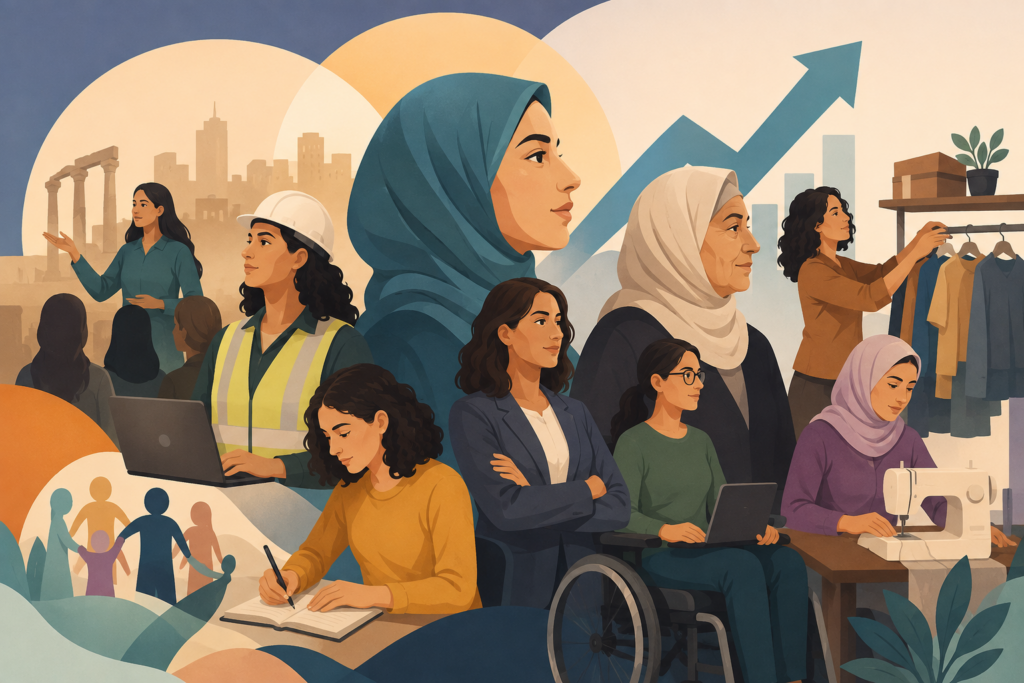
Rebuilding a truly reliable humanitarian system requires a profound structural transformation away from top-down bureaucracies, focusing on: partnerships with local grassroots associations and community-led initiatives, which are already embedded within the population; transparency and traceability of aid; uncompromising accountability and respect for the law. By rethinking a more resilient humanitarian system, and by giving local women, youth, and displaced populations the power to design their own solutions creates the foundations for a lasting peace that stops forced displacement before it starts.