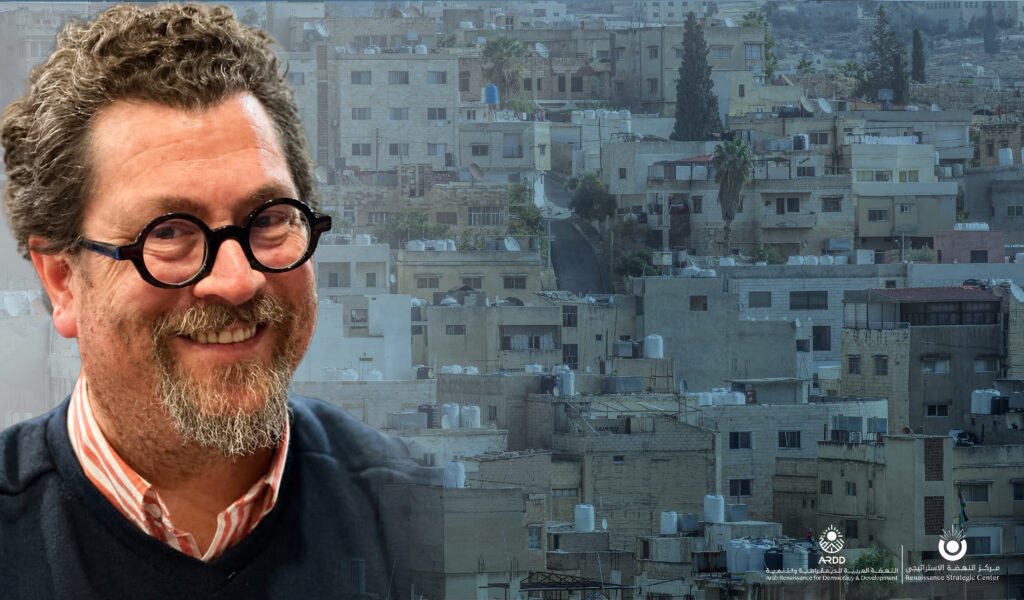
Disclaimer: this text reflects a personal point of view and no opinion other than my own.
I arrived in Jordan in 2019 as a representative of the forum of international non-governmental organisations, coming directly from the Central African Republic. I must admit that the contrast was striking. The humanitarian resources then mobilised in Jordan seemed immense compared with those available in some African contexts. But beyond financial and operational resources, what stood out most was the level of competence, experience, and structuring of the sector.
At that moment, I even wondered what I was doing there. Did Jordan really need my expertise? In a country that already had experienced humanitarian professionals, seasoned diplomats, and experts who had worked in the largest international institutions, the question was legitimate. My role could not be to bring in external expertise as if it did not already exist. It had to be about listening, understanding power dynamics, identifying blockages within the system, and contributing, modestly, to opening spaces for dialogue between actors who all held part of the response. Indeed, many senior and director-level positions in international organisations are held by Jordanians. Many national non-governmental organisations are rooted in this body of knowledge and experience. Many of their staff have worked within the United Nations, in major international non-governmental organisations, or in cooperation institutions.
In this context, one might have expected what is commonly referred to as “localisation” to already be well advanced. By localisation, I mean the principle of recognising, strengthening and integrating national organisations as full actors in the humanitarian response, instead of considering them only as implementing partners. In a country such as Jordan, where national skills are numerous and long-standing, this seemed almost self-evident.
Yet when I arrived, this was not the case. National non-governmental organisations were not even present in the refugee response coordination system led by the United Nations High Commissioner for Refugees. They were active, had real expertise, knew the field, but remained largely outside this international humanitarian architecture that organises priorities, funding, technical exchanges and collective representation.
The first contacts with these organisations, in the context of my duties, were always cordial. But a certain mistrust could quickly be felt. It was not unfounded. As in many other operational contexts, it stemmed from years of unequal relationships, where national organisations were often asked to implement, but rarely to define strategic directions. It also came from a feeling of insufficient recognition, even though many of these actors knew the communities, institutions and social realities far better than international organisations.
After several frank exchanges, common positions began to emerge. Dialogue gradually made it possible to move beyond initial postures. This was also made possible through the role of national non-governmental organisation platforms, including JONAF and HIMAM, which became key partners in this collective journey. With the support of key donors, the United Nations Resident Coordinator, the Jordanian ministry in charge of planning and international cooperation, and the United Nations High Commissioner for Refugees, a concrete step forward became possible: the integration of national non-governmental organisations into the response coordination structure.
This moment may seem technical. It was not. It was about recognising that Jordanian civil society was not merely an operational relay, but a political, social and humanitarian actor in its own right. It was also about acknowledging that the quality of a humanitarian response is not measured only by the volume of international funding mobilised, but also by the ability of the system to listen to and integrate the actors who will remain after emergencies, missions and funding cycles have passed.
The Covid-19 crisis then highlighted the central role of these organisations. In several sectors, they were no longer only consulted: they took the lead in some official working groups, organised the response, reported needs, adapted approaches and maintained links with communities. This period showed, very concretely, that Jordanian national organisations were not peripheral actors. They were an essential part of the response architecture.
This progressive alliance between international and national civil societies also helped, at least partly, to compensate for the slow erosion of financial resources dedicated to the response to the Syrian crisis. It made it possible to use available resources more effectively, avoid certain duplications and maintain a collective capacity for analysis, advocacy and action. It also gave Jordan strong visibility during the Brussels conferences on the Syrian crisis, with mixed delegations coordinated with the Jordanian government. I will particularly remember the 2023 meeting between this delegation and His Excellency Ayman Safadi on the margins of the conference. It symbolised a form of collective maturity: the possibility of dialogue between government, national civil society and international actors around a shared response.
These years also allowed a new generation of actors to emerge within Jordanian civil society. Young professionals, often highly qualified, committed and connected to the country’s social realities, gradually gained greater visibility within organisations, coordination networks and discussion spaces. Their presence helped renew practices, bring institutions closer to community concerns and promote approaches more deeply rooted in Jordanian society itself.
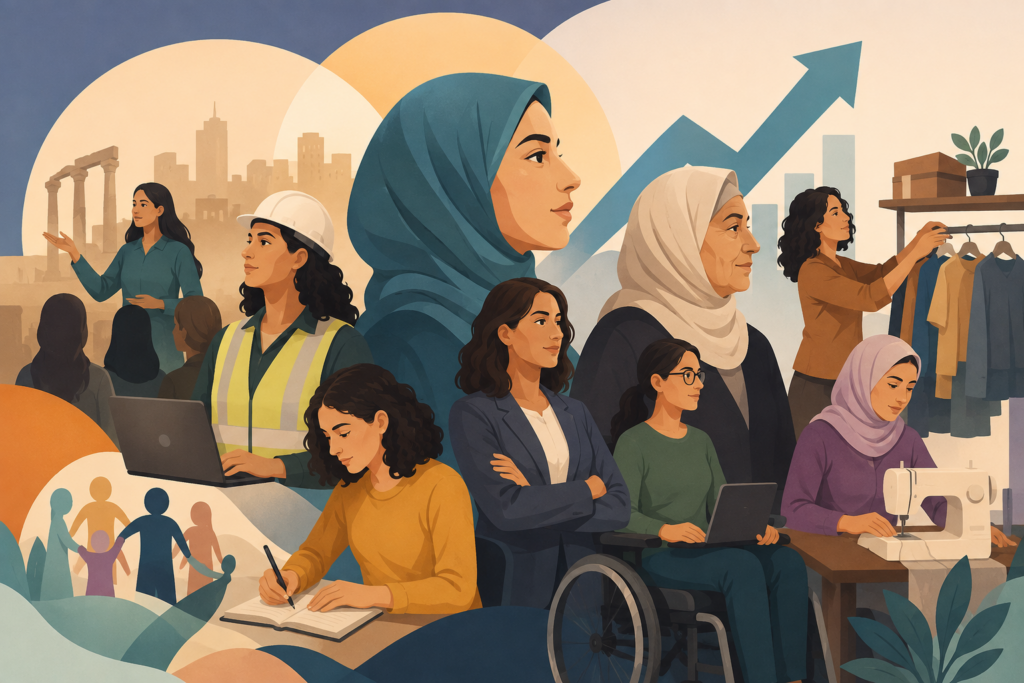
The role of women in these organisations also deserves to be highlighted. In many national structures, Jordanian women play a decisive role in leadership, programme management, social analysis, protection, education, health, local development and advocacy. Their engagement is not merely a matter of representation. It transforms the way needs are understood, priorities are defined and responses are built. The development of a constructive civil society is intrinsically linked to the participation of young Jordanian women and men, as well as to the effective place of Jordanian women in society.
The outbreak of the Gaza crisis, followed by the massive funding cuts since 2024, suddenly struck down much of these efforts. Coordination spaces weakened, resources declined, priorities shifted and partnerships built over time came under pressure. What had been patiently constructed through trust, dialogue and the progressive recognition of national actors was brutally exposed to the contraction of funding and the fragmentation of international attention. Competition around access to funding brought mistrust back to the surface, while the massive loss of jobs among Jordanian professionals in the sector damaged these efforts further.
Today, the question is not whether this partnership can exist. It has already existed. It has already shown its value. The question is whether we are ready to come together again, with greater humility, greater trust and a clearer sense of shared responsibility.
Jordan has the people, the experience, the institutions, and the civil society needed to build something stronger. International organisations, national organisations, donors, public authorities, young professionals, and women leaders all have a role to play. The next chapter should not be written through competition or fragmentation, but through renewed alliances.
It would only take a spark to revive this partnership, not to return to the old system, but to learn from it and build something stronger. International organisations must remember that professionalisation should never come at the expense of commitment, whether humanitarian, social, civic, or cultural. Civil society is not merely a combination of procedures, logical frameworks, and compliance mechanisms. It also rests on conviction, responsibility, and the ability to act in the collective interest. With minimal effort, Jordan could even equip itself with Jordanian organisations of international scope, capable of deploying in regional crises, which are, sadly, all too numerous.
If the last years have taught us anything, it is that no actor can carry these challenges alone. But together, with the right political will, renewed trust and a genuine commitment to partnership, Jordanian civil society can again become not only a pillar of the national response, but also a reference point for the wider region. The spark is still there. It only needs people willing to gather around it.
*Baptiste Hanquart is a professional in humanitarian and cooperation affairs with 20+ years of experience across conflict, displacement and crisis settings. He holds a master’s degree in humanitarian programme management and served as Country Director and INGO Forum Director, with senior leadership and coordination experience across the Middle East, Africa, the Caribbean, Eastern Europe and Asia. He is currently in charge of humanitarian affairs, development, and regional coordination at the French Embassy in Jordan.