By Giulia Zorzo, RSC Intern
June serves as a critical month for reflection and global humanitarian advocacy, bringing together three pivotal United Nations observances: the International Day of Innocent Children Victims of Aggression (June 4), the World Day Against Child Labour (June 12), and World Refugee Day (June 20). Together, these occasions highlight the interconnected forms of violence that affect one of the world’s most vulnerable groups: children.
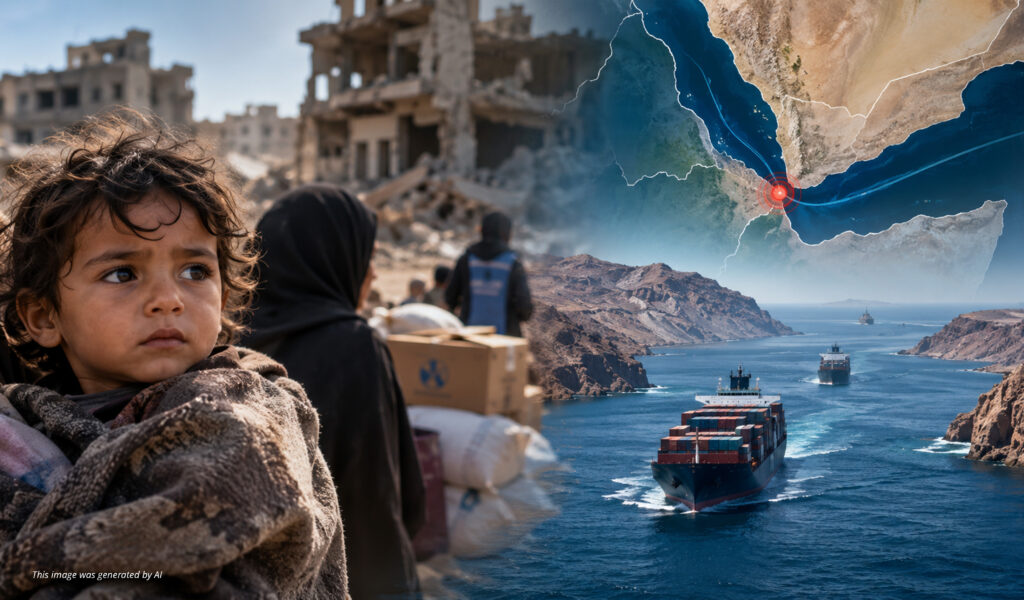
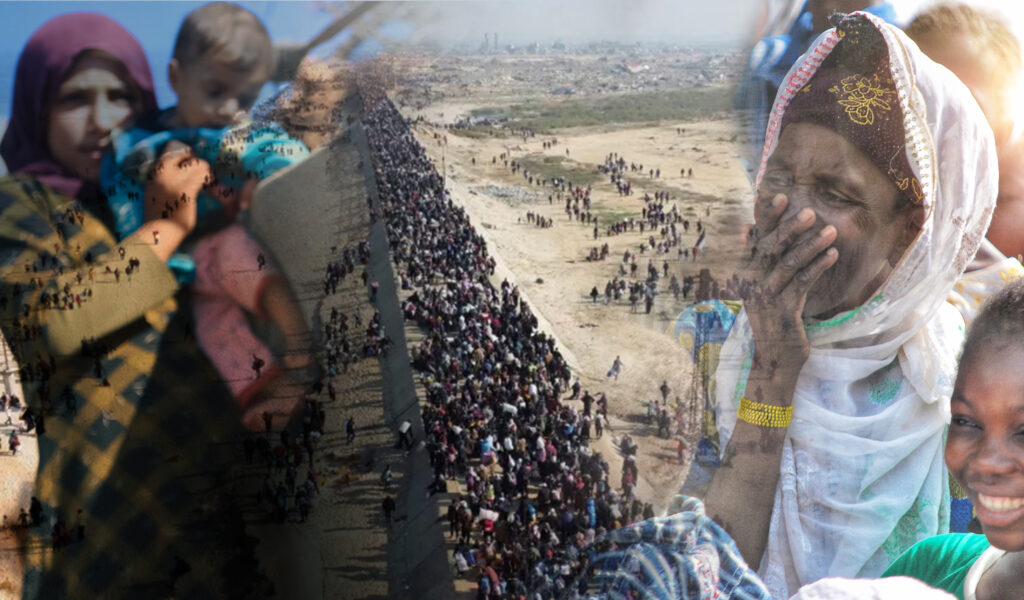
Today, 412 million children live in extreme poverty, many more lack necessities, and more than 1 in 5 children worldwide live in conflict-affected settings, where violence disrupts every aspect of their lives. Between 2010 and 2024, the number of children displaced by conflict and violence nearly tripled, rising from 17 million to 48.8 million. Violence acts as a catalyst for mass displacement, producing a global crisis where millions of children are uprooted from their homes. Families forced to flee enter a state of economic and legal precarity that pushes them towards desperate survival strategies. As a consequence, children become victims of predatory labor markets that currently trap 138 million children globally, also making them exponentially susceptible to abuse and violence.
The Legal Framework: Pillars of International Child Protection
The international community has constructed, over the years, a multi-layered legal framework designed to safeguard children from the intersectional shocks of conflict, labor exploitation, and displacement.
- The Foundation: The UN Convention on the Rights of the Child (CRC, 1989), enjoying near-universal ratification, codifies a comprehensive spectrum of civil, political, economic, social, and cultural rights, explicitly underpinned by the principle of the “best interests of the child” (Article 3).
- Armed Conflict: The UN General Assembly Resolution 51/77 (1997) formally institutionalized the mandate of the Special Representative of the Secretary-General for Children and Armed Conflict, operationalizing monitoring and advocacy mechanisms. Protection is reinforced by the CRC’s Optional Protocols on the Involvement of Children in Armed Conflict and on the Sale of Children, Child Prostitution and Child Pornography.
- Child Labour: The ILO Convention No. 138 (ILO’s Minimum Age Convention of 1973) establishes strict thresholds for employment, while the ILO Convention No. 182 (Worst Forms of Child Labour Convention of 1999) prohibits the forced recruitment of children for use in armed conflict, trafficking, debt bondage, and commercial sexual exploitation.
- Displacement: The protection of child refugees is anchored in the 1951 Refugee Convention and its 1967 Protocol. In major refugee-host countries, particularly in the Global South, that are not parties to the Convention, there exist alternative domestic protection tools and other regional instruments setting binding standards for the protection of refugees and children.
Structural Challenges and Enforcement Gaps
Despite the existence of this robust international legal framework, significant gaps remain between legal commitments and effective protection. Existing instruments often fail to address the specific vulnerabilities experienced by children in conflict and displacement. The 1951 Refugee Convention was drafted through an adult-centered lens. As a result, it fails to explicitly articulate children’s unique needs, age-specific forms of persecution (such as forced gang recruitment or lack of access to education), and child-sensitive asylum procedures.
Implementation is further hindered by domestic enforcement that lacks synchronization with international treaty obligations. Many major host states face severe financial constraints, fragile institutions, and underfunded child protection systems. Consequently, treaties are translated into domestic policy that cannot match the reality of displacement crises.
In addition, many signatories to CRC maintain reservations or invoke domestic laws or religious and cultural norms to opt out of critical provisions regarding child labor, minimum marriage age, and state accountability.
Finally, due to the lack of strong enforcement or sanctions, these instruments end up creating political rhetoric without legal accountability, perpetuating a climate of impunity for State and Non-State actors.
The Scale of Violence and Exploitation
Currently, 473 million children live in countries affected by conflict, and about 13 million children possess the status of refugee, accounting for 40% of the world’s refugees. As a result, they are routinely exposed to violence and exploitation. The risks are even more acute for those who travel alone or separated from their families. Without the protection of parents or caregivers, they are particularly exposed to human trafficking, forced labor, and other forms of exploitation. Girls and women are disproportionately affected, accounting for 95 per cent of verified cases of gender-based violence in humanitarian and displacement contexts, facing specific vulnerabilities such as sexual abuse, trafficking, and early or forced marriage. Furthermore, according to The UN Secretary-General’s Annual Report on Children and Armed Conflict, violence against children in armed conflict reached unprecedented levels in 2024, with a 25% increase in grave violations compared to the previous year.
In addition, a documented connection exists between displacement and child labor, driven by factors like economic insecurity, lack of educational opportunities, and social norms that condone exploitative practices. According to the Global Estimates of Modern Slavery, one in four victims of modern slavery is a child under 18, with an estimated 4.3 million children affected by forced labor.
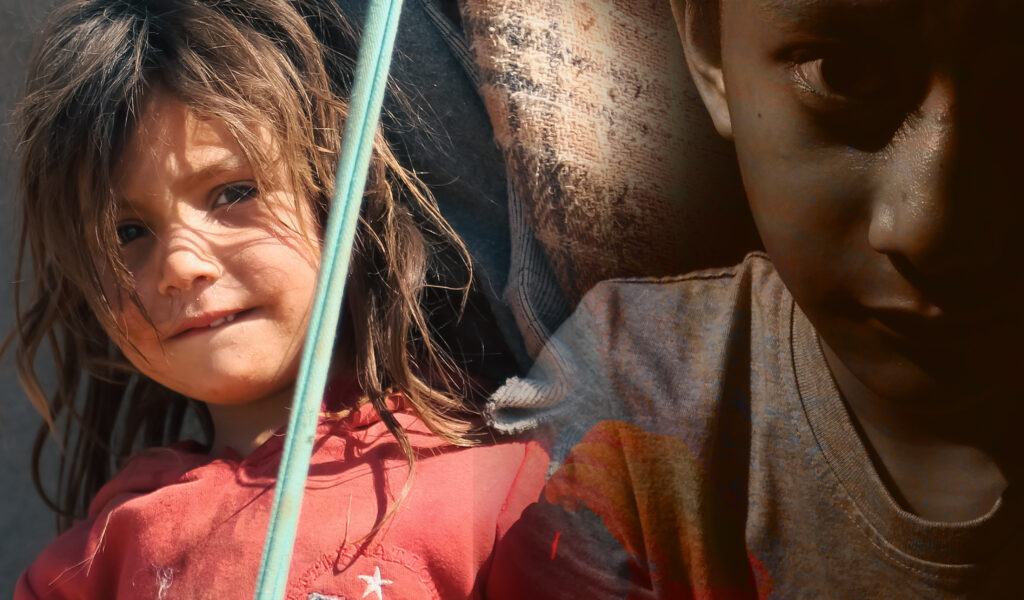
Data on Syrian refugee children in Turkey reveal an alarming trend: refugee children are working more and learning less than they would have in their home country of origin. On the one hand, employment among Syrian refugee children in Turkey is significantly higher than children of the same age in Syria. On the other hand, data on school attendance show the opposite, with a wider share of Syrian children enrolled in school in Syria than in Turkey. Dispalcement significantly affects children’s opportunity to access education, disrupting their childhood and confing them to poverty and lost development opportunities. Moreover, boys and girls experience different but equally disruptive conditions; the former are pushed into informal job markets, while the latter are more exposed to domestic labor, early marriage, and sexual violence.
The SWANA Region: Life Along the Fault Lines
Nowhere is this cascade of vulnerability more devastating than in the Southwest Asia and North Africa (SWANA) region. In areas of protracted conflict like Palestine and Lebanon, the abstract concepts of international law clash violently with the daily realities of children trapped in endless conflicts and economic disruption. .
By May 2025, UNICEF estimated that more than 50,000 children had been killed or injured in Gaza since the beginning of the conflict on 7 October 2023. Following the end of the ceasefire in March 2025, over 1,300 additional children were killed and 3,700 injured. Deliberate strikes on schools, hospitals, and homes have indiscriminately taken the lives of an ever-increasing number of innocent children in the Gaza Strip. This severe violence led the UNICEF Spokesperson James Elder to designate the conflict in Gaza “a war on children” and rendered the OPT, in particular Gaza, the “deadliest place to be a child” in 2024. Furthermore, in the West Bank, children are systematically killed and injured as a result of violent attacks by settlers and Israeli security forces. Concurrently, intensifying military operations and home demolitions have forcibly displaced over 33,000 Palestinians from northern refugee camps like Jenin and Tulkarem, dismantelling any minimal piece of stability left. For too long, the occupation has denied the rights of Palestinian children and stolen their childhoods, exposing them to violence, arbitrary detentions, and cutting them off from their homes, schools and other essential services. A catastrophic blockade on food deliveries has led to the documented starvation death of at least 50 children, with thousands under 5 currently diagnosed and treated for severe acute malnutrition. Moreover, with 95 percent of educational infrastructure damaged or destroyed, hundreds of thousands of students are completely out of formal learning, directly accelerating their risk of exploitation. These children are subjected to structured prosecution in military courts that deliberately deny their right to a fair trial and violate juvenile justice standards. It is an abusive, inhumane prosecution system, where children face physical, emotional, and sexual abuse, humiliation, and starvation. Meanwhile, hundreds of Palestinian minors are held under administrative detention orders without formal charges or trial. Decades of conflict, the ongoing military occupation, and the blockade of Gaza hinder the right to self-determination of Palestinian communities and have adverse impacts on their development, greatly exposing children. Palestinian children have carried the weight of occupation for years, suffering physical and mental consequences that an inhumane war has brought upon them.
Across the border, Lebanon hosts the highest number of refugees per capita in the world. Layered on top of a crushing domestic economic crisis, refugee families and their children are caught in a cycle of legal and financial vulnerability. UNHCR data indicates that roughly 68 percent of Syrian families live below the Survival Minimum Expenditure Basket, unable to meet bare nutritional and health needs. Because adults are severely restricted from entering the formal labor market, families are forced to rely on child labor in agriculture, street vending, and informal shops as a desperate survival mechanism. Besides, Palestinian refugees are subject to generational and structural exclusion. For the approximately 231,000 refugees verified by UNRWA the poverty rate climbs over 80%. Legal barriers further prevent young Palestinians from entering dozens of professional fields, resulting in a staggering unemployment rate of 32%, triple the Lebanese national average. This systematic exclusion creates a direct pipeline into the informal black market, forcing children into labor before they even reach adolescence.
Working towards Better Protection
When global accountability systems fail, children pay the highest price. In today’s geopolitical environment, children are no longer just incidental casualties; they have become deliberate targets and tactical levers of warfare. In a geopolitical environment of impunity and institutional paralysis, perpetrators are rarely held accountable and continue to disregard international humanitarian law, human rights law, and basic humanity.
This dramatic situation creates a devastating cascade. Armed conflict and aggression displace children from their homes and their communities; displacement pushes children and their families into economic and legal precarity, creating the conditions in which child and forced labour proliferate; and within precarity, children are exposed to violence. It is a predictable cascade of events that disrupts education and leaves deep psychological scars on those affected.
True accountability is the only antidote to impunity. To break this cascade of vulnerability, the international community must transition from abstract political rhetoric to concrete enforcement, addressing the roots of child exploitation. The world cannot afford to remain passive as children, from the SWANA region to active war zones across the globe, pay the price for institutional failure. We urge immediate international intervention to end the systematic plight of Palestinian children, who are being disproportionately devastated by military and genocidal campaigns, alongside the children of Lebanon, who are increasingly trapped in a crushing spiral of conflict and displacement. We call for immediate ceasefires across all theaters of aggression to ensure the safety of surviving children, halt the ongoing violence, and hold those responsible fully accountable under international law. Only by matching international legal standards with concrete, funded actions on the ground can the global community offer every child, regardless of their birthplace, the protection, the support, and the basic human dignity they are fundamentally owed.