Hassan Nafaa, Ph.D.
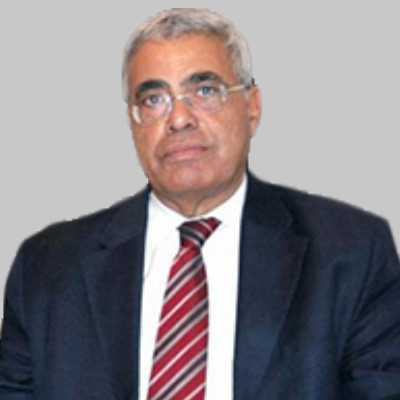
An Egyption researcher and thinker, Nafaa is currently serving as a full professor in the Political Science Department at the Faculty of Economics and Political Science at Cairo University, where he was its president for eight years. He has worked as a visiting professor at many universities and as a lecturer in several diplomatic institutes affiliated to the foreign ministries in Egypt and a number of Arab countries. He served as Secretary General of the Arab Thought Forum, Secretary General of the Arab Society for Political Science, General Coordinator of the Egyptian Campaign Against Inheritance and then of the National Assembly for Change. He is a member of the advisory board of Al-Ahram International Journal of Politics. Nafaa won many awards including the State Encouragement Award in Political Science and the State Prize for Excellence in Social Sciences. He is a member of the General Secretariat of the Arab National Conference He has many publications: Reform of the United Nations, Arabs and UNESCO, the United Nations in half a century, Western Europe and North America, Egypt and the Arab-Israeli conflict: from inevitable conflict to impossible settlement, the European Union and Arab lessons learned, and has also published numerous studies and articles in several magazines and newspapers. He contributes regular articles in a number of Arabic newspapers He holds a BA in Political Science from the Faculty of Commerce, Alexandria University, and a PhD in Political Science from Sorbonne University, France.
Abdullah Ould Abah, Ph.D.
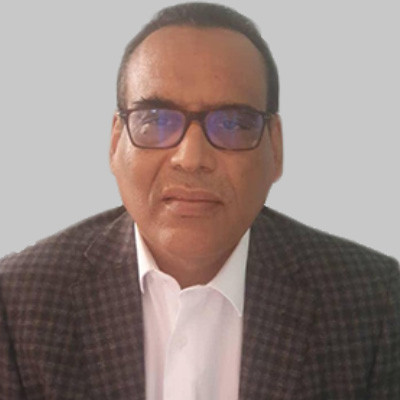
A Mauritanian academic, thinker and professor of philosophy and studies at the Mauritanian University of Nouakchott since 1989 and a visiting professor at several Arab and international universities. Walad Abah teaches modern philosophy, philosophy of ethics, politics, religion, philosophy of law, linguistics, Islamic philosophy, philosophy of communication and media sciences. Abah also serves as a coordinator of Arab-Islamic cultural and civilizational dialogue programs, an advisor to the Supreme Council for Communication, a human development expert accredited to the United Nations, and secretary-general of the Mauritanian Society for Philosophical Studies and a writer for a weekly intellectual column for Al Etihad newspaper in the UAE since 2009. He has published a book in addition to several scientific works in addition to dozens of researches and articles published in the Arab periodicals. Ould Abah holds a PhD. in Philosophy from the University of Tunisia.
Ali Oumlil, Ph.D.
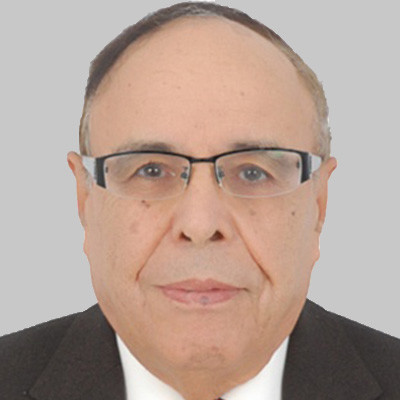
Professor and lecturer at the Faculty of Arts and Humanities in Rabat. A prominent Arab philosopher, thinker, human rights activist, diplomat and political persona. A primary figure in the fields of Islamic historical methodology and Arab political thought, he is considered to be a pioneer in issues related to state formation in the Arab world. Oumlil has extensively studied the relationship between intellectual authority and political power, the sociological pluralism and its ideological interpretations as well as the reformist trends in Arab contemporary thought. Oumlil wrote 11 books, 3 of which were translated from Arabic to French. His writings are taught throughout the major universities of the MENA region and around the world, he co-founded the Moroccan Association for Human Rights in Rabat, which he chaired until 1985, He was also a member and co-founder of the Board of Directors of the Executive Committee of the Arab Institute for Human Rights in Tunis. He headed the Arab Institute for Human Rights in Cairo. He was elected as The Secretary General to the Board of Trustees of the Arab Thought Forum. He was appointed Ambassador Extraordinary and Plenipotentiary to Egypt and Ambassador to the Lebanese Republic. He participated in many seminars and has many works in both Arabic and French. Oumlil holds a bachelor’s degree in philosophy from Cairo University and joined the Sorbonne to work with the French scholar Roger Arnalds with a focus on Ibn Khaldun’s methodology. He completed his doctorate in 1977.
Magda El-Sanousi
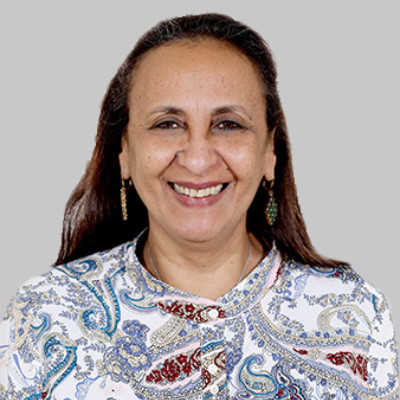
Magda El-Sanousi, is a developmental expert in the Higher Council for Peace in Sudan, and worked previously as the Chief of Women’s Empowerment Section at the United Nations’ Support Mission in Libya (UNSMIL) which she joined in July 2013 as part of the senior management team. Ms. Elsanousi led on developing strategies to enhance the role of women in the transitional period in Libya focusing mainly of the drafting of the constitution and the National Dialogue. She was Oxfam GB Country Director in Lebanon until June 2013 and has been awarded by Takreem the “Arab Woman of the Year 2012.” El- Sanousi, manages the Arab Region Gender Equality program that covers Lebanon, Jordan, Egypt, Iraq, the Occupied Palestinian Territory and Yemen. El-Sanousi devoted the last 20 years to developing programmes and mobilizing resources to empower women. She worked with Oxfam in Yemen, Egypt, Jordan and Lebanon. She has worked on promoting gender sensitive budgets and policies in Yemen; on advocating policy change in Iraq to give widows access pensions, and on empowering women in remote villages in Egypt to vote and even stand as candidates in the parliamentary elections. ElSanousi is a graduate of Ahfad University for Women in Sudan and completed two Master’s degrees from Sussex University (U.K) in Gender and Development and Rural Development.
Zaid Eyadat PhD.
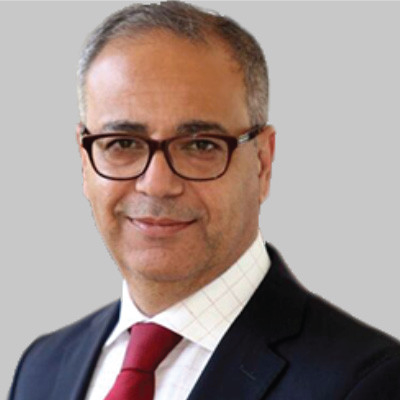
Dr. Zaid Eyadat is the director of the Center of Strategic Studies in the University of Jordan, and Eyadat is a political scientist and human rights professor at the University of Jordan, with over ten years of experience in researching the democratization of the Middle East within the framework of game theory, as he has formally been trained in comparative and international politics and game theory methodology. Subsequently, his expertise lies in Middle East politics, with his current research focusing on human rights, conflict management and resolution, the democratization and politics in the Middle East, and Islamic politics. Through his membership in both governmental and non-governmental organizations, as well as international institutions, he has extensively contributed to the analysis and advancement of Middle East politics within a comparative and international framework, working extensively on legislation, policies, and procedures with the Jordanian government and NGOs. Some of his recent works include “The Rationality of Political Violence: Modeling Al-Qaeda vs. the United States” “Culture and Foreign Policy: an Explanatory Model. American Foreign Policy Post 9\11 and “The Calculus of Consensus: an Alternative Path to Arab Democracy.” Currently, he is finalizing a project on Islamic theorizing on politics and the state, the theory of ethics in Islam, as well as developing an explanatory model for the Arab revolutions. Eyadat holds a bachelor’s degree in political science/Economics and Statistics and a master’s in political science from the University of Jordan. He also holds a master’s in international political science and a PhD in Political Science from the University of South California.
Samar Muhareb
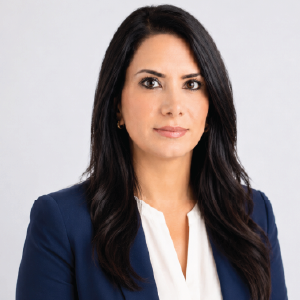
Samar Muhareb is the Executive Director of Arab Renaissance for Democracy and Development (ARDD). She also serves on the Board of the Cultural Diplomacy Forum in Türkiye and is a member of the Scientific Advisory Committee (SAC) of UNESCO’s MOST Programme. With more than two decades of experience across the Middle East, North Africa, and Türkiye, Samar has led and contributed to initiatives focused on human rights, governance, sustainable development, refugee protection, and civil society strengthening. Through her leadership of ARDD, the Renaissance Strategic Center, and the Euro-MENA Initiative for Democracy and Development (ARDD Europe), she has played a key role in building platforms that connect research, policy, and practice. Her work promotes locally led development, inclusive governance, evidence-informed policymaking, and community-centered approaches to humanitarian and development challenges. She has also contributed to regional and international dialogue on forced displacement, social justice, localization, and democratic governance, working in partnership with governments, international organizations, academia, and civil society.