Youth Political Participation in Jordan between Political Knowledge Production and Practice
This policy brief highlights the first session of the youth participation policies lab, entitled: “Political and Civic Participation and its Importance for Democracy, Governance, and Human Development” according to the methodology of the policy lab work, which was held by ARDD in partnership with the Center for Strategic Studies at the University of Jordan, within the framework of the New Generation Project. This policy brief, which comes within the youth civic and political participation policy briefs series, addressed what twenty participants from political science and law students from the University of Jordan discussed during the session featured Prof. Zaid Eyadat, Director of The Center for Strategic Studies at the University of Jordan and was moderated by human rights expert Dr. Riyad Sobh. The session discussed political participation in Jordan, specifically concerning critical analysis of the political science development level in Jordanian academic circles and knowledge production where It is necessary to look at these two dimensions together to understand how they affect the production of knowledge and working through it, and the importance of the interaction of these elements leading to the political participation of youth in the Jordanian context, which is often characterized by a lack of knowledge depth and reliance on theories and intellectual and scientific trends related to this field. Policy Labs are part of ARDD’s research methodology, providing a dedicated space for discussing and researching public policy issues with the aim of enhancing the capacities of youth and equipping them with the necessary skills to engage in public policy-making processes. The labs also facilitate exchanging opinions with experts and researchers specialized in relevant topics, based on background papers prepared to address these issues.
ICJ Ruling on Advisory Opinion
Legal Consequences Arising from the Policies and Practices of Israel in the Occupied Palestinian Territory, Including East Jerusalem
On 19 July 2024, the International Court of Justice issued a historic ruling declaring the Israeli occupation and associated regime of systematic discrimination – amounting to racial segregation and/or apartheid – unlawful. Flowing from this illegality, it calls on Israel to end the occupation and associated regime, evacuate the settlements, dismantle the wall, provide full reparation, and allow displaced Palestinians to return. The Court finally stipulated that Member States and the United Nations are obliged not to recognize the above illegality and that the UN should consider the precise modalities and further action required to bring the illegal situation to an end as rapidly as possible.
TVET and Skills Education for all: Enhancing Livelihood Opportunities for Jordanian and Refugee Youth
According to the United Nations High Commissioner for Refugees (UNHCR), Jordan is home to 723,886 registered refugees. While Syrians constitute the bulk of the refugee population, other nationalities have sought and found refuge in Jordan, such as Yemenis, Somalis, and Sudanese. Despite UNHCR’s advocacy of the “One Refugee Approach,” the needs of these particular refugee communities have been significantly overlooked by the international aid community and Jordanian authorities, exacerbating their vulnerabilities. As stressed in several national strategies, the Government of Jordan has identified TVET and Skills Education as a key economic and educational priority to address the current skills mismatch among youth in Jordan and increase the efficiency and productivity of its workforce, positively contributing to national economic and human development.3 Furthermore, TVET and Skills Education have been internationally, regionally, and nationally recognized as an effective and efficient educational pathway to foster refugees’ livelihood opportunities. This policy brief sheds light on the challenges and opportunities of the Technical and Vocational Education and Training (TVET) sector in Jordan by adopting a sectoral and refugee-specific approach. TVET and Skills Education in Jordan has been identified as a development priority by the Government of Jordan and the donor community, as not only a useful tool to achieve a skilled and competitive Jordanian workforce, but also an educational pathway to enhance protection and livelihood opportunities for refugee communities, including Yemenis, Somalis, and Sudanese. Nevertheless, the poor social image of TVET among Jordanians, inefficient public financial management strategies, or insufficient coordination between the involved stakeholders are some of the challenges the TVET sector in Jordan is currently suffering from.
TVET and Skills Education for all: Enhancing Livelihood Opportunities for Jordanian and Refugee Youth
According to the United Nations High Commissioner for Refugees (UNHCR), Jordan is home to 723,886 registered refugees. While Syrians constitute the bulk of the refugee population, other nationalities have sought and found refuge in Jordan, such as Yemenis, Somalis, and Sudanese. Despite UNHCR’s advocacy of the “One Refugee Approach,” the needs of these particular refugee communities have been significantly overlooked by the international aid community and Jordanian authorities, exacerbating their vulnerabilities. As stressed in several national strategies, the Government of Jordan has identified TVET and Skills Education as a key economic and educational priority to address the current skills mismatch among youth in Jordan and increase the efficiency and productivity of its workforce, positively contributing to national economic and human development.3 Furthermore, TVET and Skills Education have been internationally, regionally, and nationally recognized as an effective and efficient educational pathway to foster refugees’ livelihood opportunities. This policy brief sheds light on the challenges and opportunities of the Technical and Vocational Education and Training (TVET) sector in Jordan by adopting a sectoral and refugee-specific approach. TVET and Skills Education in Jordan has been identified as a development priority by the Government of Jordan and the donor community, as not only a useful tool to achieve a skilled and competitive Jordanian workforce, but also an educational pathway to enhance protection and livelihood opportunities for refugee communities, including Yemenis, Somalis, and Sudanese. Nevertheless, the poor social image of TVET among Jordanians, inefficient public financial management strategies, or insufficient coordination between the involved stakeholders are some of the challenges the TVET sector in Jordan is currently suffering from. This policy brief draws upon the findings of the study titled “Strengthening Self-Reliance: TVET and Skills Education for Youth in Jordan,” conducted by the Social Protection and Economic Development Research Team at the Renaissance Strategic Center – Arab Renaissance for Democracy and Development. This research was carried out as part of the “Investing in the Future: Improved educational, social and economic integration of Somali, Sudanese and Yemeni minorities in Jordan “ project, implemented in partnership with Vision Hope International and the generous financial support of the Ministry for Economic Cooperation and Development of the Federal Republic of Germany.
Roadmap to Strengthening and Activating the Medical and Health Responsibility Law No. 25 of 2018
This policy roadmap provides an in-depth analysis of the key and contextual challenges facing the enforcement of the Medical and Health Liability Law No. 25 of 2018 in Jordan. In addition, it will present a set of recommendations and proposed actions to enhance enforcement and increase the effectiveness of the law. The Policy Lab is a methodology that offers neutral spaces for dialogue and discussion by specialists, decision-makers and stakeholders on pressing political and social issues by harnessing previous evidence-based research on these issues. The aim of the Jordanian policy lab was to provide a neutral space for dialogue to improve the current shortcomings of the Medical Liability Law. This roadmap included Recommendations to develop and strengthen the implementation of the Medical and Health Liability Law No. 25 of 2018, in the following areas: Recommendations Related to the Main Challenges within the Medical and Health Liability Law Recommendations related to the system for receiving complaints regarding error cases. Recommendations related to the Higher Technical Committee. Recommendations related to Medical and Health Standards. Recommendations related to the Insurance Fund Against Medical and Health Liability Errors Recommendations regarding environmental and contextual issues surrounding medical and health liability law Recommendations related to Raising the Efficiency and Capabilities of Medical Service Providers. Recommendations related to Raising Legal and Societal Awareness among Medical Services´ Recipients. Recommendations related to Data and Statistics on the Reality of Medical Errors. Recommendations related to Networking among Civil Society Institutions. Recommendations related to mechanisms for resolving cases and complaints of medical errors. This roadmap has been conceptualized and developed by a group of experts in the field who, in the context of a Policy Lab initiative led by Professor Rana Jawad, University of Birmingham, and Professor Rachel Forrester-Jones, Western University Canada, and ARDD, have volunteered their knowledge and time. The initiative has been funded by the Ford Foundation.
At the Center: Towards a Gender-Sensitive Agenda for Social Protection in Jordan
Women worldwide face risks, including limited access to education, inadequate health services and coverage, gender-based discrimination, unpaid care work, high poverty rates, and increased vulnerability in old age due to the absence of adequate social protection systems. Social protection programs can be an effective tool to mitigate and address these risks. Social protection can be generally defined as “the set of policies and programs aimed at preventing or protecting all people against poverty, vulnerability, and social exclusion throughout their life course”. Social protection and women in Jordan face a double challenge. On the one hand, the understanding of social protection in Jordan remains anchored in a charity paradigm, rather than a rights-based approach based on universal minimum guarantees. International development partners perpetuate this charity paradigm through the implementation of piecemeal poverty-targeting approaches in their programs. On the other hand, except perhaps for the field of education, where women are arguably outperforming their male counterparts, women in Jordan remain at the margins in benefiting from social protection guarantees such as health and income security throughout the life cycle. This policy memo, conducted in the framework of ARDD´s Al-Nahda Center´s Inclusive Social Protection Theme, looks at Jordan’s social protection systems including looks at social protection systems in Jordan, including social security, legal frameworks, aid and zakat funds, health care, the challenges associated with COVID-19 among other issues. It recommends the adoption and adaptation of internationally recognized best practices toward more gender-sensitive social protection policies. Some of the recommendations for a way forward are as follows: Move beyond narrow approaches to social protection by embedding basic transfers in a broader social and economic policy package aimed at creating more and better jobs for women and reducing and redistributing unpaid care and domestic work. Build on targeted programs to create universal schemes that are more likely to prevent exclusion errors and stigma, especially for women from poor and marginalized groups. Avoid tying cash transfers to conditionalities that add to women’s unpaid care burdens and integrate gender-responsive elements, such as feasible daycare for children, the elderly, and persons with disabilities (whose care is mostly the responsibility of working-age women) Conduct assessments that analyze the factors that drive women’s exclusion and disadvantage in existing social protection schemes. For more read the below Policy Memo
MENA Green Voices Challenge A call for joint action and innovation to respond to climate change threats and opportunities
Youths are at the forefront of the climate movement that emerged in the 1980s and gained traction in 2019 with the global climate strike organized by Fridays for Future and Earth Strike. Despite the fact that their region is warming at twice the global average[1], surveys show that youths in the Middle East and North Africa (MENA) region tend to be less concerned and active. In order to better understand MENA youths’ views on climate change and help make their voices heard, ARDD partnered with RNW Media to implement a project aiming to foster dialogue and encourage MENA youth participation in climate change debates. With the support of the Inclusive Green Growth Department (IGG) of the Netherlands Ministry of Foreign Affairs (NL-MOFA) in Jordan, a preliminary research work, a media competition “Arab Youth Green Voices Challenge” and a series of policy labs were conducted with young environmental activists and media makers from six Arab countries that resulted in key considerations and recommendations amplifying youth´s voices such as: Support climate initiatives that build bridges with the development and peace-building sectors, as enhanced safety, education, and economic opportunities Promote a regional approach toward protecting the environment and mitigating the effects of climate change, to foster more effective, holistic, and sustainable local solutions. Engage with and train Arab media on environmental issues to increase visibility, awareness, dialogue, and accountability on climate change and environmental protection in the Arabic language. Disseminate information and narratives that highlight youth´s climate action, innovation, and promising solutions rather than focus solely on the threats and scientific data. [1]https://www.unicef.org/mena/press-releases/impact-climate-change-children-mena-region According to UNICEF, by 2050, the region could be as much as four degrees Celsius warmer. This is way beyond the 1.5-degree Celsius target set by the Paris Agreement.
Debt and Imprisonment in Jordan
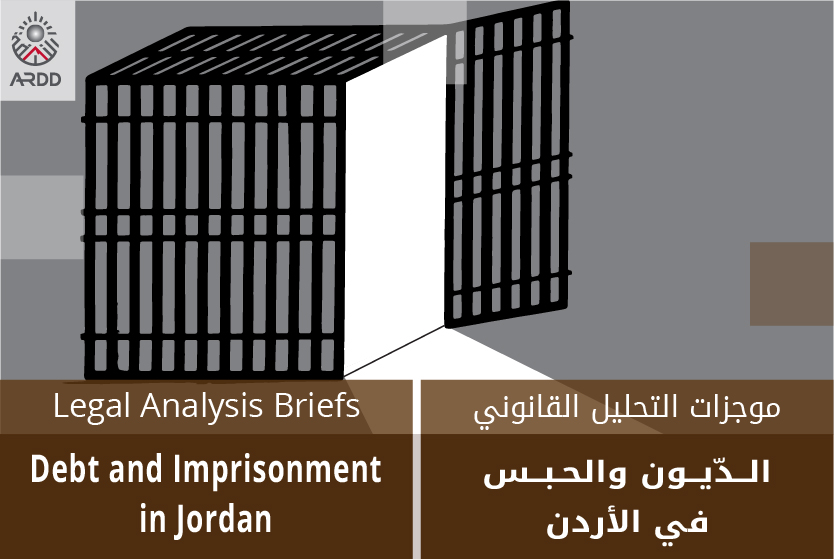
Unpaid debt in Jordan is widespread, affecting almost 2% of its population. Most recent estimates regarding people with unpaid debt in Jordan include 157,367 individuals who are wanted in civil debt cases and 30,669 individuals who have issued checks bounced due to insufficient funds.1 Among those facing civil debt cases, 8,7% possess a debt of over JOD 20,000, while the percentage reaches 42% among people who have issued bounced checks. According to Jordanian legislation, failing to repay debt is a reason for imprisonment. Although the criminalization of debt is a growing phenomenon around the world,2 Jordanian legislation takes it further: the law considers unpaid checks a criminal matter and provides for prison penalties. As per the Jordanian Execution Law no. 25 of 2007 (amended in 2019), individuals who fail to repay their debts for whatever reason, including lack of income, can be sentenced to up to 90 days in prison per debt per year if a formal or informal creditor provides proof of a loan contract and a notice to the debtor in question. Debt in Jordan is a multidimensional phenomenon that must be understood in all its complexity to formulate adequate solutions. Among policy circles in Jordan and elsewhere, there is a widespread view of simplifying debt due to ‘unhealthy consumption patterns’ by individuals. This approach emphasizes the role of individual responsibility vis-a-vis his/her financial obligations, which translates into the promotion of awareness-raising interventions on ‘financial culture and basics.’3 Instead, as analyzed by ARDD and others, factors such as chronic unemployment, low salaries, rising inflation, insufficient and inadequate financial instruments, along with the absence of stable and predictable inclusive social protection mechanisms and social safety nets that can help families cope with life shocks, help explain why many individuals resort to borrowing money to pay for food, shelter, health treatments, and other basic needs or articles. By the end of 2019, it was estimated that “the average debt ratio for each household amounted to 43% of the household’s income”.
Identifying and overcoming obstacles to the creation of MSMEs in Jordan
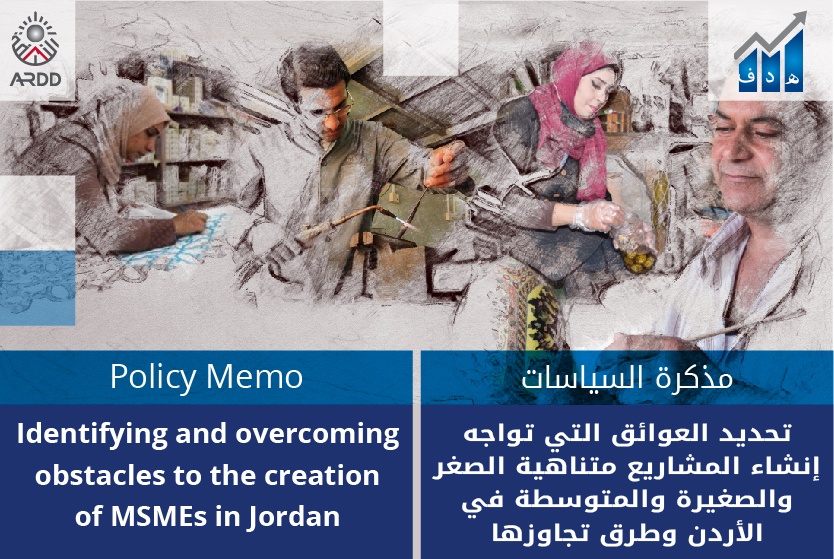
Whereas entrepreneurship is recognized by the government as an engine of economic growth, job creation and prosperity of its country, people and future, it remains recognized by relevant stakeholders, starting with entrepreneurs themselves, as a weak link in Jordan’s labor market. Despite the emergence of an entrepreneurship ecosystem notably composed of technical and financial governmental and private sector technical and credit assistance, challenges faced by Jordanians willing to open and grow businesses remain significant, in the Micro, Small and Medium Enterprises (SMEs) more especially : From financial and administrative challenges, to the lack of entrepreneurship spirit within the Jordanian population. Based on ARDD experience in establishing a business incubator in partnership with the Al-Zummurod for Orientals company in Amman, further supported by research and analysis and as part of its Human and Economic Development Platform(HEDP) efforts that seek to foster transformative change towards a better-informed, empowered, resilient and just society in Jordan and the Arab World through inclusive and informed socioeconomic research and policy this Policy Memo proposes the following recommendations to help entrepreneurs succeed in starting and developing their businesses, thus becoming true agents of economic change in Jordan. • Create a more favorable environment by facilitating the registration process and procedures • Pursue efforts to make aspiring entrepreneurs more familiar with the world of enterprise • Toward a more even geographical distribution of incubators and facilitators • Increase efforts to provide young entrepreneurs, female entrepreneurs more especially, with access to finance • Recognize the specificity of home-based businesses • Recognize the existence of social enterprises • Towards a fragmented social security package for small entrepreneurs This document comes within the framework of the Design and Determine project. This project is funded by the European Regional Development and Protection Program (RDPPII) for Lebanon, Jordan, and Iraq, which is supported by the Czech Republic, Denmark, the European Union, Ireland, and Switzerland. The contents of this policy brief are the sole responsibility of ARDD and can under no circumstances be regarded as reflecting the position of the RDPP or its donors.
Vulnerability to be Redefined with Both Governmental and Local Perspectives Policy Brief 9
The brief explores the understanding of the concept of vulnerability by local communities and by the Takaful program, run by the government of Jordan during the COVID-19 pandemic. It aims to build a better understanding of vulnerability by all stakeholders, to improve vulnerable groups’ access to assistance. The brief focuses on developing a common understanding of vulnerability and how it should be assessed. It provides policy recommendations guided by insight from 11 civil society organizations from the JONAF coalition interviewed by ARDD on existing vulnerability assessment tools. This brief comes as part of the action research within the framework of the project “Strengthening the Capacities of Women-led CSOs in Evidence-Based Advocacy and Women, Peace, and Security (WPS) Agenda”, supported by UN Women with the generous funding of the governments of Canada, Finland, Norway, Spain, Cyprus, and the United Kingdom. ARDD would like to thank the civil society partners and individuals that supported the development of this study, which was carried out by the research team of the Al Nahda Thought Center.