
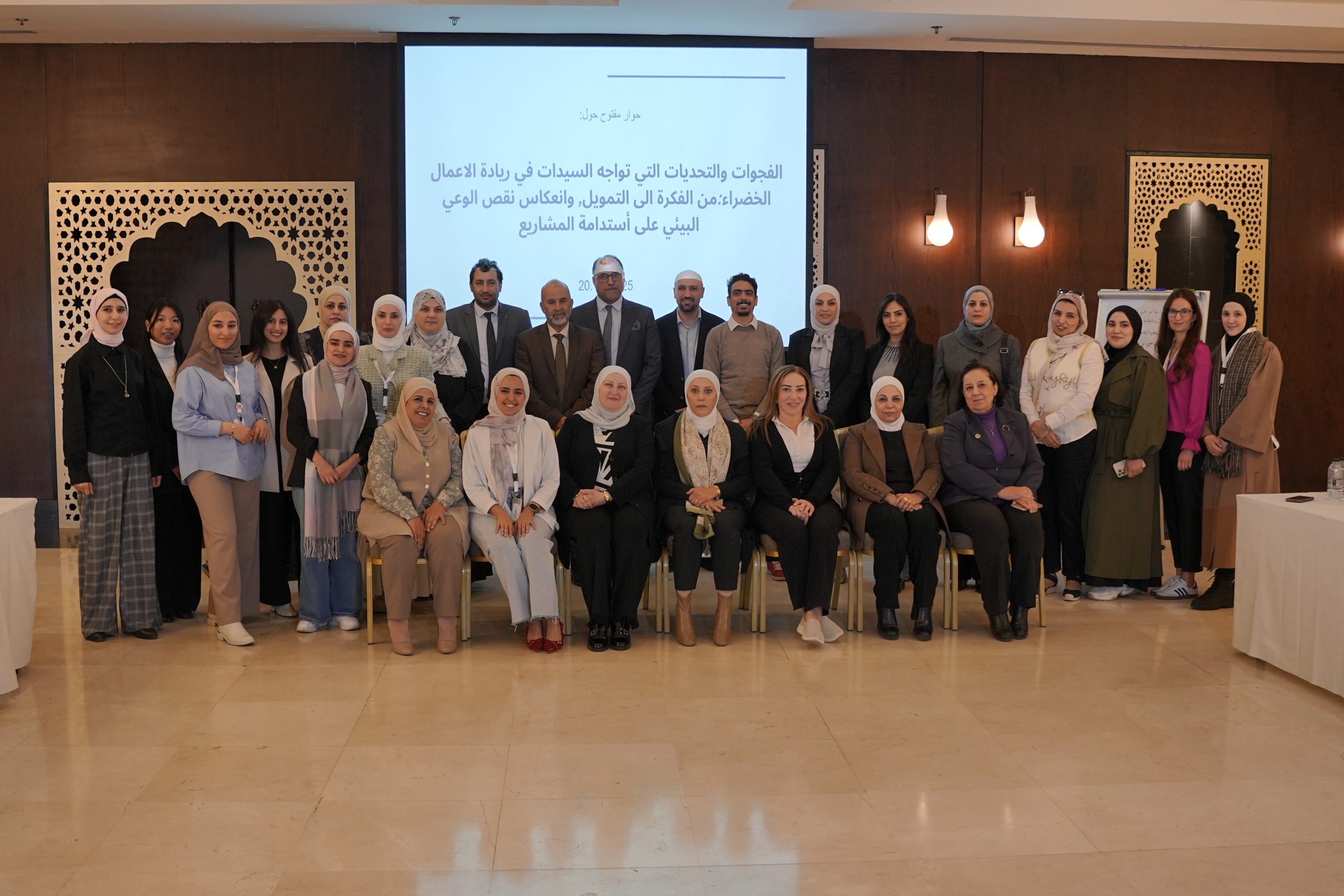
Lawyers Ahmad Akhou Ameira and Mousa Al-Zyoud from the Arab Renaissance for Democracy and Development (ARDD) participated in delivering a presentation on the legal challenges and opportunities surrounding women’s participation in economic development, whether through establishing small and medium enterprises or pursuing available employment opportunities. This took place during a roundtable session held in Amman on 20 November 2025, as part of ARDD’s cooperation with the Movement for Peace – MPDL Jordan, in collaboration with the Be Positive Association, aimed at supporting the economic and social participation of women, youth, persons with disabilities, and refugees within the framework of the green economy.
The roundtable session, titled “Gaps and Challenges Facing Women in Green Entrepreneurship: From Idea to Financing, and the Impact of Environmental Awareness on Project Sustainability,” was organized under the project “Enhancing Women’s Effective Participation through a Comprehensive Rights-Based Approach in Jordan,” implemented by Movement for Peace – MPDL Jordan in partnership with a group of local associations. The session brought together representatives from government institutions, civil society organizations, and experts in the field of the green economy.
Participants discussed the key challenges hindering women’s entry into the green entrepreneurship ecosystem, starting from idea development and proposal writing, to the difficulty of accessing donors, and finally, to meeting the requirements for sustaining environmental projects. Attendees emphasized that low environmental awareness is one of the most significant barriers to the growth and continuity of women-led projects in this sector.
Other obstacles were also highlighted, including the concentration of most projects on recycling without expanding into emerging green sectors; limited knowledge of environmental systems and licensing complexities; the absence of databases for supporting institutions; skills and technical gaps; and high production costs relative to the local market.
The Ministry of Environment and the Vocational Training Corporation presented overviews of the support available, including technical consultations, connecting women entrepreneurs with specialized partners, and providing training programs in energy, water, sustainable agriculture, and waste management. They also reviewed the national standards for assessing green projects and the relevant national policies.
In conclusion, participants stressed the need to enhance environmental awareness, facilitate access to financing, and develop institutional support pathways to ensure the sustainability of green projects. They also called for fostering creative thinking and building women’s capacities in feasibility studies, marketing, and preparing competitive proposals.