
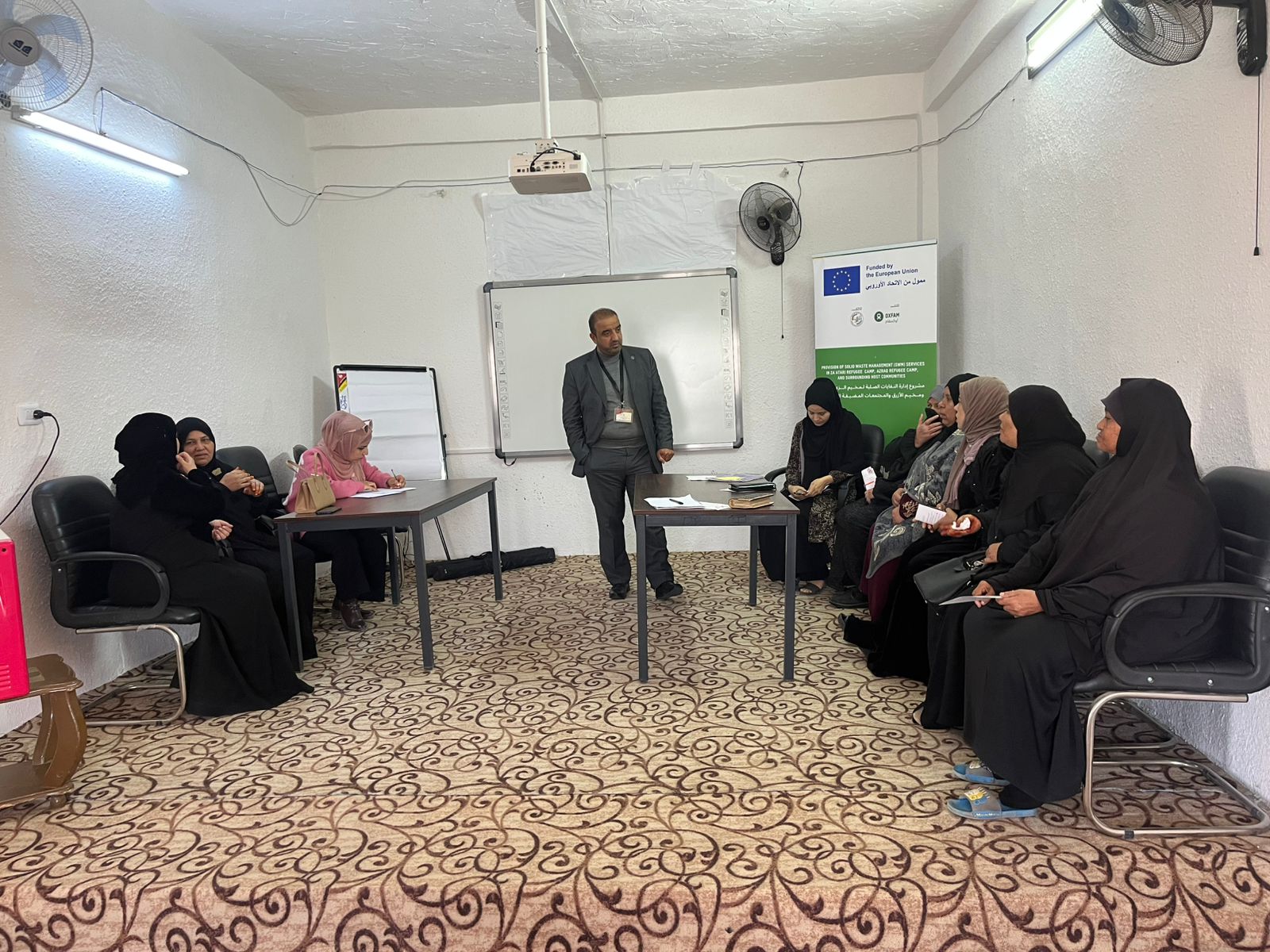
In conjunction with ARDDs #ReclaimingTheFuture Campaign and the global 16 Days of Activism Against Women and Girls campaign, held annually from November 25 to December 10, the Legal Aid Department at ARDD, in coordination with UNHCR and several local and international partners, implemented a series of legal awareness sessions aimed at enhancing legal awareness among participants of various nationalities, including refugees and Jordanians.
The workshops introduced the global campaign, targeting women and girls, which this year carried the slogan: “Technology-Facilitated Gender-Based Violence (TFGBV) is real violence… #NoExcuseForOnlineAbuse”, with a focus on the Cybercrime Law and related legal rights. The sessions highlighted emerging forms of violence, especially TFGBV, as one of the most serious types of violations in the digital age.
In this context, awareness workshops were held in Mafraq Governorate over two consecutive sessions, hosted at the Arab Women Association and Al-Khalidiyah Association, facilitated by lawyers Basil Al-Hawamdeh and Kefaya Al-Dalabih. The workshops focused on the risks of TFGBV, legal protection mechanisms, and procedures for filing complaints.
Al-Hawamdeh noted that one of the most evident concerns observed during the sessions was the intense fear among women and girls of online blackmail and defamation, particularly involving the misuse of private photos or messages as a tool of pressure and threats, often leading to silence and hesitation to report.
Al-Dalabih confirmed that limited knowledge of the Cybercrime Law and complaint-filing procedures, along with fear of social stigma and victim-blaming, represent major barriers preventing women from accessing justice and legal protection.
In Zaatari Camp, lawyers Ahmad Abu Atiyyeh, Mohammad Hamdan, and Hamed Al-Yaqub conducted three awareness workshops in different sectors of the camp, in cooperation with the Princess Noor Al-Hussein Foundation and UNHCR, aiming to reach the largest possible number of women and girls.
The workshops addressed various issues related to TFGBV and gender-based violence, focusing on: general gender-based violence, TFGBV and its forms, online slander and defamation, harassment, threats and electronic blackmail, digital spying, challenges facing victims of TFGBV, and information on the authorized bodies responsible for receiving complaints related to crimes resulting from TFGBV.
Abu Atiyyeh stated that many participants expressed concern regarding their sense of safety in digital spaces, especially with the spread of threats and harassment on social media, as well as fears of account hacking or phone surveillance.
Hamdan noted that fear of scandal and family or community reactions was among the strongest concerns, as many women prefer silence over reporting—worried about the social consequences even when facing severe psychological harm.
Al-Yaqub emphasized that TFGBV leaves deep psychological effects on victims, including constant anxiety, isolation, loss of trust in others, and fear of repeated abuse without the ability to protect themselves.
In Azraq Camp, awareness workshops were delivered by lawyers Murad Al-Faqeeh, Amjad Faris, and Mahmoud Abu Hammam, in cooperation with CARE and UNHCR, across various camp villages, reaching a large number of women and girls. The workshops focused on legal issues related to the campaign and the evolving forms of TFGBV.
Al-Faqeeh noted that participants expressed deep concern regarding the use of personal photos or information, which exposes them to blackmail or defamation, causing social and familial harm, particularly in conservative environments.
Faris highlighted that women expressed specific concerns about protecting children and underage girls from exploitation and online blackmail, in light of limited digital awareness and weak protection measures.
Abu Hammam stressed the importance of continuing legal and digital awareness programs and ensuring safe and accessible protection mechanisms for women and girls, reinforcing their confidence in reporting and reducing the prevalence and impact of TFGBV.
In conclusion, ARDD affirms that these workshops reflect its ongoing commitment to enhancing legal awareness annually during this campaign, protecting those most vulnerable to violence, and contributing to building a safer digital environment, especially for women and girls, through legal knowledge and community empowerment.