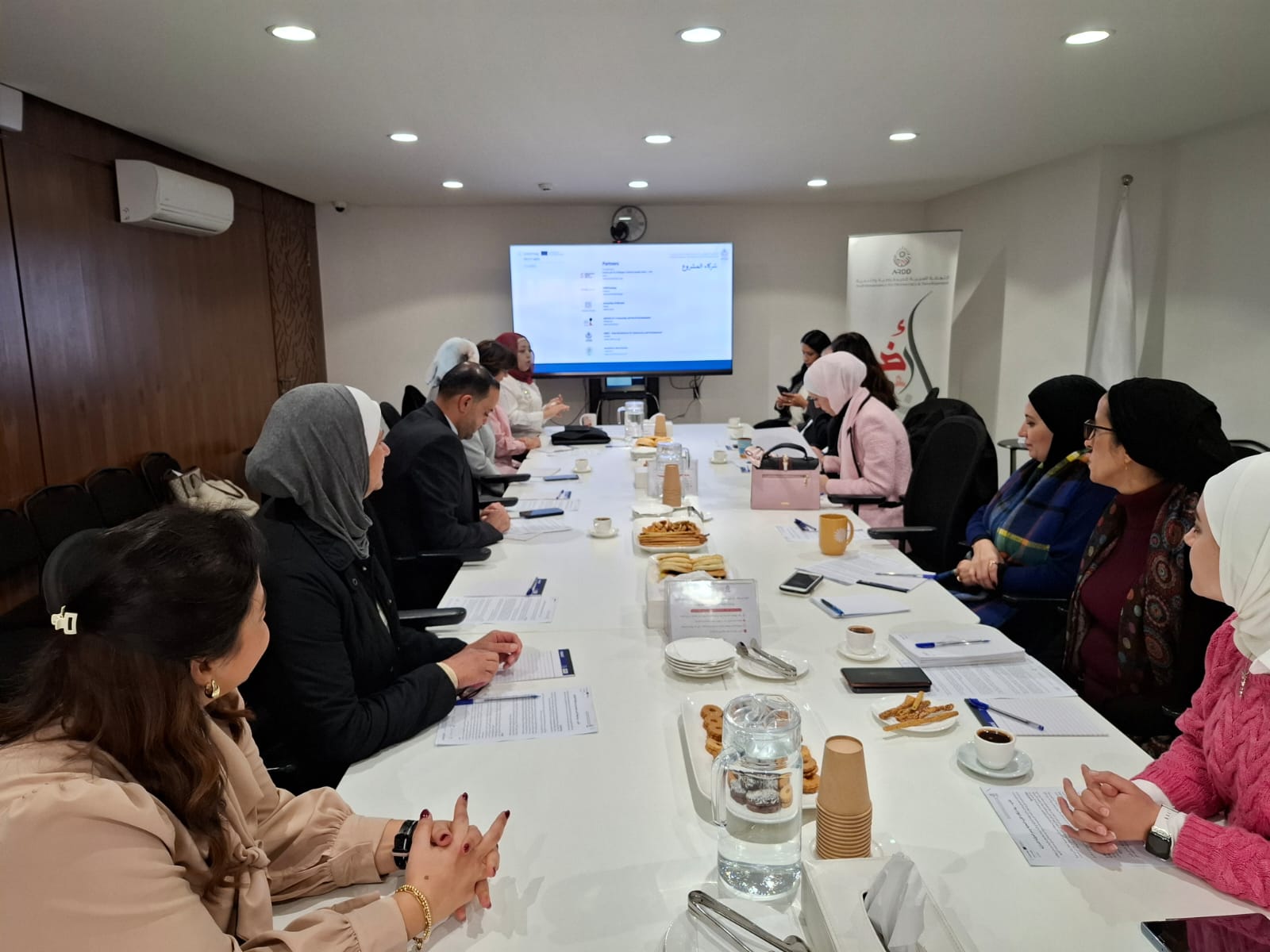
The Arab Renaissance for Democracy and Development (ARDD) has launched the CLOSER – Connecting LOcal proximity networks Sustaining participatory govERnance project in Jordan, funded by the EU’s Interreg NEXT MED Programme, to promote participatory governance and connect local proximity networks. The launch took place during a roundtable held on 15 December 2025, with participation from governmental and international institutions, alongside civil society and private sector representatives.
This launch comes as part of ARDD’s continuous efforts to strengthen Euro-Mediterranean cooperation and develop inclusive governance models that place community needs at the core of public policy.
The roundtable marked the official inauguration of CLOSER, a regional initiative aimed at enhancing local governance and expanding people’s participation across six Mediterranean countries. The project is implemented by a consortium led by the Centro per lo Sviluppo Creativo Danilo Dolci – ETS (Italy), with strategic partners including EUROTraining (Greece), the University of Alicante (Spain), JUHOOD for Community and Rural Development (Palestine), ARDD – Arab Renaissance for Democracy and Development (Jordan), and Moukhtara Municipality (Lebanon) .
Implemented between 2025 and 2027, CLOSER aims to enhance social services and rights in Mediterranean countries — particularly in Jordan, Lebanon, Palestine, Greece, Spain, and Italy. The project focuses on empowering civil society organizations and public authorities to jointly design more responsive social services, especially in marginalized and rural areas.
During the event, Project Manager Malak Suleiman highlighted the strategic importance of CLOSER, describing it as a milestone in ARDD’s work and a step that consolidates ARDD’s position as a leader in participatory local governance in Jordan. She stressed that the project is not a temporary initiative, but rather the culmination of long-term investment in ARDD’s legacy and experience in local governance and good governance practices. ARDD aims to ensure lasting impact by developing a flexible and replicable methodology across governorates, institutionalizing participatory approaches and building effective bridges between citizens and decision-makers to support inclusivity and sustainability.
The project seeks to establish local proximity networks in the six partner countries, bringing together public authorities, civil society organizations, and private sector actors to co-design innovative solutions that enhance belonging and shared responsibility, ultimately improving the quality of social services.
Speaking about practical implementation in Jordan, Project Expert Consultaant Marah Khayyat explained that CLOSER aims to position “The Jabal Amman Neighborhood Future Committee” as the nucleus of the local proximity network in Jordan — working to preserve the historical identity of the neighborhood and revive its urban heritage in line with modern inclusiveness principles. She noted that the network will serve as an interactive platform linking public institutions, private actors, and civil society organizations, ensuring that residents’ needs and aspirations shape planning and decision-making processes, ultimately transforming the area into a model of resilient communities capable of delivering sustainable quality services.
Overall, CLOSER – Connecting LOcal proximity networks Sustaining participatory govERnance contributes to establishing cross-border participatory governance through active proximity networks in Italy, Spain, Greece, Palestine, Jordan, and Lebanon. It advances social service models through institutional capacity building and co-management approaches, encouraging transparency, community ownership, and regional cooperation toward improved social well-being and sustainable social cohesion.