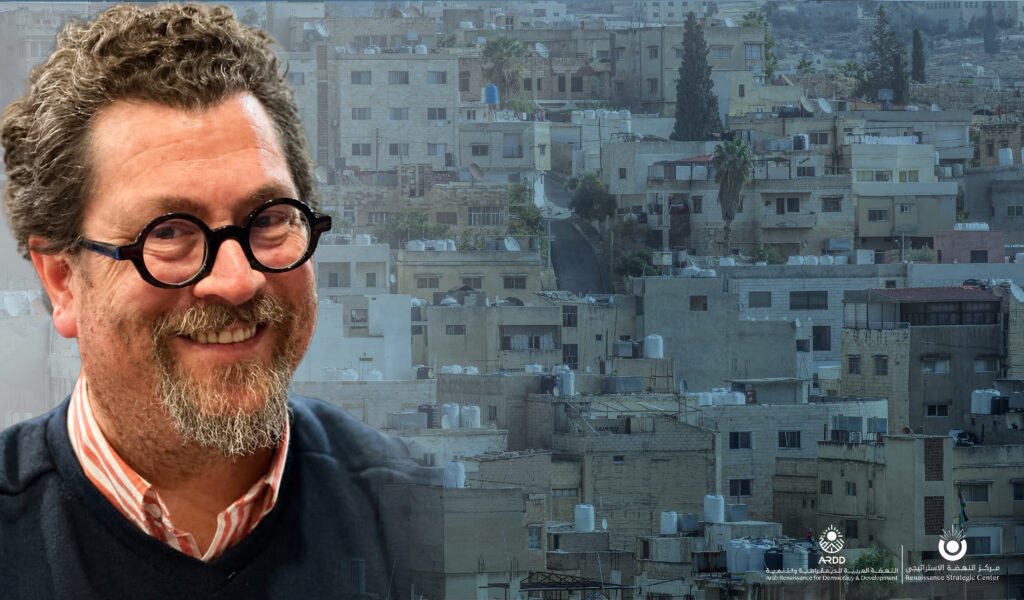
Klaas Jacob Willem Hogerbrugge, RSC intern
The 81st United Nations General Assembly (UNGA81) unfolded as a pivotal test of whether multilateralism can still deliver in an era of deep geopolitical fractures, unresolved conflicts, and accelerating global risks. It exposed the erosion of trust in international institutions, but also revealed efforts to rebuild a rules-based order grounded in international law. The greatest threat to multilateralism at UNGA81 was not open rejection of international law but its selective application, and nowhere is that clearer than in the MENA region.
UNGA81 opened on 8 September 2026 under the theme “Restoring trust, managing transformation: a United Nations that delivers for all.” The theme acknowledged that confidence in multilateral institutions has been weakened by war, humanitarian crises, climate disruption, technological change and artificial intelligence. The newly elected President of the General Assembly, Khalilur Rahman of Bangladesh, framed the session around the need to make the UN more capable of adapting, reforming and delivering for all.
The crisis facing multilateralism is also reflected within the UN itself. Budgetary pressure, unpaid member-state contributions, Security Council paralysis and growing doubts about the organisation’s relevance have deepened the gap between the UN’s responsibilities and its capacity to act. The 2026 budget process has taken place against a backdrop of fragile liquidity and significant debt, raising concerns about the organisation’s ability to implement its mandates effectively.
As Assembly President Rahman put it, the central question is no longer simply whether the UN exists, but whether it works. That question is particularly urgent as the organisation approaches a period of institutional transition, including the selection of a successor to Secretary-General António Guterres, whose term ends on 31 December 2026.
The Erosion of Multilateralism
UNGA81 demonstrated that the formal pillars of multilateralism, such as sovereign equality, territorial integrity, the prohibition of force, fundamental human rights and the institutions of international law remain intact in principle but increasingly strained in practice.
The talks at the General Assembly were dominated by the prolonged and interconnected crises: the violence in Gaza and the West Bank, the broader question of Palestinian, Russia’s war in Ukraine, regional tensions involving Iran and key maritime chokepoints such as the Strait of Hormuz, and the governance of artificial intelligence and digital technologies.
Every state invokes international law; far fewer accept it when it constrained them. Legal findings are frequently rejected, narrowed or applied selectively when they conflict with national interests. In relation to Palestine, long-standing Security Council resolutions and recent findings of the International Court of Justice have clarified the legal consequences of occupation, settlement activity and other policies, but meaningful enforcement remains limited. By contrast, the international response to Russia’s invasion of Ukraine, although incomplete, included rapid sanctions and other measures explicitly presented as responses to violations of the UN Charter.
This contrast is not merely political; it is structural. When enforcement is strong for some violations and weak or absent for others, international law risks becoming a function of geopolitical alignment rather than a universal framework. Selective enforcement can be more corrosive than open rejection because it undermines confidence in law as a neutral standard applicable to all.
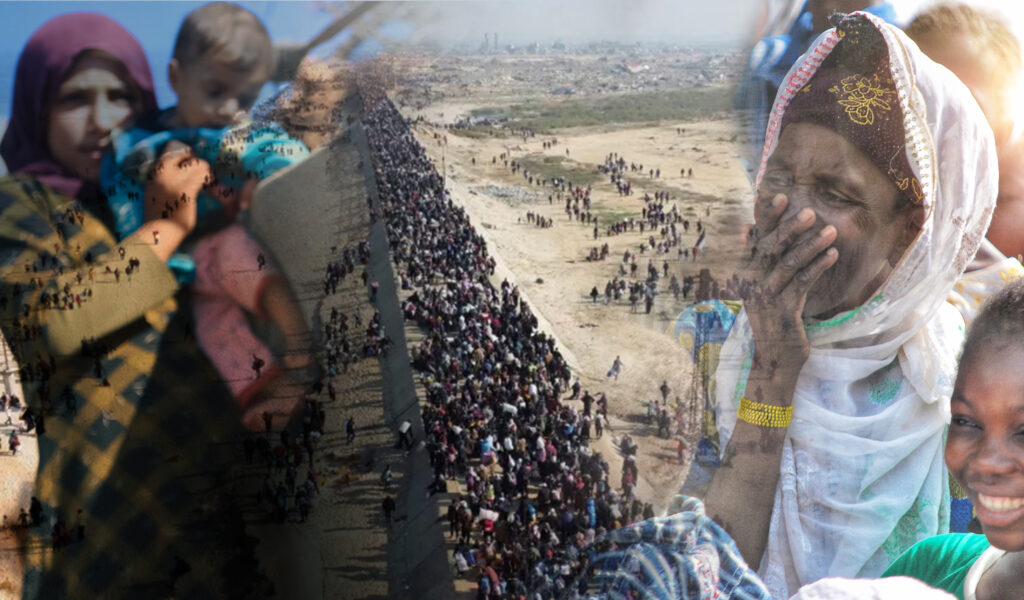
From a MENA perspective, this contradiction is particularly acute. The persistence of occupation, blockade, forced displacement and other violations across the region illustrates how norms may be affirmed in New York while remaining unenforced on the ground. When the rule of law is invoked but not consistently applied, multilateralism itself risks becoming a language of convenience rather than a framework of accountability.
Concurrently, other challenges further threaten the system. Attacks on international judicial institutions, including efforts to delegitimise the International Criminal Court or discourage cooperation with it, weaken accountability. Threats to withdraw from multilateral bodies and treaties, underfunding and unpaid contributions restrict the UN’s ability to implement its mandates, while fragmenting the global normative order.
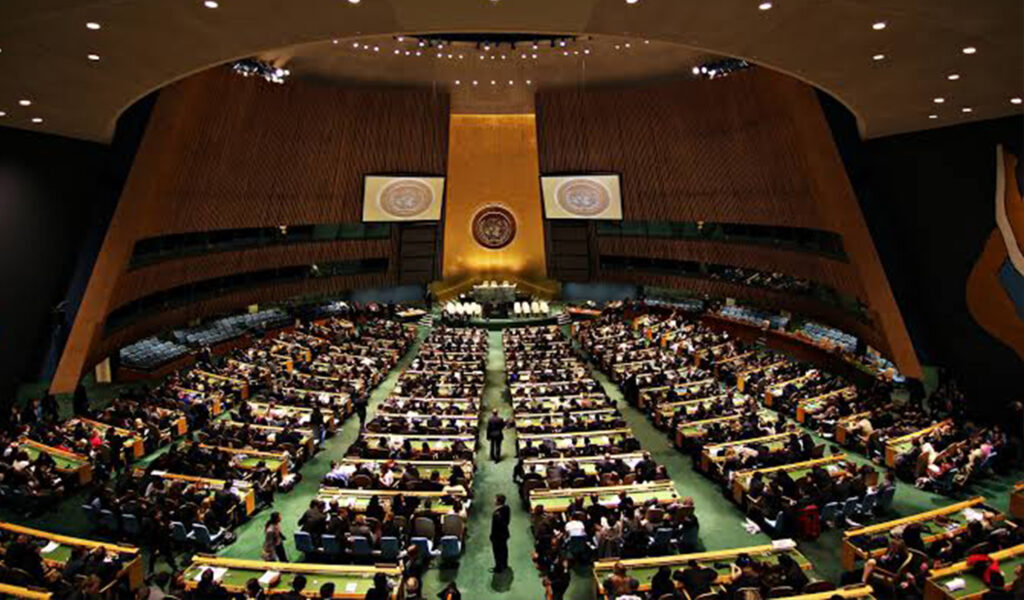
The historical parallel with the League of Nations remains instructive. It did not collapse in a single moment, but weakened through successive withdrawals, exceptions and tolerated violations. Japan’s departure after being condemned for aggression in Manchuria and the ineffective sanctions imposed on Italy over Ethiopia were important markers of that decline. The danger today is not that the UN will empty out, but that it will remain full while losing meaningful authority: a crowded hall with declining relevance.
Forces Sustaining and Renewing Multilateralism
Despite these fractures, UNGA81 also revealed important forces capable of sustaining and renewing multilateralism.
On 21 September 2026, on the margins of the UN General Assembly, the European Union, Australia, Barbados, Brazil, Canada, India and Kenya launched Partners for Multilateralism (P4M). The initiative brings together countries committed to peace, stability, inclusive and sustainable development, shared prosperity, human dignity and human rights. It also seeks to uphold the principles of the UN Charter, defend international law and support the reform and modernisation of multilateral institutions so that they become more representative, effective and trusted.
The global and cross-regional character of P4M is significant. It positions multilateralism not as a Western or regional project, but as a shared architecture for international law, peace and prosperity. Its value will ultimately depend on whether its commitments develop into coordinated action, but its formation demonstrates that broad support for multilateral cooperation still exists.
The UN’s near-universal membership and extensive institutional network also provide resilience. Unlike the League of Nations, the UN encompasses almost all sovereign states, while its agencies and programmes are deeply embedded in daily life through their work on health, food security, refugee protection, development and humanitarian assistance. This institutional density cannot resolve every crisis, but it remains an important foundation for collective action.
The theme of UNGA81 further recognises that legitimacy depends not only on historical achievements or legal form, but on tangible delivery. If multilateral institutions can reduce suffering, manage shared risks and provide fairer access to development and justice, public trust may still be rebuilt. The interconnected nature of contemporary challenges, including climate change, artificial intelligence, pandemics and financial instability, also makes cooperation indispensable, since no state can manage these risks alone.
The General Assembly also showed that diplomacy remains possible amid severe tensions, demonstrating the continuing value of multilateral spaces for communication and de-escalation.
Voices from the MENA region, including Jordan, provide further examples of rule-based diplomacy under difficult conditions. Jordan has maintained peace agreements and strategic partnerships while consistently describing violations of international humanitarian and human rights law in precise legal terms. Rather than relying on unilateral escalation, it has worked through recognised diplomatic and multilateral channels, engaging regional and global actors, including those with whom it has serious disagreements.
This approach demonstrates that choosing law over force is not weakness but a form of power. It shows that regional states can defend their security and interests by insisting on compliance with international norms rather than abandoning them.
Why UNGA81 Matters for the MENA Region
For the MENA region, UNGA81 is particularly important because it takes place at a moment when global risks are deeply interconnected and when the legitimacy of international institutions depends increasingly on practical results. Palestine, Syria, Yemen, Libya and other crises have been shaped by UN resolutions, mediation, peacekeeping and humanitarian action. Yet outcomes frequently fall short of expectations, reinforcing doubts about the UN’s capacity to enforce its own decisions, even when its fully aware of the worsening situation.
The central question is whether multilateralism will be used to confront long-standing violations or continue merely to manage them without resolution. Even so, abandoning the rule of law would be catastrophic. For societies across the MENA region, international law remains, despite its imperfect enforcement, one of the few available tools for documenting violations, demanding accountability, preserving space for diplomacy and asserting rights that might otherwise be silenced by power politics.
Compliance with international law is therefore not a technical choice; it is a political and moral compass for the future. It provides the foundation for more equitable cooperation within the region and between the MENA region and the wider world.
Values such as respect for international humanitarian and human rights law, peaceful resolution of disputes, defended by Jordan during UNGA81 are the same values ARDD seeks to make tangible in people’s lives.
Rise, Fall or Renewal?
The 81st United Nations General Assembly offers no simple verdict on the future of multilateralism. It reveals a clear erosion of trust, growing examples of selective enforcement and structural weaknesses ranging from Security Council deadlock to budgetary constraints. At the same time, initiatives such as Partners for Multilateralism, the UN80 reform process and renewed commitments to delivery and international cooperation could help anchor a more principled and effective system. International law weakens whenever states stop insisting on it. Multilateralism depends not only on institutions, but also on the individuals, governments and organisations that continue to demand compliance.
For the MENA region, the choice is stark. The international community can allow the existing order to erode under the weight of tolerated violations and unfulfilled promises, or it can use this moment to recommit to the universal application of law, meaningful enforcement and genuine institutional reform.
We believe in the second path. The League of Nations ignored its fate and learned the cost too late; the UN must not ignore the writing on the wall. The future of multilateralism will not be decided by the existence of the United Nations, but by whether states are willing to uphold its rules consistently, defend them collectively and make them meaningful for the people whose lives depend on them.