By Aya Jalal, trainee at the Renaissance Strategic Center
Every year on December 3rd, the world observes the International Day of Persons with Disabilities (IDPD). This day serves as a powerful call to action and a crucial reminder of the persistent barriers faced by 1.3 billion people globally. Across all societies, persons with disabilities disproportionately encounter poverty, employment discrimination, and social protection systems that deny their dignity and autonomy.
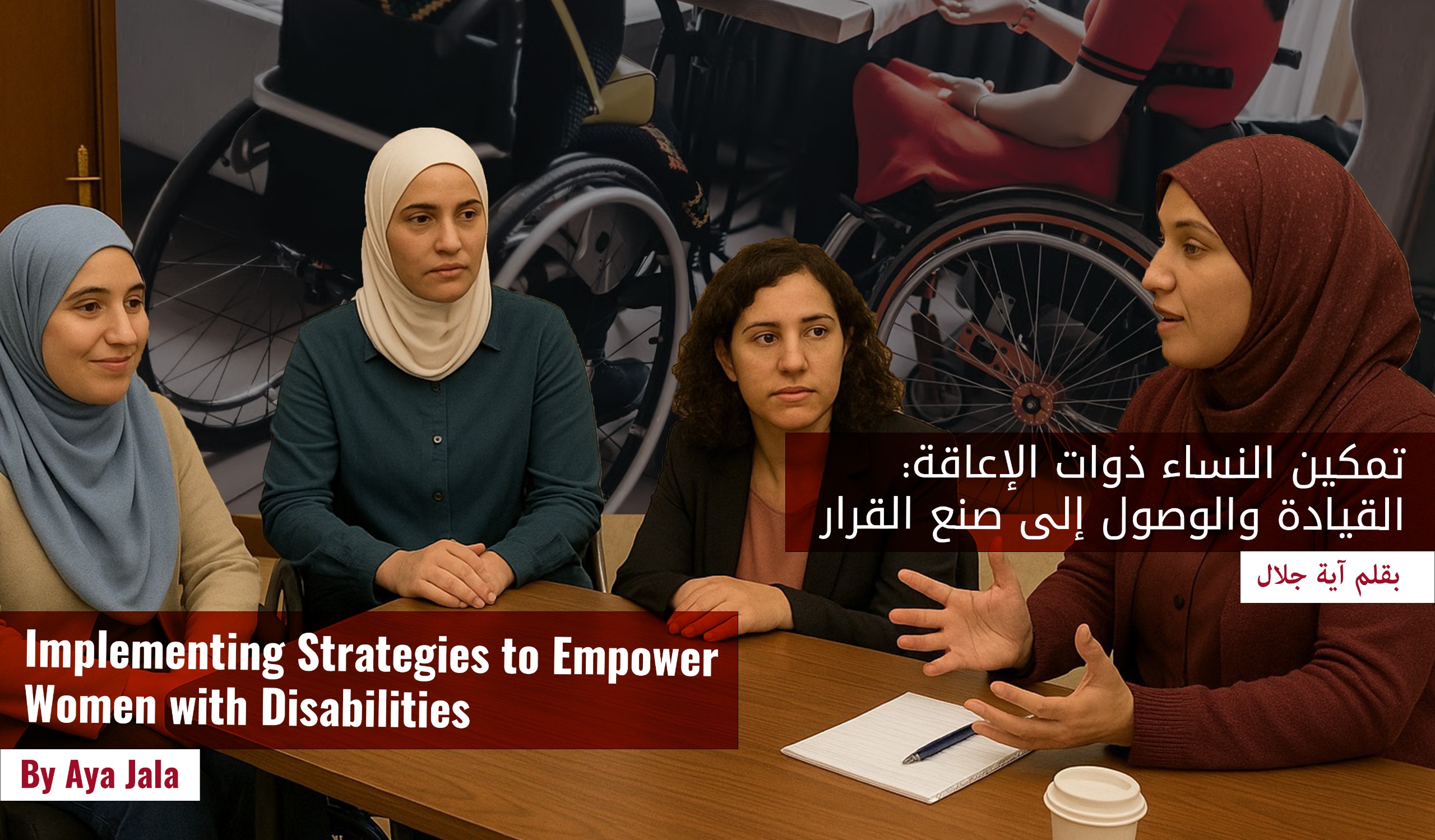
ARDD is implementing a nationwide initiative across all districts of Jordan aimed at strengthening community empowerment, with a particular focus on enhancing the participation of women with disabilities in decision-making processes. Since its launch in 2014, the Empowering Each Other (EEO) Project has been established through a long-term partnership between UN Women and The Arab Renaissance for Democracy and Development (ARDD) which significantly enhanced civic engagement among women throughout Jordan. The project plays a crucial role in promoting equity, amplifying marginalized voices, and fostering a more inclusive approach to community development. As part of this project, ARDD held a dedicated session on 27 November 2025 that addressed the unique challenges faced by women with disabilities and explored strategies to ensure their meaningful inclusion in civic, social, and institutional decision-making spaces. Nonetheless, this session was especially significant because it provided a platform for participants to voice up their experiences, identify barriers, and propose practical solutions for greater accessibility, representation, and leadership. It also represented an opportunity to identify the multifaceted barriers that continue to restrict the participation of women with disabilities in leadership roles and decision-making processes. Participants emphasized that these obstacles are deeply embedded within social norms, institutional practices, and structural inequalities, all of which collectively diminish women’s opportunities to assume influential positions within their communities and the public sphere.
In fact, a central theme of the session concerned the social and cultural dynamics that impede leadership development among women with disabilities. Traditional gender norms continue to confine women to domestic roles, limiting their visibility and engagement in public life an essential foundation for leadership. Moreover, paternalistic or pity-based attitudes toward persons with disabilities undermine their perceived agency, weakening confidence in their ability to lead or influence policy. According to that, Malak Al-Jada’an, a blind women activist, emphasized the importance of changing the stereotypical image perpetuated by the media through negative stories, sad music and sober portrayals, stated that “women with disabilities lead normal, active lives and engage in everyday activities just like anyone else: “I live like other women, cooking and helping my mum with the house chores, going everywhere by myself and I can deal with everything faces me normally.”
In addition to social constraints, the session highlighted several disability-specific barriers that directly affect leadership readiness and participation. While legislative frameworks exist to support the rights of persons with disabilities, their limited implementation creates a significant gap between policy and practice, restricting women’s access to leadership opportunities. The scarcity of accessibility tools such as assistive technologies for individuals with visual or hearing impairments hinders their full participation in capacity-building programs, public meetings, and civic processes. The session underscored significant legislative and policy gaps that limit the formal participation of women with disabilities in decision-making. “The absence of disability-inclusive language in the National Strategy 2020–2025 is a major policy gap” said one of the participants. Finally, economic constraints remain a major obstacle to leadership development. The high costs associated with disabilities, particularly transportation expenses limit women’s ability to attend leadership training programs, consultations, and community meetings. Without targeted financial support from governmental and development institutions, many women with disabilities remain unable to participate consistently in activities that cultivate leadership capabilities and decision-making confidence.
Structural barriers must be addressed through accessible infrastructure, adaptive tools, and policies that ensure meaningful representation in decision-making bodies. Social and cultural norms limiting women’s public engagement need to be challenged, alongside efforts to raise awareness among communities, families, and men about women’s leadership potential and to promote positive media representation. Capacity-building initiatives, including training in civic engagement, public speaking, advocacy, and leadership, coupled with mentorship and peer-support networks, are essential to strengthen confidence and self-advocacy skills. Economic support, such as transportation stipends and access to employment opportunities, can reduce participation barriers, while institutional reforms should ensure explicit inclusion of women with disabilities in national strategies, laws, and policy-making processes. Finally, fostering networks, partnerships with civil society and governmental institutions, and documenting success stories can empower women with disabilities, inspire others, and inform the design of inclusive programs and policies, demonstrating that sustainable leadership requires a combination of systemic, social, and individual support.
Conclusively, empowering women with disabilities is not only a matter of social justice but also a critical step toward inclusive and equitable governance. As highlighted during the session, women with disabilities face layered barriers social, cultural, economic, and institutional that limit their ability to participate fully in leadership and decision-making processes. Addressing these challenges requires targeted interventions, accessible infrastructure, legislative reforms, financial support, and sustained awareness-raising to dismantle stereotypes and create opportunities for meaningful participation.
Overall, the Empowering Each Other project embodies these principles by fostering skills, building confidence, and promoting civic engagement among women with disabilities across Jordan. By creating spaces for leadership development, advocacy, and collective action, the project directly contributes to enhancing women’s representation in community and institutional decision-making. Ultimately, the success of such initiatives reflects a broader societal benefit: a more inclusive, participatory, and equitable community where the voices and contributions of all individuals regardless of gender or ability, are valued and recognized.