Statement by MARFA
The region is running out of space and capacity to handle another displacement crisis.
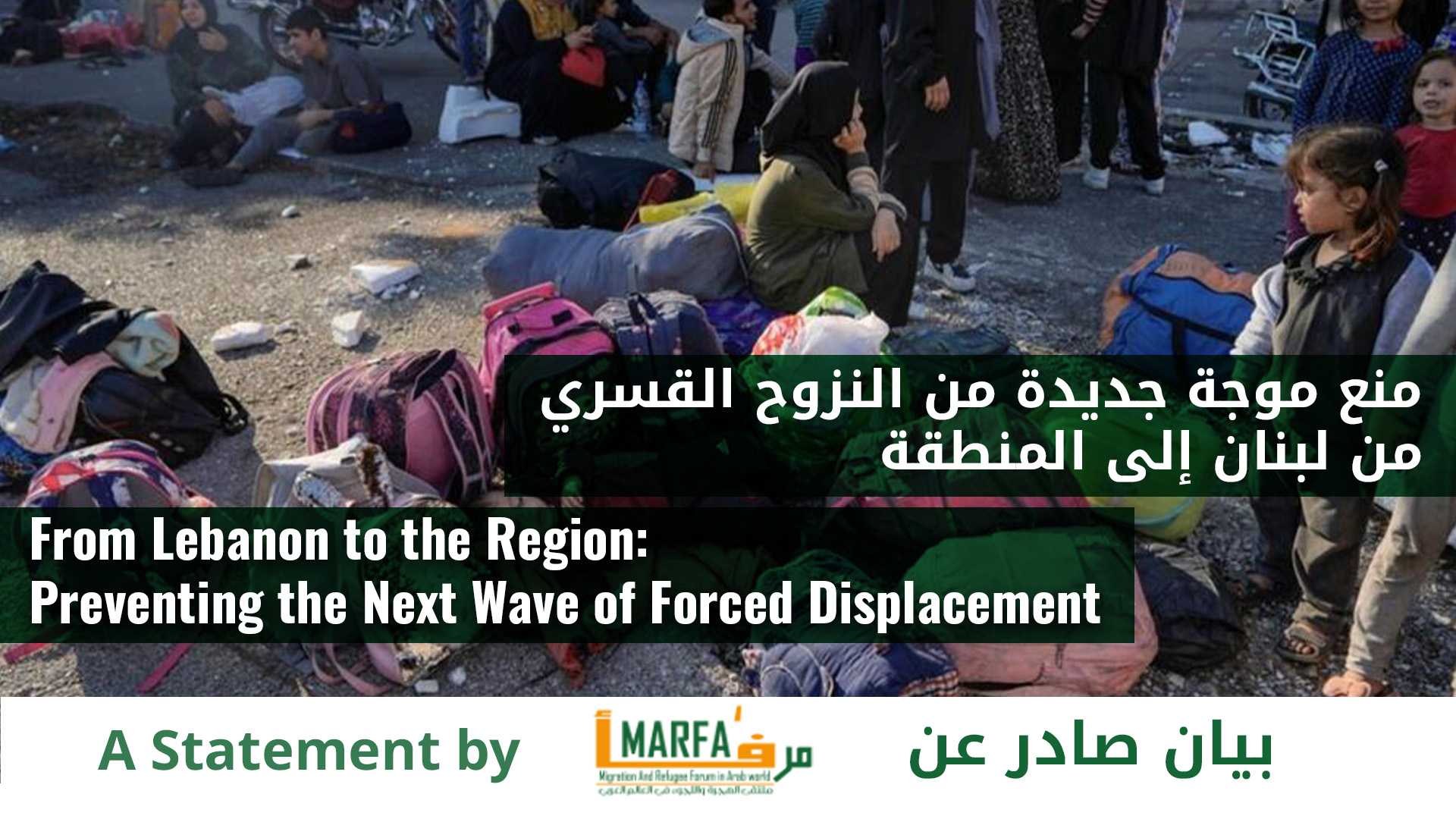
As violence escalates across Lebanon, the country is rapidly entering what could become one of the most significant displacement emergencies in the region in recent years. In just a matter of weeks, humanitarian and government sources estimate that between 700,000 and 740,000 people have already been forced to flee their homes, a staggering figure that continues to rise.
Families are escaping bombardment and insecurity with little warning, seeking refuge in overcrowded shelters, schools, unfinished buildings, and temporary accommodations. Many lack access to basic services, protection, and livelihoods, while local infrastructure, already severely weakened, is struggling to absorb the shock.
This crisis is unfolding at a moment when humanitarian resources are shrinking, and host communities across the region are already under severe strain. Countries that have carried the burden of successive refugee crises for more than a decade are now confronting new pressures while international funding for humanitarian response continues to decline. Simply put, the systems designed to respond to displacement are themselves under increasing stress.
Lebanon itself has long been at the center of regional displacement dynamics. The country currently hosts around 1.7 million refugees, primarily from Syria and Palestine, making it one of the countries with the highest refugee-to-population ratios in the world. Years of economic collapse, political paralysis, and institutional fragility have already placed immense pressure on public services and host communities.
The unfolding displacement in Lebanon must also be understood within a wider regional crisis. Across South-West Asia and North Africa, forced displacement has reached historic levels. In Sudan alone, the war that began in April 2023 has displaced more than 11.6 million people, while tens of millions across the region remain displaced or stateless as a result of protracted wars, occupations, and unresolved political conflicts.
For many societies in the region, displacement is no longer an exceptional humanitarian event but a recurring structural condition. Each new conflict compounds existing vulnerabilities and places additional strain on countries that have already absorbed successive refugee crises with limited international support.
The escalation in Lebanon, therefore, carries serious regional implications. Neighboring countries such as Jordan and Egypt, already facing significant economic and social pressures, could face renewed displacement flows at a time when global humanitarian funding is declining, and international commitment to refugee protection is weakening.
MARFA stresses that displacement cannot be addressed solely through emergency relief. Forced displacement is not simply a humanitarian accident—it is the political outcome of unresolved conflicts, violations of international law, and the failure to protect civilian populations.
Preventing a wider regional crisis requires:
- Immediate protection of civilians and strict adherence to international humanitarian law.
- Sustained support for host communities and national institutions managing displacement.
- A renewed international commitment to political solutions that address the root causes of conflict.
Without decisive action, the region risks entering another prolonged cycle of mass displacement, one that will deepen instability, fragment societies, and further erode the prospects for a just and sustainable peace.