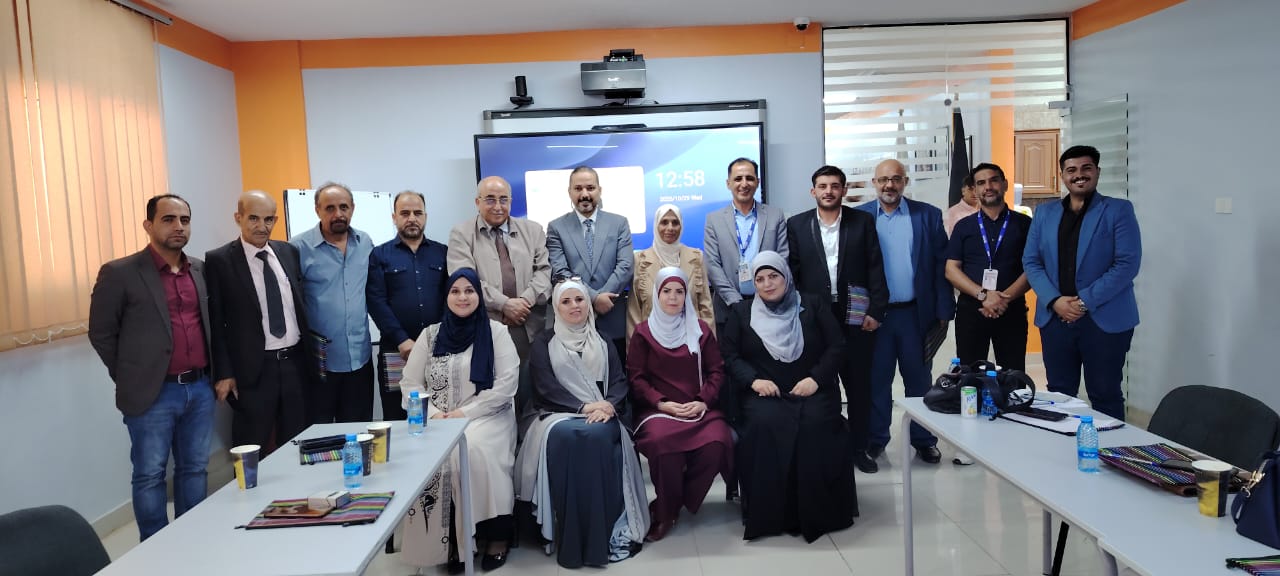
As communities across Jordan marked the 16 Days of Activism, a pioneering initiative highlighted the powerful role men can play in supporting women’s leadership and participation. Through 12 interactive sessions held in cities and rural areas across all governorates, participants—including local leaders, community members, and civil society representatives—explored practical ways to enhance women’s participation in decision-making. Approximately 236 people took part in these sessions, including around 143 men, reflecting strong and meaningful engagement by male allies in advancing gender equality.
Within the framework of the 16 Days of Activism to End Violence against Women and Girls, the “Empowering Each Other” initiative, implemented by the Arab Renaissance for Democracy and Development (ARDD) with the support of UN Women, emerged as a practical model demonstrating the influential role men can play in supporting women and strengthening their participation in public life.
A dedicated session for women with disabilities marked a significant milestone within the initiative’s activities. Participants demonstrated a high level of awareness around empowerment issues and expressed the need for more programs that enhance their independence and provide safe spaces for training and networking. Attendees called for accessible infrastructure, assistive tools, and financial support, as well as positive media representation that moves beyond traditional stereotypes which often fail to reflect the true potential of persons with disabilities. They also emphasized the importance of developing legislation, enforcing laws that protect their rights, and ensuring their inclusion in decision-making processes.
These sessions were implemented in cooperation with a wide range of local partner organizations, as well as the JONAF Coalition and the Tawasol Network, including: Al-Shahabiya Charitable Society (Karak), Queen Zein Al-Sharaf Charitable Society (Tafilah), Farah Ladies Charitable Society (Aqaba), Ana Insan Association for the Rights of Persons with Disabilities (Amman), Women’s Visions Association (Irbid), Al-Amal Charitable Society for Social Development (Baqa’a Camp), Women’s Committees Gathering / Ma’an Branch, Ajloun Ladies Charitable Society (Ajloun), Jerash Ladies Charitable Society (Jerash), Athar Youth Development Association (Zarqa), Qudurat Community Development Association (Mafraq), and Mosaawa Foundation for Training and Human Rights (Madaba).
During the sessions, participants discussed urgent priorities for strengthening women’s status in society, including expanding government support for women-led projects, increasing awareness-raising programs, boosting women’s representation in local councils, and improving media coverage of women’s issues. Discussions also addressed the cultural, economic, and behavioral barriers women face, such as restrictive social norms, economic constraints, limited access to flexible employment opportunities, and weak solidarity among women. Participants emphasized that participatory decision-making builds trust, strengthens shared responsibility, and leads to more inclusive solutions that benefit the entire community.
The initiative also highlighted the importance of economic empowerment through access to training, employment, and education opportunities, alongside strengthening women’s legal and political awareness. The sessions helped connect women to local support networks, enabling them to share experiences, advocate for their rights, and lead community initiatives. Women with disabilities, in particular, stressed the need to improve infrastructure, provide accessible transportation, and ensure access to resources and tools that enable their active participation in public life.
Participants’ testimonials reflected the initiative’s positive impact. One participant expressed appreciation for seeing men publicly support women’s voices, viewing it as a sign of genuine social change. Another participant noted that supporting women in leadership positions strengthens family resilience and reinforces the wellbeing of society as a whole.
Engineer Zainab Al-Khalil, Program Manager at ARDD, affirmed that this model of participatory action demonstrates that sustainable change is possible when women are in leadership roles and men act as supportive partners. She emphasized that building the future can only be achieved through collective cooperation.
In conclusion, the “Empowering Each Other” initiative reflects an integrated approach that links women’s empowerment with civic engagement while actively involving men, boys, and civil actors. It creates inclusive environments where all stakeholders contribute to supporting women and fostering a culture of respect and cooperation, strengthening social cohesion and contributing to a more just and inclusive society. The initiative will continue its activities through the end of 2025, building on more than a decade of experience in supporting women and refugees in Jordan and empowering them to participate meaningfully in public life and decision-making.