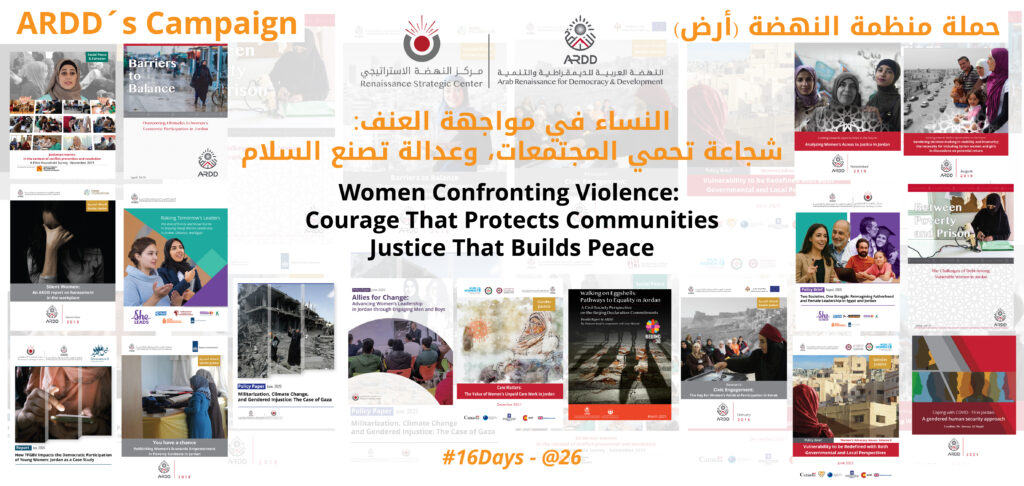
Conflict, violent extremism, and domestic violence continue to threaten the safety and rights of women and girls, while undermining the stability of communities. Amid these challenges, women play a vital role in protecting their families and communities, standing against violence, defending rights, and promoting peace.
From Al-Hamoud village in Jordan to Palestine, Sudan, and Yemen, women’s experiences show that ending violence requires protecting rights, ensuring access to justice, and strengthening solidarity within communities.
In Jordan, the women of Al-Hamoud village in Karak Governorate demonstrated remarkable courage and solidarity following the tragic terrorist attack, standing united against hatred and division. Their response highlights the important role of women and men in confronting violent extremism, whose impact extends far beyond its immediate victims, spreading fear, weakening social ties, and threatening the security and cohesion of entire communities.
Yet confronting violence in Arab communities must also mean addressing the violence women and girls face within their own homes. Domestic violence, whether physical, psychological, or economic, threatens women’s safety, dignity, and independence, while taking a lasting toll on children and family stability. Its consequences are even more severe when social pressures, financial dependence, or fear of speaking out prevent survivors from seeking help and obtaining justice.
Access to justice is more than a legal right; it is essential to protecting women from violence and preventing further abuse. This means making it easier for women to report violence, seek legal assistance, and access protection and psychosocial support. It also means ensuring that survivors are treated with dignity and confidentiality, and that perpetrators are held accountable under the law.
Across the region, women and girls in Palestine, Sudan, and Yemen continue to bear the devastating consequences of war, displacement, and human rights violations. Many have lost their homes, livelihoods, and sense of security, while access to essential services, protection, and justice has become increasingly difficult. Despite these hardships, women continue to care for their families, lead humanitarian initiatives, advocate for their rights, and contribute to recovery and peacebuilding.
As violence takes new and increasingly widespread forms, including online abuse, harassment, and violence in workplaces and public spaces, the Al-Nahda Women Network stresses that recognizing women’s rights is not enough. These rights must be protected in practice through effective law enforcement, greater accountability, and the removal of barriers that prevent women and girls from accessing justice.
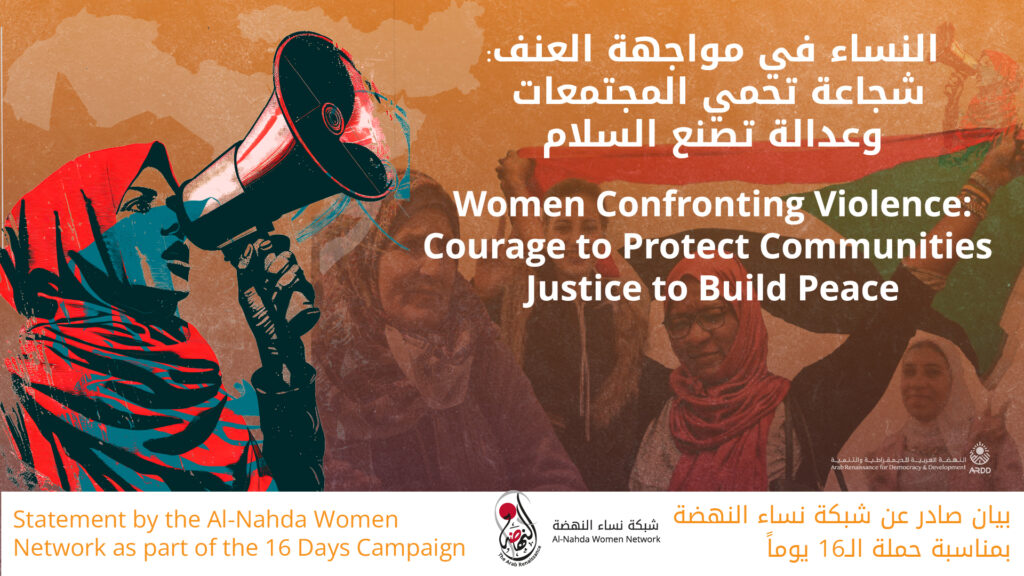
As part of the 2026 16 Days of Activism Against Violence Against Women and Girls, the Al-Nahda Women Network calls on governments, national institutions, civil society organizations, and international partners to:
- Strengthen protection and access to justice: Ensure that laws protecting women and girls from violence are effectively enforced, make it easier for survivors to report abuse and access legal aid and protection services, and hold perpetrators accountable, including in cases of domestic violence, harassment, and online abuse.
- Prevent violent extremism and strengthen community peace: Support women, men, and young people in confronting extremism and hate speech. Advance the Women, Peace and Security Agenda, particularly UN Security Council Resolution 1325 and Jordan’s National Action Plan, while supporting local initiatives that promote solidarity and social cohesion.
- Address the economic and social factors that contribute to violence: Strengthen women’s economic independence, expand access to employment and social protection, and challenge attitudes and practices that normalize violence or discourage survivors from seeking help and justice.
- Expand women’s participation and support local initiatives: Ensure that women, including women with disabilities, have a meaningful voice in decisions affecting their safety, protection, and communities. Provide sustained support to local organizations and initiatives offering protection and legal assistance, especially in underserved areas.
- Protect women in conflict-affected areas and ensure accountability: Uphold international law and protect the rights of women and girls in Palestine, Sudan, Yemen, and other conflict-affected areas. Ensure their access to humanitarian assistance, essential services, and justice, and support their active participation in recovery, reconstruction, and peacebuilding.
The Al-Nahda Women Network reaffirms that confronting violence and extremism is a shared responsibility. It requires laws that protect rights, institutions that deliver justice, and women and men working together to build safer, more inclusive communities. Peace is not achieved simply by rejecting violence, but by protecting those affected, ensuring justice for survivors, and holding perpetrators accountable.