ARDD and Terre des Hommes Italy Discuss Strengthening Child Protection in Jordan Amid Growing Challenges
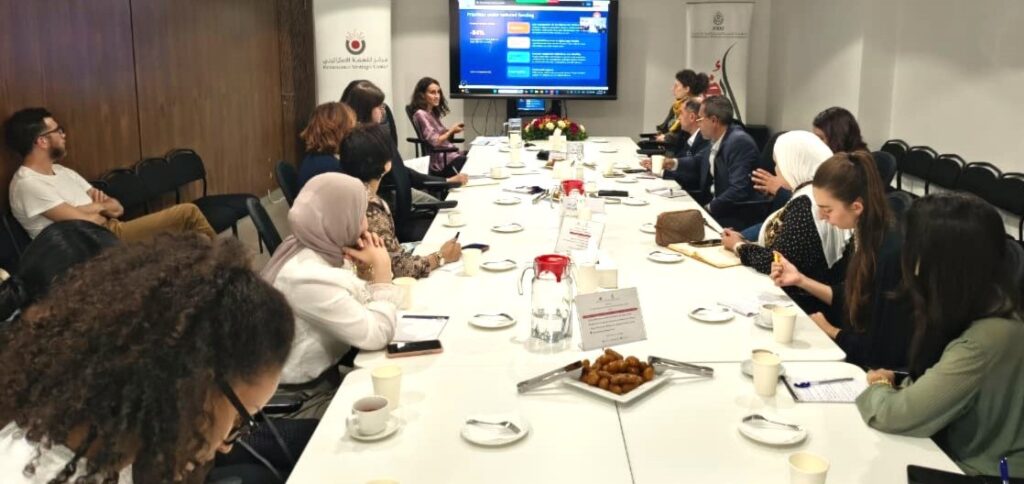
Economic hardship, gaps in legal protection, and declining humanitarian funding are placing vulnerable children and families in Jordan under growing pressure, raising concerns over child labour, school dropout, exploitation, and reduced access to essential services. These challenges were at the centre of a policy dialogue convened by the Arab Renaissance for Democracy and Development (ARDD), through its think tank, the Renaissance Strategic Center (RSC), in collaboration with Terre des Hommes Italy. The discussion examined the findings and recommendations of their joint research report, “Intersecting Risks and Rights: Child Protection and Legal Protection Needs in Jordan.” Bringing together representatives of UN agencies, national and international NGOs, and child protection practitioners, both in person and online, the dialogue explored how existing protection efforts can be sustained and strengthened as resources become increasingly constrained. The research, conducted across Amman, Ma’an, Mafraq, and Zarqa, examines the interconnected protection and legal challenges affecting vulnerable refugee and host communities. Its findings highlight how economic insecurity, limited legal awareness, difficulties obtaining civil documentation, and psychosocial distress can compound children’s exposure to violence, exploitation, and exclusion from education and essential services. A central message from the discussion was the need to protect the gains already achieved through years of child protection interventions. Participants cautioned that shrinking humanitarian resources could undermine established services and referral systems at a time when families are increasingly exposed to protection risks. Rather than developing parallel responses, participants emphasized the importance of building on existing experience, strengthening coordination, and directing limited resources towards the most pressing needs. The discussion identified four priorities for collective action: Sustaining protection services: Strengthening coordination and joint resource mobilization to maintain essential assistance and prevent gaps in coverage. Improving access to support: Updating service information and reinforcing referral pathways so that children and families can reach appropriate legal, psychosocial, and protection services. Reaching communities more effectively: Developing accessible, innovative, and continuous awareness efforts that respond to communities’ needs and preferred communication channels. Preserving evidence and institutional learning: Documenting successful interventions, challenges, and lessons learned to improve future programming, policy engagement, and advocacy. The session opened with remarks by Maria Giovanna of ARDD’s Renaissance Strategic Center, followed by a presentation of the research findings by Martina Mannocchi, Country Representative for Jordan and Programme Coordinator for Palestine at Terre des Hommes Italy. The exchange underscored the value of connecting field experience with research and policy dialogue, particularly when funding pressures require difficult decisions about priorities and service provision. Moving forward, the priority is to turn these findings into stronger coordination, more effective referrals, and sustained investment in child protection and legal assistance. ARDD and Terre des Hommes Italy will continue promoting evidence-informed dialogue and cooperation with relevant stakeholders to help safeguard children’s rights and preserve the progress achieved in Jordan. Read the full report: Intersecting Risks and Rights: Child Protection and Legal Protection Needs in Jordan
SSC, ILO and ARDD Conclude “Social Security Bridges” Activities under the PROSPECTS Programme
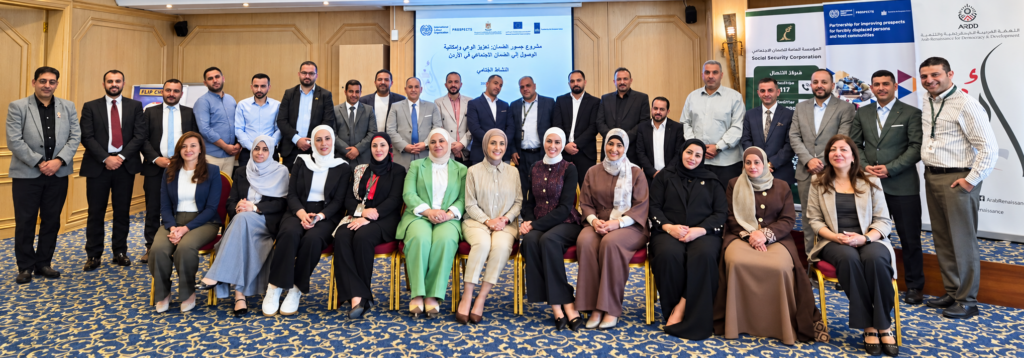
The Social Security Corporation (SSC), in partnership with the International Labour Organization (ILO) and the Arab Renaissance for Democracy and Development (ARDD), concluded the activities of “Social Security Bridges: Enhancing Awareness and Access to Social Security in Jordan,” implemented under the PROSPECTS Programme, funded by the Kingdom of the Netherlands. The initiative aimed to raise awareness of the importance of social security coverage and the insurance benefits available to workers, particularly groups with limited access to social security services and benefits. The project’s closing workshop brought together SSC staff and ARDD lawyers, who shared their experiences in conducting awareness sessions and responding to legal and social security-related inquiries. Their direct engagement with communities highlighted the need for more flexible awareness tools that respond to the diverse needs of target groups. Dalia Ruki, PROSPECTS Programme Manager in Jordan at the ILO, highlighted the growing importance of social security in efforts to ensure decent working conditions for all workers. She stressed that social security is a fundamental pillar of comprehensive social protection, not only by providing insurance coverage, but also by ensuring that individuals—including refugees and workers in the informal economy—have access to the information and services they need to understand and exercise their rights. She added that this phase represented an important milestone in raising awareness of social security and expanding access to its services. She expressed hope that the closing session would provide an opportunity to exchange experiences, draw lessons learned, and identify ways to sustain and build on these activities, particularly given their importance in strengthening social protection and reaching those most in need. Souzan Muhareb, Deputy CED of ARDD, explained that these efforts sought to bring the social security system closer to communities, particularly groups with limited access to its services, by combining capacity building for those delivering social security awareness, legal support, community outreach, and field-based engagement. She noted that more than 900 people of different nationalities benefited from awareness sessions on social security rights and services during the implementation period, including women, youth, refugees, migrants, and workers in particularly vulnerable sectors. Beyond the awareness sessions and field activities, the project developed practical resources to help sustain and strengthen awareness-raising efforts. These included an employee toolkit on best practices for communication and social security awareness raising, designed to support staff in communicating social security information clearly and effectively to diverse groups. The project also produced five public awareness videos featuring important legal and social security information in an accessible format, helping extend knowledge of social security rights and services to a wider audience. Rami Qweider, Legal Department Advisor at ARDD, presented an analysis of the needs assessment findings, emphasizing the importance of concerted efforts to strengthen awareness by moving from training to practical field implementation while responding to identified needs and opportunities to further develop awareness-raising efforts. He explained that field activities were delivered through four Workers’ Support Units, located across Ramtha, Mafraq, Russeifa, and South Amman in partnership with local civil society organizations. This approach helped bring information, consultations, and services closer to target groups in their communities. The event concluded with a discussion on how to build on the experience of “Social Security Bridges” and strengthen integration between capacity building, field engagement, legal support, and local partnerships, with the aim of expanding access to social security and advancing more inclusive and responsive social protection for workers. These activities were implemented under the PROSPECTS Programme, implemented by the ILO with funding from the Kingdom of the Netherlands, as part of broader efforts to promote decent work and social protection and expand access to rights and social security services for vulnerable groups.
ARDD’s Strategic Approach to Sustainable Livelihoods and Economic Well-Being
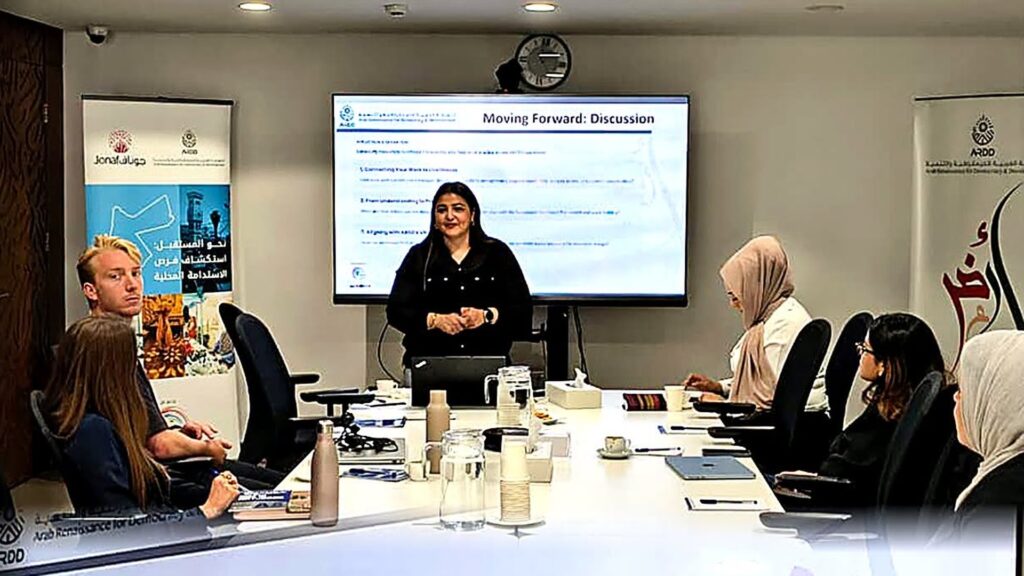
On 28 September 2026, the Arab Renaissance for Democracy and Development (ARDD) convened an internal workshop on “ARDD’s Strategic Approach to Sustainable Livelihoods and Economic Well-being: Understanding Livelihoods in Humanitarian & Development Work.” The workshop brought together ARDD’s programmatic, legal, operational, and research teams, including the Renaissance Strategic Center (RSC), to strengthen an integrated approach linking livelihoods programming, evidence, and policy engagement. Held under the Future Forward: Unlocking Sustainable Local Opportunities project, supported by the Regional Development and Protection Programme (RDPP), the workshop examined livelihoods within Jordan’s evolving socio-economic context, including constrained development financing, persistent unemployment, informality, and unequal access to economic opportunities. Discussions highlighted that sustainable livelihoods require more than short-term income generation. They depend on the wider conditions that shape access to decent work, legal protection, markets, social protection, and economic resilience. Drawing on the Sustainable Livelihoods Framework, participants examined the barriers affecting women, youth, refugees, and economically vulnerable communities, while considering how legal empowerment, market-responsive programming, research and policy analysis, and localization can work together to address them. As Future Forward Project Manager, Lena Halaseh noted: “Sustainable livelihoods are not only about creating opportunities, but about improving the conditions that allow people to access markets, exercise their rights, and participate in the economy on fairer and more sustainable terms.” The workshop will inform ARDD’s ongoing Sustainable Livelihoods and Economic Well-Being portfolio, reinforcing the connection between field realities, program design, and policy dialogue on decent work, economic inclusion, and locally led development in Jordan.
From Awareness to Prevention: Five Sessions Strengthen Protection Against Drugs and Cybercrime
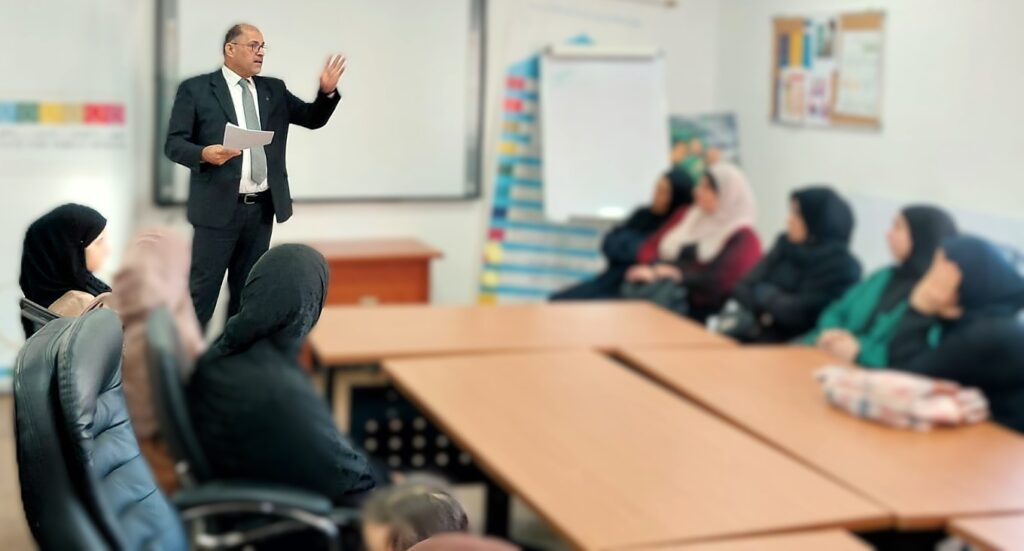
As part of its ongoing efforts to strengthen access to justice and promote legal and community-based prevention, the Arab Renaissance for Democracy and Development (ARDD) participated in five awareness-raising sessions held between July and September 2026 across Zaatari and Azraq refugee camps, Mafraq, Irbid, and Amman. Reaching more than 125 refugees and Jordanians, the sessions focused on raising awareness of the risks associated with drugs and cybercrime and providing practical guidance on prevention, protection, and response. Organized in coordination with UNHCR, the sessions brought together specialists from the Anti-Narcotics Department and the Cybercrime Unit of Jordan’s Public Security Directorate, alongside ARDD lawyers. This combination of specialized expertise, legal guidance, and direct community engagement enabled participants to better understand both the risks they may face and the resources available to address them. Through awareness presentations and open discussions, participants explored the legal and social risks associated with drugs and cybercrime, as well as ways to prevent incidents, report them, and reach the appropriate authorities. ARDD lawyers also provided guidance on relevant rights and legal procedures, responded to participants’ questions, and introduced ARDD’s free legal assistance and protection services, ensuring that those in need can continue to access legal advice and follow-up support. In this way, the sessions went beyond one-time awareness raising by connecting knowledge with practical pathways to protection and services. They strengthened the ability of individuals and families to identify and respond to risks while helping to establish prevention as an integral part of sustainable community protection. These efforts build on the longstanding partnership between ARDD and UNHCR , which dates back to 2010. Through this partnership, ARDD works to strengthen legal protection and access to justice for refugees and host communities, both inside and outside refugee camps, while connecting awareness activities with accessible legal services across Jordan. In the area of drug prevention, these efforts also complement ARDD’s role in the National Alliance for Combating Narcotics in Jordan, established in 2021 within the framework of the National Networks Forum for Supporting the Justice Sector. The Alliance brings together civil society organizations, government institutions, experts, and specialists to strengthen cooperation and support prevention, awareness, and community-based responses to drug-related challenges. Together, these efforts demonstrate the value of sustained cooperation among government institutions, international organizations, civil society, and local communities. By linking awareness with rights, early prevention, legal protection, and access to justice, such partnerships can help communities move beyond responding to risks toward becoming better equipped to prevent and address them.
In the Age of AI: What Should Tawjihi Measure for the Student of the Future?
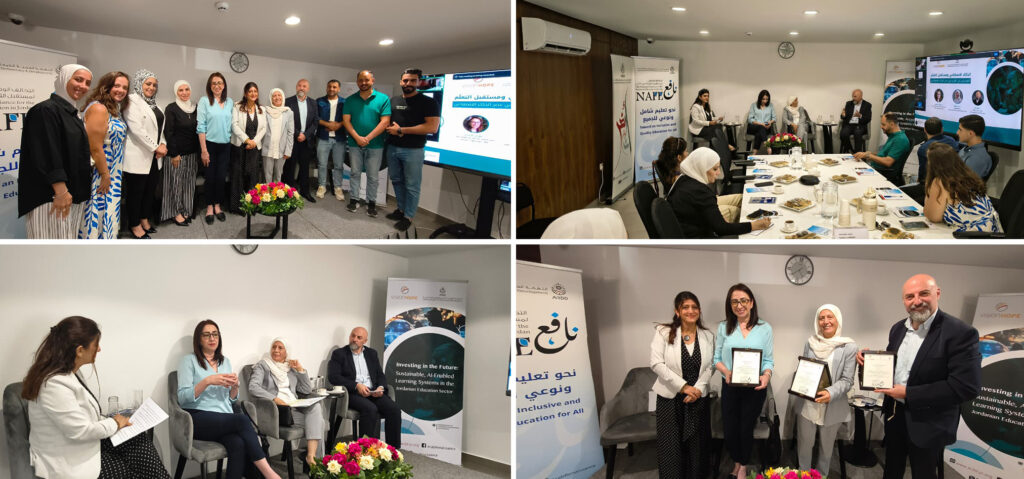
As artificial intelligence tools become an increasingly integral part of students’ everyday lives, the question facing Jordan’s education system is no longer simply whether these tools should be used. Rather, it is about what students need to learn, what knowledge and skills assessment methods should reflect to prepare them for the future, and how the roles of students and teachers can be preserved within a learning process whose tools are rapidly evolving. Against this backdrop, the Arab Renaissance for Democracy and Development (ARDD) convened a dialogue session on Tuesday, 1 September 2026, titled “Artificial Intelligence and the Future of Learning: Tawjihi in Jordan in the Age of AI.” The session was held as part of the AI and Innovation in Education Forum series, in coordination with the National Alliance for the Future of Education in Jordan (NAFE) and its AI Committee. The discussion focused on three interconnected themes: Tawjihi and assessment, students and artificial intelligence, and the role of teachers and the education system. The session was moderated by Eng. Zainab Al-Khalil, ARDD’s Education and Women’s Access to Justice Programs Manager, who posed a central question to participants: If artificial intelligence becomes readily available to every Tawjihi student, how can it support learning without replacing the learning process itself? And what does this mean for the objectives of Tawjihi, its assessment methods, and what the examination actually measures? From a practical perspective, Dr. Moataz Azer, Executive Director of the Digital Skills Association, stressed that the challenge goes beyond introducing technology into education. It is also about developing students’ approach to learning and their ability to understand, analyze, and learn from mistakes. AI can provide explanations, practice opportunities, and feedback, but its value ultimately depends on students’ ability to think critically, analyze information, and avoid automatically accepting its outputs. As he emphasized, “Getting a ready-made answer does not necessarily mean that learning has taken place.” Sahar Matarneh, an education sector expert, emphasized that making meaningful use of AI begins with investing in the foundations of learning, from literacy and numeracy to comprehension, analysis, exploration, and self-directed learning. She stressed that “having access to AI tools does not replace these fundamentals.” She also highlighted the importance of aligning the use of these tools with the realities of the education system and students’ needs, while taking into account the readiness of the learning environment and infrastructure and ensuring fair and equitable access for students across Jordan’s governorates. From the perspective of education and future skills, Suzan Qaddoumi, CEO of Al-Khwarizmi University Technical College, stressed that technological transformation does not diminish the importance of teachers. Rather, it reinforces their role in building students’ foundations, guiding their development, strengthening their skills and character, and preparing them for life and the labour market. She emphasized that “teachers cannot be replaced by artificial intelligence.” She also highlighted the importance of preparing students for the labour market, teaching them to use AI tools responsibly and respect intellectual property rights, and developing tools suited to the cultural and educational context and students’ needs, while enabling teachers to deliver knowledge in more interactive and effective ways. The discussion also highlighted the need to train teachers in the pedagogical use of artificial intelligence and to recognize differences among students in terms of skills, backgrounds, access to technology, and their ability to benefit from it. From Using AI to Rethinking Learning and Assessment The dialogue brought the discussion back to the fundamental purpose of the Tawjihi examination itself: If access to information and answers becomes increasingly easy, what should the examination measure in the future? Participants highlighted the need to develop assessment approaches that place greater emphasis on understanding, analysis, independent thinking, and the application of knowledge. This also requires distinguishing between situations in which AI can appropriately serve as a tool for practice, explanation, and feedback, and those in which students’ independent abilities should be assessed. The discussion further addressed the responsible and ethical use of artificial intelligence, information verification, intellectual property, training for both students and teachers, equitable access to technology, and the need to strengthen reliable Arabic-language content and educational resources. The dialogue concluded that integrating artificial intelligence into education is not simply a matter of providing new tools; it is a question of educational readiness. It requires students equipped with foundational skills and critical thinking, teachers capable of using technology effectively for educational purposes, and institutions able to ensure its responsible and equitable use. At the same time, it calls for rethinking the objectives of learning and what assessment tools should ultimately measure. In this sense, artificial intelligence does not place technology in opposition to traditional education. Rather, it opens the door to a broader question about the kind of education Jordan needs for the future, and how technology can strengthen learning without diminishing it. The session was held as part of the “Investing in the Future: Sustainable, AI-Enabled Learning Systems in the Jordanian Education Sector” project, implemented by the Arab Renaissance for Democracy and Development (ARDD) in partnership with Vision Hope International and in cooperation with Branches of Mercy. It also builds on NAFE’s role as a platform for coordination, knowledge exchange, and sharing expertise on the future of education and digital transformation.
The Future of Hai Jabal Amman Committee – CLOSER Jordan Local Proximity Network Advances Community-Led Priorities for Neighborhood Development
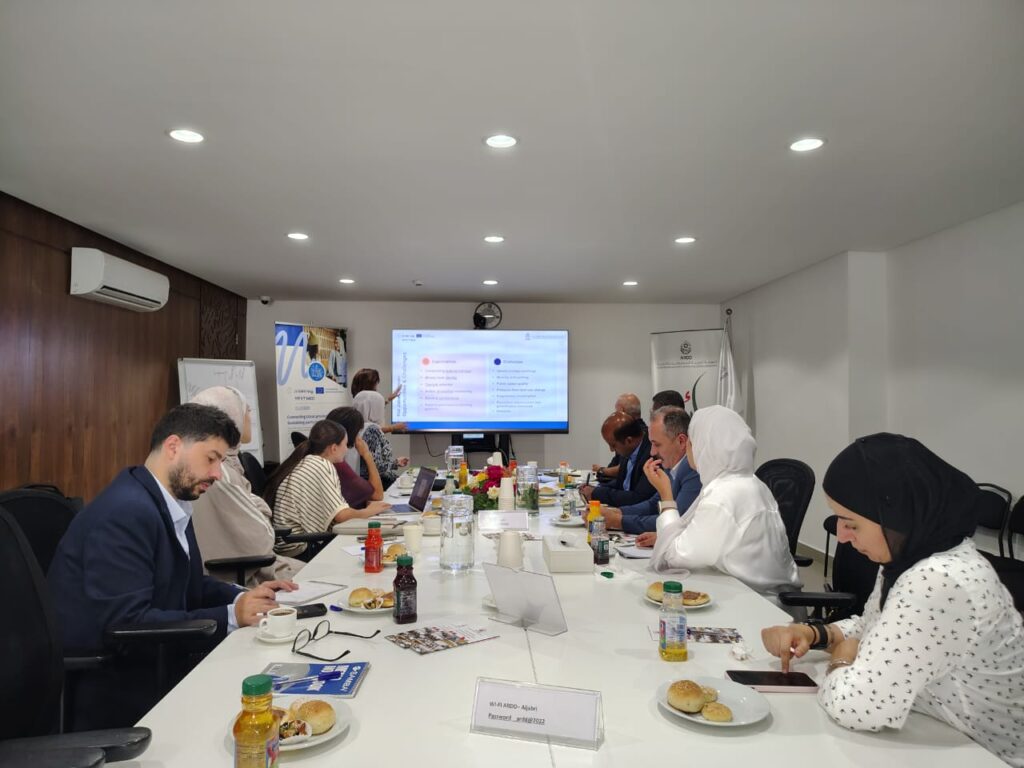
The Future of Hai Jabal Amman – CLOSER Jordan Local Proximity Network has taken a further step toward shaping a community-led approach to neighborhood development, identifying key urban priorities and agreeing on practical next steps to engage residents and translate these priorities into local action. Meeting for the second time on 12 August 2026, network members built on their initial discussions to examine Jabal Amman’s urban needs and explore how local actors can work collectively to address them. The meeting placed particular emphasis on community-driven solutions, stronger coordination among neighborhood stakeholders, and mechanisms through which residents can have a meaningful role in shaping local development. To strengthen its integration within Jordan’s broader civil society ecosystem, members agreed that the The Future of Hai Jabal Amman – CLOSER Jordan Local Proximity Network will serve as a supporting partner of the Jordan National NGO Forum (JONAF). This strategic alliance bridges local grassroots efforts with national platforms, creating vital opportunities for knowledge exchange while significantly accelerating the promotion and national-level replication of inclusive, participatory governance models. The network’s next step will be to take the priorities identified through its discussions directly to the wider Jabal Amman community through a hearing session. The session will provide residents with an opportunity to validate, challenge, and further shape the identified priorities before the network moves toward developing concrete local initiatives. Eng. Malak Suleiman, CLOSER National Coordinator in Jordan at the Arab Renaissance for Democracy and Development (ARDD), highlighted this progression: “Our discussions identified key urban priorities for Jabal Amman, but the network’s role goes beyond identifying needs. The next step is to bring these priorities back to the community through a hearing session, listen directly to residents, and work together to translate them into practical local initiatives.” Bringing together actors with different roles and perspectives in the neighborhood, the network includes representatives of public and municipal institutions, civil society, academia, international organizations, local communities, and the private and cultural sectors. Participants include representatives from the Greater Amman Municipality, the Ministry of Local Administration, the Ministry of Tourism and Antiquities, UN-Habitat, the German Jordanian University, the Jabal Amman Residents Association, Habibi Association, local community representatives, and other institutional and private-sector stakeholders. Through continued dialogue and collective action, the Jabal Amman Local Proximity Network aims to develop practical mechanisms for community participation and shared decision-making, while testing approaches that can contribute to more inclusive and responsive neighborhood development. The network was established within the CLOSER – Connecting LOcal proximity networks, Sustaining participatory govERnance project, with ARDD serving as the project’s national partner in Jordan. Funded by the Interreg NEXT MED Programme and implemented by partners from Jordan, Palestine, Lebanon, Italy, Spain, and Greece, CLOSER works to strengthen participatory governance by fostering collaboration among local authorities, civil society organizations, communities, and other local actors.
Enhancing Refugees’ Access to Justice: ARDD Highlights Its Legal Services in Zaatari Refugee Camp
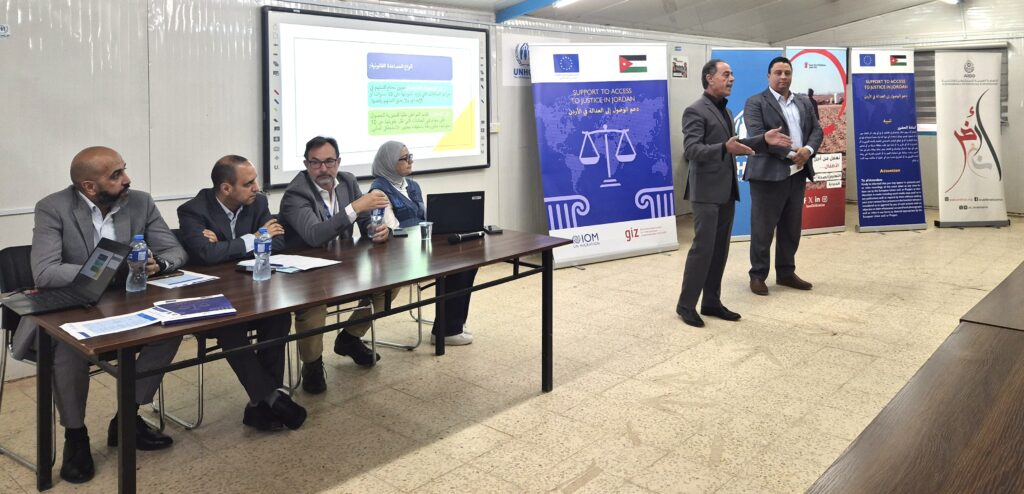
As part of ongoing efforts to strengthen refugees’ access to justice and legal protection in Jordan, the Arab Renaissance for Democracy and Development (ARDD) took part in an awareness session at Zaatari Refugee Camp on 19 August 2026, introducing refugees to available legal aid services and practical ways to access them. Organized by the International Organization for Migration (IOM) under its “Supporting Access to Justice in Jordan” project, the session brought together the Ministry of Justice’s Legal Aid Directorate, the United Nations High Commissioner for Refugees (UNHCR), and ARDD. It aimed to help refugees and other vulnerable groups better understand the legal services available to them, eligibility requirements, and the procedures for accessing assistance. The Ministry of Justice’s Legal Aid Directorate outlined its services, eligibility criteria, required documentation, and the steps for non-Jordanians seeking legal aid. UNHCR presented its role in providing protection and legal assistance to refugees, while ARDD focused on the free legal and protection services it provides inside and outside Zaatari Refugee Camp through its longstanding partnership with UNHCR Jordan. Representing ARDD’s team in Zaatari, lawyers Mohammad Al-Arid and Hamed Yaqoub engaged directly with participants on legal issues affecting their daily lives, answering questions about their rights, relevant procedures, and where to seek support. ARDD’s legal services are tailored to the circumstances of each case and include legal counselling, mediation, representation, and follow-up with official authorities. Support also covers civil documentation, personal status and Sharia court matters, labour and workers’ rights, procedures related to voluntary return, and other protection-related concerns. Alongside individual legal assistance, ARDD regularly conducts legal awareness sessions addressing issues that affect refugees and emerging legal developments. ARDD has maintained a legal presence in Zaatari Refugee Camp since 2012. Its team of lawyers and administrative staff works closely with relevant authorities and partners to follow up on cases and facilitate access to services, including through coordination with the Sharia Court, the Civil Status and Passports Department, the Family and Juvenile Protection Department, security authorities, UNHCR, and other organizations operating in the camp. This work builds on ARDD’s wider experience in legal protection and access to justice. Since 2010, ARDD has served as a legal implementing partner of UNHCR in Jordan in the framework of the Refugees Legal Protection Project, supporting refugees of different nationalities both inside and outside refugee camps and across the Kingdom, while also providing legal services to Jordanians in local communities. The session concluded with an open discussion, allowing participants to raise legal questions directly with the participating institutions and organizations. Beyond providing practical information, the exchange highlighted the value of coordination between public institutions, international organizations, and local civil society in ensuring that legal aid reaches those who need it and translates into meaningful access to rights and justice. ARDD values cooperation with IOM, the Ministry of Justice, and UNHCR in facilitating this exchange and remains committed to strengthening coordination to make legal protection and access to justice more accessible and responsive to refugees and vulnerable communities across Jordan.
RSC Summer Course: A Field Visit to Al-Nasser Refugee Camp
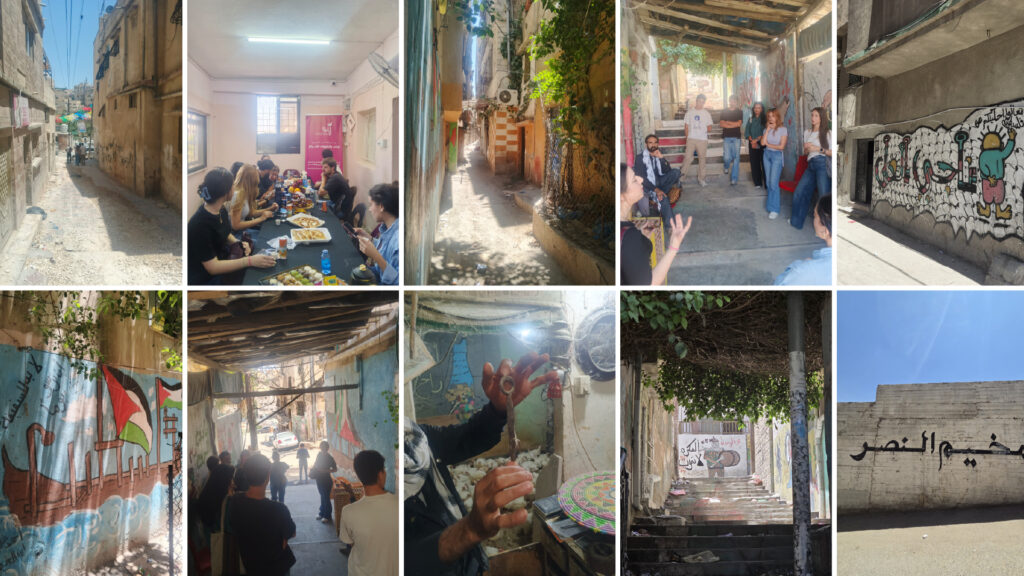
As part of the summer course “International Politics in the SWANA Region: Colonial Legacy, Displacement, and Humanitarian Governance,” organized by the Renaissance Strategic Center (RSC) at the Arab Renaissance for Democracy and Development (ARDD) in partnership with Birzeit University, students and RSC interns participated in a field visit to Al-Nasser Palestinian refugee camp, supervised by Dr. Mariam Abu Samra, Head of RSC. The visit began with a walk through the camp, giving participants an opportunity to explore its urban landscape, local businesses, and different forms of art, while meeting residents and hearing about their experiences. Established in 1967 by Palestinian refugees, Al-Nasser Camp remains a living reflection of displacement and the challenges of development in the context of the right of return. The second part of the visit took participants to the Aldiaa Charity Association, a women-led organization supporting the local community by collecting surplus food from hotels and redistributing it to families in need. Discussions focused on the experiences of the women leading the association, the challenges posed by limited funding, and their aspirations to expand its work and reach more families. The visit allowed participants to connect the course discussions on refuge, displacement, and humanitarian governance with the everyday realities of Palestinian refugees in Jordan. It also offered a closer look at the role of locally rooted initiatives in strengthening solidarity, resilience, and community support. One participant reflected: “Engaging with these women shows that meaningful initiatives often come from within communities, which have a deep understanding of their own needs. Supporting and empowering these locally rooted efforts is therefore essential.” Another participant commented: “I found the visit extremely informative and important. It introduced me to sides and stories of Amman that I would not otherwise have heard about or seen.” The field visit reflects ARDD’s broader approach to connecting academic learning with realities on the ground, giving students a deeper understanding of refugee experiences and the role of local civil society in responding to community needs and strengthening protection and solidarity.
RSC Summer Course hosts guest speaker Dr. Oroub El-Abed
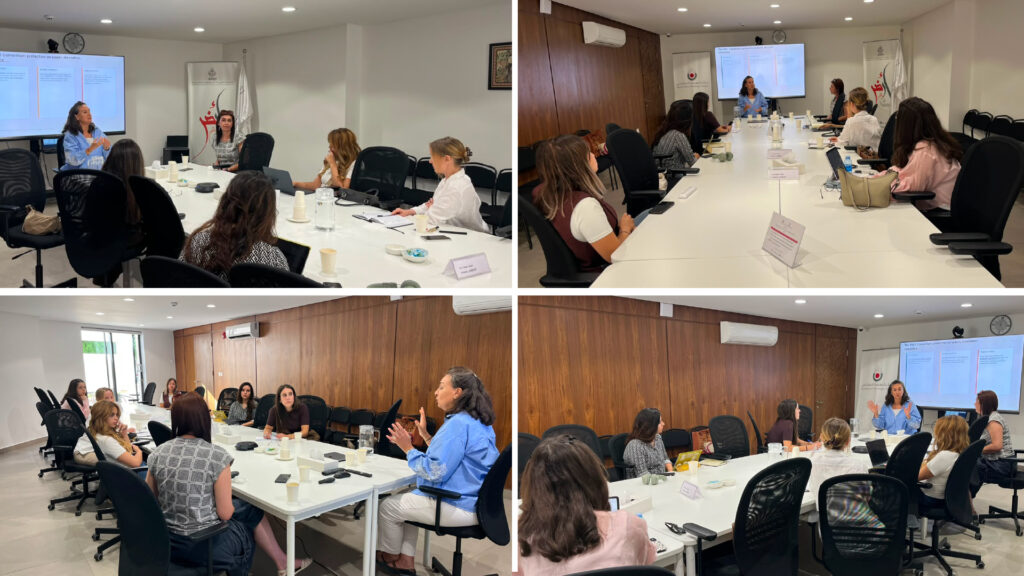
Withing the framework of the RSC Summer Course on International Politics in the SWANA Region: Colonial Legacy, Displacement, and Humanitarian Governance, organized by the Renaissance Strategic Center (RSC) at the Arab Renaissance for Democracy and Development (ARDD) in partnership with Birzeit University, the course was hosted Dr. Oroub El-Abed, as a dedicated and distinguished academic and researcher, in a guest lecture on refugees and displacement in the Arab region. Dr. Oroub El-Abed’s work centers on the deeply human stories behind forced migration and refugee rights in the Middle East, as she represents an influential, authoritative voice in international displacement studies. Today, she shapes the next generation of thinkers as an Adjunct Associate Professor at Birzeit University, while simultaneously driving critical on-the-ground research as the Regional Lead for the Center for Lebanese Studies, bridging the gap between rigorous academic analysis and fierce human advocacy. During the session, Dr. El-Abed examined the intricate economic, political, and social structures that govern refugee movement, focusing on the roles of conflict and regional labor markets. She emphasized that for refugees, essential work often comes with significant restrictions and minimal protection. One of the highlights of the lecture was its commitment to centering the lived realities of individuals navigating displacement, rather than relying solely on statistics. Personal anecdotes and specific narratives raised crucial questions about the conditions under which refugees can work and how they are integrated into economies without full rights or security. A student reflected, “I appreciated how this lecture challenged the simplistic legal categorization of refugee experiences, emphasizing their roles as economic actors rather than just recipients of aid.” This lecture connected closely with many of the wider themes of the course, including displacement, labour, and political economy. “We are incredibly grateful to Oroub El-Abed for her thoughtful session that encouraged us to see refugees not only as recipients of aid, but also as workers, family members, and autonomous individual actors, navigating difficult political and economic systems.”
RSC Summer Course: Birzeit University Scholars Examine Political Economy, Labor Migration, and Palestinian Prisoners
As part of the Summer Course “International Politics in the SWANA Region: Colonial Legacy, Displacement, and Humanitarian Governance,” the Renaissance Strategic Center (RSC) at the Arab Renaissance for Democracy and Development (ARDD) welcomed Dr. Taher Labadi and Dr. Basil Farraj from Birzeit University for two guest lectures examining political economy, labor migration, incarceration, and resistance in Palestine and the wider SWANA region. The three-week summer course, held in Amman from 12–30 July 2026, is a joint academic initiative between RSC and the Ibrahim Abu-Lughod Institute of International Studies (IALIIS) at Birzeit University. Bringing together academic seminars, interactive discussions, field visits, and experiential learning, the course seeks to connect contemporary regional developments with their broader historical, political, economic, and social contexts. Dr. Taher Labadi, a political economist whose research examines the intersections of capitalism, colonialism, labor, and economic resistance, led a session on political economy and labor migration. He invited participants to look beyond migration as simply the movement of workers and consider the economic structures, political interests, borders, and unequal power relations that shape mobility and labor conditions. Drawing on the experience of Palestinian workers in Israel, the discussion explored the contradictions of economic systems that depend on workers’ labor while leaving them exposed to insecurity and limited protection. The session encouraged participants to critically examine how colonial structures, economic dependency, and political instability influence labor relations and everyday livelihoods. Building on the course’s focus on Palestine and regional politics, Dr. Basil Farraj, Assistant Professor and Director of the Ibrahim Abu-Lughod Institute of International Studies at Birzeit University, led a session examining the experiences of Palestinian political prisoners and carceral violence. His research focuses on imprisonment, resistance, memory, violence, and the strategies through which detainees confront carceral regimes. The discussion approached imprisonment not only through the experiences of individual prisoners, but as a broader political and social issue affecting families and Palestinian society. It provided participants with a critical lens for examining the relationship between detention, rights, political violence, resistance, and systems of power. The two sessions reflected a central objective of the summer course: to ground the study of international politics in the lived realities and structural dynamics shaping the SWANA region. By bringing political economy, colonial legacies, labor, incarceration, and resistance into dialogue, the lectures demonstrated how regional developments cannot be understood separately from the historical and contemporary power structures in which they unfold. The sessions also underscored the value of the academic partnership between RSC and Birzeit University in connecting scholarship with pressing regional realities and creating space for students, researchers, and practitioners to engage critically with questions emerging from Palestine and across the SWANA region. The guest lectures form part of a wider program of academic seminars, interactive discussions, policy-oriented learning, field visits, and experiential activities designed to deepen participants’ understanding of colonial legacies, political economy, displacement, humanitarian governance, localization, and Palestine.