
Panel discussion emphasizes the role of women in decision-making, peace, and rebuilding
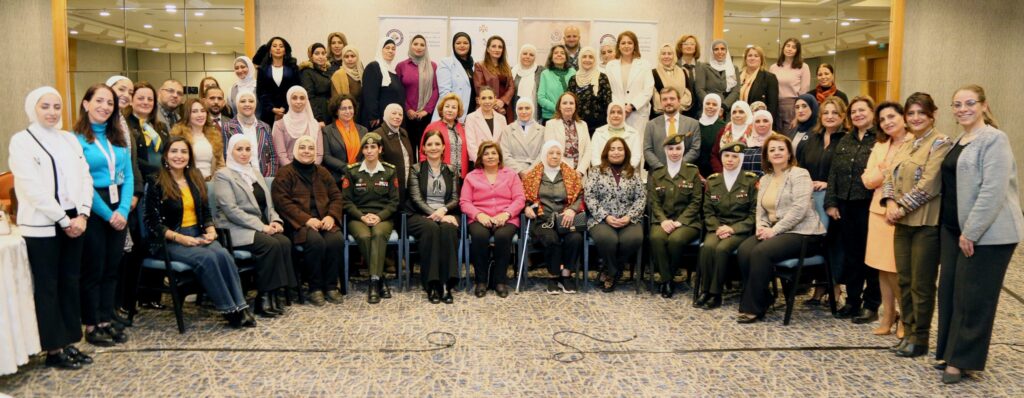
Within the framework of the annual international campaign to combat violence against women and girls (16-Day Campaign), and within the theme of the women, peace, and security agenda, the Jordanian National Commission for Women and the Arab Renaissance for Democracy and Development (ARDD), with the support of UN Women, held on Tuesday, 26 November 2024, a panel discussion entitled: “The role of Jordanian efforts in supporting the resilience of women in armed conflicts and wars”. Introducing the session, the Secretary General of the Committee, Eng. Maha Ali, said that this year’s campaign is held under the slogan: “Together to prevent violence against women and girls in peace and war”, and that it addresses various forms of violence, including domestic, economic, political and digital violence, in addition to violence in wars and conflicts. Eng. Maha also indicated that this session, in which participate several deputies and representatives of official, military, and security institutions, as well as civil society organizations that are members of the National Plan Coalition to activate Security Council Resolution 1324 on women, peace, and security, was dedicated to highlighting the great Jordanian efforts in supporting our Palestinian brothers and sisters through providing and letting in humanitarian and medical aid, and the role of Jordanian women in supporting national efforts by providing medical and mental health aid, given the double suffering of women in Gaza under the ongoing genocide and humanitarian catastrophe. In turn, the representative of UN Women in Jordan, Nicholas Burniat, pointed out that Jordan has become the focal point for the response in providing humanitarian and medical aid and bringing it into Gaza, especially given the significant restrictions on the entry of aid to the Strip, indicating that the world is approaching the 25th anniversary of the UN Security Council Resolution on Women, Security, and Peace 1325 next year, which indicates that women are affected by conflicts and wars differently, but at the same time they must have an important role in decision-making processes by avoiding conflicts, establishing peace, and rebuilding. To shed light on the role of women in combating violence against women in armed conflicts, through the provision of medical and psychological support services, the panel discussion was attended by the President of the Arab Women Doctors’ Associations, Dr. Maysam Akroush, Obstetrics and Gynecology Consultant, Dr. Aseel Al-Jallad, and the Chairperson of the Administrative Board of the Association for Victims of Domestic Violence, Dalia Al-Faruqi, while the session was moderated by the coordinator of networks at ARDD, Iman Abu Qaoud. Dr. Akroush spoke about the founding of the Arab Women Medical Association as one of the initiatives that support the women’s medical sector, which in turn established a joint work system to support women in conditions of war and crises, especially with regard to reproductive and preventive health within the framework of effective community awareness, indicating that the Association launched a specialized digital medical platform to support women’s mental and physical health, and for families in the Gaza Strip, as well as coordinating with the Hashemite Charity Organization, the Ministry of Health in Gaza, and UNRWA, to get medicine and medical needs into the Strip, especially insulin. Akroush indicated that the platform includes 30 doctors and 9 psychiatrists, pointing out that the platform is being developed to provide a medical educational program for medical students who have lost access to education in the Gaza Strip, in coordination with the University of Jordan. Regarding her volunteering journey and supervising the treatment of hundreds of Gazan women and hundreds of childbirths in the Gaza Strip, Dr. Al-Jallad, who volunteered in the Gaza Strip as the first female doctor from the Jordanian private sector, pointed out that Gazan women are displaced with their families at a rate of 3-4 times and up to 10 times, indicating in the same regard that Gazan women suffer from complex health conditions and deprivation of health care, and that many females have had to assume the role of mothers due to the loss of their families and having to care for other family members. Dr. Al-Jallad explained that about one million Gazan women suffer from the lack of health services and lack of privacy, stressing the importance of providing the Gaza Strip with gynecologists to alleviate the suffering of women in Gaza, at a time when women often receive medical care from male doctors who do not consider women’s needs and “psychological conditions” as female doctors do. As for the Association for Victims of Domestic Violence, Al-Faruqi pointed out that the association was established in 1998, and works in the fields of raising awareness about issues of violence against women and supporting women who are mentally and socially abused, citing the association’s work in supporting the families of victims of the terrorist bombings in Amman in 2005, which resulted in forming a specialized support team from official and voluntary bodies and civil society. Al-Faruqi also noted that the association has a special program that targets women survivors of violence, who have undergone administrative detention, within a specialized aftercare program. Finally, participants in the session recommended providing psychological support to women and girls in societies witnessing conflicts and wars, with a focus on the role of civil society institutions in addressing violence against women and supporting their resilience. They also called on the international community to exert efforts to end wars and conflicts and ensure the continuation of peacebuilding efforts to prevent them, in addition to prioritizing the protection and empowerment of women and girls, ensuring that their voices are heard, and supporting their rights.
Enhancing Localization: Strengthening JONAF’s Governance Validation Workshop

Members of the Jordan National NGO forum (JONAF) participated in reviewing JONAF’S governance framework and future steps, represented in determining its structure and membership criteria, increasing the number of members, continuing to implement the objectives of the alliance, as well as ensuring the active participation of all members and exchanging information among them, diagnosing priority strategic issues, promoting the localization of humanitarian and development work, and representing members before external strategic partners and international organizations. This came during a workshop held by the Arab Renaissance for Democracy and Development (ARDD) and JONAF, on Sunday, November 24, 2024, within the framework of the project “Future Forward: Unlocking Sustainable Local Opportunities”, funded by the European Regional Development and Protection Programme to support Jordan and Lebanon. The project aims to develop a robust governance structure and standard operating procedures to institutionalize JONAF, as well as strengthening the localization of Jordan’s livelihoods sector through a multi-faceted approach focused on building the capacity of the local civil society. Lina Halasa, Project Manager at ARDD, stressed the need to institutionalize collective efforts by strengthening JONAF’s governance structure and institutional capacities to strengthen its capacity to lead the implementation of a local humanitarian agenda in the field of aid delivery, strengthen dialogue with local and international stakeholders, increase efficiency, and enhance accountability to ensure aid and development efforts are better designed to meet the needs of local communities. Regarding the governance framework of the alliance, Eng. Zainab Al-Khalil, Program Manager at ARDD and coordinator of JONAF, explained that the alliance was established in 2016 with the aim to activate the localization and decentralization of humanitarian and development work, as well as emphasizing the role of women as an active element in security and peace, indicating that local associations are the most able to touch upon the needs of their communities, apply humanitarian standards, and reach out to beneficiaries such as the elderly and persons with disabilities, which was evident during the preparedness and response plans for seasonal, emergency, or crisis assistance. Al-Khalil pointed out that the coalition currently includes about 50 organizations covering the central, northern, and southern regions of Jordan, including a variety of civil society groups, community-based organizations, and founding partners. Membership criteria have been developed to ensure that each organization understands its roles and responsibilities within the Alliance. She also explains that the expansion of JONAF’S membership and its organizational structure reflects a commitment to inclusiveness and sustainable community participation, which contributes to the promotion of peace, security, and development in Jordan, stressing the importance of adopting a participatory approach that ensures that the voices of all members are heard, and which enhances their role in formulating governance in a way that reflects their needs and ensures that the governance emanates from them, especially as this approach supports the development of a fair and inclusive organizational structure that addresses local challenges more effectively. For her part, Iman Abu Qaoud, Network Officer at ARDD, stressed the importance of focusing on the Alliance’s presence in all governorates, holding activities in them, and creating motivation to support and sustain political, civil, and economic participation projects, while increasing JONAF’s participation in international and local coordination platforms. Meanwhile, extensive discussions took place among the members of the alliance, during which they stressed the role of JONAF in the emergency response plan for seasonal or emergency crises, as well as ARDD’s support for their participation in the implementation of UN Resolution No. 1325 to address the humanitarian impact during the COVID-19 pandemic, with the need to enhance the knowledge of local organizations in the fields of advocacy and strategy building, and support initiatives that improve the livelihoods of local communities, especially those serving women and families from refugee communities, as well as encouraging and sustaining small and medium income-generating enterprises, leading up to the need to give civil society organizations an active role in policy-making.
Jabal Amman: A model of social and cultural fabric that embodies values, traditions, and identity

The social and cultural history of Jabal Amman is a rich reflection of the diversity of cultures, traditions, and values among its inhabitants, as its distinctive character embodied the spirit of the area and its development. This history has shaped people’s relationship with the place, giving it a unique identity and a vibrant memory, manifested in the various aspects of art and culture. The preservation of cultural heritage through civic participation, especially by young people, is a guarantee that future generations can appreciate this rich heritage and contribute to its continuity. Several programs have proven successful in this field, such as Shoman Cultural Days, implemented in partnership with the Jabal Amman Old Neighborhood Residents Association (Jara), which has contributed to engaging residents in preserving cultural traditions through music, art, and academic participation. In this context, the Arab Renaissance for Democracy and Development (ARDD) held the fourth panel discussion of the “Jabal Amman: Past, Present, and Future” initiative, entitled: “The Social and Cultural Fabric”, on Monday, November 18, 2024. The session was moderated by the consultant at ARDD, Eng. Marah Khayat. Regarding the Jara Association, vice president of the association, Khader Qawas, pointed out that the association was established with the aim of preserving the heritage and character of the old Jabal Amman neighborhood, and works to introduce the neighborhood and its historical, artistic, and cultural origins, as well as preserving part of its cultural heritage. On the Jara street market and its cultural and heritage importance, Qawas said: “The Jara street Market, which was launched in 2005, brings together the residents of the Kingdom as a whole. Most of the participants are women from the local community, interested in heritage and arts. They display their products every Friday, with the aim of bringing life back to Rainbow Street and Jabal Amman, this ancient area with its inhabitants, buildings, and streets.” Qawas stressed the importance of introducing the new generation to the Jabal Amman area and its heritage markets, pointing out that JARA keeps in touch with the local community through cooperation with schools, such as Al-Ahlia School. This cooperation resulted in the establishment of the “Haretna” festival, with the aim of reviving the social and cultural fabric in the area. As for Jabal Amman as an incubator for culture and population diversity, the founder and general manager of Jabal Amman Publishers and Kotobi platform, Dr. Sinan Sweis, considered that the Jabal Amman area carried a culture of diversity, openness, and a spirit of partnership since its inception, and also constituted a model for the concept of the neighborhood, pointing out that Amman was a living example of the fusion of Arab cultures. According to Sweis, having grown up in the Jabal Amman area, he pointed out that there have been great societal transformations that have taken place in the area, especially since it has been characterized by a strong and interconnected social fabric since ancient times, as large families of different races and religions built their homes there, and these homes have now become heritage sites, not to mention that the inhabitants of the area were known for their kindness, affection, humility, and cooperation on all occasions, in addition to the culture of productivity and leadership among the residents of the neighborhood, which has turned into a consumer culture today. Finally, the participants in the session underscored the importance of reviving the cultural and social heritage in Jabal Amman, and sparking the interest of young people in the old areas and neighborhoods of their city, as well as the importance of developing, restoring, and preserving neighborhoods, which requires a comprehensive study of the area that includes all elements. It is also necessary to collect information and documents on the neighborhood’s experience related to the cultural and social fabric, and about the history and civilization of the neighborhood, in order to enhance the skills of new generations, and encourage youth cultural initiatives in order to contribute to the sustainability of cultural and social work and preserve the Ammani identity that has been distinguished throughout history.
National Alliance for Combating Narcotics Calls for Supporting Security Efforts in Addressing Drug Smuggling Threats from the North and South of the Kingdom

As the Jordanian border witnesses a significant escalation in the operations to thwart drug smuggling across the border, in conjunction with the military tensions in the region, starting with the Israeli war on Gaza to the escalation in Lebanon, the Kingdom is facing a new scenario in which the southern region has become a frontier for drug trafficking, after it was long confined to the northern region. In this context, security and military experts stress the need to harness all capacities and capabilities to confront drug trafficking which “targets national security”, as several cases have been recorded over the past few months confirming that the southern region has become a point of smuggling and importing narcotic substances, they said. This came during a meeting organized by the Arab Renaissance for Democracy and Development (ARDD), on November 12, 2024, with member of the National Alliance for Combatting Narctics in Jordan, retired Major General Dr. Ammar Al-Qudah, to talk about his vision and action plan regarding anti-narcotics efforts as a member of the Upper House of Parliament, and with the participation of members of the alliance, which is affiliated with the Justice Sector Support Forum. For his part, retired Major General Tayel al-Majali, head of the alliance, said that “Jordan and the region are real targets for drug trafficking, as we are in a real state of war with drug traffickers on the northern and southern borders between the authorities and international gangs, using the latest means and equipment such as drones, which are supposed to be owned exclusively by official bodies and armies.” Al-Majali called for the need to use the punishment for drug abuse in a way that achieves public deterrence, by adding an offence to the record of the drug abuser temporarily, for a year for example, and if they manage to quit drugs during that year, the offence will be removed from their record, so that they can continue to reform themselves and rectify their behavior. In turn, Al-Qudah stressed the importance of providing studies that show the extent of drug prevalence and abuse in the Kingdom, as there is a noticeable increase in crimes committed due to drug abuse, which requires -according to him- concerted efforts and cooperation between all segments of society, starting with families, to universities, schools, places of worship, and others to raise awareness of the seriousness of this scourge on young people. Regarding the National Strategy for the Prevention of the Scourge of Drugs 2024-2026, the attendees indicated that the Anti-narcotics Department, in cooperation with all partners concerned in the implementation of the strategy, is working diligently to reach the desired goal of launching this strategy, which came under the directives of the King, stressing the importance of the family’s role in protecting their children from drug abuse by raising their awareness and keeping an eye on their psychological condition. Meanwhile, extensive discussions took place among the members of the alliance, where they focused on the need for concerted security, governmental, and civil efforts, including the media, civil society institutions, and experts in this regard, especially with the emergence of narcotic substances containing chemicals that are dangerous to humans. They also stressed the importance of holding more meetings and consultations to integrate efforts in this regard, and that it is necessary to provide special care to juveniles, ensure the continuation of aftercare for drug users after the treatment journey, as well as focusing on educating school and university students about this scourge and including the risks of drug abuse in school curricula. In conclusion, according to the members, there is a need to invest the membership of the Alliance in the national strategy for the prevention of the drug scourge and its effective role to contribute to reducing the drug problem and working to strengthen joint coordination and concerted efforts with official and civil institutions to secure response tools when needed, in addition to working to raise institutional awareness about the developments of the issue from all aspects, developing collective perceptions of possible solutions, and responding to domestic and regional crises.
جلسة للنهضة العربية (أرض): السياحة المجتمعية كسبيل لتحقيق التنمية المستدامة ورفاه المجتمعات

يمكن للسياحة في المناطق الحضرية أن تكون أداة قوية للنمو الاقتصادي المحلي، غير أنها تحتاج أيضاً إلى إدارتها بعناية للحفاظ على الطابع الثقافي والتاريخي فيها. وفي جبل عمّان، الذي يعد من أقدم أحياء العاصمة، جلبت السياحة فوائد اقتصادية كثيرة على الحيّ وزادت من بروز المكان وظهوره. في هذا الإطار، وحول أهمية تطوير قطاع السياحة واستدامته في الأردن ككل وجبل عمّان تحديداً، يقول رئيس مجلس شركة فنادق البحر الميت، ورئيس لجنة جبل عمّان، العين ميشيل نزال: “إن تعزيز السياحة المجتمعية في جبل عمّان ليس ممكناً فقط، بل هو ضروري للحفاظ على روح الحيّ وثقافته وحيويته الاقتصادية، وذلك من خلال دعم الأعمال المحلية، وإشراك المجتمع بشكل مباشر في تقديم التجربة السياحية وتطويرها. وبذلك ينعكس على الشعور بالملكية، ويمكننا بناء نموذج سياحي متكامل وشامل”. جاء ذلك خلال الجلسة الحوارية الثالثة ، لمبادرة “جبل عمّان: الماضي والحاضر والمستقبل” والتي حملت عنوان: “السياحة”، الإثنين 11 تشرين الثاني/ نوفمبر 2024، وأدارتها المستشارة في منظمة النهضة العربية للديمقراطية والتنمية (أرض)، المهندسة مرح خياط. وأكد نزال أن الأردن لديه تاريخ وتراث مهم منذ القدم، وهو ما يعتبر قيمة إضافية لاستمرارية السياحة فيه، مبيناً أن إنشاء الفنادق في عمّان شكلت دخل سياحي متكامل وتطور اقتصادي على مستوى البلد، مما يستدعي التطوير والتجديد بشكل دائم لجذب السياحة الداخلية والخارجية. وحول أهمية السياحة القائمة على المجتمع وتعزيز استدامتها، أوضح نزال أهمية البعد الاقتصادي للمبادرات السياحية ومساهمته في انفتاح المجتمع، مع ضرورة التركيز على المشاركة المحلية في قطاع السياحة، مما يضمن تدفق العوائد الاقتصادية إلى سكان المنطقة. وبشأن الاستراتيجيات التي يمكن أن تجعل السياحة المجتمعية ناجحة، وبالاستناد إلى نماذج ملهمة حول العالم، شدد نزال على ضرورة التخطيط التشاركي واتخاذ القرارات بالتعاون مع المجتمع المحلي، إلى جانب تطبيق إجراءات تخفيف الضرائب والإيجارات لسكان المنطقة ودعم المشاريع الصغيرة، وصولاً إلى تعزيز شراكات سياحية مستدامة مع الجهات المعنية. وبخصوص ضرورة الاستفادة من تجارب الدول التي طبقت نماذج السياحة المستدامة بنجاح، نقل العين نزال تجربة “كيوتو” في اليابان، حيث يعمل السكان مع المسؤولين لتطبيق قواعد سلوكية تحافظ على التراث الثقافي للمدينة، كما وضعت برشلونة خطة لتحسين تنقل السياح وتقليل الازدحامات المرورية، لا سيما في المناطق التاريخية، وفي كوبنهاغن تم تشجيع السياحة المستدامة من خلال استخدام الدراجات بدلًا من السيارات، لافتاً إلى أن كل من هذه المدن وجدت طرقاً لحماية تراثها وتعزيز جودة حياة سكانها، ويمكن لجبل عمّان أن يتبنى هذه النماذج في سياقة الخاص. وفي ما يتعلق، بالآثار والتراث والهوية في عمّان، وجبل عمّان خاصة، أوضحت نهى مبيضين، وهي محاضرة ومنسقة برنامج الإرشاد السياحي في كلية عمون الجامعية التطبيقية، أن السياحة وهوية المنطقة بينهما ارتباط كبير، وخصوصاً أن الأردن يحتوي على معالم حضارية وتراثية نادرة، داعية في هذا السياق، الشباب، التعرف على هذه المعالم، والتركيز على تطوير تجربة سياحية تفاعلية تشمل رواية القصة المتعلقة بالأماكن التاريخية في جبل عمّان وتسويقها، مشددة على أهمية حماية الإرث الفكري والثقافي والفني في مناطق جبل عمّان، والاهتمام بدعمها والمحافظة على ديمومتها التي ساهمت في نهضة المملكة وذاكرتها. وبين نقاشات المشاركون الشباب والمتحدثين، جرى التأكيد على ضرورة تشجيع دور الشباب في المشاركة المدنية لتطوير القطاع السياحي في المنطقة، ودعم توفير الغرف الفندقية كجزء أساسي من نمو القطاع السياحي، وكذلك التركيز على دور السياحة في دعم اقتصاديات المجتمعات المحلية، إضافة إلى تعزيز التعاون بين وزارة السياحة والمؤسسات المتخصصة. وأوصوا بأهمية تدريب المرشدين السياحيين لتقديم شروحات شاملة للسياح والإجابة عن الأسئلة المتعلقة بثقافتنا، وترويج الشباب للأماكن والمنتجات المحلية عبر مواقع التواصل الاجتماعي لإضفاء لمسة شخصية وجعلها أكثر جذبًا للسياح، مع ضرورة زيادة الوعي بالمواقع السياحية المحلية والحضارات التي مرت عبر الأردن وأهميتها التاريخية بين أفراد المجتمع وصولاً لإنشاء لجان محلية تضم سكان وأصحاب الأعمال في جبل عمّان للمشاركة في صنع السياسات والقرارات.
Panel Discussion by ARDD: Environmental sustainability requires effective practices and strategies
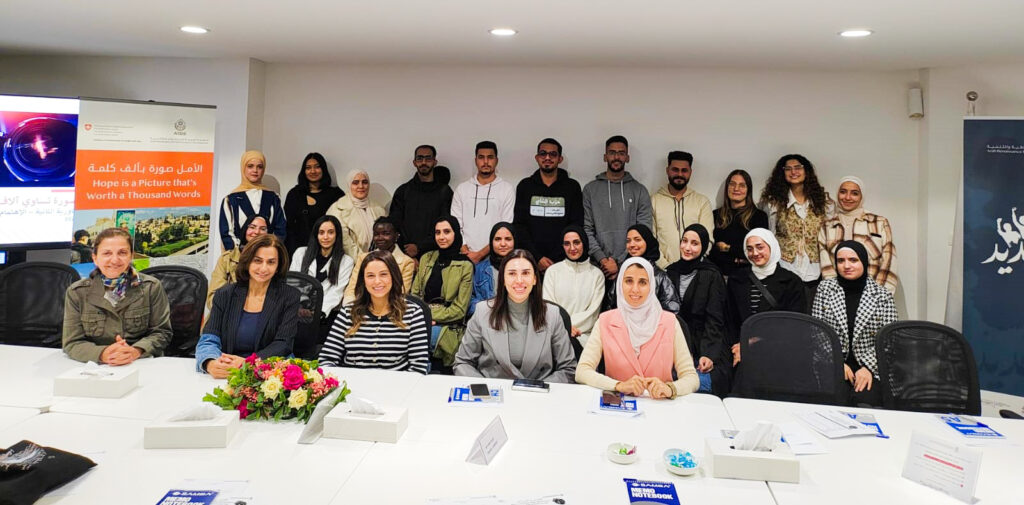
The second panel discussion of the “Jabal Amman: Past, Present, and Future” initiative, entitled “Environment”, concluded that “the issue of environmental sustainability is one of the main challenges faced by societies, and one that requires adopting effective strategies at all levels: the individual level, the societal level, and the policy level, to protect the environment, manage natural resources, and ensure a better future for the coming generations.” The participants in the session, which was held on Monday, November 4, 2024, within the activities of the “Hope is a Picture That’s worth a Thousand Words ” project, sponsored by the Swiss Embassy in Jordan, and moderated by Advisor at the Arab Renaissance for Democracy and Development (ARDD), Eng. Marah Khayyat, stressed the need for waste management and paying attention for water management in Jordan in general and in Jabal Amman in particular through a set of technological innovations, as well as enhancing community participations and youth participation in these efforts. Addressing water management and promoting sustainable urban practices are key to ensure the resilience of the neighbourhood in the future, as environmental management in urban areas focuses on the sustainable use of resources, reducing pollution and preserving green spaces. This includes waste management, water conservation, and environmentally friendly infrastructure development. For Jabal Amman, effective and sustainable environmental strategies must be adopted to ensure the preservation of its distinctive heritage character, through initiatives that encourage recycling, proper waste disposal, and renewable energy solutions. With regard to the water and environmental situation in the Kingdom in general and Jabal Amman in particular, Mai Al-Qusi, Water and Environment Engineer at the United Nations Human Settlements Program, stated that Jordan ranks second in the world in terms of water scarcity and per capita share, after Kuwait ranked first, which requires finding solutions for sustainable development through the construction of green buildings, the development of biological yards, the establishment of pools for water collection and rain gardens for water harvesting, and increasing community participation by all segments of society by incorporating awareness about water management into school curricula, and imposing laws to prevent wasting water through sustainable solutions. Waste management is another important environmental issue in Jabal Amman, especially in light of the growing population and busy tourist and commercial activities. Effective waste management is essential to maintain the beauty and cleanliness of the area, while ensuring the sustainability of its social and cultural life. During the recent Jabal Amman Committee meeting, waste management was identified as a major concern, particularly in areas such as Souq Jara and Rainbow Street, where commercial activity generates a huge amount of waste. In this context, and with regard to waste management and the importance of community initiatives to encourage residents to sort and reduce waste, environmental activist and creator of the “Zero Waste” initiative, Amal Madanat, spoke about her initiative, which was launched in 2011, saying: “I started recording and reading about all the materials I use in my life, keeping track of everything I threw in the waste bin, only to discover the negative effects of plastic products used in food and drink to health, to the environment, and to all living things.” She then added: “I passed my experience on to my relatives, friends, and neighbours, but the results were not as big as I expected. However, the coincidence of having a school next to my place of residence allowed me to sort waste and collect recyclable materials with students, their mothers, and women from the local community.” Madanat stressed the importance of focusing on the humanitarian and health aspect related to the environment, especially since the environmental and waste management concern has multiple dimensions (economic, religious, and touristic). She focused on spreading awareness about the waste sorting and collection process, saying: “Hand in hand, the new generation can make a change.” In turn, the young participants stressed the need to support young people’s ideas and initiatives in the field of environmental sustainability, as well as applying the principle of accountability at the level of individuals, society, and policies, in addition to the importance of preparing and publishing studies to identify needs, solutions, and alternatives. Participants also agreed to design and implement a waste management initiative in Jabal Amman.
Panel Discussion by ARDD: Amman is the Story of its People, Centered Around Active Youth

“Urban planning plays an important and pivotal role in preserving Jabal Amman’s distinctive urban heritage while addressing contemporary challenges such as population growth, urban improvement, traffic congestion, among others. Hence, it is imperative to pay attention to the importance of civic participation by the people of area, especially the youth, as part of this planning, so that they have a say in determining their needs in order to shape their future.” With these remarks, consultant at the Arab Renaissance for Democracy and Development (ARDD), Eng. Marah Al-Khayyat, presented the first panel discussion of the “Jabal Amman: Past, Present and Future” initiative, under the title: “Urban Planning”, which was held on Monday, October 28, 2024, where planning, heritage and urban development expert, Dr. Rami Al-Daher, and Eng. Dima Abu Diab, program coordinator at The United Nations Human Settlements Progrmme (UN-Habitat) and member of the Jabal Amman Committee (a committee launched by ARDD in partnership with multiple entities with diverse expertise to promote meaningful civic participation in the planning of Jabal Amman by developing a comprehensive and sustainable urban plan to revitalize the area). This panel discussion comes within the activities of the “Hope is a Picture that’s Worth a Thousand Words” project, sponsored by the Swiss Embassy in Jordan, which will represent the past, present and future of Jabal Amman through the eyes of young photographers, who will participate in panel discussions with field experts on the important issues that the project focuses on, namely : Urban planning, environmental concerns, tourism development, social and cultural fabric, and economic development. Meanwhile, the results of the competition and panel discussions will be translated into policies based on the visions of young people for their participation in the development of their societies in all aspects. During the speech he gave about Jabal Amman: “the neighborhood with its cosmopolitan nature and forgotten modernity”, Al-Daher described Amman as the city of “hats”, as it has set itself apart since its inception by opening its arms to people of all origins and beliefs, pointing out that Amman has set an example of brotherhood, coexistence, and social responsibility. In this context, Al-Daher called for highlighting the architectural identity of Amman as an authentic Arab city. Al-Daher pointed out that the studies conducted about Amman in the early nineteenth century were not of real interest in working to highlight the city’s landmarks. He also saw that schools, hospitals, political parties and old hotels were an important part of the modernization project of Amman, which is the largest and most densely populated city in the Kingdom. “The story of Amman is the story of its people,” he said, noting that it was schoolteachers, doctors and merchants who built Amma, stressing that the real danger to the Jabal Amman area lies in the lack of understanding of its historical heritage and social fabric, as well as the changes that are at odds with the cultural vibe of the area. The expert emphasized the need for young people to have an active role in the city by protecting its heritage, shaping the future of their communities, and developing initiatives aimed at preserving its identity, specifically at this stage in the Jabal Amman neighborhood, explaining in a related context that community participation in urban planning improves the quality of life. On the most prominent urban planning challenges for the city of Amman, Al-Daher explained that neglecting the participation of residents, monopolizing decision-making, in addition to the lack of work by regulatory and service bodies as an integrated team and the lack of funding are among the most important of these challenges, indicating that privatization has increased the obstacles faced by urban planning and its sustainability, in addition to the lack of involving multiple disciplines in urban planning, as it is usually limited to engineers and architects only, without considering other basic fields such as anthropology, geography, environmental sciences, and others. On community participation in the urban planning process, Abu Diab stressed the importance of listening to the voice of young people in identifying needs, stressing the right of the community to participate in urban planning processes and setting priorities for development as a human right, with the need to focus on the including of all segments of society in this context. Regarding UN-Habitat, Abu Diab pointed out that it works on the basis of the vision that community participation leads to a better urban future, as it supports the development of integrated, inclusive and sustainable cities and human settlements, capable of providing an adequate standard of living for children, youth, women and men, and that enjoy governance and resilience to shocks. For their part, the youth participants in the session stressed the need to raise awareness among students in schools, universities and institutes about the importance of heritage and civilization, in addition to the importance of building and producing societal and cultural knowledge among young people, and to have a broader outlook and horizon to bring about positive change in society, whether at the local or national level, which is a national responsibility of governments and civil society, while warning of the need to have initiatives to qualify young men and women to engage in civil work. According to the participants, there is a decline in the Arab world in terms of critical studies related to civilization, heritage and urban planning, noting that involving communities in the decision-making process related to urban planning empowers individuals to have a voice in decisions that affect their neighborhoods, streets and urban environments.
Policy Dialogue Focuses on Enhancing Climate-Resilient Social Integration of Syrian Refugees in Jordan – Amman, October 29, 2024

The policy dialogue “Policy Strategies for Enhancing Climate-Resilient Social Integration of Syrian Refugees in Jordan” is part of ARDD’s Migration, Displacement, and Statelessness Program and is supported by CGIAR’s MENA Regional Climate Security Hub. The collaboration reflects a commitment to advancing climate resilience and social cohesion through evidence-based policy and partnership. This dialogue aimed to address the need to shift from short-term humanitarian aid to strategies that promote long-term sustainability and resilience, focusing specifically on Syrian refugees in Jordan with the goal of bridging the gap in programming that supports host communities and refugees in jointly building climate-resilient livelihoods. It also explored how refugee contributions can strengthen the resilience of Jordan’s food, land, and water systems, with a particular emphasis on the inclusion and empowerment of women and youth as outlined in the Women, Peace, and Security (WPS) agenda. Martina Jaskolski, a CGIAR climate, peace, and security policy scientist, highlighted research findings that advocate a shift from humanitarian aid to sustainable livelihoods for Syrian refugees. Interestingly, the CGIAR research initiative HER+ adds a gender lens to the discussion. Frans Schapendonk, climate security specialist at CGIAR gave a summary of a report conducted by CGIAR based on financial health in the agricultural sector and the inclusion of Syrian refugees. The dialogue tackled the complex challenges at the intersection of climate change, displacement, and peace and security. It aimed to develop strategies that enhance self-reliance among Syrian refugees, promote social inclusion, and build effective social protection systems in Jordan aiming to contribute to Jordan’s broader efforts to support both refugee and host communities in achieving sustainable development. The policy dialogue presented actionable recommendations based on data-driven analysis and attendees worked together to identify successful models and best practices for integrating climate resilience into social inclusion and safety net development. Moreover, the event aimed to strengthen collaboration among sub-national, national, and international stakeholders, fostering policy development and future interventions that enhance social and economic integration. The organizers call on policymakers, community leaders, international partners, and the private sector to adopt a collaborative and data-driven approach, in turn creating a more inclusive and resilient future for both refugees and host communities in Jordan. Mariam Abu Samra, Coordinator of the Renaissance Strategic Center (RSC) at ARDD and Senior Researcher within the “Migration, Displacement, and Statelessness” Program, stated that, although Jordan has made critical strides in supporting Syrian refugees’ access to work and basic services, formidable challenges persist. Legal, economic, and social barriers continue to constrain Syrian refugees’ ability to achieve self-sufficiency. Policy recommendations should focus on: Sustaining access to affordable work permits for Syrian refugees, Decoupling social security requirements from work permits to increase accessibility, Expanding Technical and Vocational Education and Training (TVET) options to improve employment prospects, Enhancing legal aid services to support refugees’ rights and protections. Localization The discussion following the organizers’ presentations highlighted several key points for enhancing the social integration and resilience of Syrian refugees in Jordan: – Cash-for-Work Initiatives: Emphasis was placed on cash-for-work programs to provide immediate income support while fostering community engagement. – Joint Loan Program Development: Participants discussed designing joint loan programs to empower refugees and host community members in starting small businesses and fostering economic self-reliance. – Group Networking and Peer Support: Implementing a group approach was suggested, including networking events where Syrians can act as trainers, sharing skills and experiences with peers. – Targeted Skill Assessments: The importance of conducting skill assessments in sectors with high demand was underscored to ensure that training aligns with market needs. – Digital Inclusion: Digital inclusion efforts were recognized as vital, with a focus on bridging the digital divide to enhance employment opportunities. – Hiring Quotas for Syrian Refugees: Discussions also considered introducing hiring quotas to encourage more inclusive labor market practices. – Local Policy and Adaptation Plans: Attendees emphasized the role of local policies and adaptation plans in ensuring that refugee integration strategies align with Jordan’s broader social and economic goals. To conclude, a coordinated effort between Jordanian authorities, NGOs, and the international community will be essential to support Syrian refugees in achieving dignified livelihoods, stability, and long-term social cohesion in Jordan’s society and economy.
النهضة العربية (أرض) والجمعيات المحلية في تحالف “جوناف”: معاً لتعزيز جهود المناصرة المجتمعية

في إطار تعزيز قدرات المناصرة لأعضاء التحالف الوطني الأردني للمنظمات غير الحكومية (جوناف)، وبما يمكنهم من تمثيل احتياجات المجتمع والاستجابة لها بفعالية أكبر، عقدت التحالف ومنظمة النهضة العربية للديمقراطية والتنمية (أرض) ورشة لتعزيز قدرات الجمعيات المحلية في التحالف بمجال المناصرة، وذلك يوم 26 أيلول/ سبتمبر 2024. وسعت الورشة التي تأتي ضمن إطار مشروع “نحو المستقبل: استكشاف فرص الاستدامة المحلية”، بتمويل من البرنامج الأوروبي الإقليمي للتنمية والحماية لدعم الأردن ولبنان، إلى دعم الدور الاستراتيجي لتحالف جوناف كمنصة للمناصرة لتنمية قدرات الجمعيات، وتعزيز التعاون والخبرات بين أعضائه، فضلاً عن تمكين منظمات المجتمع المدني الوطنية، حيث قام تحالف جوناف بالتعاون مع النهضة العربية (أرض) بعقد أكثر من ورشة متخصصة للجمعيات المحلية في هذا السياق. ولضمان تعزيز محلية قطاع سبل العيش في الأردن من خلال اتباع نهج متعدد الجوانب يركز على تعزيز قدرات المجتمع المدني المحلي، شارك في الورشة 9 جمعيات من أعضاء التحالف الذي تأسس عام 2016، وهي: “الأمل للتنمية الاجتماعية الخيرية النسائية، شركة درة المنال للتنمية والتدريب، تجمع لجان المرأة الوطني الأردني، رعاية الطفل الخيرية، خطوة أمل الخيرية، سيدات الرفيد الزراعية، سيدات قرى حوض الديسي، شركاء للأفضل، وجمعية الشابات المسيحية”. من ناحيتها، بينت مستشارة برامج المرأة والشباب في مركز النهضة الاستراتيجي في النهضة العربية (أرض)، د. سناء جلاصي، أن هذه الجهود المشتركة تهدف إلى تعزيز قدرة المجتمع المدني، كما تساهم في تلبية احتياجات المجتمع المحلي بفعالية، وتجعلها أكثر استعدادًا للاستجابة للتحديات وتحقيق أثر ملموس على مستوى المجتمعات التي تخدمها، إضافة إلى المشاركة في رسم السياسات لتحقيق تأثير مستدام في مجالات التنمية والتغيير الاجتماعي. بدورهم، أوصى المشاركون الأعضاء على ضرورة تعزيز المعرفة للمنظمات المحلية في مجالي المناصرة وبناء الاستراتيجيات، ودعم المبادرات التي تصب في تحسين سبل العيش للمجتمعات المحلية، لا سيما تلك التي تخدم النساء والأسر من مجتمعات اللجوء، وكذلك تشجيع المشاريع المدرة للدخل واستدامتها، وتشجيع المشاريع الصغيرة والمتوسطة من خلال تسهيلات خاصة في السنوات الخمس الأولى. فيما تأتي هذه التوصيات انسجاماً مع رؤية التحالف لتعزيز العمل الإنساني المحلي ومنح منظمات المجتمع المدني دوراً فاعلاً في رسم السياسات.
Ahead of the 25th Anniversary of UNSCR 1325: What’s next for the WPS Agenda in the Arab States?

As part of the WPS dialogues series, the Renaissance Strategic Center at ARDD and the Swedish Dialogue Institute for the Middle East and North Africa, co-hosted a webinar entitled: ”Towards the 25th Anniversary of UNSCR 1325: What’s Next for the Women, Peace, and Security (WPS) agenda in the Arab States?” on Thursday, October 24, 2024. The webinar, which falls in the WPS week, brought together more than 50 experts, policymakers, academics, civil society members, and the public, focusing on stakeholders involved in advancing WPS across the Arab region, was addressed by Suzanne El Houssari from the WPS Working Group for Arab States, Sanaa Qasmieh, Team Leader of Tamasok, Chemonics, and Dr. Salma Al-Nims, consultant in gender and social inclusion field, while the webinar was moderated by Dr. Eleonora Banfi, Director of the AL-Nahda Women’s Studies at RSC. The session discussed the efforts required to meet the unique needs of the Arab region, how to advance the WPS agenda, and prepare for a review of Security Council Resolution 1325 ahead of its 25th anniversary. For her part, El Houssari shared updates on the Women, Peace and Security Working Group for the Arab States, and outlined the key points for a White Paper to be submitted to the UN Security Council in 2025. As for Qasmieh, shared insights and recommendations from the recent WPS conference in Amman, and stressed the need to overcome regional obstacles to implementing the Security Council resolution. In turn, Dr. Al-Nims discussed ongoing progress for the WPS in the region, the challenges hindering the agenda’s implementation, and the government’s role in promoting the agenda in the Arab region. In conclusion, participants stressed the importance of donor cooperation with partner countries to support and protect civil society organizations, ensure safe spaces and equitable distribution of resources, and carry out legal reforms in countries to institutionalize national action plans for WPS as necessary to enhance accountability, implementation and commitment, as well as adapting the resolution framework to suit local contexts while maintaining universal principles.