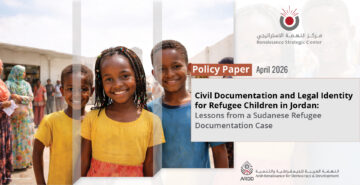
Executive Summary This paper examines a documentation challenge affecting Sudanese refugee children born in Jordan that arises from differences between Sudanese and Jordanian naming systems. While Jordan’s civil registration system generally follows a four-name
Since 2020, the Arab Renaissance for Democracy and Development (ARDD) has monitored the illegal practice of retaining personal identification documents by Jordanian hospitals as collateral for unpaid medical fees. This practice disproportionately has impacted
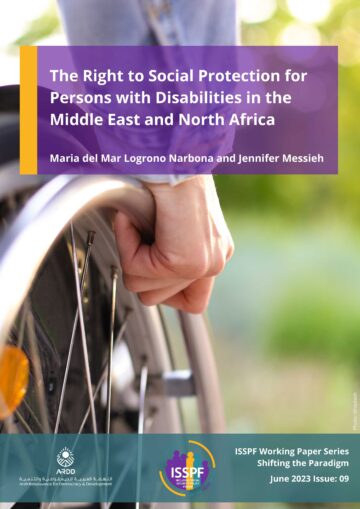
The Right to Social Protection for Persons with Disabilities in the Middle East and North Africa provides a comprehensive analysis of how legal and policy frameworks across the region address the rights of persons with
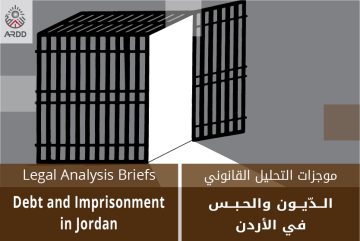
Unpaid debt in Jordan is widespread, affecting almost 2% of its population. Most recent estimates regarding people with unpaid debt in Jordan include 157,367 individuals who are wanted in civil debt cases and 30,669
ARDD and the Justice Forum advocate work to prevent the retention of personal identification documents by hospitals in Jordan and MOH responds Local civil society organizations, better capable of analyzing and identifying the
Debt and Imprisonment in Jordan brief discusses the legal frameworks for debt in Jordan and looks at repayment of debt according to the Jordan execution law and the penal code. It also sheds light
Syrian refugees in Jordan, as elsewhere in the world, are vulnerable to exploitation and abuse and are prevented from accessing humanitarian services, such as health and education. To amend this situation and in an
This paper is part of a series that summarises the decisions and measures taken by various sectors of the Jordanian government in the face of the COVID-19 health crisis. This is the second summary that
The Convention on the Rights of the Child, one of the most important documents concerning children, was adopted in 1989, after the UN General Assembly approved making it into international law. It entered into
This paper addresses the recently amendments issued on the procedures of 2017 , which allows the practice of certain home-based professions, and their impact on Syrian women refugees’ economic participation and empowerment, the paper also