Social Protection and Access to Justice in the Jordanian Labour Market
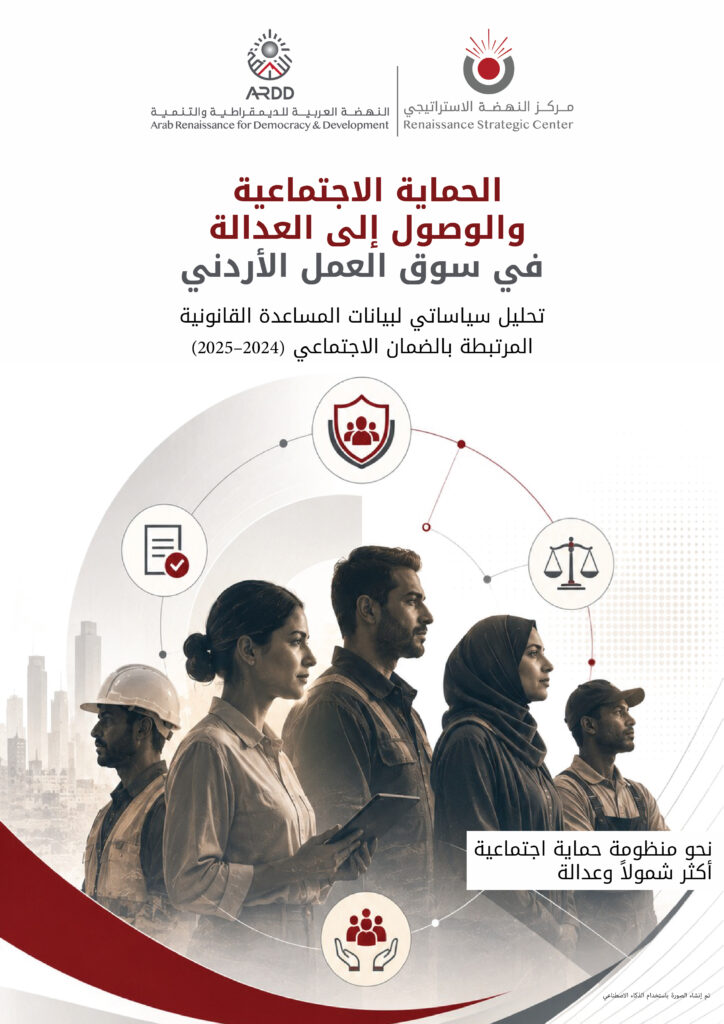
Access to social protection is a fundamental human right and plays a central role in ensuring dignity at work, income security, and social justice. However, millions of workers worldwide remain partially or entirely excluded from national social protection systems or are unable to benefit from them adequately due to legal restrictions, administrative barriers, difficulties in transferring benefits when moving between jobs, weak oversight mechanisms, and the widespread prevalence of informal forms of employment. The social security system is one of the most important tools used by states to achieve social protection and promote economic stability for individuals and communities. In Jordan, the social security system has developed gradually since the establishment of the Social Security Corporation in 1978, becoming one of the most prominent social protection institutions in the region and covering a broad segment of workers and employees. However, the economic and demographic changes Jordan has experienced over the past two decades, including refugee influxes and the expansion of the informal economy—which accounts for approximately 54% of the labour force and is estimated to have a financial value of around JOD 30 billion—have generated new challenges concerning the system’s ability to provide broad social insurance coverage and ensure that all groups, including Jordanian workers, migrants, and refugees, can access their rights and social protection. This paper draws on an analysis of labour and social security-related cases handled by the Arab Renaissance for Democracy and Development (ARDD) through its Legal Aid Department during 2024 and 2025. The dataset comprises 1,156 labour cases distributed across 28 locations and involving 10 different nationalities, providing a comprehensive picture of the obstacles workers face in accessing their rights and social protection.
ARDD Emergency Hotline: Continuing a Lifeline of Support (2024–2025)
15,405 Calls in 2 Years ARDD’s hotline continues to provide 24/7 legal support across Jordan Since 2006, ARDD’s Emergency Hotline has provided immediate legal guidance and support to individuals across Jordan, operating 24/7 to ensure that no call for help goes unanswered. As highlighted in ARDD’s hotline publication, this service has long served as a critical lifeline, particularly for refugees, migrants, and vulnerable communities. During 2024 and 2025 alone, the hotline received a total of 15,405 calls (7,540 in 2024 and 7,865 in 2025), reaffirming the continued importance and growing reliance on this service. The hotline has supported a diverse range of callers, reflecting sustained trust from both refugee and host communities across Jordan. Operating 24/7, the hotline addresses various urgent needs, from legal assistance to connecting callers with essential services, while ensuring that every call is treated with the same seriousness, regardless of complexity. Calls received highlight ongoing legal and protection needs, including issues related to personal status, administrative detention, work permits, residency, and access to services, demonstrating the evolving challenges faced by individuals. Beyond the numbers, each call represents a person seeking guidance, protection, or simply someone to listen. ARDD’s hotline remains defined by its human-centered approach, providing not only legal information but also reassurance and direction in moments of urgency. As needs continue to evolve, ARDD Hotline’s ongoing adaptation and responsive service continue to enhance its impact, making it an indispensable tool for emergency response in Jordan. Implications and Future Directions 2024–2025 data confirms the critical role of ARDD’s hotline in delivering legal support, while highlighting access gaps among women and youth. Moving forward, it may be beneficial to: Increase outreach to women and youth: Develop targeted communication and services to expand access among underrepresented groups. Strengthen legal response capacity: Expand specialized support in high-demand areas, including administrative detention, personal status, and residency-related cases.
Allies for Change: Advancing Women’s Leadership in Jordan through Engaging Men and Boys
Women’s civic engagement and leadership in Jordan remain constrained by intersecting structural, social, and institutional barriers. These barriers confine women’s authority to the private sphere, while the public domain continues to be dominated by men. Addressing this imbalance does not only require directly targeting constraints, but also transforming the broader social environment, including engaging men and boys as active allies. Engaging men and boys as allies contributes to a results pathway in which increased awareness and dialogue lead to shifts in attitudes and behaviors, fostering more enabling environments that support women’s leadership and participation in community decision-making. This policy brief provides evidence-based recommendations for policymakers and civil society to advance women’s leadership through inclusive, gender-transformative approaches that actively engage men and boys. It draws on insights from local dialogues and programmatic experience to identify key barriers and opportunities for fostering more inclusive civic spaces and to propose recommendations for policymakers, civil society actors, and community leaders seeking to strengthen women’s participation in community decision-making in Jordan. During 11 community dialogue sessions with 331 male participants across several governorates, stakeholders recognised inclusive decision-making as essential to social cohesion and community resilience, noting that women’s leadership produces solutions more closely aligned with household and community needs. Safe spaces for men should be complemented by joint dialogue between women and men. Religious and community leaders should be engaged to reframe gender equality as a shared value, while greater visibility of women in leadership roles and expanded economic empowerment opportunities are essential to driving lasting change. To address these challenges, programs should be locally grounded and designed in consultation with community stakeholders, with strong investment in gender-transformative facilitation.
The Reality and Challenges of Licensing Community and Small Enterprises in Jordan
Small, medium, and micro enterprises constitute a fundamental pillar of both national and global economies due to their role in promoting growth, sustainable development, and addressing poverty and unemployment. They also provide broad employment opportunities, especially for women, youth, and low-income groups. In Jordan, these enterprises represent about 99.5% of private-sector institutions, reflecting their significance in the national economic structure. Despite this vital role, community and small enterprises face complex challenges that hinder their launch and sustainability, including procedural and bureaucratic complexities, multiple legal authorities, weak financial incentives, and fear of losing social benefits—all of which limit the transition of grassroots initiatives into productive, formalized projects. This paper, issued by the Jordan National NGO Forum (JONAF) as part of the project Future Forward: Unlocking Sustainable Local Opportunities, aims to highlight these challenges, analyze their legal, procedural, and economic dimensions, and present practical recommendations to strengthen the supportive legislative and administrative environment. This would help empower women, youth, and refugees to participate effectively in local development and achieve economic sustainability.
Empowering the Future: Jordanian Youth’s Role in Driving Meaningful Change
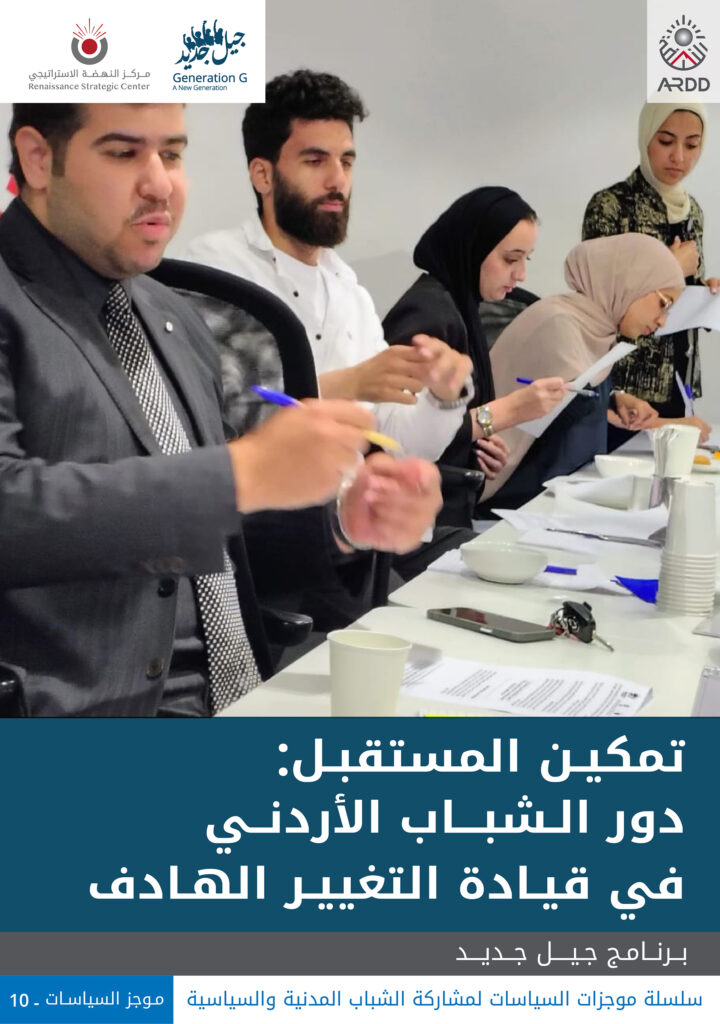
Jordanian youth, as the country’s demographic majority, hold great potential to drive meaningful social change. They bring energy, creativity, and a strong awareness of community challenges, actively engaging in civic and social initiatives through grassroots organizing, digital activism, and participation in civil society, highlighting their vital role in shaping the future. However, despite representing a significant portion of the population, young people in Jordan remain largely disengaged from collective action and formal decision-making. Their involvement in civic and social initiatives is often individualistic, lacking the structured unity needed for lasting impact. Additionally, most youth show disinterest and distrust in politics, with voter turnout among young people significantly lower than that of older citizens, and their representation in state institutions is minimal, with a 42% gap in parliamentary representation. The brief is an output of the Youth Civic and Political Participation Policy Labs, conducted by the Arab Renaissance and Democracy (ARDD) as part of the New Generation Program. It highlights the session titled “Empowering the Future: Jordanian Youth’s Role in Driving Meaningful Change,” and what political science and law students from the University of Jordan discussed regarding this matter. Following the labs’ work methodology, the session featured Dr. Mohammad Jreibi, Director of the Thuraya Center for Studies.
Envisioning Change: Aspirations and Perspectives of Jordanian Youth for a Better Future
Jordanian youth, praised by His Majesty King Abdullah as the nation’s “greatest asset and hope for the future,” are energetic, creative, and socially aware. Their digital fluency enables them to mobilize, voice opinions, and connect with global movements. Yet, they face a major challenge: rapid technological change outpaces slower cultural adaptation, creating a gap that hinders collective impact. This policy brief examines how to bridge the disconnect and harness youth potential for structured, meaningful change. The brief is an output of the Youth Civic and Political Participation Policy Labs, conducted by the Arab Renaissance for Democracy and Development (ARDD) as part of the New Generation Program. It highlights the outcome of the session titled “Envisioning Change: Aspirations and Perspectives of Jordanian Youth for a Better Future,” and what political science and law students from the University of Jordan discussed in this regard. Following the lab´s methodology, the session featured anthropologist and researcher Dr. Kamal Mirza.
Two Societies, One Struggle: Reimagining Fatherhood and Female Leadership in Egypt and Jordan
Despite vast differences in geography, population size, and political trajectories, the lived realities of young women in Egypt and Jordan reveal a striking commonality: the enduring influence of family structures shaped by deeply rooted cultural norms, religious interpretations, and mounting economic hardship. Whether in Cairo or Amman, families remain both gatekeepers and potential enablers of women’s public participation. This policy brief examines how evolving family dynamics—particularly the roles of fathers and male relatives—are shaping young women’s access to leadership in both countries. It draws on insights from bilateral consultations with gender and leadership experts convened by ARDD between April and June 2025 under the “She Leads” program. These consultations reflect a growing recognition that gender equality in the Arab world cannot be achieved without rethinking how family and fatherhood are understood and practiced. At the heart of this inquiry lies a key paradox: while young women are entering education and professional spaces in unprecedented numbers, their leadership pathways remain constrained by private sphere dynamics. Decisions about autonomy, mobility, and self-expression are often negotiated—or controlled—within the family. The same religious, cultural, and economic logics that confine women to the domestic sphere can also create openings to renegotiate male roles, transforming them from disciplinarians to allies, from passive providers to active champions of girls’ ambitions. In both Egypt and Jordan, the past two decades have seen gradual but uneven shifts in these roles. Fathers and male siblings are increasingly offering emotional support, moral encouragement, and even mentorship—changes often shaped by education, displacement, or exposure to digital and transnational gender discourses. Digital platforms, in particular, have become arenas where gender norms are both challenged and reinforced, offering spaces for contestation and reconstruction. This policy brief identifies promising practices, challenges, and opportunities to reframe fatherhood as a driver of gender transformation—leveraging cultural continuity to advance equality. While the sociopolitical contexts of Egypt and Jordan differ, their gender struggles are deeply interconnected. Both societies are navigating how to adapt traditional family roles to modern aspirations, and this adaptation—if guided strategically—can unlock the leadership potential of a new generation of young women. The recommendations that follow build on existing cultural foundations, drawing on models of positive male engagement and gender-sensitive family frameworks. They offer a roadmap for institutions, civil society, and development actors committed to advancing gender equality in leadership—transforming the family not as a barrier to overcome, but as a partner in change. This policy brief is part of the “She Leads” project, a joint project of Plan International Netherlands, Defense for Children – ECPAT the Netherlands (DCI-ECPAT), African Women’s Development and Communication Network (FEMNET), and Terre des Hommes the Netherlands (TdH), targeting social norms in formal and informal institutions in East Africa, West Africa, and the Middle East. As an implementing partner with Terre Des Hommes regionally, the Arab Renaissance for Democracy and Development (ARDD) works towards increased sustained influence of girls and young women (GYW) within the decision-making processes in the MENA region.”
Follow-up to the paper “The General Pardon Law No.5 of 2024 and Its Impact on Refugees: Insights from ARDD”
As part of its ongoing legal efforts in enhancing access to justice, the Arab Renaissance for Democracy and Development (ARDD) issued a legal paper in July 2024 entitled The General Pardon Law No.5 of 2024 and Its Impact on Refugees: Insights from ARDD.”The paper provided a detailed explanation of the key provisions of General Pardon Law No. (5) of 2024, issued on April 2, 2024, and the significance and impact of the law for both Jordanians and refugees. In this context, the paper stated that on May 7, 2024, ARDD submitted a legal petition to the committee formed under the chairmanship of the President of the Court of Cassation, in accordance with Articles (6) and (7) of the General Pardon Law No. (5) of 2024, requesting an official clarification on whether the General Pardon covers: Fines and violations stipulated in the Residency and Foreigners’ Affairs Law and deportation decisions. Fines and deportation decisions contrary to the Labor Law. Fines resulting from violations of the Social Security Law. However, as of the date of publishing the paper, the committee’s decision had not yet been issued, and the organization continued to follow up to obtain the requested clarification as indicated above. Subsequently, the official response from the competent committee was recently issued, explicitly stating that these fines and violations are not covered by the General Pardon. The decision considered that the fines imposed under Article 15 of the Instructions on the Conditions and Procedures for Employing and Recruiting Non-Jordanian Workers represent expenses borne by the State Treasury due to the efforts of the Ministry of Labor and other official bodies in detecting violations, detaining non-compliant workers until their deportation, and covering deportation expenses. The decision also found that this amount constitutes a civil obligation paid to a specific authority when violating the instructions and is paid to a non-judicial entity, thus qualifying as a civil obligation that is not subject to the General Pardon. The same applies to the fine collected from the employer for failing to renew a work permit after 90 days from its expiry date. Likewise, residency fines, deportation, and removal decisions fall under the authority of the Minister of Interior upon the recommendation of the Minister of Labor, unlike the fine stipulated in Article 12 of the Labor Law, which is a criminal penalty imposed on the employer for committing a misdemeanor involving the employment of a non-Jordanian worker without a permit — this fine is covered by the General Pardon. The decision was issued on April 20, 2025.
Redefining Participation: Arab Youth Between Traditional Politics and New Forms of Activism
Over the past five years, the Arab World has faced a series of multifaceted crises that have significantly impacted governance systems and legitimacy. These crises have led to a growing disillusionment among Arab youth and a decline in formal political engagement. This policy brief examines the factors contributing to this demobilization across three levels: international, regional, and national. At the international level, global challenges such as climate change, economic instability, conflict, and the spread of misinformation have fueled frustration and disengagement. At the regional level, in addition to conflicts and insecurity, entrenched systemic issues, including corruption, the absence of long-term youth-focused policies, and the lack of spaces for expression and engagement, have further alienated young people. At the national level, Jordan serves as a case study to illustrate how these broader dynamics shape youth perceptions and civic participation within a specific country context. In response to these challenges, young people have turned to informal activism, including digital engagement, community-based initiatives, and cultural resistance. This policy brief explores the potential and constraints of these alternative avenues, shedding light on how youth navigate restrictive political environments to assert their agency. Ultimately, it provides policy recommendations for governments, civil society, and youth to foster inclusive political participation and rebuild trust in governance structures.
Women, Youth, and Leadership: Lessons Learned
This policy brief explores the evolving dynamics of leadership among youth and women in Jordan, positioning leadership as a central enabler of civic and political participation. It draws on insights from the Youth Civic and Political Participation Policy Lab -organized by the Arab Renaissance for Democracy and Development (ARDD) in collaboration with the Center for Strategic Studies at the University of Jordan -particularly the 8th session, Women, Youth, and Leadership: Lessons Learned, held in October 2024. This session served as a validation space, building on discussions from the first three Labs (February–May 2024), where twenty students of political science and law examined topics including: 1) Social Norms and Political Processes; 2) Women’s Leadership in Jordan; and 3) Youth Social Capital. The session also integrated preliminary findings from the 2024 Gen G research on inclusive leadership, exploring how leadership traits and practices can support youth and women’s meaningful engagement across public, private, and civil society sectors.