Economic empowerment and mitigating domestic violence risks Policy Brief 6
This brief explores the local response to domestic violence through building local research capacity, with a focus on mitigating domestic violence risks. The brief offers policy recommendations guided by insights from various actors from the local community on their perceptions of domestic violence. To gain insight into the community perspectives, ARRD collaborated with 11 civil society organizations from the Jordan National NGO Forum (JONAF) Coalition and provided various training to prepare them to launch this research and build a common understanding of gender-based violence and how to address it. The study shed a light on the lack of awareness concerning the topic of domestic violence within the local communities, where the perception of domestic violence is limited to its physical form. This lack of knowledge often leads individuals to be unaware or in denial when facing domestic violence often justifying other forms of domestic violence as lesser, indicating a need to raise awareness on the different forms of domestic violence. The study also identified the local perspective towards the various needs of domestic violence survivors focusing on rehabilitation and empowerment. The participant emphasized the importance of better understanding the needs of domestic violence survivors and means of addressing them. The brief suggested policy recommendations including Ensure a participatory approach to the identification of services offered to survivors that should be reviewed regularly Build economic empowerment in a vision of mitigating domestic violence, taking into account the local perspective. While addressing the need of raising awareness about domestic violence This brief comes as part of a series of Women Advocacy Issues policy briefs ARDD is producing within the framework of the project “Strengthening the Capacities of Women-led CSOs in Evidence-Based Advocacy and Women, Peace, and Security (WPS) Agenda” supported by UN Women with the generous funding of the governments of Canada, Finland, Norway, Spain, the United Kingdom, and Cyprus. ARDD acknowledges the support of the women-led civil society partners involved in the project implementation and thanks to the representatives of the organizations for their meaningful contribution.
Enhancing Access to Services for Survivors of Domestic Violence: Building Trust in National and Local Services Providers Policy Brief 5
This brief explores the local response to domestic violence, with a focus on identifying the local perceptions towards the roles and mechanisms of the Family Protection Department and Local Civil Society actors. The brief provides policy recommendations guided by insights from various actors from the local community on their perceptions of domestic violence and the response provided by various actors. To gain insight into the community perspectives, ARRD collaborated with 11 civil society organizations from the Jordan National NGO Forum (JONAF) Coalition and provided various training to prepare them to launch this research and build a common understanding of gender-based violence and how to address it. The research-action showed that families lack information about the mechanisms and role of the Family Protection Department and other relevant stakeholders when it comes to domestic violence. The absence of trust is evident among respondents with concerns over confidentiality and misconceptions limiting understanding of processes mixed with stereotypes around GBV survivors by the participants. Additionally, a lack of knowledge and awareness of the services provided by the family protection department and other stakeholders often deters women from reporting their cases, rather than dealing with their cases internally with their families. The brief presents several recommendations including: Increasing local knowledge about services providers Build local capacity to raise awareness about domestic violence, access to services beyond stereotypes Clarifying and building knowledge and awareness about safety procedures. This brief comes as part of a series of Women Advocacy Issues policy briefs ARDD is producing within the framework of the project “Strengthening the Capacities of Women-led CSOs in Evidence-Based Advocacy and Women, Peace, and Security (WPS) Agenda” supported by UN Women with the generous funding of the governments of Canada, Finland, Norway, Spain, the United Kingdom, and Cyprus. ARDD acknowledges the support of the women-led civil society partners involved in the project implementation and thanks to the representatives of the organizations for their meaningful contribution.
Strengthening Access to Healthcare Services and Legal Protection among low-income Jordanians and Refugees An end to the retention of personal identification documents by Jordanian hospitals
ARDD and the Justice Forum advocate work to prevent the retention of personal identification documents by hospitals in Jordan and MOH responds Local civil society organizations, better capable of analyzing and identifying the needs of their communities, spearhead evidence-based advocacy efforts that lead to concrete results on the ground. Arab Renaissance for Democracy and Development (ARDD) engaged in such advocacy effort, scoring a measure of success, but vowing to obtain more. Through the Forum for Supporting the Justice Sector – a joint ARDD-Durrat Al-Manal for Development and Training initiative – and through its Public Health Policy Lab sessions, which enjoy the participation of experts in the justice and health sectors, and which aimed at integrating the right to health into the justice system, ARDD contributed to improving one aspect of the Jordanian health sector. The sector has witnessed a steep decline due to the COVID-19 pandemic, which has led to an increase in cases of medical accountability lacking health services, and adoption of practices that, due to ARDD’s hard work and determination were proved illegal. More specifically, the seizure of patients’ personal documents by way of ensuring payment for their treatment. During the Public Health Policy Lab session, ARDD was the first to raise the issue of hospitals withholding patients’ personal documents as a guarantee that they would settle their hospital fees, one of the major problems that have emerged recently, and which the Ministry of Health felt it needed to address. Minister of Health Dr. Firas Al-Hawari issued instructions with the heads of health directorates and hospitals, asking them to prevent the seizure of patients’ identification documents, which is illegal, according to Article 10 of the Civil Status Law. Having the required expertise, ARDD was able to spearhead the advocacy efforts and legal discussion within the Justice Forum, ARDD’s legal aid department, about the issue. It presented a legal analysis that had dealt with 565 cases in which identification documents had been withheld by Jordanian hospitals in the period 2020- 2021. The number of such cases varied across the various Jordanian governorates. The central governorates witnessed 216 cases, the northern governorates 187 cases, the southern governorates 111 cases, and the Syrian refugee camps (Azraq and Zaatari) 51 cases. This illegal practice poses a great problem, especially for refugees. As such, the legal aid department issued a recommendation, to be circulated by the directorates of health in Jordan, asking for the practice to stop and for hospitals to resort, instead, to legal means and relevant enforcement entities, in addition to establishing a mechanism that enables patients to pay their dues in installments. ARDD shared a letter with Minister Al-Hawari, informing him of the severity of the issue, in particular for the refugees who already suffer tremendously, are under more serious monitoring and who, without identification documents run the risk of jail. In response to the letter, Dr. Al-Hawari sent a letter to the heads of health directorates and hospitals, instructing them to ask their cadres to desist from withholding personal identification documents of both Jordanian and non-Jordanian patients who fail to pay the costs of their treatment at the Ministry of Health’s hospitals and, instead, resort to legal action. Dr. Al-Hawari has instructed that, instead of seizing patients’ personal documents, the accountant or administrative employees request that the patients or their sponsor sign a pledge that they will pay the amount due upon their discharge from the hospital. The issue has not been fully addressed yet. Fulfilling its duty to serve the local community and to strive to ensure respect for the rule of law, ARDD, through the Justice Forum’s Public Health Policy Lab, will follow up on the adherence of health directorates and hospitals to the Ministry of Health instructions.
Care Matters: The Value of Women’s Unpaid Care Work in Jordan
Care work, defined by the International Labor Organization as “consisting of activities and relations involved in meeting the physical, psychological and emotional needs of adults and children, old and young, frail and able-bodied,” has historically and overwhelmingly been undertaken by women worldwide in their roles as wives, mothers, and daughters. Care work can either be paid—through education, health, social care, and domestic work sectors—or unpaid. Unpaid care work typically includes the direct care or supervision of persons (primarily children, persons with disabilities, the elderly, and persons with chronic illnesses), housework that facilitates the care of persons, and food shopping, among other activities. While these actions are not always viewed as “work,” the “third-person” criterion defines work as activities for which a third person could be compensated, and as such, these behaviors are considered as work. Globally, women spend more time on unpaid care work than men; on average, they spend 2 hours and 28 minutes more on unpaid work than men per 24-hour day. In the Arab States, researchers have estimated that women perform 4.7 times more unpaid care work than men, which is the highest women-to-men ratio in the world. Specifically in Jordan, it has been calculated that the ratio of women-to-men’s time spent on unpaid care work reaches 19:1 in Jordan, the highest within the Arab States. In economic terms, unpaid care work has been proven as a predictor in determining both whether women enter and stay in the labor force as well as the quality of jobs they accept. Moreover, research shows that there is a significant negative correlation between a country’s female employment rate and women’s average unpaid working time. In other words, women’s unpaid care work decreases as national rates of women’s employment increase and vice versa. This phenomenon is reflected in Jordan, where the female labor participation rate is 14.9 percent, and it has been estimated that 51.3 percent of Jordanian women aged 15 years or above consider domestic household work (which is considered unpaid care work) as their primary activity. COVID-19 has exacerbated the inequalities in unpaid care work worldwide. Despite descriptions of crashing productivity in the “real economy,” women have been busier than ever, as men who are staying home due to job losses and remote work requirements have not increased their contributions to housework. Moreover, during crises such as the COVID-19 pandemic, women “may face increased pressure to substitute unpaid work for lost income, for example, taking care of an ill relative at home rather than taking them to a clinic.” Indeed, UN Women estimated that in Jordan, married women with children may have spent 18 to 24 additional hours per week on unpaid care work during the pandemic, while men have only spent 1-3 hours additional hours per week on the same activities. As assessed by UN Women in 2020, unpaid care work has constituted a particular burden for women in Jordan despite social protection mechanisms. However, there is a lack of accurate and reliable data on care work activities undertaken by women, particularly considering the impact of COVID-19. Measuring the amount of unpaid direct and indirect care work that women perform on a daily basis is one of the strategies that feminist economists have highlighted as integral to bringing awareness to governmental institutions about the critical economic contributions of women. To this end, this report aims to sensitize wider audiences on the impact of unpaid care work from the perspectives of women in Jordan; and explore a gender-responsive and bottom-up approach in deciding how care work can be reduced and redistributed in Jordan. While the commodification of care work is presented as a potential solution by international experts, a women’s rights approach to unpaid care work must investigate the drivers that initially placed women in the position of the primary unpaid caregivers and the solutions that can provide women with a choice. To this end, the transformation of social norms and legislative changes are among the two most pressing recommendations. Further research looking into the realities of women’s lives as unpaid caregivers provides the necessary foundation to enact the necessary policies toward that transformation. This report comes as part of the action research conducted by ARDD’s Al Nahda Center within the framework of the project “Strengthening the Capacities of Women-led CSOs in Evidence-Based Advocacy and Women, Peace, and Security (WPS) Agenda” supported by UN Women with the generous funding of the governments of Canada, Finland, Norway, Spain, and the United Kingdom. ARDD would like to thank JONAF civil society partners and individuals that supported the development of this study.
JONAF’s observations on bill () 2021 Jordan Associations’ Law (associations’ law amendment bill)
Seeking to contribute to the efforts to create a law that promotes the role of various local and international civil society organizations and associations, the Jordanian National NGOs Forum (JONAF), sent a letter to the minister of social development and the reviewing committee of the Associations Law 2008 stressing the importance of implementing several procedures to ensure the issuance of an ideal law that emphasizes the constitutionally and internationally protected space and freedom of civil society organizations as partners in development. The forum wishes to highlight its recommendations regarding the amendment of the Associations Law, which it views as an integral part of this memorandum.
Debt and Imprisonment in Jordan Legal Analysis Briefs Series Volume 1
Debt and Imprisonment in Jordan brief discusses the legal frameworks for debt in Jordan and looks at repayment of debt according to the Jordan execution law and the penal code. It also sheds light on the impact of the Covid-19 crisis on debt repayment and the implications of the debts of women and refugees. The brief provides insights on Defense Law 28 and offers an overview of the laws in force in the region. The Brief proposes recommendations for moving forward that contribute to focusing on finding solutions that guarantee protection for both debtors and creditors in order to strengthen the rule of law and the right to litigation and ensure the implementation of legal provisions while avoiding harming the debtor or creditor. Amending the Jordanian Implementation Law of 2007 and its amendments, the insolvency law, and expanding the credit information law, in addition to the creation of a stable fund to pay off the debts of the defaulting debtor that is managed by the Ministry of Justice or the Ministry of Social Development. This brief on debt and imprisonment in Jordan is the first of ARDD’s legal analysis series. ARDD acknowledges and thanks members of The Forum for the Development of Justice Sector in Jordan for their insights on Defense Order no. 28 in particular.
Women’s Informal Employment in Jordan: Challenges Facing Home-Based Businesses During COVID-19 Women’s Advocacy Issues Policy Brief Volume 3
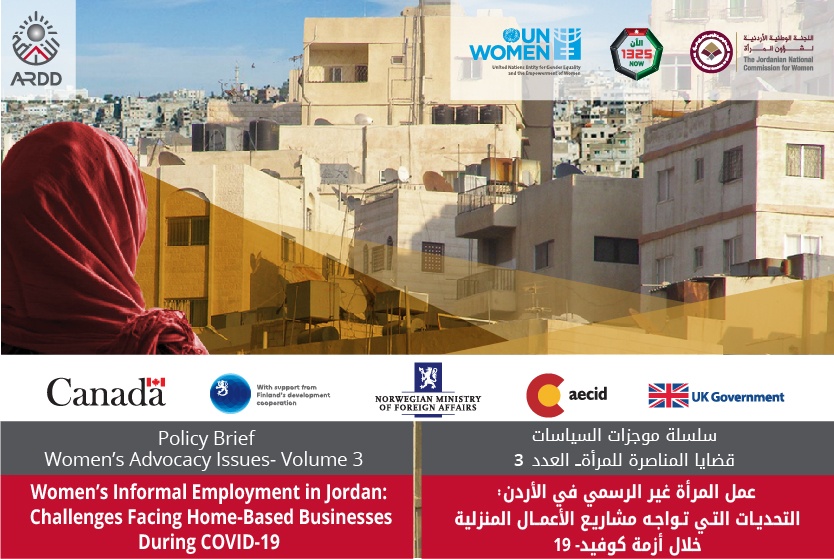
Jordan has moved into the second year of the COVID-19 crisis. The lockdowns, the global economic slowdown, trade disruptions, and the suspension of international travel have “exacerbated existing structural weaknesses in the economy and unresolved social challenges and put pressure on the country’s fragile macroeconomic stance.” Assessments conducted during the first wave of the pandemic revealed that employment losses and income reductions due to restrictions had had significant effects on households in governorates of Jordan. COVID-19 and the policies put in place to curb the spread of the pandemic worsened the situation, especially for women, as they lost income, were confronted with increasing responsibilities at home due to the closure of schools and caring for those infected and faced further risk of physical or psychological violence due to heightened tensions within the household and/or increased food insecurity. Women working in the informal sector, such as unregistered home-based businesses (HBBs), encountered challenges that took the form of termination of work and loss of major clientele. CSOs, in particular women-led CSOs, witnessed negative consequences of the COVID-19 pandemic on women working informally, as well as some trending coping measures that many women adopted to stay afloat. This brief explores women’s participation in the informal labor market, with a focus on home-based businesses before and during the COVID-19 crisis. The brief offers policy recommendations guided by insights from women-led and women-focused civil society organizations (CSOs) on how to address the economic impact on informal women-led home-based businesses in Jordan. This brief comes as part of a series of policy briefs ARDD is producing within the framework of the project “Strengthening the Capacities of Women-led CSOs in Evidence-Based Advocacy and Women, Peace, and Security (WPS) Agenda,” supported by UN Women with the generous funding of the Governments of Canada, Finland, Norway, Spain, and the United Kingdom. ARDD acknowledges the support of the women-led civil society partners involved in the project implementation and thanks to the representatives of the organizations for their meaningful contribution.
Beware of delegation…displacement and assignment of properties to the the Custodian for Absentees’ Property A statement issued by civil society organizations in Lebanon, Palestine and the diaspora
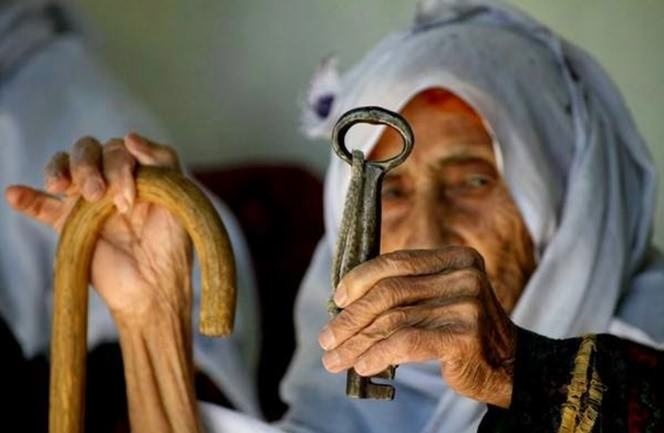
Civil organizations in Lebanon, Palestine, and the diaspora have revealed evidence and data confirming the involvement of lawyers and institutions operating in Lebanon seeking to displace Palestinian refugees from Lebanon to Western countries and liquidate their rights in the face of the colonial state “Israel” by transferring property ownership to the so-called custodian of absentees’ property. They called on Palestinian and Arab political forces, civil institutions, and individuals to organize awareness campaigns about the dangers of providing a legal mandate that includes a representative formula that enables the delegated body, whether it is an individual lawyer, institution, or body, to tamper with the legal rights of individual and collective Palestinian refugees. Statement in Arabic
JIF and JONAF point to successes and challenges in responding to Syrian refugee crisis in the Kingdom prior to the Brussels 5th Conference
The Jordan INGO Forum (JIF) and the Jordanian NGOs Forum (JONAF) launched the 2021 Walk the Talk report on progress and challenges faced in implementing the commitments made by the Government of Jordan and the International Community under the Jordan Compact and at subsequent Brussels meetings in 2017, 2018, 2019, and 2020. As with previous years, this year’s Walk the Talk assesses education, livelihoods, protection, and health for Syrian refugees in Jordan prior to the Brussels 5 Conference on March 30, which will occur virtually. The report is based on assessments and surveys taken over the past year to track progress and barriers faced, as well as on civil society feedback from both international and national NGOs. It looks to highlight the challenges faced by Syrian refugees, as well as provide evidence-based recommendations as to how the International Community and the Government of Jordan can support these communities and address ongoing and emerging issues. This year the conference comes at a time following one year of the outbreak of the pandemic, as well as a decade of conflict and protracted displacement in Syria. The COVID-19 crisis has posed immense health challenges to all communities in the Kingdom and strained health infrastructure and capacities. Jordan has been forced to grapple not only with mitigating the spread of the virus, but also to address the secondary impacts of the response, which encompass exacerbated protection risks, such as with regards to SGBV and child protection; socioeconomic concerns related to the loss of livelihoods; school closures and barriers to online learning; and increased psychological stress. Additionally, ten years of displacement of Syrian refugees has resulted in increased vulnerabilities with highly limited pathways to durable solutions. Thus, JIF and JONAF continue to advocate not only for the inclusion of refugees in national response plans and social protection schemes to ensure no one is left behind, particularly in the COVID-19 response, but also to maintain an emphasis on longer-term approaches for Syrian refugees and integrating the humanitarian-development nexus and resilience programming into policies and practice. The need for support is greater now than before, both to assist the Government and to strengthen and include civil society in the overall response. Multi-stakeholder partnerships across and between sectors are critical to incorporate local actors, strengthen capacities, and place refugee and host community voices at the center of all interventions. Furthermore, after a decade of displacement, assistance through flexible funding is necessary to shift to longer-term responses and promote the resilience of communities. All stakeholders ranging from government actors, INGOs and NNGOs, community-based organizations, donors, and the private sector have a responsibility to assist the Kingdom not only in addressing the challenges Syrian refugees face through programming and the COVID-19 response but also in continuing to promote principled humanitarian policies and assistance.
Women’s Financial Vulnerability: Challenges Women Face with Debt and Loans
In August 2020, ARDD collected data from 506 women in Jordan to gauge their financial situation, particularly the impact COVID-19 has had on their financial debt. The analysis of the data, combined with information and insight from the 19 CBOs participating in this project, resulted in very informative findings regarding women’s debt. Overall, COVID-19 has exposed the fragile financial situation of women. When looking at different aspects of women’s lives (their legal status, educational level, and civil/marital status), data shows that these elements are all critical to understanding the type of debt and the vulnerability of their situations. Along with it, the prevalence of non-institutional actors providing financial assistance to Syrian refugee women raises concern about the potential risk of abuse. The brief also suggests several recommendations to the Jordanian government and donors, such as providing support to programs that improve women’s skills and raise their legal and financial awareness, strengthening cash assistance programs, and drafting protocols to report situations of abuse regarding borrowing from non-institutional sources, in addition to enhancing legal aid services for women and supporting them. The Arab Renaissance for Democracy Development (ARDD) is producing a series of policy briefs within the framework of the project “Strengthening the Capacities of Women-led CSOs in Evidence-Based Advocacy and Women, Peace, and Security (WPS) Agenda” supported by UN Women with the generous funding of the governments of Canada, Finland, Norway, Spain, and the United Kingdom. ARDD acknowledges the support of the women-led civil society partners involved in the project implementation and thanks to the representatives of the organizations for their meaningful contribution.