Author: Vincent Metzger, RSC Intern
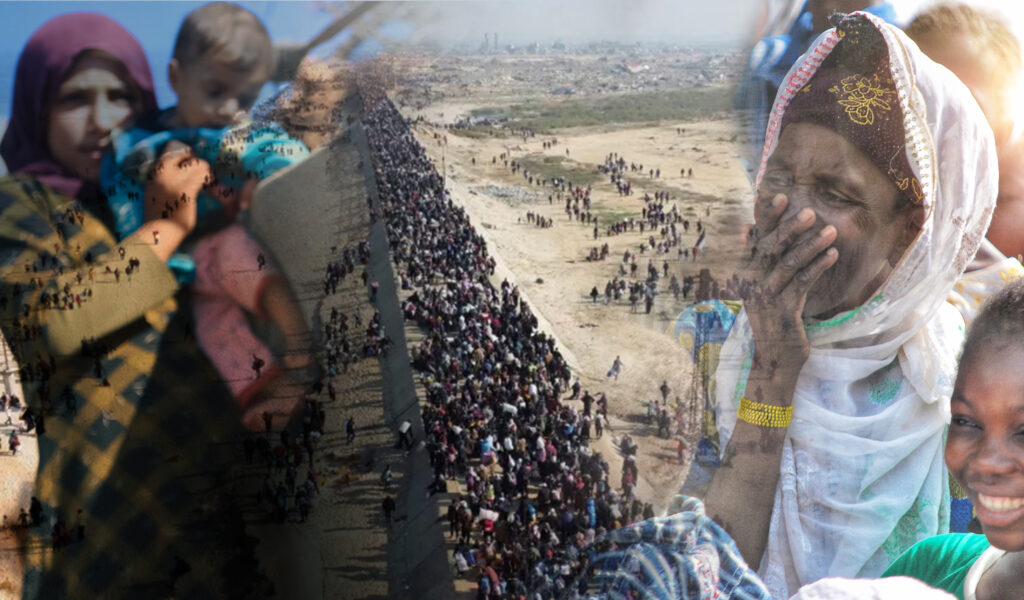
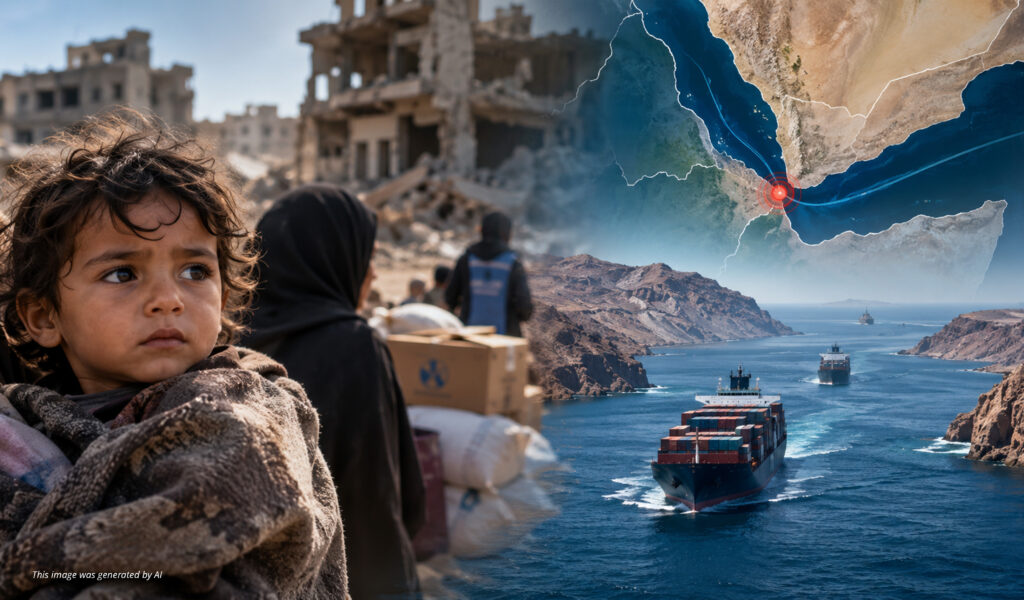
Since early September 2026, fighting in Yemen has affected strategic locations, including Mayyun Island and the port city of Mokha, increasing pressure around the Bab al-Mandab Strait, a major international shipping route. The escalation has reportedly displaced more than 120,000 Yemenis, many of whom have moved to Taiz and Lahij. Over the course of Yemen’s decade-long conflict, approximately 4.5 million people have been internally displaced, often more than once, Representing roughly 14% of the population.
The conflict continues to affect both Yemeni communities and refugees living in the country. It has also created risks for trade and aid deliveries through the Bab al-Mandab Strait. Nearly half of Yemen’s population, approximately 41 million people, is estimated to need humanitarian assistance.
Yemen on the Edge
Even before the recent escalation, Yemen had limited capacity to respond to another major crisis. After more than a decade of conflict, the country faces a weakened economy, widespread poverty and a severely strained healthcare system. More than 80% of the population lives below the poverty line, while only around half of medical facilities are fully operational.
The division between the central bank branches in Sana’a and Aden has contributed to different exchange rates and complicated economic activity. Goods entering areas controlled by the Houthis through the port of Aden may also face additional charges, increasing costs and discouraging some trade and investment, according to Yemeni researcher and activist Osamah Al-Fakih. Goods entering the Houthi-controlled areas are effectively taxed twice if they enter through Yemen’s main port in Aden, first by the government and again by the Houthis. This burden has deterred foreign trade and investment, according to Osamah Al-Fakih.
Displacement has placed further pressure on local communities. Yemen does not have enough large, organized camps to accommodate all those fleeing the fighting. As a result, many displaced families stay with relatives or integrate into host communities. While this can provide temporary shelter, repeated displacement often forces families to leave behind their homes, livelihoods and social networks. Families moving to Aden, Al Hodeidah, Abyan and Taiz are arriving in areas where humanitarian services are already under significant pressure.
Routes out of Yemen are also limited. Approximately 3,000 people have crossed the Bab al-Mandab Strait to Djibouti, one of the few available routes out of the country. Djibouti’s Markazi camp currently has capacity for around 5,000 refugees but is expecting more than 10,000 additional arrivals, according to UNICEF. The agency is also monitoring possible routes to Somalia. While those with money or connections sometimes fly out of the country to Amman or Cairo, many have no option and are displaced repeatedly inside the country. The same applies to the 65,000 registered refugees in Yemen, mainly from Somalia and Ethiopia. Some have since returned to their home countries, while many more have simply stayed. Although Yemeni law formally guarantees them protection against discrimination, in practice, according to Osamah Al-Fakih, they face many of the same abuses as Yemenis who have been displaced within their own country.
The Bab al-Mandab Strait and Global Trade
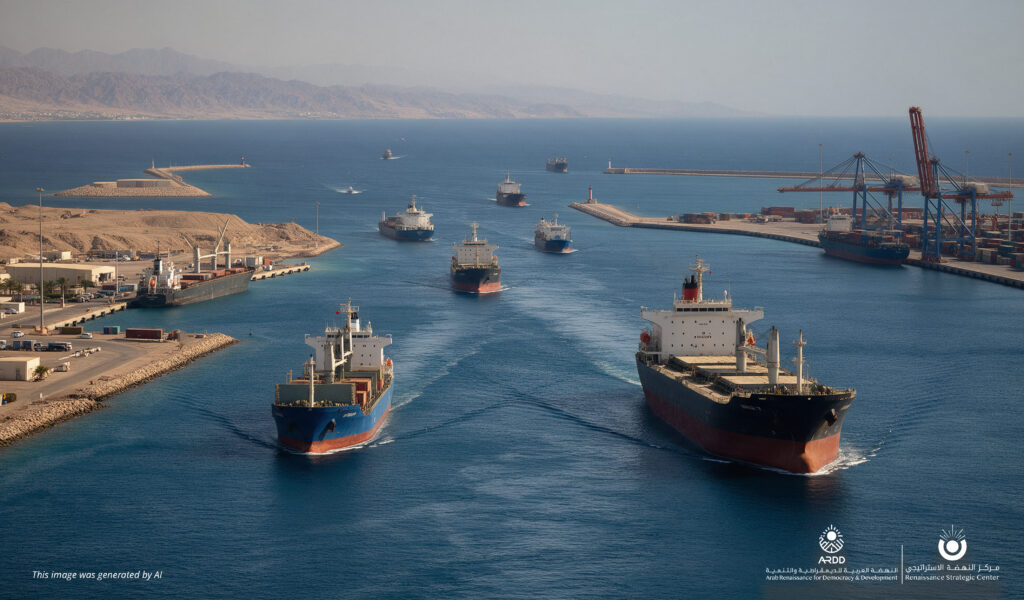
The humanitarian crisis is unfolding alongside developments around the Bab al-Mandab Strait, which connects the Red Sea with the Gulf of Aden. An estimated 12–15% of global trade passes through the wider Red Sea route, making the waterway important for international shipping and regional economies. As the war continues, the strait has gained further strategic importance due to the re-routing of oil exports to the kingdom’s western port of Yanbu. Crude oil is transferred from the east via the Petroline, which itself became a target of military attacks. Of the approximately 4.5 million barrels of oil exported from Yanbu, around 3 million used to pass through Bab al-Mandab.
Recent changes in the conflict have increased attention on the strait and the surrounding coastline. The area is also relevant to energy transport, including Saudi oil exports routed through the western port of Yanbu. Disruptions or security concerns can encourage ships to avoid the strait and travel around the Cape of Good Hope instead. This adds time and cost to voyages and can place further pressure on global supply chains.
These disruptions also affect humanitarian operations. Aid agencies depend on functioning transport routes to deliver food, medical supplies and other assistance to Yemen. Any increase in shipping costs, delays or security risks can make that work more difficult.
Humanitarian Work Under Pressure
Humanitarian organizations face significant challenges in reaching people in need. Laurent Bukera, the United Nations resident and humanitarian coordinator for Yemen, has identified insecurity, movement restrictions and communication problems as obstacles to access along the western coast. He has also expressed concern about the safety of aid workers and warehouses.
Funding remains another major challenge. The United Nations’ humanitarian appeal for Yemen, valued at US$2.16 billion, had received approximately 18% of the required funding at the time of writing.
Even when funding and supplies are available, humanitarian organizations may not be able to reach the communities that need them. In areas controlled by the Houthis, aid workers have been detained since 2014. According to Al-Fakih, these detentions have become a major constraint on humanitarian assistance.
As of September 2026, 73 UN staff members from different organizations had reportedly been detained since 2021. The United Nations has said that the detentions have significantly limited its ability to assist people across Yemen.
In 2025, the UN suspended official movement into and within Houthi-controlled areas after additional aid workers were detained, citing concerns for staff safety. This made it more difficult for humanitarian agencies to operate in some of the areas with the greatest needs.
The crisis therefore involves more than the availability of funding and supplies. Humanitarian assistance also depends on whether aid workers can safely reach affected communities. The UN Secretary-General António Guterres has called for the safe release of detained staff and warned that the detentions have restricted the ability of the United Nations and its partners to provide assistance.
Yemen’s crisis shows how humanitarian needs can be affected by developments in transportation, trade and regional security. Conditions around the Bab al-Mandab Strait have consequences beyond Yemen, but displaced families and local communities continue to face the most immediate impact. The conflict for control over one of global trade’s strategic chokepoints extends far beyond Yemen’s borders. As long as access for humanitarian workers remains restricted and funding gaps persist, displaced families will continue to bear the immediate consequences. Sustained international attention, both to secure humanitarian access and to close the funding gaps, will be essential to prevent a further deterioration of the situation on both fronts. Improving humanitarian access, protecting aid workers and addressing funding shortages will be essential to prevent further deterioration and support people affected by the conflict.