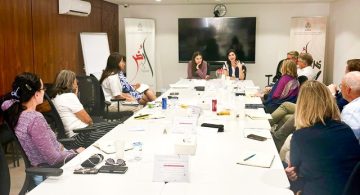
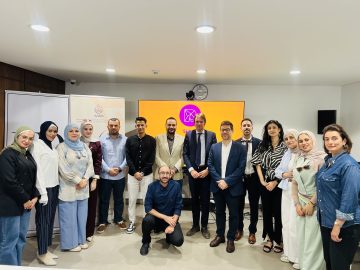
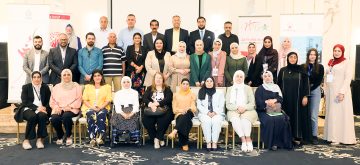
On September 17, 2025, the Arab Renaissance for Democracy & Development (ARDD) hosted a seminar for the Comenius Leadership group from the Netherlands, held as part of the Comenius Course on Diversity of Leadership.
By Maria Mariani As the 80th United Nations General Assembly (UNGA) opened on September 9 in New York City, world leaders are gathering amidst unprecedented challenges in peace, security, and global governance. This year’s
As part of its ongoing partnership with Independent Diplomat, the Arab Renaissance for Democracy and Development (ARDD) hosted a specialized training aimed at strengthening the diplomatic tools of organizations working in Jordan and linking
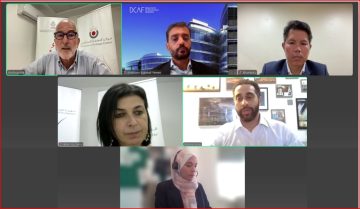
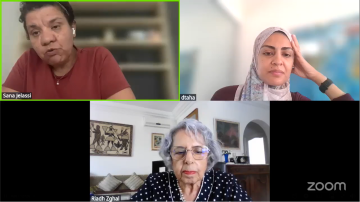
The Renaissance Strategic Center (RSC), as part of the Arab Renaissance for Democracy and Development (ARDD), facilitated an engaging virtual discussion titled “Reimagining Participatory Governance in the Arab Region: Local Practices and Comparative Lessons
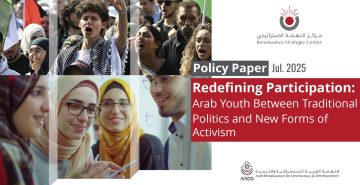
Over the past five years, the Arab World has faced a series of multifaceted crises that have significantly impacted governance systems and legitimacy. These crises have led to a growing disillusionment among Arab youth
As part of advocacy efforts aimed at promoting the localization of humanitarian and development work related to livelihoods, a group of local associations from the Jordan National NGO Forum (JONAF), in cooperation with the Arab Renaissance
As part of its ongoing efforts to understand the shifting landscape of international aid and to challenge the unequal power dynamics that shape this sector, the Women’s Studies Unit at ARDD´s Renaissance Strategic Center—organized
On May 18th, the Renaissance Strategic Center (RSC) hosted the launch of Identity Building in Jordan and Kuwait: The Strategy of Inclusion and Exclusion (Palgrave Macmillan, 2024) by Dr. Odetta Pizzingrilli, Post-Doctoral Researcher at the University
A Statement by JICOF* on the Impact of U.S. Foreign Aid Cuts in Jordan Jordan’s humanitarian and development sector is on the brink of a new crisis. The abrupt suspension of U.S. foreign
International aid agencies, particularly those involved in crisis-response who handle larger budgets, have power over national crisis responders. The primary source of that power is money. It is not just the money that is