Renaissance Strategic Center Signs Two MoUs with the University of Turin and CIEE Amman
September 2025 – The Arab Renaissance for Democracy and Development (ARDD), through its Renaissance Strategic Center (RSC), has signed two Memoranda of Understanding (MoUs): one with the Università degli Studi di Torino (UniTo) and another with CIEE INC Amman. These agreements establish a framework for cooperation in the areas of research, knowledge exchange, and capacity development, with a particular focus on advancing the RSC Internship Program. The partnerships are designed to strengthen collaboration between academic institutions and policy research platforms, contributing to both educational advancement and the production of innovative research. Through these MoUs, students and researchers from UniTo and CIEE will have the opportunity to participate in structured internships at RSC. The program will provide exposure to policy-oriented research and civic engagement initiatives, while also enabling interns to enhance their knowledge of the region and contribute to the Center’s ongoing projects. These partnerships, underscore ARDD/RSC, UniTo, and CIEE’s shared commitment to fostering academic-practice linkages, enhancing knowledge production, and supporting the development of the next generation of scholars and practitioners.
ARDD Hosts Training on Global Diplomacy Strategies and Local Realities
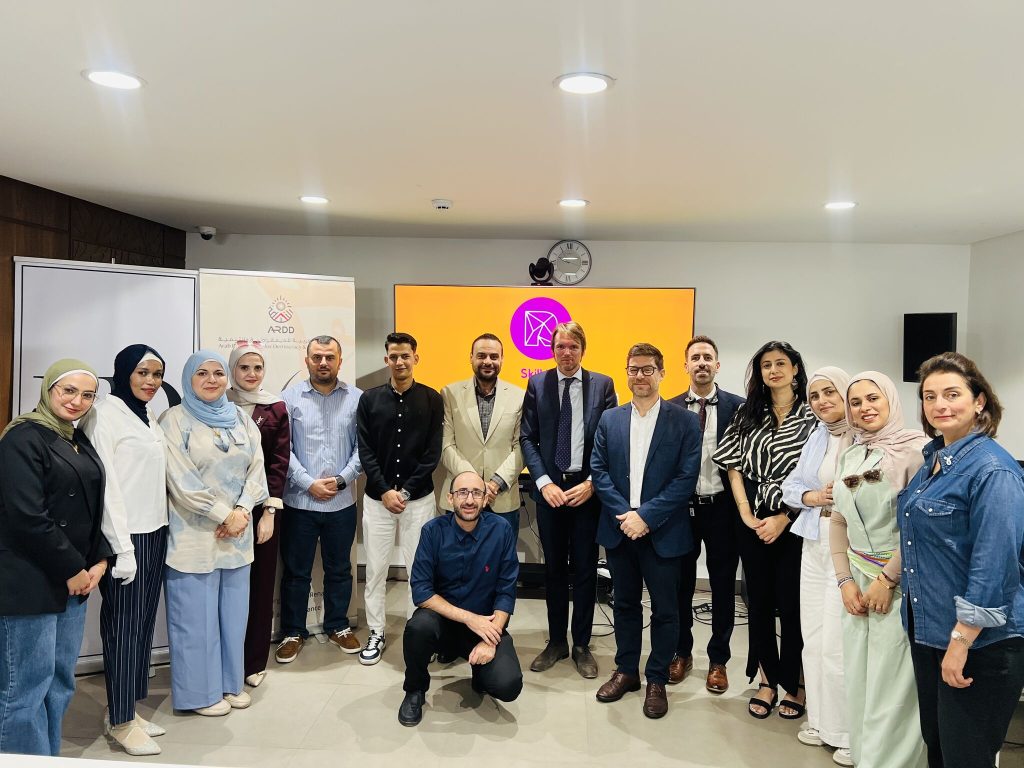
As part of its ongoing partnership with Independent Diplomat, the Arab Renaissance for Democracy and Development (ARDD) hosted a specialized training aimed at strengthening the diplomatic tools of organizations working in Jordan and linking global perspectives with local realities. The training brought together staff from Tahfeez Association and ARDD, the official partners of Independent Diplomat in Jordan, alongside representatives of diplomatic missions, civil society organizations, trainers, volunteers, and refugees. The Deputy Head of Mission of the Embassy of the Kingdom of the Netherlands delivered opening remarks, adding valuable insights on diplomacy to the discussions. Focusing on the history of refugee rights in Jordan, the program combined theoretical sessions with practical workshops designed to build effective strategies for engaging decision-makers and amplifying the voices of local organizations in global policy arenas. The training also drew on Jordan’s extensive experience with UNHCR, providing a unique perspective on connecting international frameworks with national policies. Community leaders shared their reflections on the experience. Samia, representing the Sudanese community in Jordan, said: “The training gave me the opportunity to use my personal experience in shaping effective diplomatic messages and linking local issues to the international scene.” Mohammed, a leader from the Yemeni community, added: “I gained practical skills to engage with decision-makers. I now feel that our voices can truly influence policy.” This initiative is part of a series of trainings that will continue throughout the coming year, aimed at empowering organizations working on refugee and humanitarian issues to strengthen their advocacy tools, highlight shared challenges with host communities, and engage international audiences. By doing so, ARDD and its partners seek to advance justice and fairness in global policies on asylum and displacement.
Empowering Each Other in Its Eighth Phase: 400 Women and Girls Strengthen Their Capacities to Drive Change in Their Communities
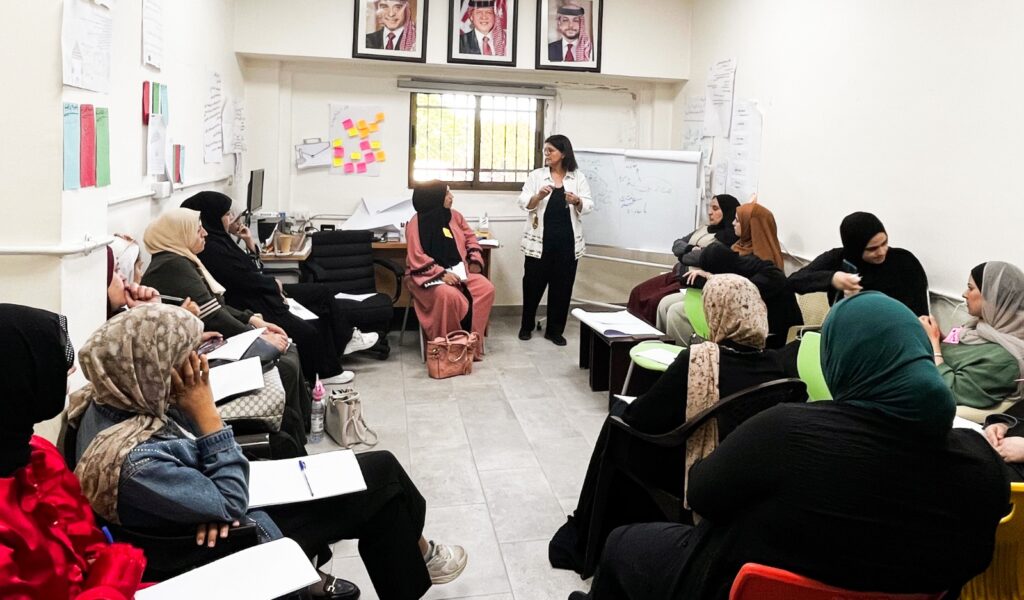
The Arab Renaissance for Democracy and Development (ARDD), in partnership with UN Women and with support from international donors, has concluded the first phase of trainings under the Oasis Program, held from 3 to 27 August 2025. The trainings spanned 18 centers across 11 governorates, engaging around 400 women and girls. The sessions were led by a distinguished group of experts, including Dr. Haifa Haidar and trainer Imad Abu Saleh. Participants in the specialized trainings on civic engagement and leadership, organized under the “Empowering Each Other” project, noted: “These intensive trainings gave us the tools and confidence to become more involved in our communities and contribute to change, while highlighting the importance of continuing such initiatives to reach more women across different governorates.” The Empowering Each Other project aims to equip women and girls with the knowledge and skills to become trainers in civic engagement and social protection within their governorates, while also fostering awareness and participation among both women and men. The trainings covered several key areas, including civic engagement, social protection, leadership skills, public speaking, psychosocial support, and the prevention of violence against women and girls. These efforts align with ARDD’s mission to strengthen the leadership role of women and girls in society and encourage their active involvement in community initiatives and decision-making. ARDD Program Director Eng. Zainab Al-Khalil emphasized that the trainings provide women, including those with disabilities, with the tools and confidence needed to become effective leaders capable of driving real change in their communities. She also noted that future plans aim to reach even more women in the coming months. Reflecting on her experience, Doaa from Aqaba said: “The training enhanced our leadership role and opened our eyes to the importance of supporting each other as women in society.” Amal Suleiman from Karak added: “The training boosted my confidence in active participation, expanded my understanding of rights, leadership skills, and positive influence. It was a turning point in my awareness of my role as an active woman and opened new horizons for understanding the tools of change.” Roweida Al-Zoubi from Balqa shared: “From the very beginning, I benefited greatly from the training. Every lecture was excellent—none like yours.” Meanwhile, Ilham Eid Al-Muhairat from Amman reflected: “The training touched me in a special way. I felt it opened new doors in my life… This type of training is not only useful, but necessary.” Reem Ahmad Al-Ananzeh from Jerash highlighted how the training enriched her communication and creative thinking skills, stressing the importance of community initiatives in influencing decision-makers. Similarly, Bushra, Malak, and Rawan from Bani Hashem villages in Zarqa emphasized: “The training course was comprehensive and motivating, encouraging us to engage in community work. We now have the confidence to assert our presence. Hand in hand, we shape decisions and create change.” In conclusion, all centers witnessed strong engagement from participants, many of whom expressed a sense of value and belonging. They also learned how to identify and analyze community issues and link them to real-life contexts, while fostering collaboration and teamwork. Participants stressed the importance of women’s participation in community life, strengthening their leadership roles, and setting an example in sharing responsibilities within both family and society. They further underscored the need to continue such trainings to broaden the scope of empowerment and positive impact for women and girls across all Jordanian governorates, thereby contributing to a more inclusive and just society.
ARDD Holds Dialogue Session on the New National E-Invoicing System
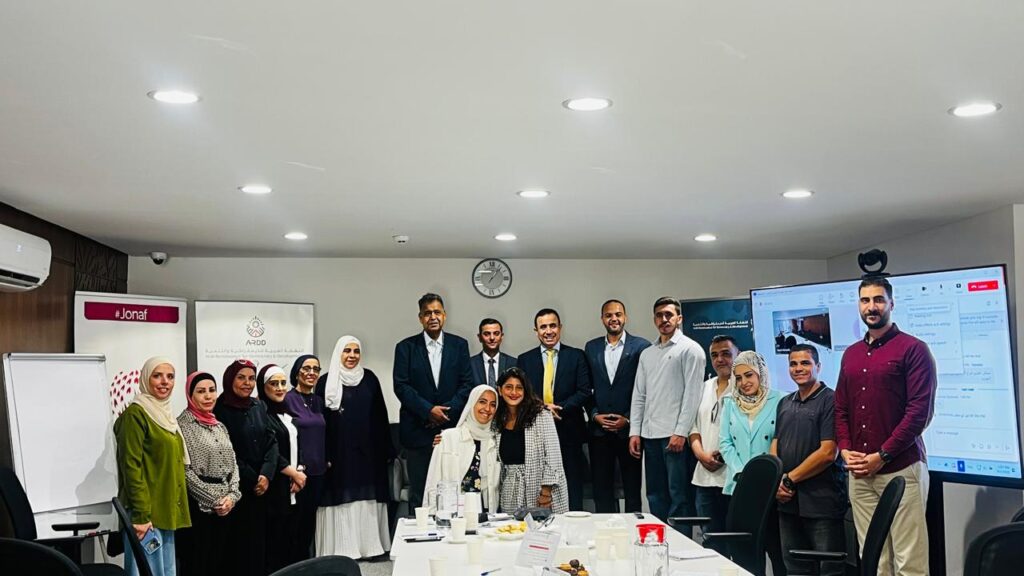
In line with the global shift toward digital transformation, the Jordanian government launched the National E-Invoicing System, which became mandatory in April 2025. The system, officially issued in 2022 under tax legislation, aims to digitize invoices to ensure accurate documentation of transactions, improve tax collection, and curb tax evasion. It represents a key step toward a sustainable digital economy, requiring close cooperation between the government and all sectors for successful implementation. In this context, the Arab Renaissance for Democracy and Development (ARDD) held a dialogue session on Wednesday, September 3, 2025, as part of the New Generation project, focusing on the new National E-Invoicing System. The session brought together associations from the Coordination of Youth Institutions and the Jordan National NGO Forum (JONAF) to shed light on the system’s mechanisms and respond to questions from civil society organizations regarding its application. The session featured remarks by Ayman Khawaldeh, Director of the Invoicing Directorate at the Income and Sales Tax Department, with the discussion moderated by Rami Quwaider, Legal Advisor at ARDD. Khawaldeh outlined the main features of the system, emphasizing its flexibility, which enables taxpayers to join easily and without additional costs. He highlighted that the system helps speed up tax procedures, facilitates access to tax clearance certificates, and enhances transparency and trust between taxpayers and the authority. He explained that invoices are issued and stored electronically within a regulated system that meets invoicing and monitoring requirements, noting that registration is available through the department’s website using the taxpayer’s tax number and password. Khawaldeh stressed that the invoicing system is no longer just a digital platform, but a reform tool that reshapes the relationship between the state and citizens on the basis of transparency, accountability, and tax justice. The Income and Sales Tax Department first launched the system in late 2022, marking the start of companies joining the national invoicing network. Earlier this year, the legislative framework for the second phase was adopted, expanding application to local purchases of taxable goods and services through official invoices. Participants underscored the importance of regular evaluation to address potential loopholes, broadening the system to include more sectors, and ensuring it is supported by a balanced legislative framework that imposes penalties on violators without burdening compliant taxpayers. They also emphasized the importance of law enforcement in strengthening trust and transparency, and called for continued efforts to raise awareness of the invoicing system, particularly in the governorates and among nonprofit organizations, including civil society groups. The New Generation project seeks to strengthen partnerships between youth civil society organizations and encourage collective youth action through creative approaches that amplify young people’s voices and enhance their participation in the public sphere.
ARDD holds a Digital Symposium on Participatory Governance in the Arab Region
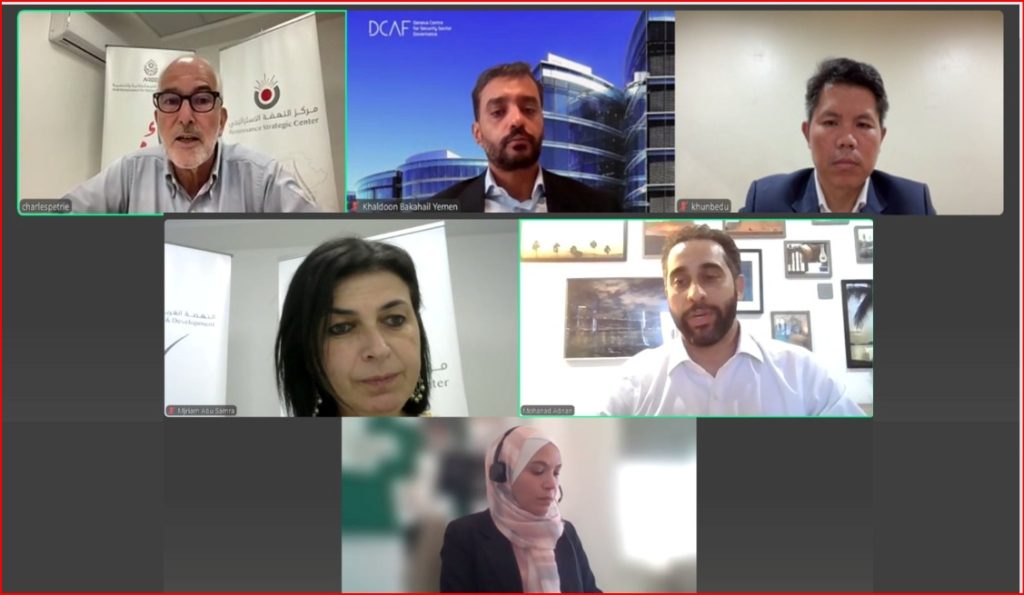
The Renaissance Strategic Center (RSC), as part of the Arab Renaissance for Democracy and Development (ARDD), facilitated an engaging virtual discussion titled “Reimagining Participatory Governance in the Arab Region: Local Practices and Comparative Lessons from Karenni State.” The webinar aimed at advancing a new understanding of governance in the complex, challenging context of the Arab world, where prolonged conflicts, fragile institutions, and declining public trust have highlighted the limits of top-down approaches to civic engagement. In response, localized and participatory approaches—emphasizing civic trust, inclusion of youth and women, and proximity networks linking state and society—are increasingly viewed as essential to rebuilding legitimacy and resilience across the region. Against this backdrop, the case of Karenni State in Myanmar offered a powerful comparative lens: its locally driven governance structures, emerging amid conflict and institutional collapse, provide valuable lessons on decentralization, accountability, and community-based legitimacy that resonate with Arab contexts of fragmentation and transition. The RSC convened four esteemed panelists to reflect on these themes across two sessions, connecting regional governance debates with global comparative insights.The RSC brought four esteemed panelists together to discuss local governance frameworks within their country specialty across two sessions. The speakers for Session I, titled “Governance from Below in Conflict-Affected Settings – the Karenni State Experience,” included Khun Bedu, Vice-Chairperson of the Karenni State Interim Executive Council, and Khaldoon Bakahail, Senior Strategic Advisory at the Geneva Center for Security Sector Governance (DCAF) and former Yemeni Deputy Minister for Internal Administration. The speakers for Session II, titled “Conceptualizing Governance in the Arab Region – Challenges, Alternatives, and Emerging Models,” included Mohanad Adnan, Executive Director of Roya Development Group Iraq, and Deema Abu Thiab, Head of Country Programme: UN Habitat Jordan. Session I: Facilitated by Charles Petrie, ARDD Senior Advisor and former UN Assistant Secretary General, commenced the webinar by establishing its key themes. A starting premise is that when strong, central, many times oppressive, regimes collapse, the spaces vacated allow local governance structures to emerge. Attempting to try to reestablish a central authority – very much a Westphalian approach to governance – becomes almost impossible in the short to medium term. The examples of Somalia, Central African Republic, Libya, Yemen and Myanmar being among the demonstrations of this reality. There is thus a need to acknowledge the existence of these local governance structures and understand the contribution they can make in re-establishing a functioning State. Khun Bedu presented his unique experience in Karenni and their bottom-up federalism framework which prioritizes institution building, decentralizing power to local administrations, and improving local trust through transparency and accountability of the administrative structures. Khaldoon Bakahail expanded and applied these notions to the context of Yemen, explaining how fragmentation, and the essence of conflict itself, has laid the groundwork for local stabilization initiatives, and advocacy toward a more representative and federalist structure. The session then opened the floor for audience participation. Issues that were raised included climate change, food insecurity, and the role of external assistance. To the query of the role of external assistance, Bedu outlined Karenni’s attempt to establish a regional multi-donor trust fund. Bakahail strongly advocated for the international community to not intervene in Yemeni’s political power-sharing negotiations. Instead, the focus should be turned towards reviving the federal framework that had been agreed to in the past and that could ensure some levels of stability. Bakahail went on to say that the question of climate change and food insecurity must be addressed with a holistic approach, involving civil society, youth, and women. Local mitigation strategies should be tailored to provide opportunities for climate action. Session II: Facilitated by Mariam Abu Samra, Coordinator at the RSC, expanded the concepts explored in the first session and focused on the governance experiences characterizing differing contexts across the Arab region. Of primary importance was engagement from the ground-up, with emphasis on the participation of youth, the disabled, and women in identifying opportunities. Mohanad Adnan articulated how Iraq, as a country that experienced decades of conflict, has witnessed a power struggle between its federal parliament and its local and provincial councils. The fear that the provincial councils were siphoning too much power from the federal parliament – a conflict of authority – led to the dissolution of provincial councils. Adnan emphasized the role protests played in getting the youth greater recognition from the government, something that women and the disabled have yet to achieve. Deema Abu Thiab brought the discussion to the local Jordanian context, where UN Habitat works to engage citizens in shaping policies that will allow for a better urban future. In connection with Adnan, Abu Thiab explained how creative initiatives, such as the Jabal Amman Neighbourhood Planning project with ARDD, aim to encourage youth participation and the promotion of community-driven planning. When opened to the wider discussion with viewers, Abu Thiab and Adnan both expressed the immediate need for climate action initiatives pertaining to flash flood prevention in Jordan and water treatment mechanisms in Iraq. This discussion brought experienced individuals from a range of contexts together to explore the significance and potential of local governance in addressing the challenges of the Arab region and the world as a whole. Such questions as youth and female participation, as well as the threat of climate change were raised. Contrary to conventional perception, it was argued that conflict can form the necessary foundation for the emergence of viable local governance structures. Accepting this reality and building strategies incorporating local governance can contribute to future stability in the face of a constantly changing world.
ARDD Participates in ABAAD’s Youth Symposium in Lebanon
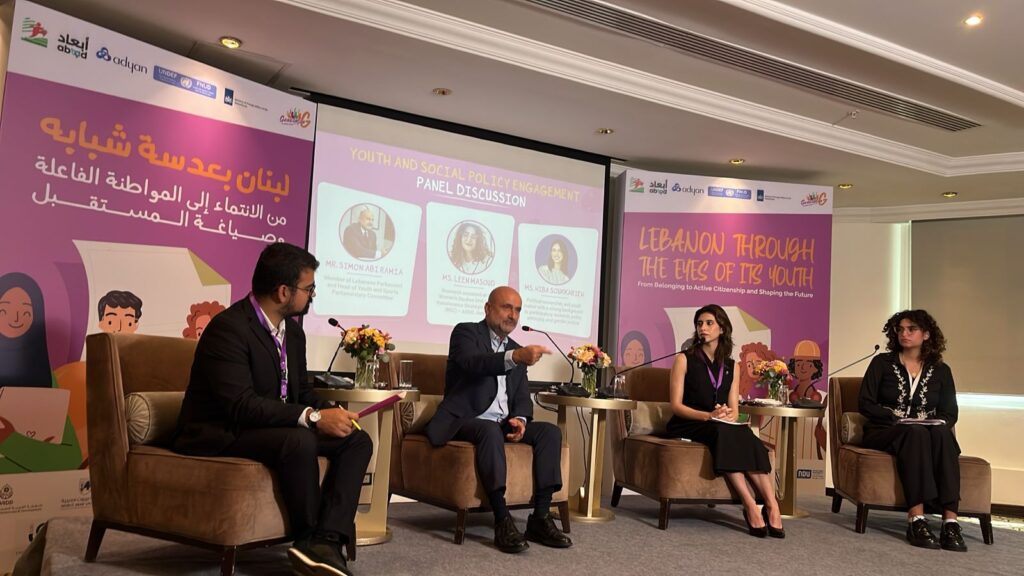
The Arab Renaissance for Democracy and Development (ARDD) participated in ABAAD’s youth symposium, “Lebanon Through the Eyes of its Youth: From Belonging to Active Citizenship and Shaping the Future.” The two-day event in Lebanon, held as part of the New Generation GenG program, brought together young leaders, policymakers, and experts to amplify youth voices in shaping inclusive and representative policies. Representing ARDD, Leen Masoud, researcher at the Renaissance Strategic Center, joined a high-level panel on youth and social policy engagement, where she shared ARDD’s inclusive, evidence-based approach to policy brief development and stressed the importance of advocacy and cross-community collaboration. ARDD also hosted a booth highlighting results from Generation G policy labs on civic and political participation. On the second day, Masoud co-facilitated a policy lab on equitable employment, guiding participants in drafting proposals on issues such as raising the minimum wage and ensuring fair intern compensation. The symposium concluded with youth presenting their policy recommendations, reaffirming the importance of youth-led, inclusive solutions for Lebanon’s future.
Dialogue Session in Aqaba Explores Facilitating Licensing Procedures for Small Businesses and Startups
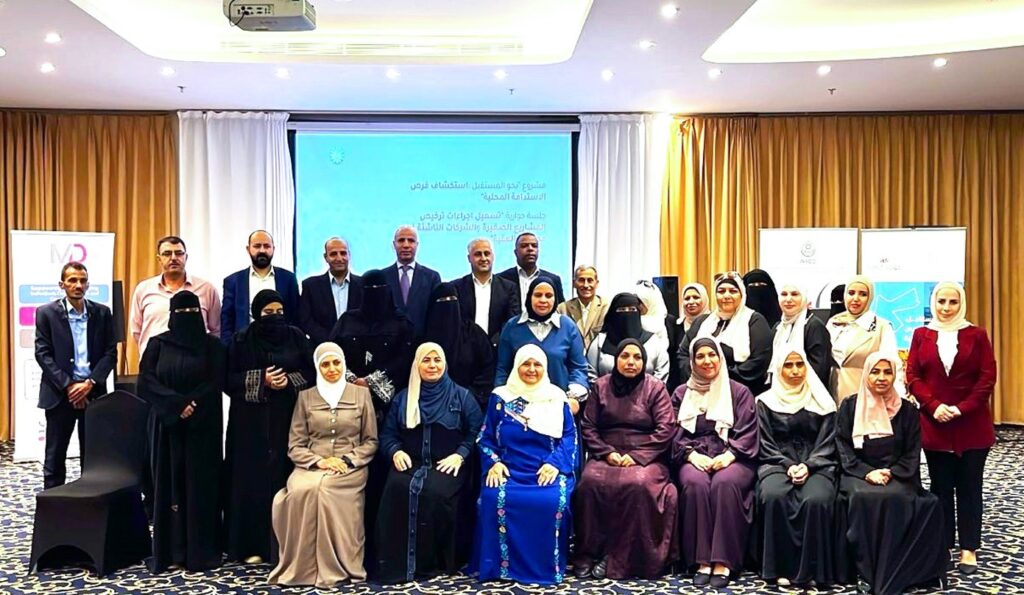
As part of advocacy efforts aimed at strengthening the localization of humanitarian and development work in the field of livelihoods—efforts developed within the framework of the project “Future Forward: Unlocking Sustainable Local Opportunities”, implemented by the Arab Renaissance for Democracy and Development (ARDD) in cooperation with the Jordan National NGOs Forum (JONAF), and funded by the European Regional Development and Protection Programme in support of Jordan and Lebanon— a group of local associations within the JONAF coalition, namely the Women’s Association of the Disi Basin Villages, the Jordanian National Women’s Committee Network, Durra Al-Manal for Development and Training, and Al-Amal Association for Social Development, held a dialogue session in Aqaba Governorate titled “Facilitating Licensing Procedures for Small Businesses and Startups”, under the patronage of Senator Sharhabeel Madi. The session addressed the challenges faced by small businesses and startups in the licensing process and ways to address them to enhance the empowerment of these projects and support their contribution to achieving sustainable development. It discussed the main legal, procedural, and financial obstacles and presented practical proposals to improve the licensing environment, such as enhancing specialized training, developing marketing methods, and encouraging entrepreneurial and non-traditional projects. Participants also shared their experiences and relationships with donor bodies—particularly the Development and Employment Fund—and discussed ways to overcome obstacles facing business owners. Senator Sharhabeel Madi pointed out that women’s participation in economic activities remains below expectations, at around 13%, stressing that the state seeks to raise and expand this percentage in line with the Economic Modernization Vision. For her part, Qutna Al-Zawaideh, President of the Women’s Association of the Disi Basin Villages, emphasized that women and youth in the south, especially in Aqaba, possess strong determination to develop their projects, but face bureaucratic, financial, and procedural challenges, as well as burdens related to licensing. She noted Jordan’s need for young energy to engage in building and development, aiming for a more equitable local economy that better meets people’s needs. Participants stressed the need to reduce local licensing requirements, as the current regulations place an additional burden on small and medium-sized enterprises, and that easing these procedures would allow projects to focus on developing their work. They also called for lowering taxes and adopting a flexible legal framework that gives projects greater growth opportunities. Regarding the legal framework, participants highlighted the importance of providing practical and tangible government policies that offer necessary incentives, streamline procedures, and establish clear legislation that promotes sustainability and increases job opportunities. They also emphasized the need to study the long-term impact of legislation to support the national economy and encourage investment. Interventions also agreed on the importance of reducing the financial burdens associated with registering small businesses, as high fees and complex registration procedures discourage many from pursuing licensing, limiting these projects’ expansion and transition into the formal sector. At the conclusion of the dialogue session, participants agreed that implementing these recommendations would contribute to launching broader initiatives focused on social enterprises and enabling local organizations to lead advocacy efforts for policies that support community-led, resilient livelihoods—ultimately influencing policy-making and decision-making toward building a strong national economy driven by local capacities.
Leading Together: A New Phase for Women’s Civic Leadership
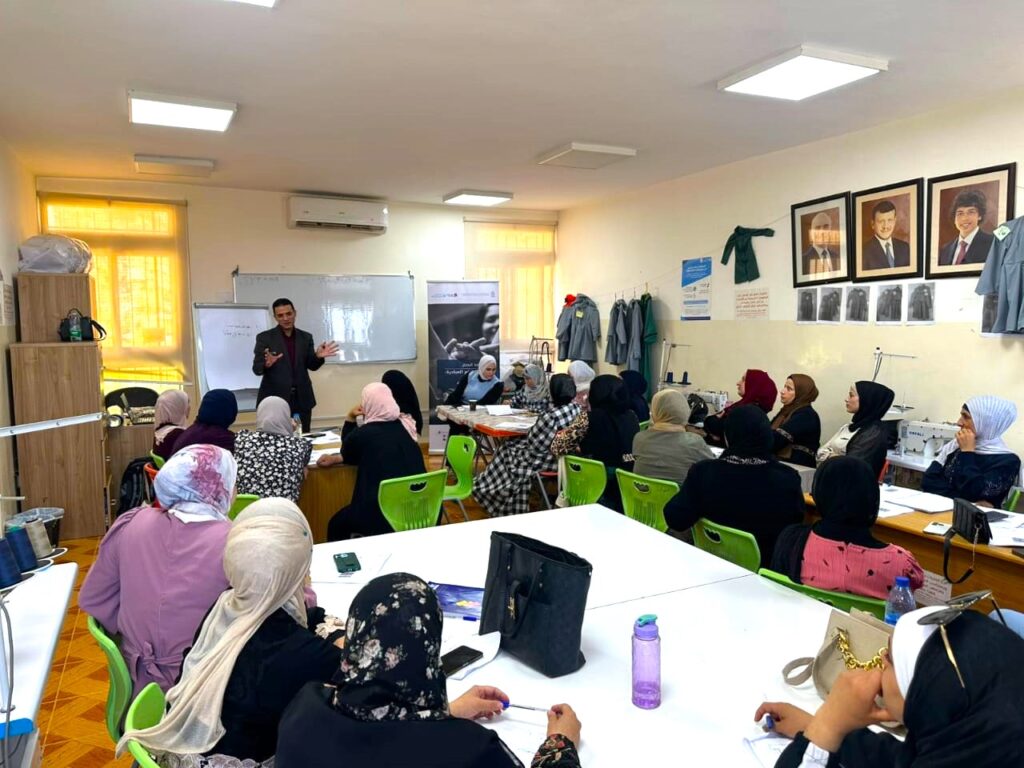
The Arab Renaissance for Democracy and Development (ARDD), in partnership with UN Women, has launched a new phase of the Empowering Each Other EEO project, further strengthening women’s leadership and civic action across Jordan. Rooted in over a decade of collaboration and community work, this phase deepens ARDD’s commitment to ensuring that women—particularly those from vulnerable communities—are not just included but are leading civic efforts toward social justice. “Empowering Each Other is more than a project, it’s a pathway toward creating inclusive communities where leadership, justice, and civic participation are shared responsibilities,” said Zainab Alkhalil, ARDD Program Manager. Implemented through 18 Oasis Centers in partnership with the Ministry of Social Development, EEO provides training in civic engagement, public advocacy, leadership, and social protection, while fostering an inclusive environment where men and boys are allies in advancing gender justice. The initiative directly supports national priorities including the Jordanian National Strategy for Women (2020–2025) and the Economic Modernization Vision, while also aligning with global commitments such as the Sustainable Development Goals (SDGs) and the Beijing Platform for Action. By 2025, over 1,000 women across 11 governorates will be equipped with the tools, skills, and confidence to lead initiatives that respond to local needs—reshaping civic life and reinforcing social cohesion. As the project enters this new phase, EEO continues to serve as a platform for collective action, fostering leadership and community participation among women, men, and youth alike, reaffirming that lasting change is built through shared responsibility and inclusive civic engagement.
Regional meeting discusses youth leadership and civic engagement in the Arab region
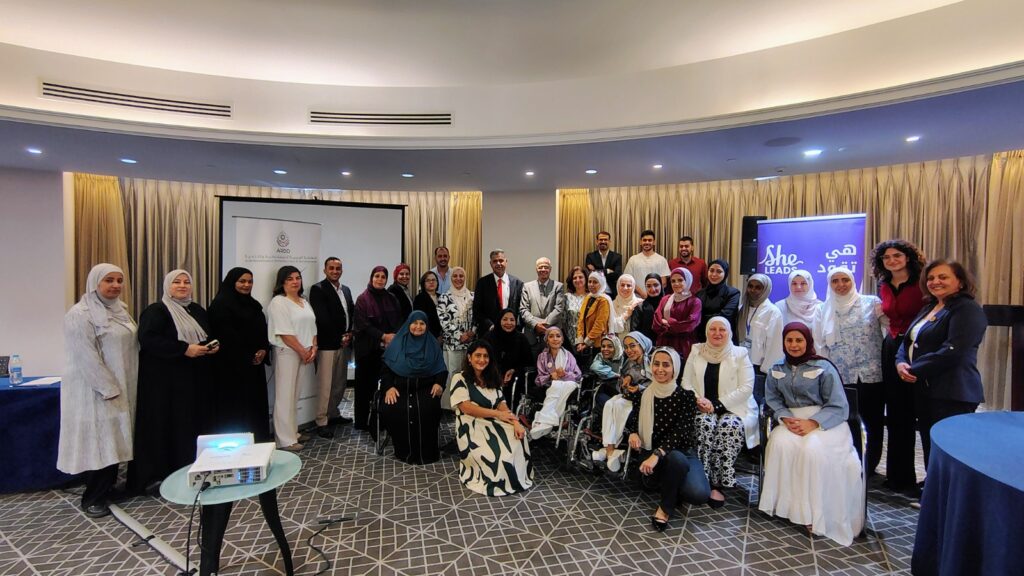
In light of the social, political, and economic challenges facing youth in Jordan and the Arab region, the importance of strengthening youth leadership and civic engagement emerges as essential tools for building more just and sustainable societies. In this context, the Arab Renaissance for Democracy and Development (ARDD), as part of its “She Leads” program, held a regional dialogue meeting titled “Youth Leadership and Civic Engagement: How Can It Be Activated?” on Wednesday, July 30, 2025. The meeting brought together a group of activists from Jordan and Egypt, along with representatives of civil society organizations, to discuss ways to activate the roles of youth, especially women, in public life. This meeting comes amidst the growing momentum in the region to promote the participation of young women in public life, and in light of legislative changes witnessed in some countries, such as lowering the age of candidacy for local elections in Jordan and expanding civic spaces in Egypt. These changes reflect the growing interest in strengthening the voice of youth and empowering them. The meeting also highlighted the results of research and studies conducted by the Women’s Studies Unit on youth leadership and the factors that support and hinder the participation of young men and women in civic action. For her part, Lina Halsa, Director of the “She Leads” Project, emphasized that local and regional partnerships play a pivotal role in strengthening fieldwork and advocacy. She highlighted the importance of exchanging experiences between young women in Jordan and Egypt, and emphasized the importance of creating an enabling environment for girls and young women through effective partnerships with local community institutions. She highlighted the impact the project had on building young women’s capacities, developing their leadership and advocacy skills, and enhancing their presence in decision-making spaces. Through their personal contributions, Sally and Sondos Saleh spoke about their journey with “She Leads,” viewing challenges and obstacles as opportunities for growth. They noted that success does not come without perseverance and determination, and that they have become trainers and activists in many community issues. From Egypt, Mona Nabil said that her participation in the program opened a new horizon for her in thinking and interacting with community issues, enhancing her ability to express herself and lead. Dr. Mohammed Al-Jarabi, Director of the Thuraya Center, emphasized that civic participation is the cornerstone of community leadership, explaining that participation takes many forms, such as political parties, unions, and volunteer work. He pointed out that the Jordanian government has called for enhancing youth participation in civic and political work over the past decades, but emphasized the need to develop discourse and approaches to effectively activate this participation. Representatives from the Women’s Committees Association also participated, presenting the “She Leads” program’s experience in promoting women’s political and legal participation through interactive and dialogue sessions. Regarding the role of teachers in building the capacity of youth, education expert Dr. Aseel Al-Shawareb explained that teachers play a pivotal role in enhancing critical thinking and life skills among students. She noted that empowering them and developing their capabilities directly impacts the quality and outcomes of education, contributing to the preparation of an informed generation capable of active participation in their communities. Dr. Amani Al-Sarhan, Associate Professor of Women’s Studies at the University of Jordan, focused on the role of the family as the “first school” that influences the formation of young people’s values and social identities. She added that families must play a motivating, not obstructive, role in the process of change. In the Safe Spaces and Innovative Community Initiatives section, Dr. Sami Al-Hourani spoke about the “Diwaniya” initiative, an open community dialogue space that aims to create public discussion spaces that enable direct interaction between youth and decision-makers in public debate environments. He emphasized that providing these spaces is an essential element in supporting youth participation and empowerment in various fields. They are not just physical or virtual spaces, but rather environments that allow youth to freely express their opinions and participate in influencing decision-making. Finally, the participants recommended the need to produce new young and female leaders with the ability to innovate and keep pace with change. They also recommended developing interactive programs based on the real needs and aspirations of youth, while enhancing community awareness of the value of civic and political participation. They also emphasized the need to create safe and inclusive spaces to empower youth and women to express themselves and participate, with a focus on public space as a platform for interaction and community influence.
Strategic Partnership between ARDD and Independent Diplomat
The Arab Renaissance for Democracy and Development (ARDD) is proud to announce the signing of a Code of Cooperation with Independent Diplomat (ID), marking a key milestone in advancing refugee rights and promoting inclusive, rights-based diplomacy across the region. Under this agreement, ID will offer technical assistance, capacity building, and diplomatic guidance, while ARDD will continue to lead impactful legal aid, protection, and policy advocacy programs throughout Jordan and the wider region through its Renaissance Strategic Centre (RSC) for research. Independent Diplomat (ID) is an innovative non-profit diplomatic advisory group that helps those most affected by crises and conflicts access the high-level political discussions about them. With a mission to make diplomacy more inclusive, transparent, and accountable, ID provides high-impact diplomatic support, advice, and training to marginalized groups and democratic governments, leading to more inclusive, just, and sustainable outcomes. ARDD is proud of this partnership, which marks a new chapter in its joint mission to shape a diplomatic system that responds to the needs and aspirations of affected communities, placing justice, dignity, and empowerment at the heart of its work.