Tawasol Network Holds Its Induction Meeting to Strengthen the Role of Civil Society Organizations in Southern Jordan
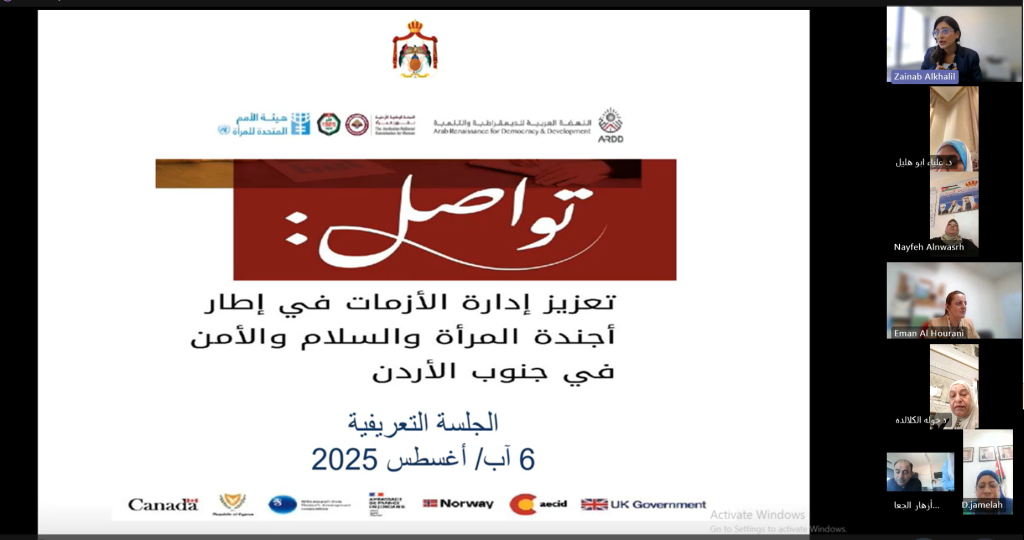
In a step that reaffirms the vital role of civil society organizations (CSOs) across southern Jordan and aims to enhance their effective representation in development issues, crisis management, and peace and security, the Arab Renaissance for Democracy and Development (ARDD), within the framework of the project “Tawasol: Strengthening Crisis Management within the Women, Peace, and Security Agenda in Southern Jordan” — implemented in partnership with UN Women — held its first induction meeting on Wednesday, 6 August 2025, with the participation of around twenty CSOs from various southern governorates. This meeting marks the beginning of a joint process aimed at strengthening the capacities of CSOs and women in southern Jordan to play an active role in crisis management and decision-making. It also seeks to foster partnership and coordination among network members to ensure effective and sustainable community responses, while addressing key challenges facing CSOs in the south — such as weak participation in decision-making, limited resources, and declining representation in crisis management, peace, and security issues. Representatives from organizations in Aqaba, Wadi Araba, Al-Disi, Ma’an, Amman, Southern Ghor, Karak, and Tafileh participated in the meeting, including: Al-Sumo Charitable Care and Leadership Association, Farha Women’s Charitable Association, Al-Sharif Nasser Bin Jamil Charitable Society, Women of Al-Disi Basin Villages Association, Al-Jawhara Charitable Association, Women’s Committees Coalition, I Am a Human for the Rights of Persons with Disabilities, Be Positive Association, Women of Al-Haditha Ghor Charitable Association, Ain Abata Women’s Charitable Association, Ghor Al-Safi Women’s Association for Social Development, Zahoum Charitable Association, Rakin Women’s Charitable Association, Al-Shaheebiya Charitable Association, Shaqira Social Development Association, Al-Hasa Charitable Association for Orphans and the Poor, Queen Zein Al-Sharaf Charitable Association, Ahl Al-Himma Women’s Charitable Association, and Tafileh Women’s Charitable Association. “UN Women established this network under Jordan’s National Action Plan on UN Security Council Resolution 1325 to strengthen women’s role in crisis management and peacebuilding. The development of its governance structure and the series of capacity-building trainings provided by our implementing partner ARDD is a concrete step toward enabling community-based organizations — especially those led by women, youth, and people with disabilities — to lead change on the ground. The strong participation and commitment of local actors reaffirm that women are not only essential stakeholders but also key drivers of more resilient and inclusive responses to crises under the Women, Peace, and Security agenda.” — Eman Hourani, Programme Specialist, UN Women For her part, Eng. Zainab Al-Khalil, Program Manager at ARDD, highlighted the importance of the active participation of network members, praising their contributions and interventions that helped shape a shared vision for the network. She noted that the project provides a platform for coordination and collective action, enhancing community resilience and crisis response. Naifa Al-Nawasrah from the Ghor Al-Safi Women’s Association for Social Development emphasized that the project directly responds to the needs of southern regions, expressing hope that it will consider the unique context of each area and allow local communities and organizations to set their own priorities for achieving sustainable impact. Meanwhile, Zina Al-Dughaimat from the Ghor Al-Haditha Women’s Charitable Association stressed the importance of women’s roles in southern Jordan, pointing out that many women-led organizations are exerting significant efforts in empowerment and participation, thereby strengthening collaboration and expanding the scope of action. The meeting is part of the “Tawasol” project implemented by ARDD in cooperation with UN Women in Jordan. The project aims to equip women’s organizations with leadership and technical skills for strategic influence, support the implementation of Jordan’s Second National Action Plan on UNSCR 1325 (2022–2025), engage women and marginalized communities in decision-making and peacebuilding, and enhance gender-responsive institutional approaches — ultimately empowering local organizations to strengthen resilience and sustainable development. In conclusion, participants stressed that this foundational step will help strengthen coordination and communication among members and lay the groundwork for the network’s future direction, reinforcing women’s role as key actors in advancing peace, security, and development at both the local and regional levels.
Women in Financial Leadership: Ordinary Decisions That Make Extraordinary Impact
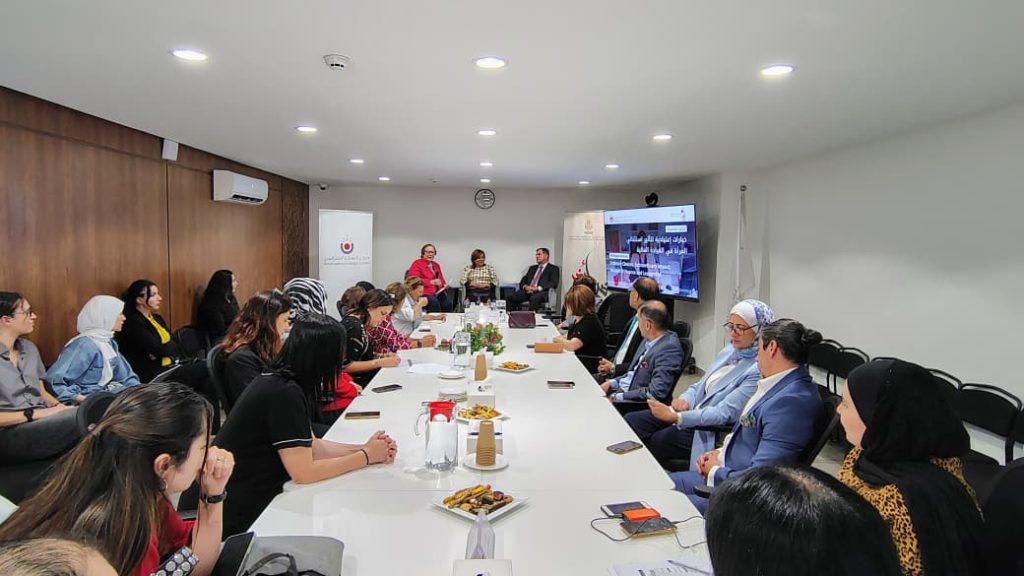
At a time when the need for economic leaders capable of effecting change is growing, women are reaffirming that impact is not achieved through exception, but through continuity and awareness. With this in mind, the Renaissance Strategic Center, affiliated with the Renaissance Organization (ARDD), in partnership with the Renaissance Women’s Network, held a dialogue session titled “Ordinary Choices for Extraordinary Impact: Women in Financial Leadership” on Tuesday, October 7, 2025, to enhance financial awareness and literacy and support women’s presence in economic leadership positions. During the session, which featured former Minister of Investment Kholoud Al-Saqqaf and economic expert Dr. Adly Kandah, along with a group of specialists and those interested in economic affairs and women’s empowerment, and was moderated by Dr. Sawsan Majali, the importance of empowering women in the fields of financial management and entrepreneurship was highlighted, as well as their growing role in achieving sustainable economic growth. Dr. Majali emphasized that countries with a greater presence of women in leadership positions—such as Bahrain, the UAE, and Qatar—also achieve higher levels of financial inclusion, with women occupying approximately 30% of leadership positions worldwide. For his part, Dr. Adly Qandah emphasized the importance of promoting financial literacy from an early age, explaining that Jordan began incorporating financial literacy into school curricula in 2015, from grades seven through twelve, in cooperation with the Central Bank and the Ministry of Education. The goal is to build financial literacy based on knowledge, skills, and responsible behavior. He added that financial literacy must be scientific and skill-based, noting that the new generation must possess independent financial awareness. He noted that recent studies confirm that women often perform better in business management, due to their meticulous and organized approach to financial planning and decision-making. Her Excellency Kholoud Al-Saqqaf emphasized that incorporating financial literacy into educational curricula is one of the most important steps taken by Jordan. She explained that there are ongoing challenges in public financial management, and that women constitute approximately 83% of those working in the banking sector, in addition to a prominent presence in the health and education sectors. Al-Saqqaf explained that women’s limited access to leadership positions is due to a number of reasons, some of which are related to women themselves, others to society, stereotypes, customs, and traditions, in addition to the lack of specialized programs to develop female leaders. In response to a question about the most important factors in her success, Al-Saqqaf explained that she “did not reach the position of Chairperson of the Social Security Investment Fund and Minister of Investment by chance. She is one of the women who set their goals in mind and strive to achieve them with steadfastness and competence. She is one of the few in Jordan and the Arab world who have a distinguished relationship with the world of numbers and economics, having held senior positions, the most prominent of which was Deputy Governor of the Central Bank of Jordan, as the first woman in the Arab region to hold this position. The values she was raised on – that a person’s value is in what he offers, not what he owns – motivated her to overcome challenges and achieve her ambition to lead one of the most important national financial institutions. In her remarks, Samar Muharib, Executive Director of the Renaissance Organization (ARDD), emphasized that the session’s title, “Ordinary Choices for Extraordinary Impact,” reflects the reality of financial management in women’s daily lives, where financial leadership is practiced in the simple details of life. She highlighted the important role of civil society, local committees, and official institutions in spreading financial awareness and empowering women to pass this culture on to their children, thus enhancing long-term financial sustainability. Finally, the participants concluded with a set of recommendations, most notably: developing the public sector and building the capacity of both women and men to reach leadership positions; investing in women’s capabilities and empowering them in financial and economic fields; highlighting women’s success stories; supporting oversight practices to enhance transparency; building professional networks that support women; and developing studies that highlight gaps, challenges, and future opportunities in financial leadership.
When Neutrality Feels Uneven: A Letter from ARDD and JONAF to UNICEF
Following UNICEF’s recent statement marking two years since the October 7 attacks, the Arab Renaissance for Democracy and Development (ARDD) and the Jordan National NGOs Forum (JONAF) addressed a letter to Ms. Catherine Russell, Executive Director of UNICEF. The letter emphasized the importance of maintaining balance, fairness, and consistency in humanitarian messaging and urged UNICEF to ensure that all children, regardless of nationality or geography, are equally acknowledged and protected. The letter highlights ARDD’s and JONAF’s shared belief that humanitarian credibility rests not only on principles but also on the perception of neutrality and empathy — and that grieving all children equally is central to the mission of justice and humanity. Below is the full text of the letter sent to UNICEF’s Executive Director: _______ 7th October 2025 Ms. Catherine Russell, Executive Director UNICEF Headquarters New York, USA When Neutrality Feels Uneven: On UNICEF’s Statement Marking Two Years Since the October 7 Events I am writing on behalf of the Arab Renaissance for Democracy and Development (ARDD), a Jordan-based organization and the coordinator of the Jordan National NGOs Forum (JONAF), a network that brings together national civil society organizations committed to advancing human rights, justice, and dignity for all. We acknowledge UNICEF’s recent statement marking two years since the October 7th events. The statement rightly condemned violence against children and communities, reaffirming that every child deserves safety and protection. However, across the Arab World, the post has caused discomfort and deep concern — not because people disagree with the universal principle of defending children’s rights, but because the message appeared selective. By naming one perpetrator and one group of victims, while omitting any reference to the ongoing genocide, suffering, and devastating loss of Palestinian children, the statement risks undermining the very neutrality and moral authority that give humanitarian institutions their credibility. This is especially painful because UNICEF has been one of the strongest and most consistent advocates for children in Gaza, courageously documenting the catastrophic toll of the conflict, calling for a ceasefire, protection of civilians, and unimpeded humanitarian access. When such advocacy is not reflected in global communications, it creates a sense of dissonance and erodes the trust of the communities that UNICEF serves and represents. In deeply polarized contexts, neutrality must be felt, not just declared. The credibility of humanitarian action depends not only on principles but also on the perception of fairness, empathy, and the courage to grieve all children equally, regardless of their nationality, ethnicity, or geographical location. We therefore urge UNICEF to ensure that all future public statements, particularly those marking moments of violence and loss, reflect the organization’s universal mission: to uphold the rights, protection, and dignity of every child, without exception or selectivity. Such consistency will strengthen UNICEF’s standing as a global moral voice and a trusted advocate for children everywhere. With respect and appreciation for UNICEF’s tireless efforts to protect children in the region and beyond, Sincerely yours Samar Muhareb, ARDD Chief Executive Director & JONAF Coordinator
Redefining Peace and Liberation: Palestinian Women and Global Feminism
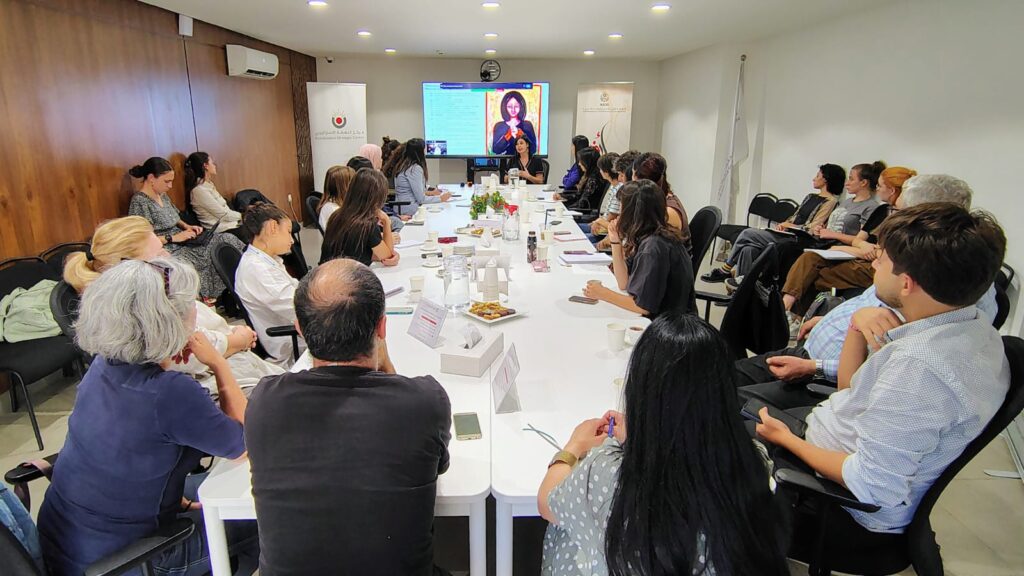
Two years on the ongoing genocide in Palestine, and as the world approaches the 25th anniversary of UN Security Council Resolution 1325 on Women, Peace, and Security, the Arab Renaissance for Democracy and Development (ARDD), in partnership with the Al-Nahda Women Network, held a seminar titled “Redefining Peace and Liberation: Palestinian Women and Global Feminism.” The event marked the launch of ARDD’s regional campaign, “Reclaiming the Future: Women, Peace, and Justice in the Arab World,” in line with the 16 days of activism and reaffirming women’s leadership in peace, justice, and dialogue. Dr. Mariam Abu Samra, Senior Researcher and Coordinator at the Renaissance Strategic Center, led the seminar, examining the historic and ongoing role of Palestinian women in shaping global feminist thought and their contributions to liberation movements. She highlighted how Palestinian women have long linked national liberation with women’s liberation, viewing patriarchy as inseparable from colonial systems of oppression. Drawing on more than a century of women’s mobilization—from early organizing in the late 1800s to leadership in social and political resistance—Dr. Abu Samra showcased how Palestinian women have played a dual role: strengthening social resilience and actively participating in national liberation. The seminar also critically addressed how neoliberal and Western feminist frameworks have often misrepresented or marginalized Arab women’s agency, calling instead for a decolonial feminist approach rooted in justice, dignity, and collective emancipation. Dr. Abu Samra underscored that peace for Palestinian women means justice and liberation, not the mere absence of violence or the illusion of stability imposed by international actors. Through moving examples—such as women asserting reproductive rights and resilience under occupation—she illustrated the enduring strength of Palestinian women as symbols of hope and defiance.
Reclaiming the Future: Women, Peace, and Justice in the Arab World
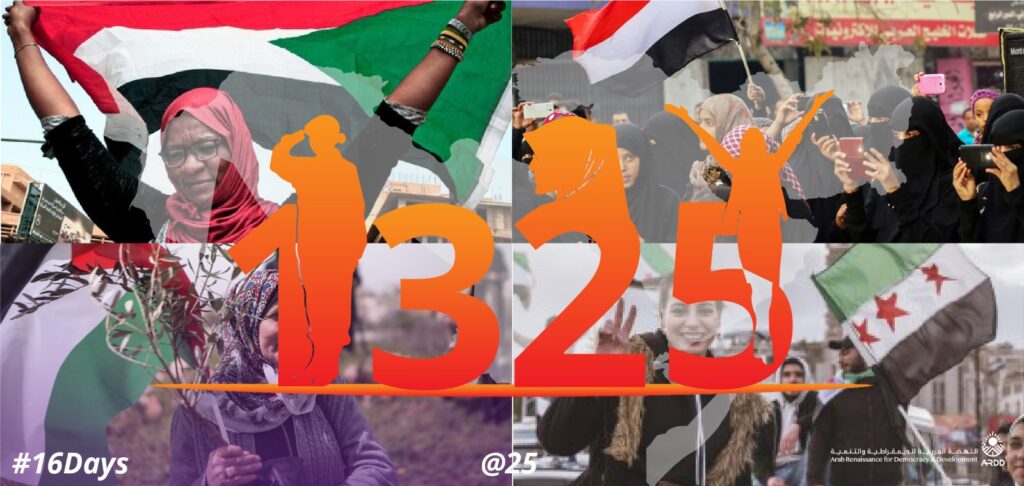
ARDD Launches Campaign Marking the 25th Anniversary of UNSCR 1325 and the 16 Days of Activism: Reaffirming Women’s Leadership in Peace, Justice, and Dialogue Amman — 6th October 2025 — The Arab Renaissance for Democracy and Development (ARDD) marks the anniversary of United Nations Security Council Resolution 1325 on Women, Peace, and Security during the global 16 Days of Activism against Gender-Based Violence with a renewed call to action: to uphold the rights, leadership, and voices of Arab women in building peace and advancing justice across the region. Adopted twenty-five years ago, Resolution 1325 remains one of the most visionary commitments of the international community — recognizing that peace cannot be achieved or sustained without women’s participation. Yet today, as wars and displacement continue to devastate communities, the region faces another challenge: the normalization of militarization as trade. ARDD warns against turning conflict into a marketplace — where the exchange of weapons replaces the exchange of ideas, and where militarization undermines the very foundations of peace. The organization calls on all stakeholders to end militarization as a trade practice, and to open genuine channels of dialogue, reconciliation, and cooperation that prioritize human dignity over political or economic gain. To commemorate this milestone and in alignment with the 16 Days of Activism, ARDD is launching the regional campaign “Reclaiming the Future: Women, Peace, and Justice in the Arab World.” This campaign highlights the struggles and achievements of women in conflict and post-conflict contexts, reaffirming ARDD’s unwavering commitment to ensuring that women lead the conversations on peace, justice, and recovery. “UNSCR 1325 is not just a resolution; it is a moral compass reminding us that no nation can build peace through militarization or exclusion,” said Samar Muhareb, ARDD’s Chief Executive Director. “We call on the world to stand with Arab women — from Gaza to Sudan, Syria, and Yemen — who continue to hold the line for peace, justice, and humanity. Their courage lights the path toward a region built on dialogue, solidarity, and shared security.” She added, “We must also invest in women’s economic, political, and social empowerment as an integral part of regional stability — because women’s leadership is not only a moral imperative, but a strategic necessity for a just and sustainable peace.” Campaign Goals Through this campaign, ARDD calls on governments, international partners, and civil society to: Strengthen women’s meaningful participation and leadership in peace negotiations, transitional justice, and reconstruction processes; End the militarization of economies and prioritize dialogue, diplomacy, and social investment; Ensure accountability for violations against women and girls in conflict zones; and Invest in women’s economic, political, and civic empowerment as a foundation for sustainable peace. ARDD’s campaign is both a celebration and a call to action — a reminder that peace is not born from power but from participation, and that the future of the region depends on dismantling systems of violence and restoring spaces for women’s voices to shape a just and lasting peace. Campaign Highlights and Events As part of the campaign, ARDD, through its programs and Renaissance Strategic Center, and in collaboration with its partners and networks, will organize and feature a diverse set of activities across research, dialogue, and advocacy, including: Seminar: “Redefining Peace and Liberation: Palestinian Women and Global Feminism” — 6 October 2025, presented by Dr. Mariam Abu Samra, Senior Researcher and Coordinator, Renaissance Strategic Center – ARDD. Dialogue Session: “Ordinary Choices, Extraordinary Impact: Women in Finance and Leadership” — 7 October 2025, held at ARDD Premises – Jabal Amman, featuring H.E. Kholoud Saqqaf, Former Minister of Investment, and Dr. Adli Kandah, Strategic Expert in Economics. Publishing a series of policy briefs and reports focusing on women’s and youth’s political and civic participation, leadership, and peacebuilding roles across the region as part or New Generation GenG, She Leads Project and others Event to launch ARDD_RSC Study on TFGBV in Jordan Legal Awareness Sessions, blogs, analysis articles, and various media products highlighting women’s agency in leadership, peacebuilding, and social transformation across different contexts in the Arab region. 25 Years of WPS: Local Women Leading Crisis Response and Social Cohesion Event and the launch of the Tawasol Project in November Various participation and representations in national and international events during the period of the campaign from 6th October till 10th December 2025. These initiatives aim to inspire solidarity, amplify women’s and youth voices, and foster a culture of inclusive dialogue and shared responsibility for peace and justice. Further events and activities will follow throughout the campaign period, continuing to shed light on women’s leadership in advancing peace, justice, and equality across the Arab region.
The Global Network on the Question of Palestine Convenes Emergency Meeting to Discuss Recent Developments in Gaza
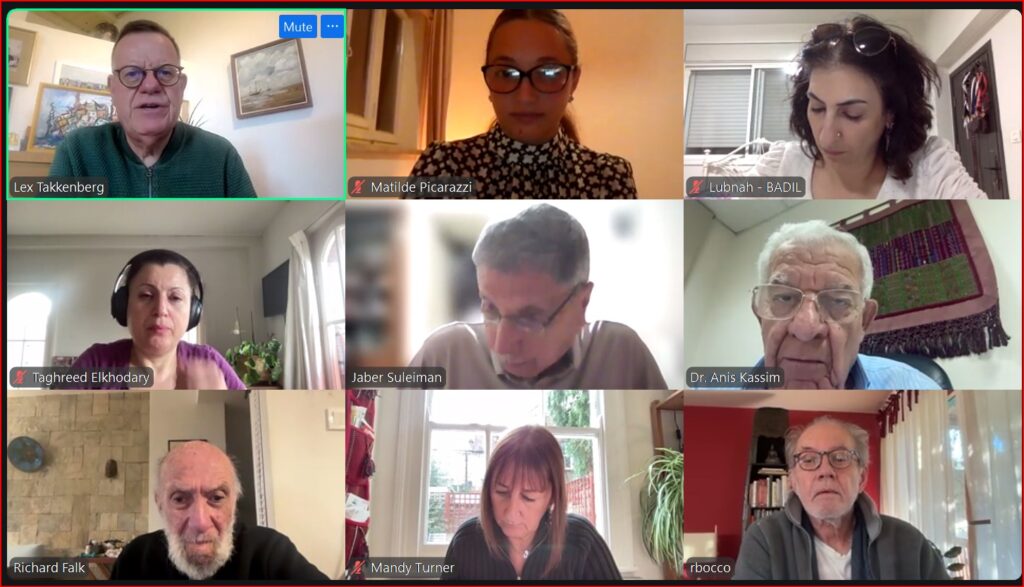
Amman, 1 October 2025 — The Global Network on the Question of Palestine (GNQP), facilitated by the Arab Renaissance for Democracy and Development (ARDD), convened an emergency meeting to examine the recently announced 20-point plan by U.S. Presiden Donald Trump regarding the future of Gaza. Participants from across the Network engaged in an in-depth exchange on the political and humanitarian implications of the plan. While acknowledging the stated objective of promoting stability, participants expressed concern that certain provisions risk undermining key principles of justice, accountability, and Palestinian rights — including the right to self-determination and return. The discussion underscored the need for any proposed framework to be firmly grounded in international law and to safeguard the rights and dignity of the Palestinian people. Particular emphasis was placed on ensuring that efforts to address the situation in Gaza are inclusive, transparent, and reflective of Palestinian voices and aspirations, rather than externally imposed arrangements. Participants also highlighted the importance of maintaining the role of UNRWA and protecting the institutional frameworks that uphold the rights and welfare of Palestinian refugees. In closing, the GNQP reiterated that sustainable peace can only be achieved through genuine dialogue, respect for international law, and the restoration of Palestinian agency in determining their own future.
Amna visit to ARDD as part of the Prevention and Protection Interventions Project
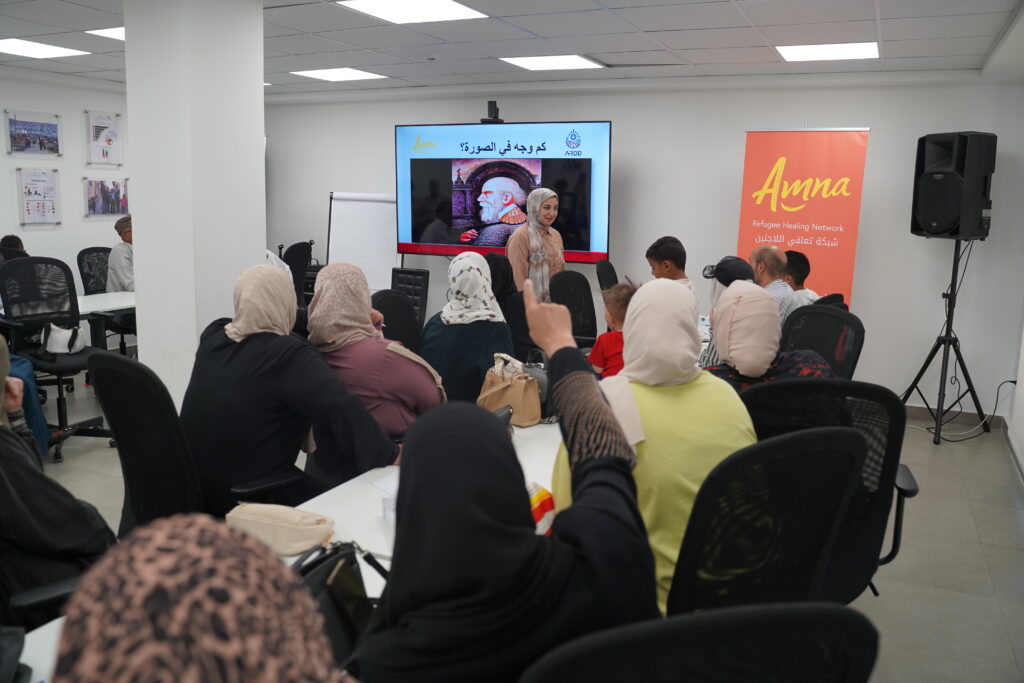
On Sunday, September 21, 2025, a team from Amna Organization visited ARDD. The visit included meetings with the project team implementing a project funded by Amna, titled “Prevention and Protection Interventions.” The visit also included holding one of the project sessions with a number of participants. The Amna team attended part of the session and later met with some of the participants to hear their views on the sessions, as well as their suggestions and recommendations for the future. The participants spoke positively about the value of the sessions, highlighting how they provide a safe space to discuss important issues and explore techniques that help them cope with daily challenges. They noted that the sessions also offer opportunities to meet others in the community who share similar struggles, leading to the creation of supportive social networks and friendships. Meanwhile, children enjoy recreational activities in a separate space, allowing them to connect with peers and build friendships of their own. The Amna team expressed their appreciation to ARDD for implementing the project and for making it possible for new participants to benefit from the sessions and learn about services offered by ARDD, other organizations, and state institutions that can support them in addressing everyday challenges. ARDD, in turn, values Amna’s support and commitment to empowering communities, strengthening individuals’ psychological well-being and social standing, and providing tailored support that ensures a lasting impact on families and society as a whole. It is worth noting that the project began in October 2024 and will run until June 2026. It marks the first collaboration with Amna Organization, which in 2024 established partnerships with ten local associations in Jordan and Lebanon to implement its projects.
GNQP/ARDD Facilitate Publication of Albanese’s Genocide Reports with Pluto Press
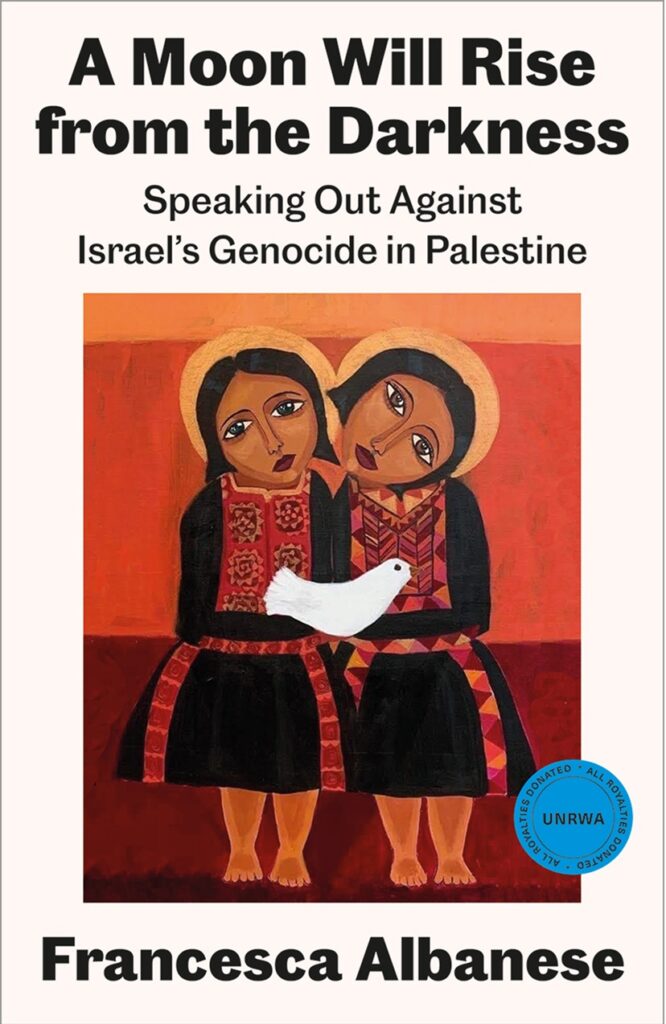
Amman – September 2025 A new book, “A Moon Will Rise from the Darkness”, compiles United Nations Special Rapporteur on the Occupied Palestinian Territories, Francesca Albanese’s indispensable and damning reports on Israel’s conduct in Palestine since October 2023. In these reports, Albanese outlines the case that this period should be understood as a genocide, situates the ongoing violence within the longer history of Israel’s settler colonialism, and presents a devastating indictment against the international corporations that treat mass killing and destruction as a business opportunity. The volume also includes a reflection by Albanese on the current state of affairs; revelations by her predecessors Richard Falk, John Dugard, and Michael Lynk of their experiences as UN Special Rapporteurs; and a preface by Lex Takkenberg, a 30-year veteran of UNRWA, co-authored with scholar Mandy Turner. The book’s title is a variation on a line from a poem by the Palestinian national poet Mahmoud Darwish, serving as a metaphor for hope and strength even in the darkest of times. Its cover features the painting “Children of Gaza Dreaming of Peace” by Malak Mattar, a Palestinian artist from Gaza. The publication was made possible through the efforts of the Global Network on the Question of Palestine (GNQP), at the Arab Renaissance for Democracy and Development (ARDD). With the support of Mandy Turner, GNQP member and Director of the Kenyon Institute in Jerusalem, and Richard Falk, GNQP member and former UN Special Rapporteur, the initiative was realized in collaboration with Pluto Press, a leading independent publisher known since 1969 for amplifying progressive voices and supporting marginalized perspectives. Noting that all royalties will be donated to the UNRWA, GNQP and ARDD call on advocates, institutions, and individuals committed to justice and freedom of expression to share this publication widely and pre-order copies. Order here: Click here
ARDD and Comenius Leadership Group Continue Exchange on Leadership in the Arab Region
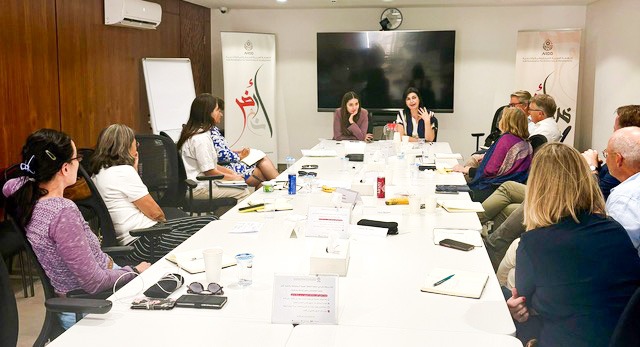
On September 17, 2025, the Arab Renaissance for Democracy & Development (ARDD) hosted a seminar for the Comenius Leadership group from the Netherlands, held as part of the Comenius Course on Diversity of Leadership. This seminar built on previous exchanges and collaborations between ARDD and Comenius. The program featured a lecture by Dr. Mariam Abu Samra, Coordinator of the Renaissance Strategic Center (RSC), and a session led by Zina Darwish, Senior Program Development Officer at ARDD. Discussions with participants explored themes such as resilience, governance from decolonial perspectives, and women in leadership, offering space for mutual learning and reflection on leadership in the Arab region.
Season’s Market: Experts Highlight the Importance of Supporting Markets to Strengthen Livelihoods
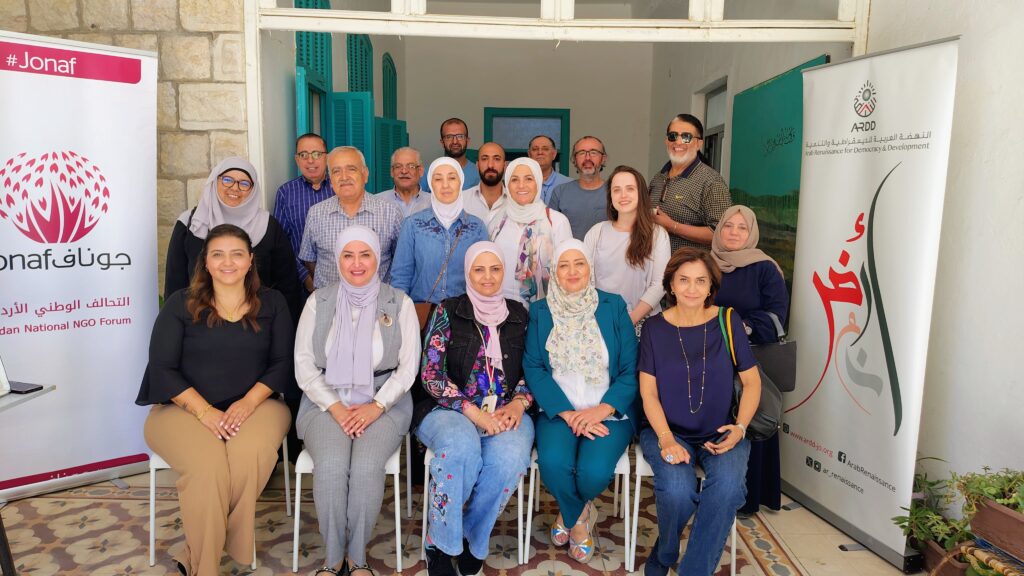
Popular markets in Jordan are among the most vital economic and social spaces, connecting local communities while generating job opportunities and promoting economic empowerment for diverse groups, including refugees. In the face of mounting economic challenges, investing in and supporting these markets has become critical to advancing sustainable livelihoods and creating inclusive employment opportunities. Against this backdrop, the Arab Renaissance for Democracy and Development (ARDD) organized a panel discussion on Friday, September 12, 2025, at Jara Market – Tajalla Association in Jabal Amman, as part of the Summer Bazaar and the wider Season’s Market initiatives. The discussion, held under the title “Popular Markets in Jordan: Toward a Sustainable Economic Model – Challenges and Opportunities”, brought together experts and researchers concerned with issues of the local economy and social development. The session, which explored the current state, challenges, and opportunities for developing popular markets, is part of an ongoing study by ARDD’s Renaissance Strategic Center. The study aims to strengthen these markets in Jordan and provide practical recommendations to support their role in creating inclusive and sustainable livelihoods for both Jordanians and refugees. The panel featured contributions from researcher and writer Dr. Kamal Mirza and journalist and researcher on poverty, development, and society Dr. Ahmad Abu Khalil, with researcher Khaled Jumaa from the Renaissance Strategic Center moderating the discussion. Dr. Mirza emphasized: “Popular markets are social and cultural spaces that reflect the identity of local communities, while also generating job opportunities and empowering marginalized groups. Supporting them should go beyond infrastructure to include legislation and policies that encourage innovation and sustainability.” Dr. Abu Khalil added: “Popular markets have a long history of social and cultural exchange. They are a mirror of people’s daily experiences and ways of life. Developing these markets requires a deep understanding of vendors’ needs and behaviors, and genuine dialogue between government, the private sector, and civil society to develop sustainable, practical solutions. This is essential to enabling markets to create real livelihood opportunities for local communities, including refugees, and integrate them into the local economy.” Participants in the discussion highlighted the need for a clear definition and criteria for popular markets, whether through official recognition or flexible, community-based frameworks. They stressed that these markets often emerge as grassroots initiatives responding to local needs and should be recognized not only as sources of income but also as cultural and heritage spaces that preserve community identity. The dialogue also underscored the importance of organizing markets through participatory approaches that engage all stakeholders—including the private sector—to ensure sustainability. Speakers emphasized that decision-making about popular markets must strike a balance between the vision of local communities and the perspectives of policymakers. They noted that planning and managing these markets is inherently complex, encompassing not only economic aspects but also social, developmental, security, and integrated urban planning dimensions. Alongside the discussion, the Summer Bazaar—organized under the project “Future Forward: Unlocking Sustainable Local Opportunities”, with support from the EU Regional Development and Protection Programme for Lebanon and Jordan—offered a vibrant platform for entrepreneurs to present their creative ideas to a diverse audience, including local communities, civil society, the private sector, and international organizations. The Bazaar showcased a wide variety of handmade products, ranging from artworks, accessories, clothing, and organic soap to homemade food. It celebrated the creativity of both Jordanians and refugees and featured entertainment activities for children of all ages. Vendors also gained valuable opportunities to network with associations, marketing platforms, and new clients, strengthening the sustainability of their businesses in the local market. The event drew a large audience, with participants who had undergone training to enhance their market access and networking skills expressing their appreciation for such initiatives. As one participant noted: “The Bazaar was a wonderful opportunity to showcase our products, build partnerships, and collaborate with new outlets such as antique and handicraft shops. It boosted our confidence and encouraged us to expand our projects.” Looking ahead, the Season’s Market will continue next winter with a new range bazaars. ARDD and the Jordan National NGO Forum (JONAF) reaffirmed the importance of exploring local livelihood opportunities, supporting startups in Jordan, and promoting sustainable economic initiatives.