She Leads… Jordanian and Egyptian Experts Emphasize the Need to Strengthen a Community Culture that Supports Young Women’s Leadership
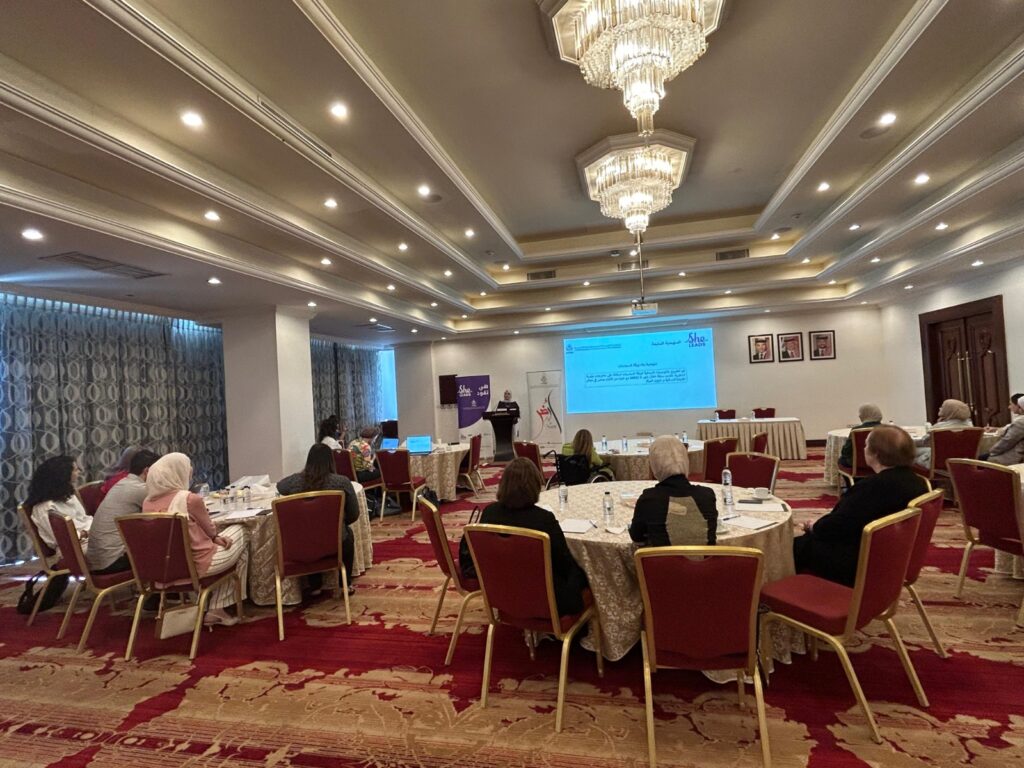
As part of the “She Leads” program, the Arab Renaissance for Democracy and Development (ARDD) organized two dialogue sessions in Jordan and Egypt to explore the role of men within families in supporting young women’s leadership. The sessions aimed to develop recommendations grounded in real-world challenges facing women, with active participation from young female leaders and regional experts on women’s leadership. The goal is to produce a detailed policy brief and research paper on this topic. During the sessions, held on June 18 and 24, 2025, with regional experts on women’s leadership in Egypt and Jordan, Lina Husseh, Project Manager of She Leads, highlighted the importance of addressing decision-makers through policy papers and research to secure their support. She stressed the need to strengthen communities and the legislative environment by planning and implementing programs that increase meaningful participation opportunities for young women and girls. Meanwhile, Malak Suleiman, Projects Manager at ARDD, presented a draft policy brief in progress. The brief includes recommendations to activate the role of young men and boys within families to help cultivate young female leaders. She shed light on how political, cultural, economic, and technological shifts affect patterns of support for women within families, and how these shifts impact women’s broader societal presence. Suleiman also emphasized the importance of working within a systematic and integrated framework to enhance institutional and individual efforts to create an enabling environment that supports young women in reaching leadership positions. Participants in both sessions noted that despite ongoing efforts to strengthen women’s roles in leadership and decision-making, these efforts have not yet reached the desired level across various sectors and communities. This gap is particularly evident in some regions of Egypt. They agreed that societal constraints continue to limit women’s effective participation, and there remains a lack of genuine representation of women in decision-making positions, despite the presence of successful female role models who need greater visibility and institutional support. Participants also discussed the necessity of integrating girls with disabilities into education and enhancing their civic and political engagement. The discussions underscored the importance of designing well-structured local initiatives within educational contexts, incorporating leadership skills and principles of gender justice from an early age, and providing appropriate psychological and social training for girls during decision-making stages at the family level. Participants also stressed the need for sustainable programs to train parents on supportive parenting methods. At the institutional level, participants recommended enhancing young women’s leadership by providing tangible opportunities in the public and humanitarian sectors, focusing on establishing a more supportive and inclusive organizational culture, especially regarding women’s leadership. They highlighted the need to adopt clear social, economic, and political standards that promote women’s participation in leadership and decision-making positions. Participants also called for a reexamination of youth studies to ensure they more accurately reflect the complex and evolving realities faced by girls and young female leaders. In conclusion, participants emphasized the importance of effectively adopting the recommendations in both the Jordanian and Egyptian contexts to ensure their transformation into actionable national policies, while respecting cultural and historical specificities. They stressed the need to raise men’s awareness of their roles, build trust between local community institutions and families, and enhance the role of media and social media as powerful tools for raising awareness—particularly among men—by presenting recommendations backed by data, statistics, and real-life examples. They agreed that meaningful change begins with recognizing existing gaps in program design and implementation and the need for cooperation across all sectors to adopt new, more realistic, and comprehensive approaches that reflect the needs of women and girls, fostering real transformation in the culture of leadership in both Jordanian and Egyptian societies. It is worth noting that the “She Leads” program aims to promote equitable representation of men and women in decision-making processes through capacity-building activities focused on expanding girls’ and women’s access to education, skills development, political engagement, advocacy, purposeful interaction, and awareness-raising, all through a collaborative and inclusive approach at both regional and international levels.
Global Network on the Question of Palestine discusses the impact of Israel’s attack on Iran
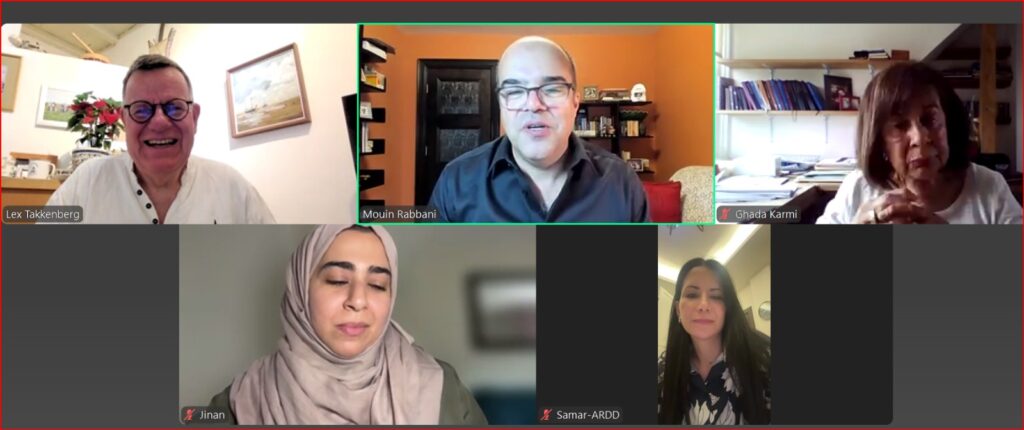
On 22 June 2025, ARDD’s Global Network on the Question of Palestine (GNQP) held an online meeting to discuss the impact of Israel’s attack on Iran on the broader Question of Palestine, including the war in Gaza and the attacks on the West Bank. The meeting, attended by some 20 members of the Network and several invited guests, started with an introduction by Mouin Rabbani, co-editor of Jadaliyya, non-resident fellow at the Center for Conflict and Humanitarian Studies, and member of the GNQP. Rabbani focused on Israel’s motives for its attack on Iran – making it clear that contrary to wide-held belief, it was not to divert attention from its war in Gaza – but rather the outcome of Israel’s new security doctrine, post 7 October, that wants to further cement it’s hegemonic position in the region – including through regime change – and maintain at all cost its nuclear monopoly in the region. With respect to the implications for the Palestine question, now that the US has agreed to join its attack on Iran, Israel likely feels emboldened to continue its genocide in Gaza and to possibly trigger expulsion of Palestinians from Gaza, the West Bank and possibly Israel itself. One effect of the attacks on Iran has been is that it has muted European criticism of Israel with some Europeans now aligning behind Israel, as was the case immediately following 7 October 2023.
Civil Society in Transition: Funding, Regulation, and Digital Governance in Jordan
Amid legal and technological changes reshaping the work of civil society organizations in Jordan, the Arab Renaissance for Democracy and Development (ARDD) convened a consultative session for members of the Jordan National NGO Forum (JONAF) on June 23, 2025 to discuss the latest regulatory and technical developments affecting the sector. The session, part of the “Future Forward: Unlocking Sustainable Local Opportunities” project funded by the European Regional Development and Protection Programme, was titled “Civil Society in Transition: Funding, Regulation, and Digital Governance in Jordan.” It brought together representatives from leading civil society organizations, as well as legal and technology experts, to examine new legislation, registration systems, and funding challenges. Lina Halaseh, ARDD Project Manager, stressed the need for organizations to adapt to digital transformation and regulatory changes, highlighting the importance of building transparent relationships with donors and government bodies. She underscored that automating administrative processes supports transparency, accountability, and stronger partnerships across sectors. ARDD Legal Advisor Rami Qweider presented the key legal updates, including the new electronic invoicing system issued by the Income Tax Department, which obliges all institutions to issue official invoices through the system. He also noted new banking requirements, such as periodic updates of administrative board members’ data, which add to the administrative burden on organizations. Presenting the findings of a recent survey conducted by ARDD and JONAF, Programs Manager and JONAF Coordinator Zainab Khalil revealed that among 31 participating organizations, only 17 had registered with the electronic invoicing system, 22 had started issuing invoices, and 26 had signed up for the “Takamul” platform. Khalil praised improvements to the “Takamul” platform, which now offers faster processing, streamlined applications, and complete archiving of information, speeding up official responses and improving access to government services. Khaled Juma, researcher at ARDD’s Renaissance Strategic Center, highlighted challenges facing civil society amid digital transformation, such as weak digital infrastructure and the shortage of qualified personnel to use new platforms. He called for accurate data collection, staff training, and the alignment of projects with community needs. Participants also noted that some organizations, especially small coalitions, continue to struggle with registering on the “Takamul” platform due to unclear guidelines and lack of technical support. They pointed to confusion caused by the coexistence of electronic invoices and existing official receipts, as well as ongoing funding challenges. Concluding the session, participants recommended the development of a new dialogue framework between civil society and government institutions, enhanced technical support for using digital platforms like “Invoicing” and “Takamul,” and stronger coordination between donors and local organizations. They also called for a review of current policies to ensure inclusive and equitable funding and to build the digital capacities of civil society staff.
JONAF Launches Comprehensive Program to Strengthen Member Capabilities and Advance Localization Efforts in Jordan’s Civil Society
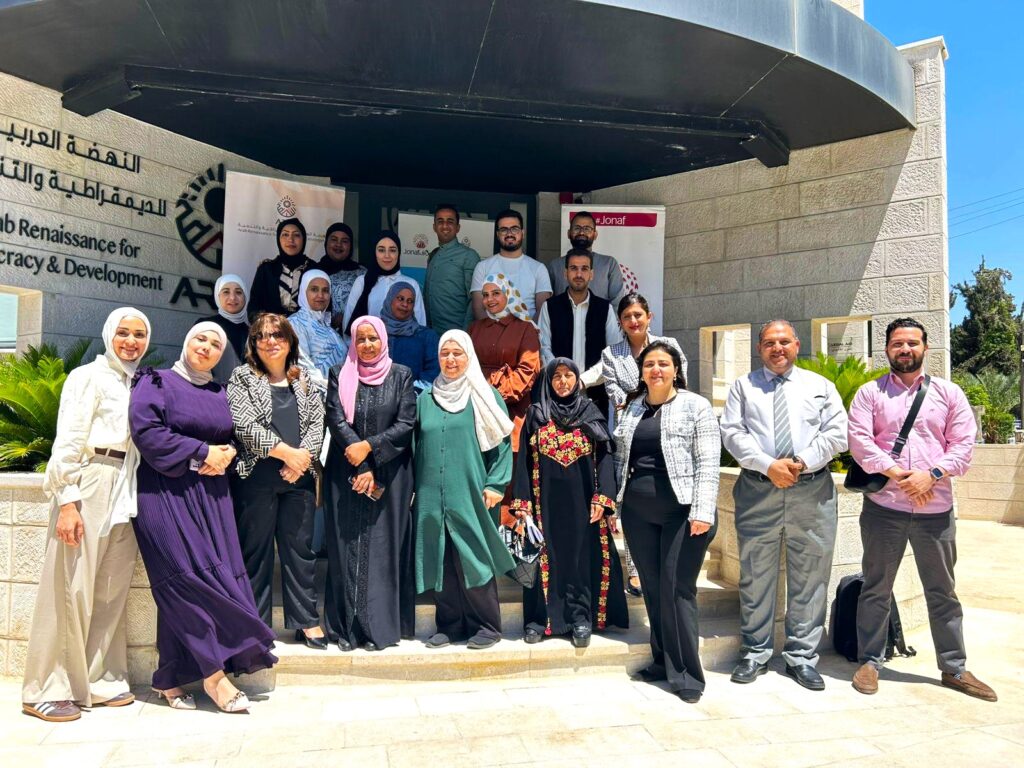
In a clear demonstration of its commitment to promoting the localization and strengthening the capacity of local partners, the Jordan National NGOs Forum (JONAF) has launched a comprehensive program aimed at enhancing the capabilities of its member organizations across various areas of community response. This initiative is part of JONAF’s ongoing efforts to position itself as an inclusive platform that reflects the priorities of local communities and contributes to more effective, sustainable, and locally-driven development outcomes. The program’s inaugural activity was a specialized workshop on monitoring and evaluation (M&E), organized by the Arab Renaissance for Democracy and Development (ARDD) on May 27–28, 2025. The workshop brought together representatives from local member organizations across multiple governorates. It is part of ARDD’s project, “Future Forward: Unlocking Sustainable Local Opportunities”, which aims to empower local communities by enabling organizations to lead responses based on accurate field insights and by strengthening their institutional tools to operate with effectiveness and independence. The project also emphasizes the importance of building partnerships among key stakeholders, with particular attention to livelihoods and economic empowerment for vulnerable groups. Additionally, it supports JONAF’s role as a unifying umbrella platform through the review and enhancement of its governance framework—ensuring it reflects member aspirations and reinforces JONAF’s standing as a leading local actor in shaping the civil society agenda in Jordan. The workshop, designed based on a needs assessment conducted by the alliance, aimed to build the capacity of member organizations to monitor and evaluate their projects effectively and to develop action plans and proposals that are rooted in community needs. This strengthens their ability to conduct self-assessments, promote community accountability, and take on meaningful roles as genuine development partners—not just implementers. Select representatives from participating organizations will also contribute to updating JONAF’s logical framework, supporting the development of a more robust governance structure and institutional foundation for the alliance as a coordinating body that champions local priorities and leads relevant policy dialogues. This program responds to the growing need to empower local organizations—not only technically, but within a broader reform vision that centers localization in humanitarian and development efforts in Jordan. Principles such as equitable partnerships, accountability, and sustainable funding are seen as essential pillars of any model that truly supports localization, moving beyond centralized implementation or operational dependency. Participating organizations in the workshop included: NAYA Community Network, Athar for Youth Development, Society for Protection Family Violence Victims, Abu Alanda Social Development Association, Al-Hassa Charity Association, Women Tafeileh Association, Qudrat Association for Community Development, and Shamaa Charity Association. Which reflecting the diverse geographic and thematic representation within JONAF’s membership. Established in 2016 as an initiative led by ARDD in partnership with local and community-based organizations, JONAF works to foster coordination, resource sharing, and policy influence grounded in community needs. The alliance currently comprises a 10-member governing board and a general assembly of 41 local member and supporting organizations. These organizations span Jordan’s northern, central, and southern regions and include those focused on serving people with disabilities—further reinforcing JONAF’s inclusivity and responsiveness to underrepresented groups. Today, JONAF stands as a leading example of a local coordination platform striving for the sustainability of community work through the integration of roles between local and international actors.
ARDD Signs Three Strategic Agreements to Empower Youth and Women in Environmental Civic Engagement
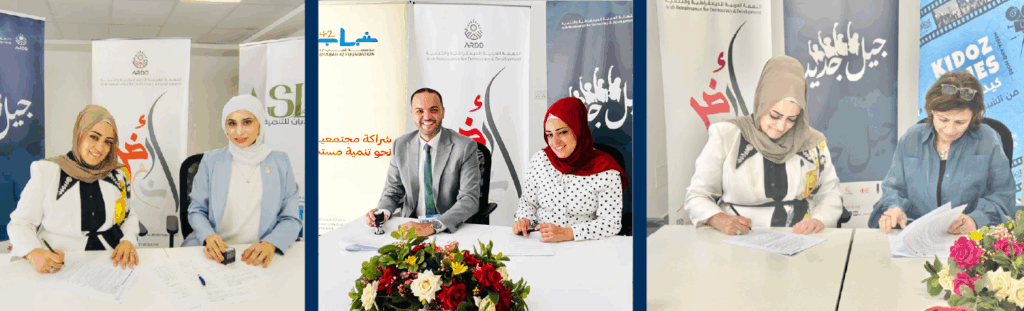
The Arab Renaissance for Democracy and Development (ARDD) has signed three cooperation agreements with members of the Youth Organizations Coordinating Network, under the framework of the New Generation – GenG project. This project aims to enhance civic and political participation among youth and women, support advocacy for social justice, and contribute to building a strong, inclusive civil society. The agreements were formalized during May-July 2025 at ARDD’s headquarters in Amman, with the following partners: Kidoz Times Youth Platform, Al-Sendyan Land Association-ASLA, and Shabab 42 Foundation. These partnerships will support the implementation of grassroots initiatives designed to increase youth and women’s involvement in addressing environmental challenges—particularly climate change. The focus will be on community mobilization, empowering local populations to take collective action, and promoting gender equity, especially in rural areas where women play a critical role. Partner organizations were selected through a transparent and rigorous process based on their experience and capacity in community engagement, environmental activism, gender justice, and inclusive development—particularly in climate-affected contexts. The Youth Organizations Coordinating Network is one of ARDD’s key initiatives, established to foster a dynamic network of youth-led organizations working to advance civic and political engagement, facilitate knowledge exchange, and create collaborative responses to the pressing challenges facing youth and women in Jordan.
Renaissance Strategic Center Launches “Engage & Discuss” Series with Inaugural Session on Migration Governance in Jordan’s Garment Sector
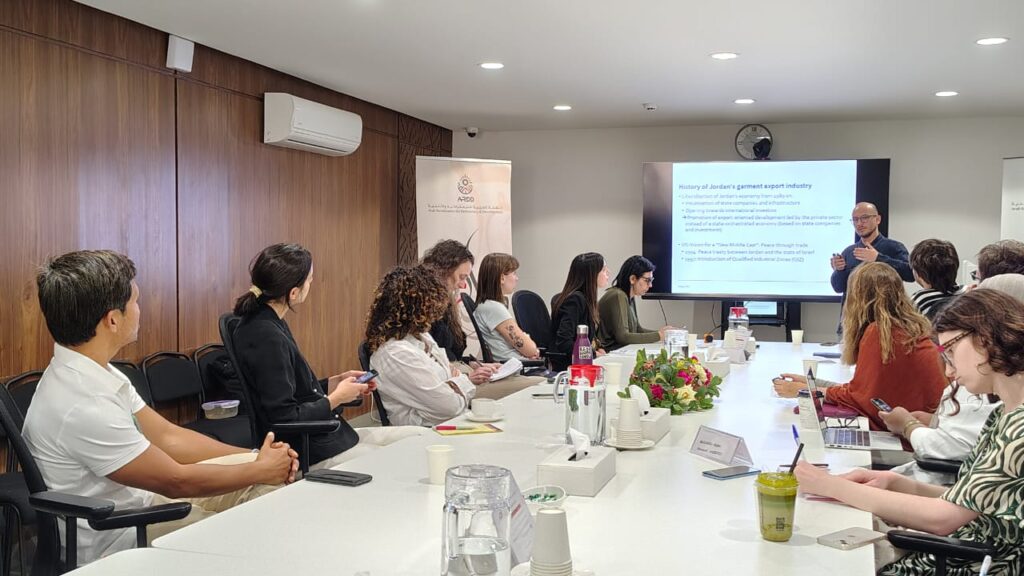
29 May 2025 – The Renaissance Strategic Center (RSC) launched its new discussion platform, the “Engage & Discuss” series, with a dynamic inaugural session titled “Migration Governance and Development in Jordan’s Garment Sector.” The event featured guest speaker Maximilian Hofmann, a PhD candidate at Queen Mary University of London’s School of Business and Management, who presented his early research on bilateral migration governance and the role of migrant labor in Jordan’s export-oriented garment industry. Mr. Hofmann’s presentation explored the sector’s evolution since the establishment of Qualified Industrial Zones (QIZs) in the 1990s, marking Jordan’s integration into global garment supply chains. He emphasized that although Jordan is a relatively recent entrant in the sector, it has become a significant exporter. The country’s reliance on Bangladeshi migrant workers is underpinned by bilateral cooperation between Jordan and Bangladesh, driven by aligned economic goals: Jordan’s strategy to increase local value addition and create quality jobs for Jordanians depends on a stable migrant workforce, while Bangladesh seeks to expand overseas employment through vocational training. The session, introduced by RSC Coordinator Mariam Abu Samra, also highlighted the active involvement of the Center’s internship program. Interns Giovana Mariani and Giorgio Gioele Sirito served as moderators, reflecting RSC’s commitment to inclusive knowledge sharing and youth engagement. This opening event attracted students, researchers, and migration experts, setting a strong foundation for the “Engage & Discuss” series. Upcoming sessions will continue to explore the multifaceted realities of migrant and refugee workers across the Arab region.
ARDD Featured in the Legal Aid Services Map for Women in Jordan
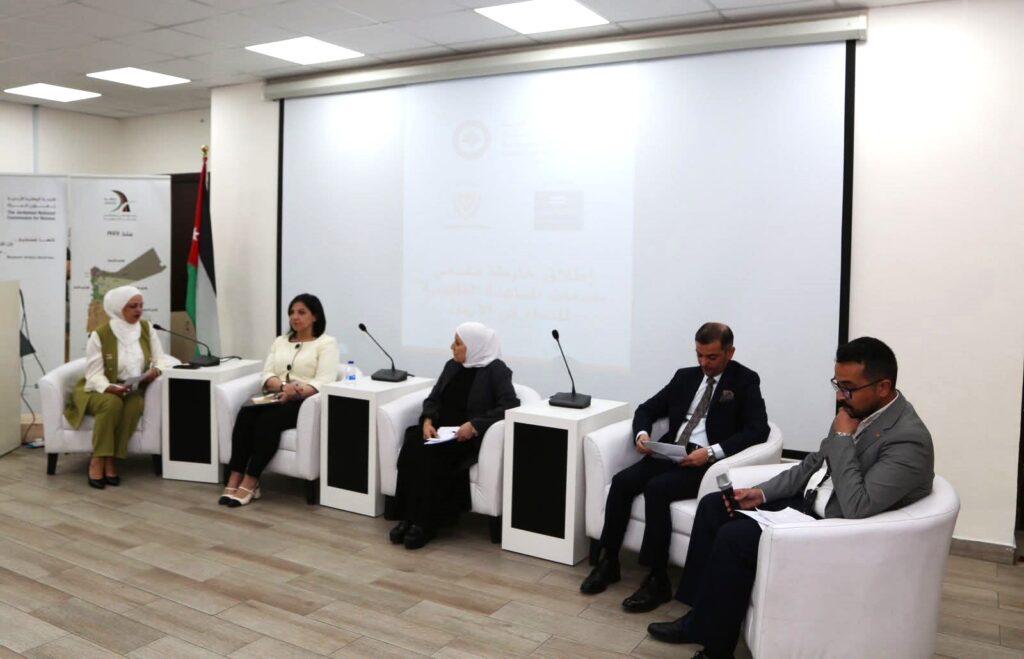
As part of ongoing efforts to enhance women’s access to legal aid services and raise awareness about service providers, their geographic distribution, the types of services offered, and the target groups, the Jordanian National Commission for Women launched the Legal Aid Services Map for Women in Jordan on Tuesday, May 27, 2025. The map includes 12 specialized organizations, among them the Arab Renaissance for Democracy and Development (ARDD). Launched under the patronage of Her Royal Highness Princess Basma Bint Talal, and developed in collaboration with the Justice Center for Legal Aid and with support from the Government of Cyprus, the initiative falls within the framework of the project “Raising Community Awareness on Legal Aid Services.” The map provides information on services such as legal consultation, court representation, accompaniment to official institutions, mediation, and self-representation. It was developed based on focus group discussions, field research, and a review of relevant legislation. In her opening remarks, Her Royal Highness highlighted that “empowering women to access legal aid contributes to upholding justice and fairness, safeguarding constitutionally protected rights, and promoting social justice.” The launch event was attended by representatives from government institutions, civil society organizations, project partners, Cypriot Ambassador to Jordan Sivas Aviedizian, members of Parliament, the National Family Protection Team, and the Commission’s legal team. Representing ARDD, Legal Consultant, Adv. Rami Qwaider stressed the importance of intensifying efforts to remove barriers and ensure that legal services are inclusive and equitable, especially for vulnerable groups. He emphasized that ARDD prioritizes improving access to legal aid services for women of all nationalities—both Jordanians and refugees—by offering legal support, building the capacity of service providers, and developing innovative tools that facilitate access to legal information. Engineer Maha Ali, Secretary-General of the Commission, noted that the launch of the map is part of broader national efforts to strengthen women’s access to justice, in alignment with the National Strategy for Women 2020–2025. Concluding the event, JNCW announced the launch of a dedicated section for the map on its digital platform “Know More!”, where users can find information on legal aid providers across Jordan’s governorates, the types of services offered, and how to get in touch with them.
“She Leads” Program Hosts Awareness Session in Egypt on TFGBV

As part of the “She Leads” program implemented by the Arab Renaissance for Democracy and Development (ARDD), the Egyptian Female Lawyers Foundation for Women’s Rights, in cooperation with the Housing Committee of Agouza District, organized an awareness session addressing the dangers of harassment and online blackmail against women and girls. The event, held at the Ard El Lewa Youth Center in Giza, brought together 30 women and girls from the local community. The session was designed based on an advocacy plan developed by participants in the She Leads program. It aimed to raise awareness of the increasing threats of child harassment and cyber extortion, provide preventive measures, and promote safe internet practices. The event also served as a platform for discussing legal protections and reporting mechanisms available under Egyptian law. Heba Adel, cassation lawyer and Chair of the Board of Trustees of the Egyptian Female Lawyers Foundation, opened the session with an overview of the She Leads program and its objectives in empowering young women. She highlighted several community initiatives developed through the program and elaborated on the legal dimensions of harassment and the importance of accessible reporting channels. Program participants Rehab Ehab and Nora Adel led a discussion on the various forms and symptoms of harassment, offering practical strategies for prevention and intervention. They also provided a detailed explanation of online blackmail and its link to digital harassment. Wissam Ibrahim, a lawyer at the Giza branch of the National Council for Women, discussed legal procedures and judicial avenues for addressing harassment cases. She stressed the importance of ensuring legal support for survivors. Rita Naguib, a member of the National Council for Women and the Agouza Housing Committee, highlighted the need for inclusive awareness efforts, particularly the integration of persons with disabilities in anti-harassment initiatives. She also introduced key services provided by the National Council for Women and the National Council for Disability Affairs, including guidance on obtaining integrated service cards for individuals with disabilities. Participants concluded the session by calling for continued support for women and girls across Giza and the expansion of community-led initiatives to combat harassment and cyber threats. They emphasized the importance of making reliable information and support services readily available. The She Leads program seeks to promote gender justice and equal representation in decision-making through targeted capacity-building efforts. These include enhancing access to education, skill development, political participation, advocacy, and meaningful engagement, while adopting a collaborative and inclusive approach at both regional and international levels.
Season’s Market (Third Edition) – the Spring Bazaar: A Shared Platform Connecting Jordanians and Refugees to Showcase Products and Expand Market Access
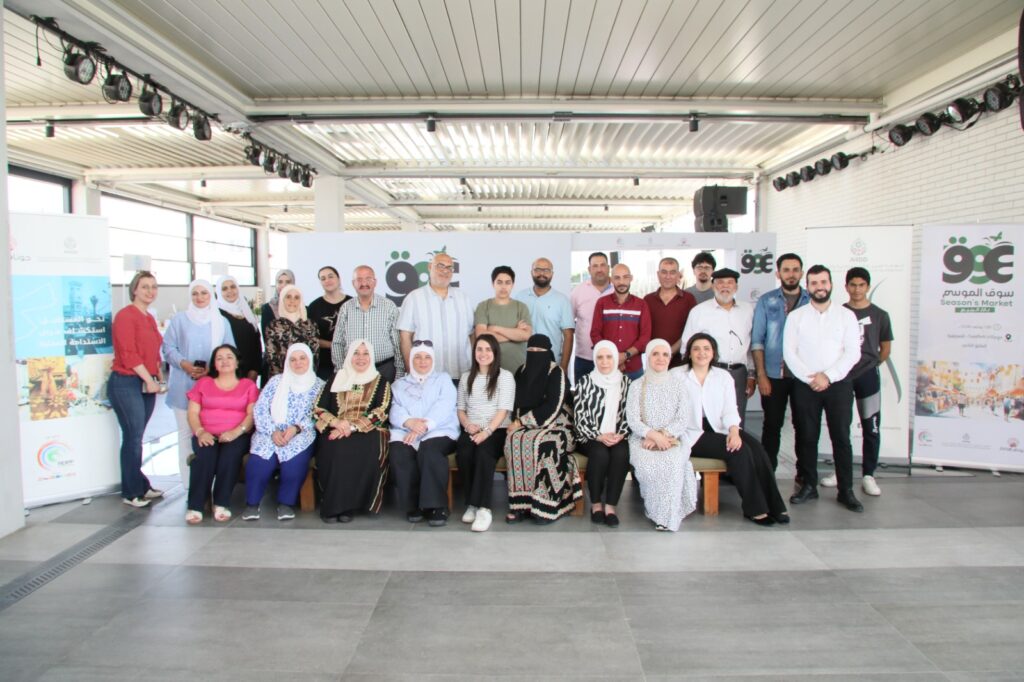
As part of its ongoing efforts to address the challenges faced by entrepreneurs from both the local community and refugee populations, the Arab Renaissance for Democracy and Development (ARDD), in collaboration with the Jordan National NGOs Forum (JONAF), organized the third edition of the “Season’s Market” the Spring Bazaar on Thursday, May 22, 2025, at the Sweifieh Village Complex in Amman. The Spring Bazaar showcased a wide array of handmade products—ranging from artwork and accessories to clothing, organic soaps, and homemade food—highlighting the creativity and talent of both Jordanian and refugee entrepreneurs. The event also featured entertainment activities for children of all ages, creating a family-friendly and inclusive atmosphere. Beyond its role as a vibrant marketplace, the bazaar served as a vital platform for vendors to connect with local associations, marketing platforms, and potential clients. These interactions help pave the way for greater access to the labor market and contribute to the sustainability and growth of their businesses. In the lead-up to the event, ARDD’s Legal Aid Department conducted a remote capacity-building session on Tuesday, May 20. This specialized training focused on the legal protection of small and medium-sized enterprises (SMEs). Topics included project registration, financing mechanisms, building partnerships with the private sector, and strategies for legally safeguarding products and services—providing participants with the tools to scale their initiatives sustainably. The bazaar drew wide participation from the general public, representatives of international organizations, embassies, and community members. Participants expressed appreciation for the opportunity to promote their work, expand their market reach, and connect with a broader audience. One vendor remarked: “This was a great opportunity to connect, explore different products, and foster competitiveness and creativity. The event was successful by all measures—in organization, presentation, and the welcoming atmosphere that allowed us to truly engage with customers.” ARDD and JONAF reaffirm their commitment to supporting local livelihoods by exploring innovative solutions that empower entrepreneurs from both host and refugee communities. By promoting startups, enhancing youth capacities, and creating inclusive and sustainaböe economic opportunities, such initiatives contribute meaningfully to the development and resilience of local markets.
ARDD and Amna – Refugee Healing Network Enhance Community Engagement
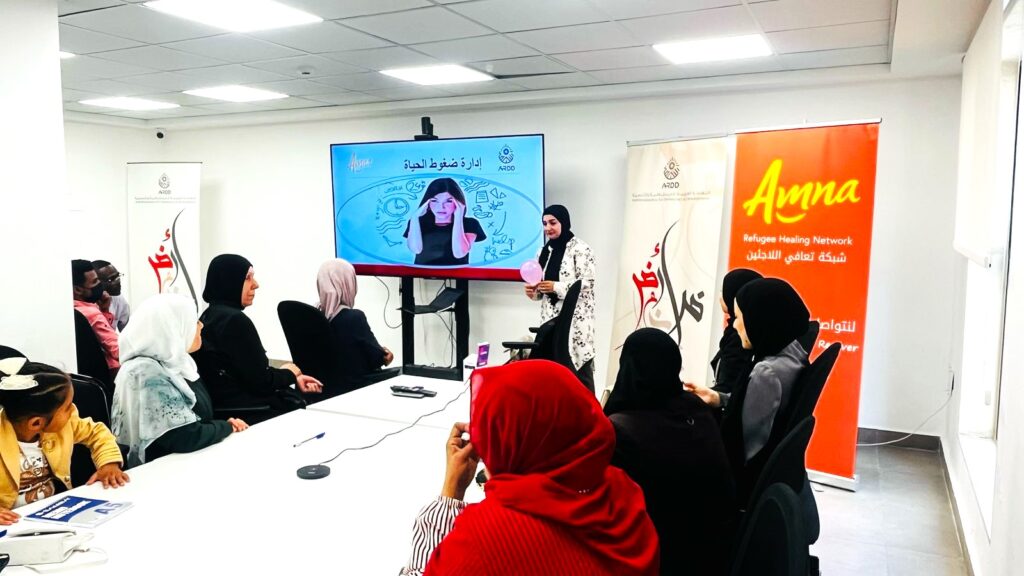
As part of its ongoing efforts to provide social support and strengthen community engagement, the Arab Renaissance for Democracy and Development (ARDD) continues to implement awareness activities through the Prevention and Protection Interventions project launched in February 2025. The project hosts 3 to 4 sessions per month and will run through the end of the year at ARDD’s office in Amman, Jordan. Funded by Amna – Refugee Healing Network, the project is part of a broader program being implemented simultaneously in Lebanon under the title “Community Engagement in Jordan and Lebanon,” involving ten local organizations across both countries. The initiative aims to support community members of all nationalities, including men and women, with an emphasis on assisting families as they navigate psychological, social, and economic challenges that impact their well-being. The sessions provide a safe space for parents to discuss and learn about family-related issues, especially those concerning children. They offer a range of tools and skills to cope with daily challenges, particularly those linked to economic pressures and child protection, with a special focus on combating drug abuse. Additionally, the sessions aim to raise awareness about national protection systems and services and how to access them through Jordan’s national referral system. In this context, psychological trainer Manal Al-Sarhan noted: “These sessions create a real and safe space for parents to express themselves and participate. In every meeting, we witness a positive impact on families, whether through improved awareness of child protection or learning coping strategies for everyday psychological pressures.” She added: “The importance of these activities lies in their direct reach to individuals who are often neglected or forgotten amid the many challenges facing humanitarian work.” Participants emphasized the need to continue such activities, particularly now, as many similar projects have been suspended. They pointed to the significant impact these sessions have had on their family and psychological well-being. Many called for younger age groups to be included in the activities, recognizing the preventive value of early intervention. These requests and testimonials were echoed in multiple sessions, where parents shared moving stories about the positive changes in their relationships with their children and their increased understanding of the risks surrounding them. Participants also appreciated ARDD’s provision of a dedicated space for children during the sessions, allowing them to draw and play in a child-friendly environment that supports family participation without barriers. Despite funding challenges, ARDD affirms the importance of maintaining direct relationships with local communities and continuing to deliver services and activities through its diverse programs. This includes providing a safe space for meaningful community engagement for families, as well as in-kind and cash assistance, among other activities that empower communities and enhance their resilience and stability. In this spirit, ARDD calls on donors to listen to the needs of targeted groups and include them in the design of activities and services—an approach demonstrated by Amna – Refugee Healing Network through its partnership with ARDD in implementing this project. The initiative addresses one of the most fundamental needs: preserving human dignity, helping individuals overcome trauma, restoring psychological and social balance, and enabling families to protect their members and strive for a better future.