RSC hosts the Book Launch of Identity Building in Jordan and Kuwait: The Strategy of Inclusion and Exclusion

On May 18th, the Renaissance Strategic Center (RSC) hosted the launch of Identity Building in Jordan and Kuwait: The Strategy of Inclusion and Exclusion (Palgrave Macmillan, 2024) by Dr. Odetta Pizzingrilli, Post-Doctoral Researcher at the University of Pisa and Consultant with RSC. The event brought together academic researchers and representatives from UN agencies, civil society, and international organizations. Dr. Pizzingrilli’s book investigates how national identity in Jordan and Kuwait is shaped through mechanisms of inclusion and exclusion. Based on over 100 interviews and several years of fieldwork, the study analyzes the spatial and narrative dimensions that inform citizenship and belonging. The research focuses on four groups: Arab expatriates and Bedoon (Stateless) in Kuwait, and Circassians and Gazans in Jordan—communities that are integrated within state structures yet occupy distinct legal and social positions. The discussion was moderated by Dr. Mariam Abu Samra, political scientist and RSC Coordinator, who framed the book within broader debates on governance, minority rights, and state formation in the Arab region. She described the work as relevant to various fields concerned with participation and exclusion. The book, organized around two primary dimensions: space and identity, and how these evolve, mapping the changing contours of national belonging from the late Ottoman era to the present, through historical junctures such as the British Mandate, the development of rentier state systems, and the 1990–91 Gulf War. Spatial developments—such as the building of Kuwait’s 1920 wall or the removal of historical landmarks in Amman—are examined for their role in reinforcing dominant national narratives. The conversation addressed how the built environment—including urban infrastructure, territorial boundaries, and natural features—contributes to identity formation. Examples discussed included Gazans in Jordan who recall Gaza through generational memory, reflecting the role of narrative and space in shaping emotional and political attachments. The event concluded with a discussion of positionality, examining how the book contributes to ongoing regional analysis of identity politics and emphasizes the interplay of history, geography, and discourse in the construction and negotiation of belonging.
JONAF Launches its Governance Framework: A Strategic Step Toward Strengthening Civil Society Institutions
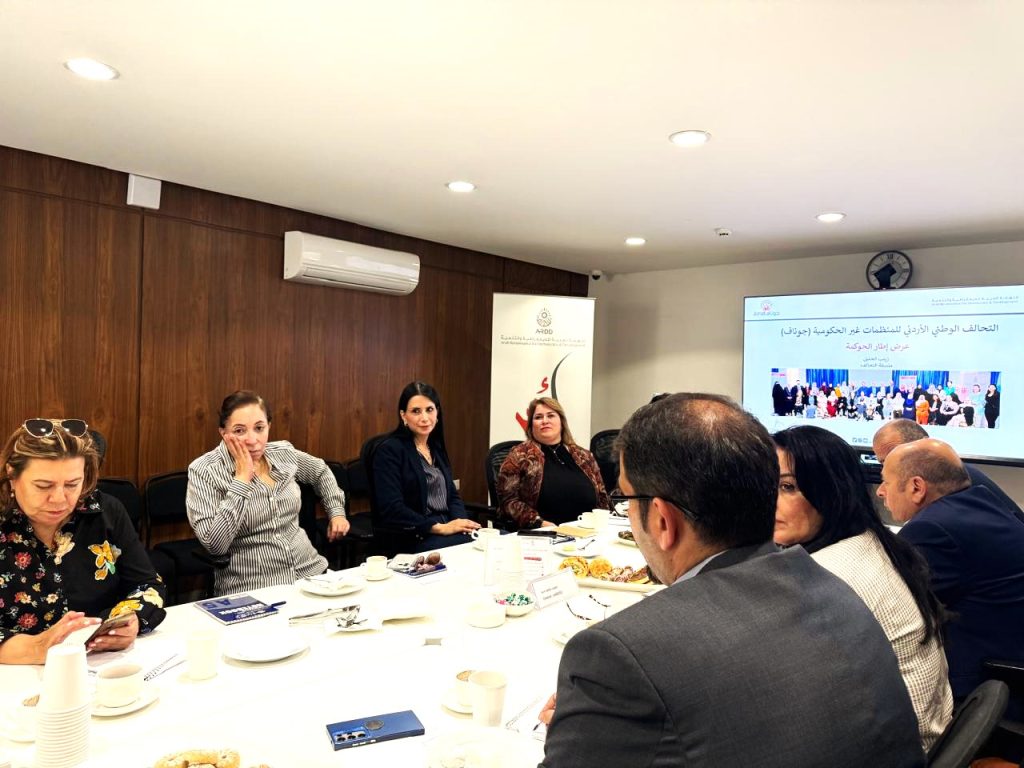
In a pivotal move to reinforce transparency and accountability within the Jordan National NGOs Forum (JONAF), the Arab Renaissance for Democracy and Development (ARDD) has officially announced the launch of the forum’s final governance framework. This milestone is part of the “Future Forward: Unlocking Sustainable Local Opportunities” project, funded by the European Regional Development and Protection Programme (RDPP) to support Jordan and Lebanon. The governance framework was introduced through two consultative meetings held on April 22 and 23, 2025. The first meeting took place virtually with members of the General Assembly, while the second was held in person at ARDD’s headquarters with the forum’s administrative board. These sessions aimed to present and explain the framework’s core components while offering a space for feedback and questions, paving the way for a comprehensive and actionable implementation phase. Key topics discussed included the framework’s decision-making mechanisms, internal and external operational structures, roles and responsibilities of committees, and fundamental governance principles—such as transparency, participation, inclusiveness, and the integration of institutional and humanitarian analysis. A monitoring and evaluation (M&E) plan was also introduced, alongside the development of tailored performance measurement tools. The development process of the governance framework spanned from 2023 to 2025 and involved several integrated phases. It began with a thorough assessment of JONAF, a review of relevant networks and platforms, and individual and group consultations with forum members and coordinators to understand the organizational context and key challenges. The process relied on internal evaluations and wide member engagement, culminating in a consultative workshop in November 2024 to finalize the draft framework before its official launch. This initiative not only seeks to clarify roles and responsibilities and build consensus among members, but also to set a roadmap for future steps. These include strengthening inter-organizational collaboration and expanding community representation within the forum. Zainab Al-Khalil, Executive Coordinator of JONAF, emphasized that the launch of the governance framework marks a turning point for the forum: “It is a milestone that reinforces our collective commitment to transparency, accountability, and shared vision, ultimately increasing the forum’s institutional impact.” The “Future Forward” project, implemented by ARDD, aims to empower local communities, foster partnerships among stakeholders, and support livelihoods and economic resilience, particularly among vulnerable groups. A central component of the project is enhancing the JONAF platform by developing a governance structure that truly reflects the aspirations and needs of its members. Established in 2016 as an initiative led by ARDD in collaboration with local and community-based organizations, JONAF promotes coordination, resource sharing, and policy influence grounded in community needs. The forum currently includes an administrative board of 10 members and a General Assembly comprising 41 members and supporting organizations from across Jordan—north, central, and south. These organizations represent a wide array of civil society actors, including groups specialized in working with persons with disabilities, reaffirming the forum’s commitment to inclusiveness and responsiveness to marginalized populations.
“She Leads” Program´s Participants Develop Community Initiatives in Jordan and Egypt
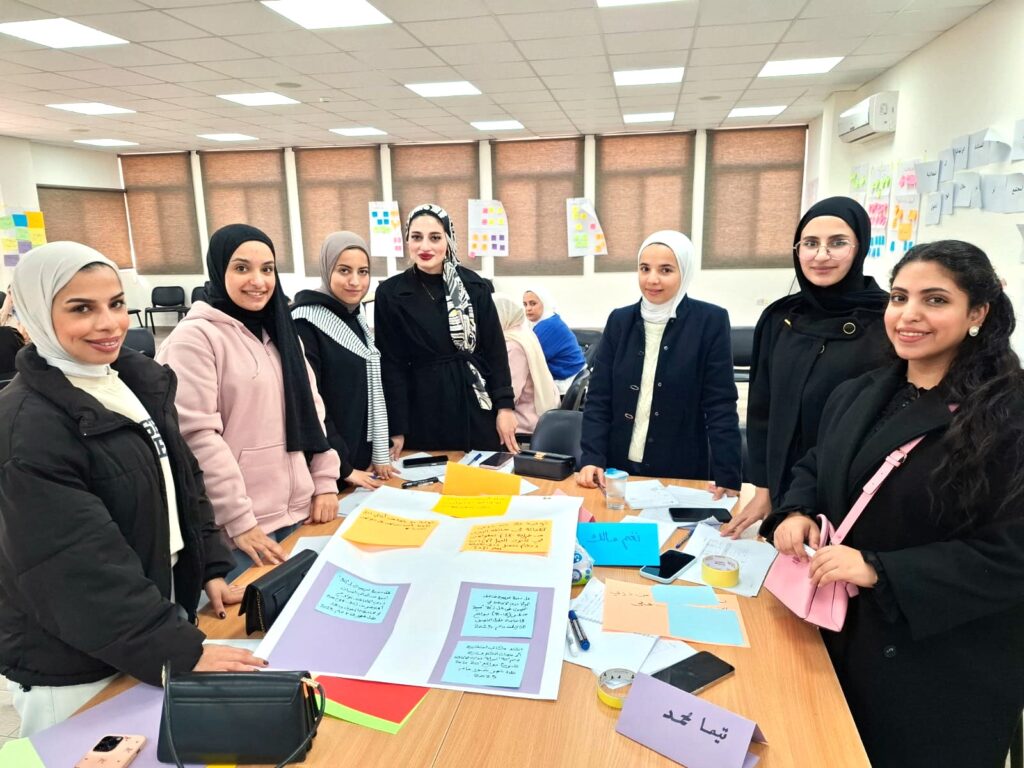
As part of its ongoing efforts to empower young women and enhance their civic and political participation, the Arab Renaissance for Democracy and Development (ARDD) continues to implement the “She Leads” program. The initiative aims to amplify the lasting impact of girls and young women in decision-making processes, while challenging stereotypical perceptions of women in both formal systems and informal institutions. It does so by fostering meaningful youth engagement, strengthening the role of girls and young women in shaping decisions, and training local girls’ councils to ensure the continuity of community and development efforts beyond the life of the project. Following a series of intensive trainings and interactive workshops, She Leads participants launched a range of high-impact initiatives in Jordan and Egypt, designed in response to pressing community priorities and informed by strategic planning. In Jordan, two initiatives were developed in the capital, Amman: one focused on increasing women’s access to leadership and decision-making roles, and the other on addressing electoral violence against women—both contributing to the advancement of women’s political rights and tackling ongoing barriers to their political participation. In Egypt, initiatives were implemented in the governorates of Giza and Assiut. In Giza, participants addressed economic empowerment for women and girls, the creation of safe and inclusive work environments, and improvements in transportation systems to support women’s access to economic opportunities. In Assiut, efforts were focused on reducing child marriage, promoting health awareness among women and girls, and expanding educational opportunities for girls within local communities. What sets these initiatives apart is that they were developed directly by the young women themselves, based on the specific needs of their communities and in collaboration with local councils. This grassroots, participatory approach provides young women with greater agency and space to contribute meaningfully to public life and decision-making processes. The program also includes the development of strong networking and collaboration channels between participants and civil society organizations. These pathways help enhance participants’ practical skills and prepare them to assume impactful leadership roles in the future. This participatory model is a cornerstone of ARDD’s work, which is rooted in the belief that young female leadership is essential for creating lasting and inclusive change. “She Leads” is implemented by ARDD in partnership with Terre des Hommes. It aims to promote gender-equitable participation in decision-making by expanding access to education, skills development, and economic opportunities for women and girls, and by encouraging their engagement in political processes. The program also strengthens advocacy skills, fosters meaningful interaction, and raises awareness through a collaborative and inclusive approach at both the regional and international levels.
Youth Participation Policy Lab: Youths Share Their Visions for Change and a Better Future

Amid the complex political, economic, and social challenges facing Jordan and the wider region, the idea that “Youth are the engine of change” stands out as one of the most vital responses to current crises and a cornerstone for building a better future. Moving forward requires a radical shift in approaches, mindsets, and methodologies — a transformation that hinges on empowering a new generation of leaders and thinkers across all sectors. This aspiration was echoed by participants in the first session Youth Participation Policy Lab in 2025, organized by the Arab Renaissance for Democracy and Development (ARDD) on Monday, May 12, as part of the “New Generation -GenG” project. Titled “Imagining Change: The Aspirations and Visions of Jordanian Youth towards a Better Future,” the session featured anthropologist and researcher Dr. Kamal Mirza, who holds a PhD in sociology and master’s degrees in social anthropology and modern media. Implemented by ARDD in collaboration with the Center for Strategic Studies at the University of Jordan, the lab aims to foster civic and political participation among political science and law students at the university. It also offers practical exposure to key institutions and experts, while equipping students to amplify their voices in policymaking and engage constructively with decision-makers. Speaking on youth and their role in social change, Dr. Mirza said: “Youth are not just the hope of the future; they are the energy of the present. We must provide them with tools and real opportunities for change, not burden them with empty promises.” He stressed that change is never accidental—it requires renewed critical awareness and deep engagement. He continued: “The most important thing we can offer youth is training in analytical thinking and deep understanding of their reality, not simply encouraging them to demand change.” Dr. Mirza emphasized the need to rethink youth involvement in public and political life: “We need platforms managed by youth and for youth—not symbolic inclusion without tangible impact.” Encouraging deeper engagement, he advised young people to build a foundational understanding of social change by reading and reflecting on the realities around them: “Reading deeply opens new doors to understanding. If we want real societal change, we must start with our culture.” Dr. Mirza argued that shaping a better future starts with listening to youth: “They are not just bearers of hope—they are active partners in creating change. We must rethink how institutions engage with young people and support them in building their confidence as changemakers.” The session saw enthusiastic participation from youth, who shared their perspectives on challenges they face—from access to education and meaningful political engagement to social justice. They underscored the need for more inclusive policies that empower youth and strengthen their role in decision-making. As one participant put it: “We need spaces where we can freely express our ideas. Meetings like this make us feel heard—and remind us that change is possible when both will and opportunity exist.” In conclusion, the youth presented a wide range of insights and recommendations. A common theme emerged: real change requires collective effort and shared responsibility. It cannot be imposed from the top down—it must be co-created through participatory policies, support for innovation, and a commitment to transparency and accountability. Only then can young people move from being recipients of challenges to active contributors to sustainable and stable solutions for the future.
She Leads”: A Lecture Shedding Light on Women’s Political Participation and Electoral Violence Against Them
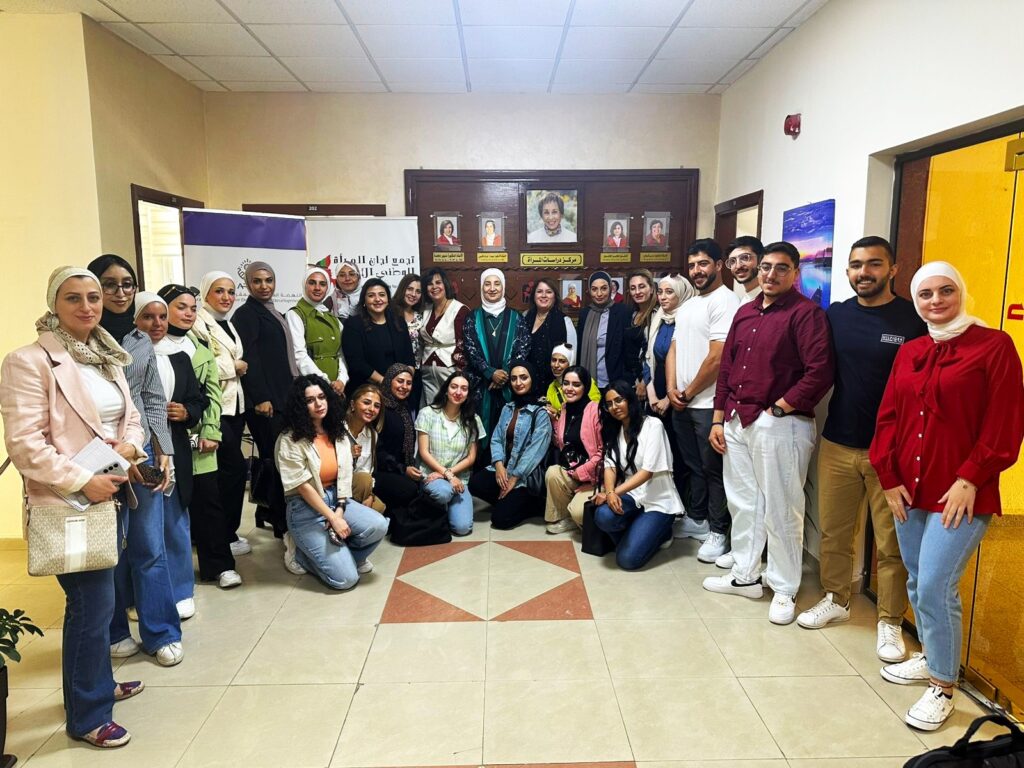
As part of the She Leads program, and in collaboration with the Jordanian National Commission for Women and the Center for Women’s Studies at the University of Jordan, a lecture titled “Women’s Participation in Political Life and Electoral Violence Against Women” was held on Tuesday, May 13, 2025. The lecture was delivered by Dr. Jumana Al-Dahamsha, Head of the Women’s Empowerment Unit at the Ministry of Political and Parliamentary Affairs. Designed as part of the advocacy plan developed by participants in the She Leads program with the support and supervision of ARDD, the lecture showcased the current political realities faced by Jordanian women, the various forms of electoral violence they encounter, and strategies for overcoming these challenges. Dr. Al-Dahamsha explained that electoral violence against women encompasses any form of violence, pressure, or discrimination women face due to their participation in the electoral process, whether as voters, candidates, or campaign workers. She noted that this violence takes many forms, including physical, psychological, and symbolic abuse, such as smear campaigns, bullying, mockery, and threats via social media or in community settings. She emphasized that women’s participation in political life is not a luxury but a cornerstone of justice and democracy. Civil society organizations, governments, and individuals must work to dismantle barriers and ensure that women can access decision-making positions safely and equitably. Amal Al-Awawdeh, Director of the Center for Women’s Studies, highlighted the importance of inclusive activities that bring together young women and men. She emphasized that these initiatives raise awareness of women’s rights and political participation and help build their capacity to address the challenges of leadership and public engagement. Lena Halaseh, Project Manager at ARDD, underscored the importance of building an effective network of youth leaders, experts, and women’s rights activists to facilitate knowledge exchange, promote genuine change in women’s participation in decision-making, and support the sustainability of community-based initiatives. She stressed the need for integrated, locally driven efforts that bring together individual, community, institutional, and political stakeholders to drive meaningful progress. The lecture also prompted insightful interventions from university faculty, students, and representatives of women’s organizations. Many expressed concern over the growing manifestations of symbolic and political violence in both physical and digital spaces and called for stronger preventive and legislative measures. In closing, participants called for greater youth and student involvement in national dialogues on women’s empowerment and the development of support and advocacy networks to challenge stereotypes and reduce violence against women. This includes awareness-raising, training, and legal assistance programs. The She Leads program aims to promote gender-equitable representation and increase women’s participation in decision-making processes through targeted capacity-building activities. These focus on expanding access to education and skills development, fostering political engagement, and strengthening advocacy and meaningful interaction. The program adopts a collaborative and inclusive approach at the regional and international levels.
Book Launch of Stolen Nation: The Right to Reparation of Palestinian Refugees at RSC, Marking the 77th Anniversary of the Nakba
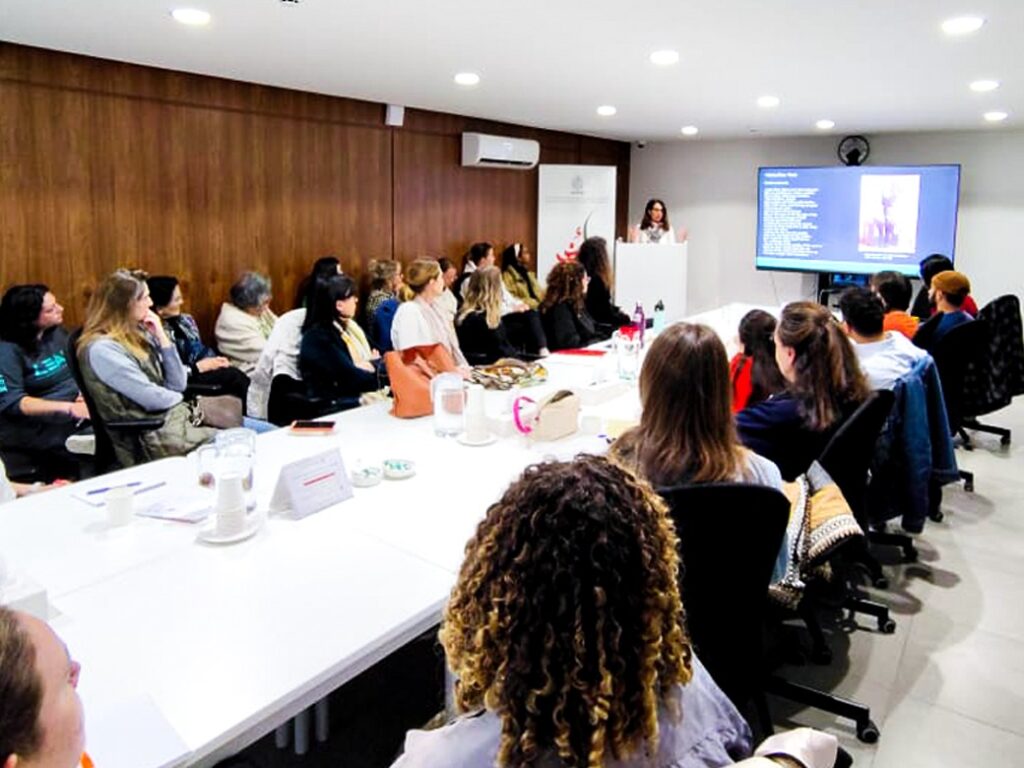
As part of the activities marking the 77th anniversary of the Nakba, independent legal expert and associate member of the Centre for Palestine Studies at SOAS, Dr. Lena El-Malak, presented her timely new book Stolen Nation: The Right to Reparation of Palestinian Refugees. In it, she offers a legal analysis of the right to reparation under international law for the destruction and expropriation of Palestinian property during the Nakba. The event was attended by students, as well as several representatives of civil society and international organizations. Dr. Mariam Abu Samra – political scientist and coordinator of the Renaissance Strategic Center – moderated the launch, introducing it as “our first event under the framework of the Nakba activities that we organize every year.” Acknowledging the brutality of the ongoing genocide, she stated that the “book is coming at a very, very important moment.” We are living in “this historical phase, where, on top of everything we are seeing, we are also witnessing the complete dismantlement of any kind of international framework and institution that was supposed to provide some kind of justice or protection for Palestinians and in this case, Palestinian refugees.” As the daughter of Palestinian refugees and a Nakba survivor, Dr. Lena El-Malak wanted to revive the Palestinian refugee issue, noting that researchers, media and politicians rarely touch on this issue. She sees international law as a tool for advocacy and aims to show how reparations can deter states from engaging in forcible displacement. In researching this topic, she came to the understanding that the Nakba is not a closed historical event, but an ongoing process rooted in a complex system of domination. Her book’s analysis of property laws dating back to the Ottoman Empire – including the Ottoman Land Code and the British Mandate – illustrates how Israel used the law to give a legal clout to the permanent expropriation of Palestinian refugee property. Laws such as the Absentee Property Law were used to dispossess Palestinian refugees but also Palestinian citizens of Israel by creating the fictitious legal status of “present absentees” – Palestinians considered legally absent whilst being physically present within the State of Israel. In asserting that the laws used resulted in the unlawful expropriation of Palestinian property, Dr. El-Malak calls for a rights-based approach in which Palestinian refugees can claim their rights of restitution and compensation, or both – since the rights are not mutually exclusive. As Dr. Abu Samra noted, law – like any other framework – can serve as a tool of power and colonialism. Dr. El-Malak takes a decolonial perspective, arguing that law can and should be strategically used to fight for Palestine because “it’s a legal way to be strategic, powerful and efficient.” Yet, she emphasizes the need for new strategies. Recognizing that models like the Holocaust restitution movement are unlikely to succeed in this context, she proposes legal action against entities such as the JNF or Elbit Systems as more effective avenues. Despite the obstacles, she insists these efforts are worth pursuing, as sustained pressure on governments and corporations can yield results. She concluded by stressing the need to view today’s events as part of a continuum that began over a 100 years ago with the colonization of Palestine. She said that “this is the ongoing Nakba and it is impossible to conceive of any permanent resolution of this struggle for liberation that wouldn’t address the root cause of it – the theft of a Nation”.
Civil Society Organizations Emphasize the Need for Collaborative Efforts and Cross-Sector Dialogue During the Launch of the National Social Protection Strategy
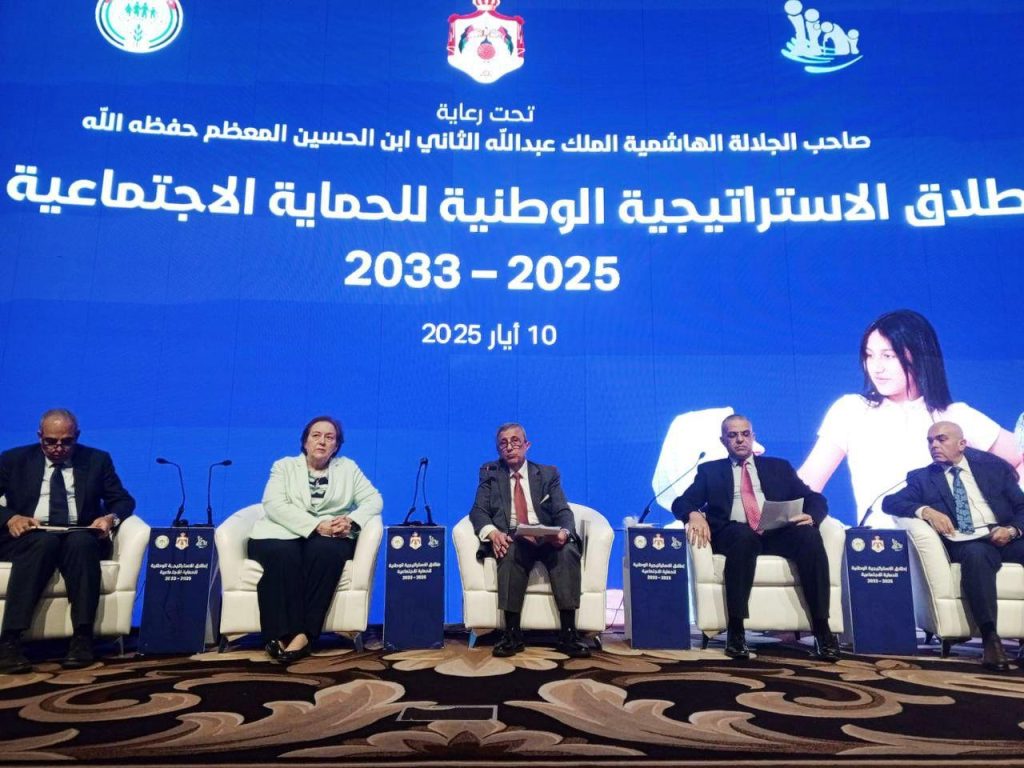
As part of national efforts to develop the components of the National Social Protection Strategy for 2025–2033, Dr. Sawsan Al-Majali, board member of the Jordan National NGO Forum (JONAF) and representative of civil society organizations, participated in a dialogue session held at the King Hussein Bin Talal Convention Center on Saturday, May 10, 2025. The session aimed to discuss key challenges and available opportunities to strengthen Jordan’s social protection system. It brought together representatives from government ministries, civil society organizations, and subject-matter experts. Speakers included Dr. Barq Al-Damour, Secretary-General of the Ministry of Social Development and head of the “Empowerment” pillar; Jadallah Al-Khalayleh, Director General of the Social Security Corporation and head of the “Opportunity” pillar; Dr. Sawsan Al-Majali, representing the JONAF coalition; and Dr. Ahmad Awad, Director of the Phenix Center for Economic Studies. In her remarks, Dr. Al-Majali emphasized the importance of involving civil society in all phases of formulating and implementing social policies. She described civil society as a strategic partner with field-level expertise and access to underserved groups, particularly women, persons with disabilities, and the elderly. She also reaffirmed JONAF’s commitment to promoting transparency and social accountability by empowering local communities to voice their needs and ensuring that the national strategy reflects the real priorities of the people. The session, moderated by Senator Issa Murad, Chair of the Senate’s Labor and Social Development Committee, highlighted the significance of the strategy and its alignment with Jordan’s three modernization tracks—political, economic, and administrative—led by His Majesty the King. Speakers described the strategy as a practical embodiment of these national directions. They also stressed the need to achieve the goals of the “Empowerment” and “Opportunity” pillars through close collaboration with government bodies, the private sector, civil society organizations, and all relevant stakeholders. In conclusion, participants called for a deeper partnership between government institutions and civil society and advocated for a participatory approach in designing and evaluating social programs. They emphasized that a robust social protection system is not only essential but urgent, given its integral connection to the country’s modernization efforts. A fair, inclusive, and sustainable system, they noted, must be guided by a clear and comprehensive vision rooted in integration and inclusivity.
ARDD Concludes Project Management Training
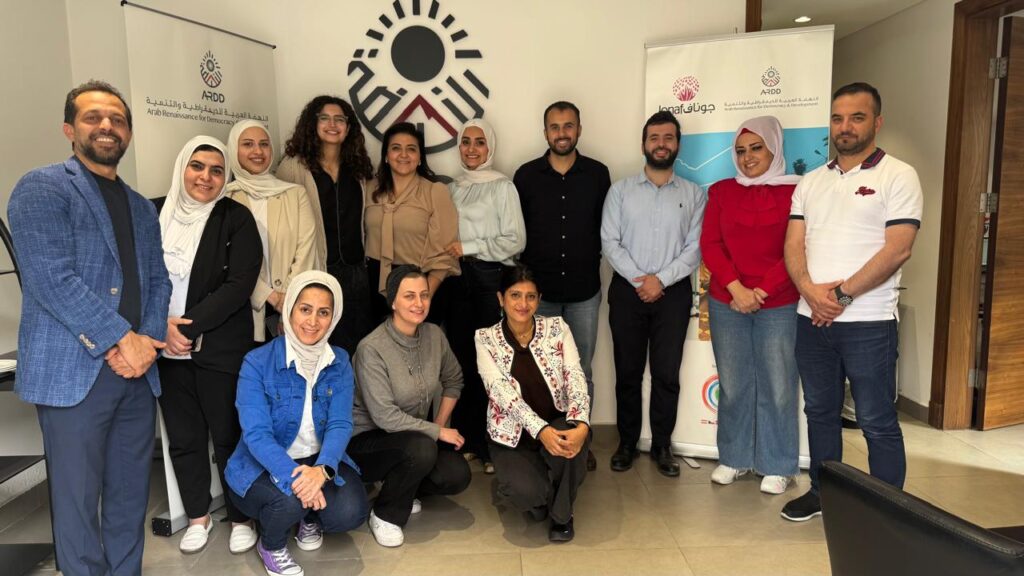
As part of its ongoing commitment to strengthening institutional capacities, the Arab Renaissance for Democracy and Development (ARDD) recently concluded a four-day specialized training in project management, conducted in partnership with Zain International for Consultancy and Training. This training forms a core component of ARDD’s capacity development plan under the project “Future Forward: Unlocking Local Sustainability Opportunities,” supported by the European Regional Development and Protection Programme for Jordan and Lebanon. The training aimed to build a shared understanding among ARDD team members from diverse academic and professional backgrounds of essential tools and methodologies for managing change, including the logical framework approaches, theory of change, results-based management, and results-based budgeting. ARDD also held a one-day Training of Trainers session to empower a group of team members and several Jordan National NGO Forum (JONAF) members. The participants acquired skills and methodologies needed to transfer this critical knowledge in their respective roles, ensuring the sustainability of best practices in project management organizations’ programs and significantly enhancing the ability to design and implement projects using an effective project cycle management approach and to attract innovative and impactful initiatives aligned with their developmental goals. Ultimately, ARDD reaffirms the importance of strategic investment in human capital and the continuous improvement of team performance to ensure the sustainability of its efforts in addressing emerging challenges, reinforcing the localization of humanitarian and development work.
ARDD Holds Roundtable on TFGBV and Its Impact on Young Women’s Democratic Participation
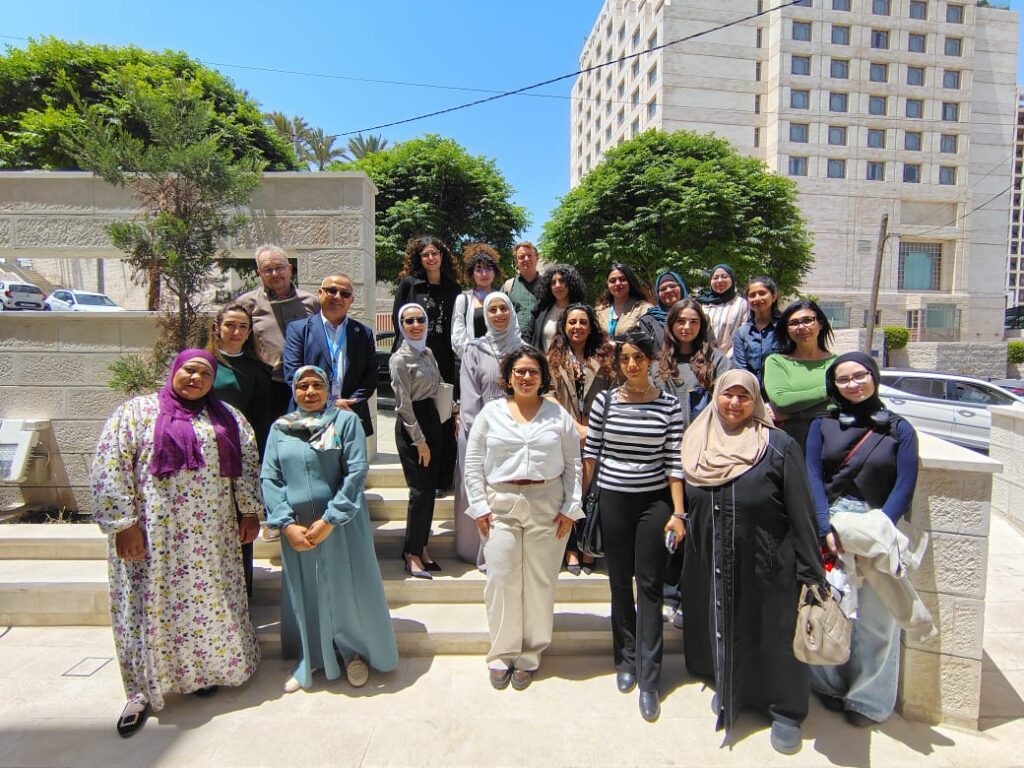
ARDD´s Renaissance Strategic Center(RSC) convened a high-level roundtable on Sunday, May 4, 2025, titled “Online Harm, Offline Consequences: Exploring the Barriers to Young Women’s Democratic Participation.” The event brought together activists, young women, experts, civil society representatives, and policymakers to address the growing impact of technology-facilitated violence on young women’s participation in public life. The roundtable featured the preliminary findings of RSC’s latest research on online violence targeting girls and women, highlighting its tangible consequences for young women’s civic and political engagement in Jordan. This research is part of ARDD’s broader efforts supported by the New Generation (GenG) project’s Fund. Participants discussed the increasing prevalence of cyberviolence, particularly against young women active in civic and political spaces, and explored the implications of digital threats, defamation, and privacy violations. These forms of harm were identified as key factors in discouraging women from participating in public discourse and decision-making, often leading to self-censorship and disengagement. The roundtable emphasized the need for inclusive and responsive legal and governance frameworks that can effectively address the challenges of digital violence. Participants also reflected on the structural and cultural barriers that prevent young women from reporting abuse, including fear of public scandal, social stigma, and limited knowledge of reporting mechanisms. Real-life experiences were shared throughout the session, shedding light on the psychological, social, and professional toll of cyberviolence. The discussion underscored the importance of integrating digital protection education into schools, universities, and professional settings, given the growing reliance of young women on technology for learning and work. In their concluding remarks, participants stressed the importance of developing national policies that ensure online safety for young women, raising awareness through targeted digital literacy programs, enhancing mechanisms for reporting abusive content on social media, and enhancing the capacities of law enforcement and judicial actors through gender-sensitive training. The conversation also reaffirmed the role of civil society in creating safer digital spaces and supporting young women’s leadership and participation in both online and offline public life. The roundtable forms part of ARDD’s ongoing commitment to promoting digital rights, inclusive governance, and gender equality in Jordan and across the region.
She Leads… A Consultation Meeting with Women Leaders and Experts on Women’s Issues from Jordan and Egypt
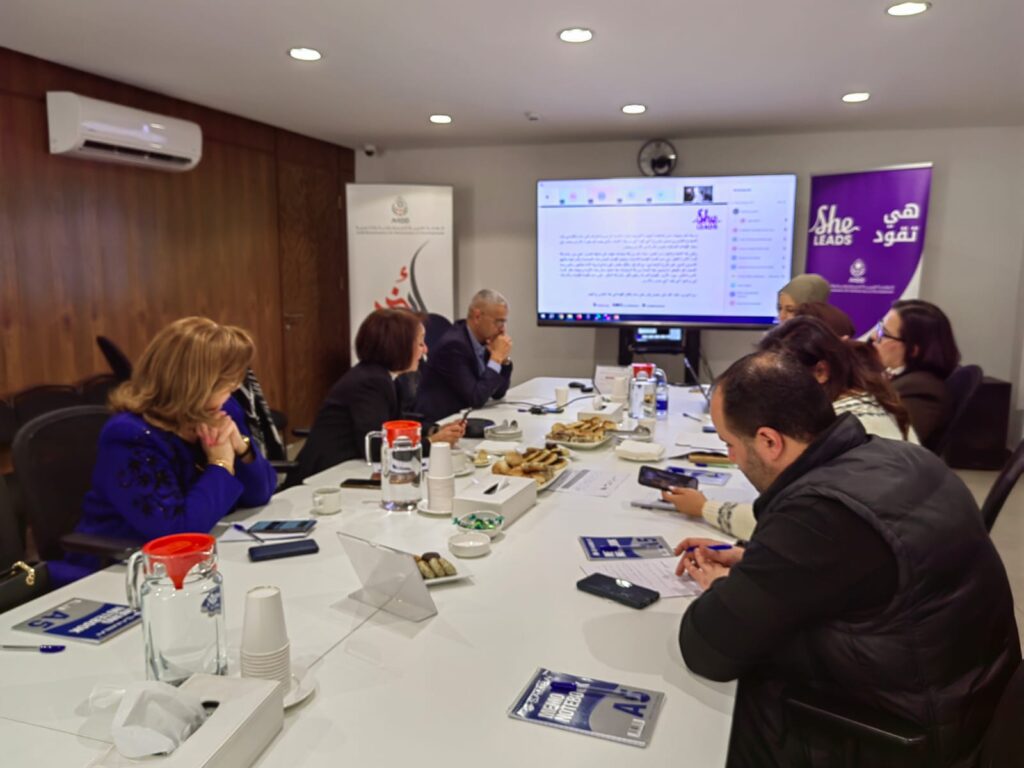
As part of the second phase of the “She Leads” program, the Arab Renaissance for Democracy and Development (ARDD) held a consultation meeting on Tuesday, April 15, 2025, bringing together experts in women’s leadership and gender affairs from Jordan and Egypt. The meeting aimed to contribute to Renaissance Strategic Center´s ongoing research exploring the role of male family members, particularly fathers, in fostering leadership skills among young women. The meeting gathered representatives from research centers, universities, and regional and international civil society organizations. It formed part of efforts to develop a significant study and policy paper highlighting the importance of male family members’ involvement in supporting young women’s leadership development. It also aimed to identify best practices in this area and to assess how the male family members’ attitudes and actions affect young women’s leadership roles and impact the leadership journeys of girls and young women enrolled in the program. Regarding the influence of male family members on girls’ professional and leadership decisions, participants stressed the need to develop a reference guide clarifying key research terms, such as “leadership,” “participation,” and “gender justice.” They also emphasized the importance of integrating economic, cultural, and social conditions into the research analysis, with attention to differences in emotional, material, and leadership support provided by families across the diverse social and cultural contexts of Jordan and Egypt. Discussing the challenges and opportunities related to men’s involvement in supporting women’s leadership, participants noted that traditions, religion, and legal frameworks are primary determinants of behavior in any society, and that discrimination against women persists in certain areas. They highlighted the importance of incorporating men’s perspectives directly into the research to better understand their views, as well as the need to engage other societal actors such as schools, neighbors, workplaces, and friends. They also stressed the importance of considering geographic and social variations, along with the increasing role of social media in raising awareness among young women and their families. In conclusion, participants recommended promoting positive male role models and providing safe spaces for dialogue between men and women. They also emphasized the need to develop practical tools to support men in adopting a conscious, supportive role in creating an enabling environment for young women. Moreover, they called for in-depth research that balances academic rigor with practical approaches, grounded in the local context and attentive to cultural and social transformations. The She Leads program aims to promote gender-equal representation in decision-making processes through capacity-building activities that enhance girls’ and women’s access to education and skill development. It also encourages political engagement, advocacy, meaningful interaction, and awareness-raising through a collaborative and inclusive approach at both regional and international levels.