ARDD and René Moawad Foundation Sign Partnership Agreement to Enhance Girls’ Participation in Decision-Making
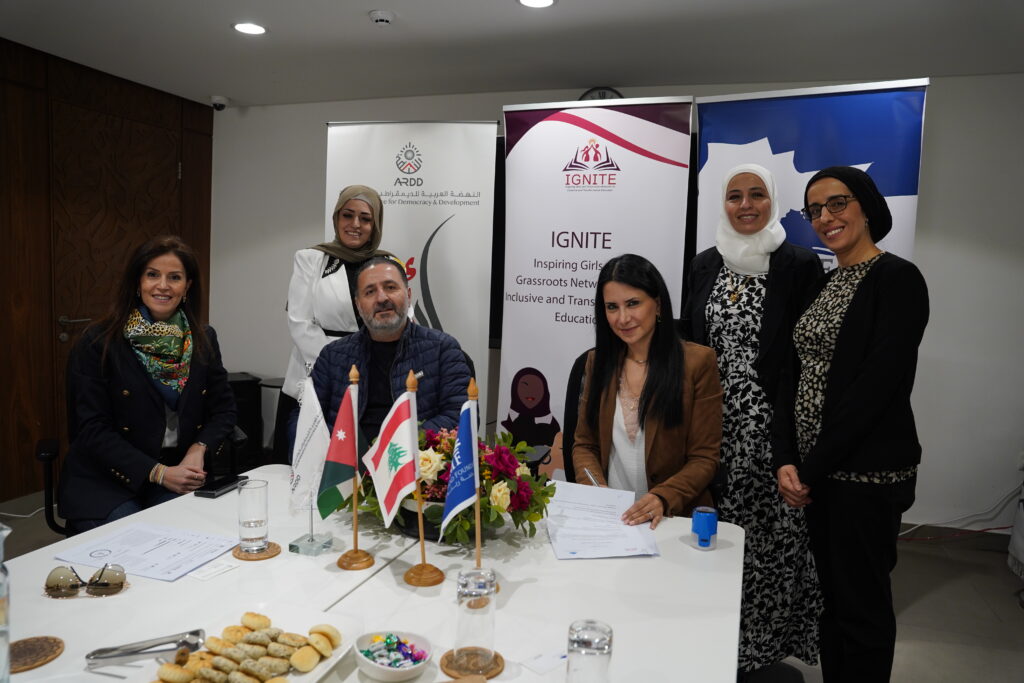
As part of the IGNITE project – Inspiring Girls and Grassroots Networks for Inclusive and Transformative Education, the Arab Renaissance for Democracy and Development (ARDD) and the René Moawad Foundation signed a partnership agreement on Tuesday, April 8, 2025, to implement the project “Nidaa for Change” in Jordan, specifically in the governorates of Mafraq and Amman. Funded by the Agence Française de Développement (AFD), the project aims to empower girls aged 15 to 19 from magenalised communities in Amman and Mafraq—including refugees and Jordanian girls with limited access to opportunities—by enhancing their leadership skills and influence, building networks, and gathering evidence that enables them to effectively advocate for their right to inclusive and quality education, and to strengthen their active participation in decision-making processes within their communities. The project involves the participation of various education sector stakeholders, civil society organizations, and policymakers to ensure sustainable and long-term change. This partnership also seeks to inspire girls and local networks to pursue inclusive and transformative education, aligning with ARDD’s broader program framework, “Women’s Access to Justice.” Project activities are expected to begin in early May 2025.
Five JONAF Members Win Elections for Charitable Associations Unions
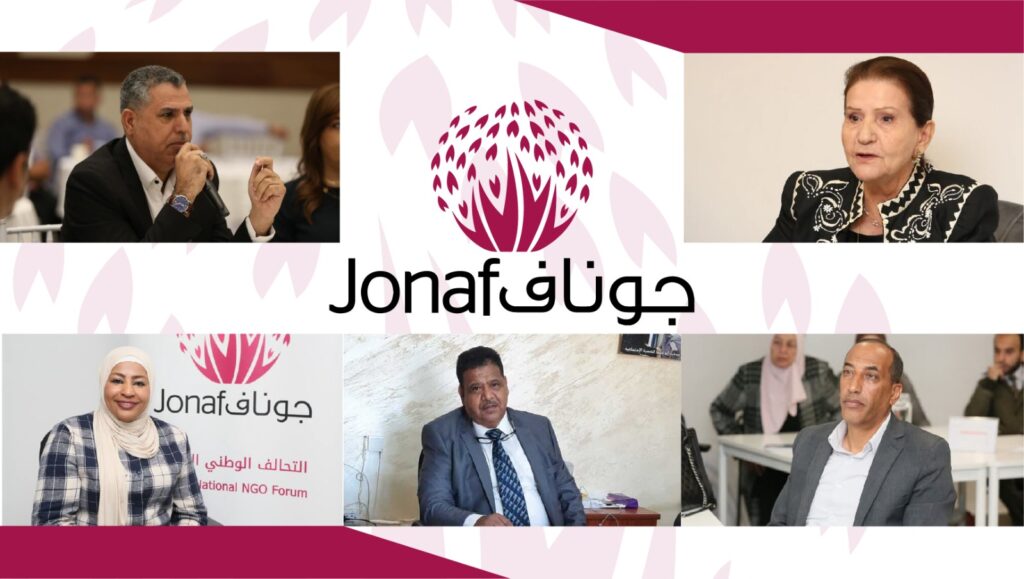
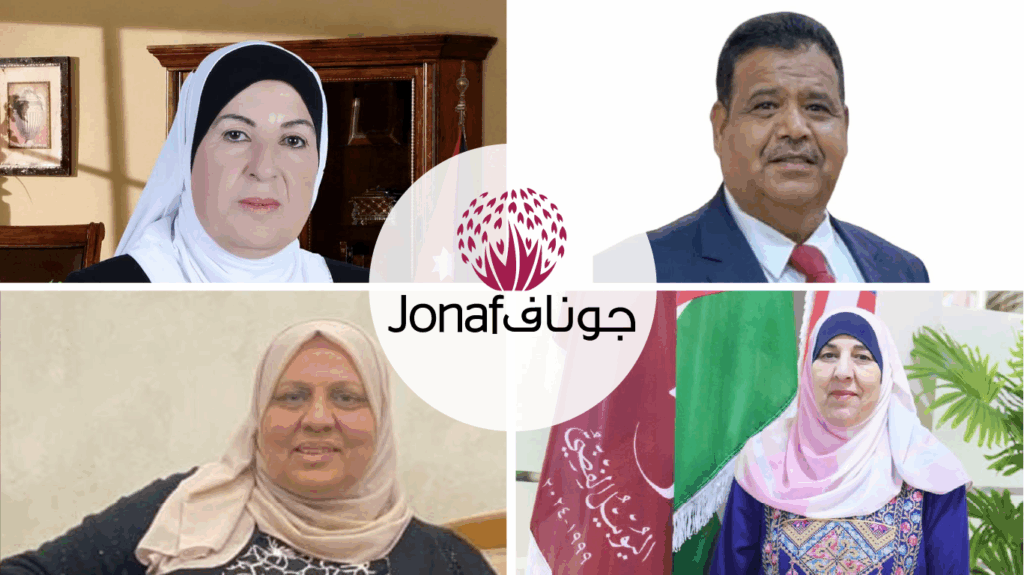
In a significant step toward empowering charitable and local associations as well as Jordanian civil society, four members of the Jordan National NGO Forum (JONAF) won elections for charitable and women’s associations. These elections were held for the first time under the new unions’ system issued in February 2024, with voter turnout reaching 93% for charitable associations and 100% for the women’s union, according to the Ministry of Social Development. The elected JONAF members are: Farea’ Al-Masaeed, President of the Union of Charitable Associations, Mafraq Governorate Abla Al-Hajaya, President of the Women’s Union, Tafileh Governorate Kulthum Mareesh, President of the Women’s Union, Capital Governorate Abdel Ilah Al-Hunayti, Administrative Board Member, Amman Ma’en Al-Shamaileh, Chairman of the General Union of Voluntary Societies, Karak Governorate Their success underscores JONAF’s important role in supporting governance, strengthening civil society capacities, and shaping public policy. Established in 2016 through a collaborative initiative by the Arab Renaissance for Democracy and Development (ARDD), JONAF brings together non-governmental civil society organizations operating at both national and local levels. The forum collaborates with experts, media professionals, and activists across Jordan, recognizing the value of unified efforts, innovation, and resource-sharing in addressing complex challenges. Al-Masaeed noted, “These elections mark a milestone in advancing the work of local and charitable associations and highlight the importance of synergy between civil society and official institutions in fostering local participation and enabling associations to respond to community needs.” Al-Hajaya commented, “This victory is more than just a result—it reflects deep trust and genuine support from those around me.” She emphasized the need to enhance associations’ performance to improve the quality of social services. Al-Hunayti stated, “True charitable work is based on solidarity. This victory is not mine alone—it belongs to everyone committed to serving the community and taking responsibility for progress.” Mareesh stressed the importance of building knowledge and capacities to overcome challenges, and highlighted the need for cooperation between associations, unions, civil society, and government as key partners in achieving development goals. Al-Shamaileh explained that the next phase will witness a qualitative shift in the union’s performance, through supporting grassroots associations and enabling them to fulfill their humanitarian and renaissance mission. He emphasized the importance of enhancing transparency, developing work mechanisms, and expanding the base of development initiatives that address the needs of local communities. Meanwhile, Rased, the election-monitoring center, recently called for reviewing nomination mechanisms, enhancing women’s representation in association and union administrative bodies, improving accessibility at polling centers for persons with disabilities, and building elected bodies’ governance and management capacities to ensure transparent and effective elections.
Nobel Peace Laureates Conclude Jordan Visit with Meeting with HRH Prince El Hassan bin Talal

The Nobel Women’s Initiative delegation concluded its visit to Jordan and the occupied Palestinian territories with a meeting with HRH Prince El Hassan bin Talal and HRH Tharwat El Hassan at Basman Palace on Thursday, April 10, 2025. The meeting was attended by a diverse group of women leaders, experts, and Jordanian activists. The visit, organized in partnership with the Arab Renaissance for Democracy and Development (ARDD), included three Nobel Peace Laureates: Dr. Shirin Ebadi (Iran), Jody Williams (USA), and Tawakkol Karman (Yemen), along with the Executive Director of the Nobel Women’s Initiative, Maria Butler. The delegation also included representatives from Nobel Prize-winning international organizations, as well as human rights defenders and women activists from various countries. The program featured field visits to refugee camps and UNRWA facilities, a reception at the Irish Embassy, and a roundtable discussion organized by ARDD in collaboration with the Nobel Women’s Initiative titled: “The Role of Women’s Leadership in Building Security and Peace.” ARDD highlighted the value of its partnership with the Nobel Women’s Initiative and its role in co-organizing the visit, emphasizing the importance of showcasing women’s achievements and their essential contributions to peacebuilding, human rights, and resilience.
Women Nobel Peace Laureates and Jordanian Human Rights Defenders Call for Collective Action for Peace and Security
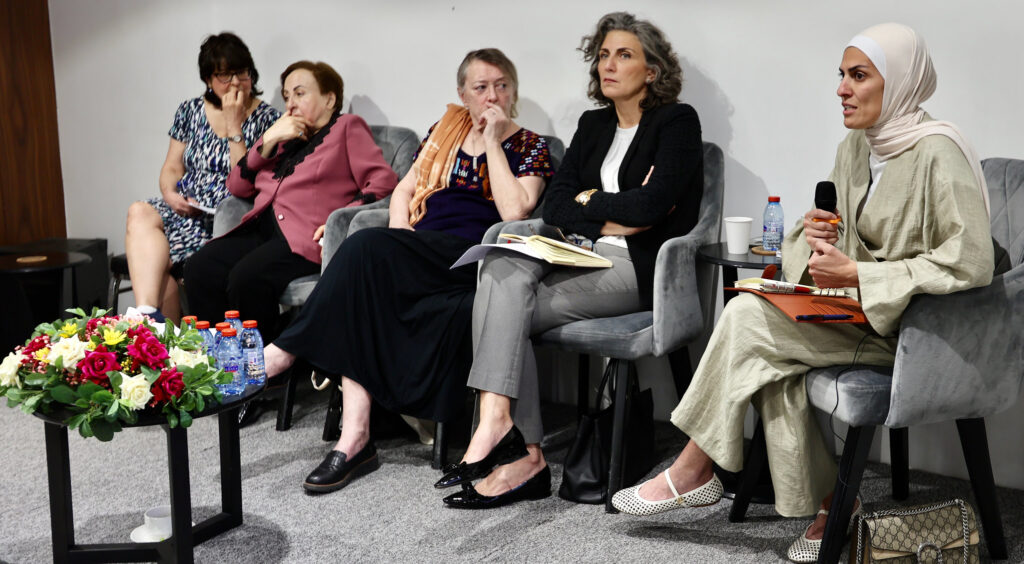
In honor of the Nobel Women’s Initiative Delegation to Jordan and the Occupied Palestinian Territories, the Arab Renaissance for Democracy and Development (ARDD), in cooperation with Nobel Women’s Initiative, held a Roundtable on Wednesday, April 9th 2025, titled “Women’s Collective Power to Lead Peace and Security.” This roundtable brought together Nobel Peace Prize laureates, women leaders, human rights defenders, and advocates to explore the vital role of women in peacebuilding, human rights, and resilience. In her opening remarks, Samar Muharab, Executive Director of ARDD, spoke about the need to embrace “radical love”, a principle of Nobel Women’s Initiative, and dispel the pluralization of hate that we are currently witnessing. The key themes of the event touched on promoting peace, justice, and accountability; empowering women’s leadership and political participation; and protecting civic space and civil society. Speakers emphasized women’s unity and solidarity as a tool for change. Rawan Yousef, Palestinian advocate, moderated the roundtable. Dr. Aseel Jallad, obstetrics, gynaecology, and infertility specialist, gave a powerful and moving speech about the 800,000 extraordinary women in Gaza. After arriving back from her second mission last week, where she worked in a field hospital in Khan Younis, she talked about the extreme suffering and resilience of every single woman and girl in Gaza due to combination of military attacks, siege, and occupation. “We’re talking about girls growing up unsafe, in fear, hungry, thirsty and deprived of every single thing a girl needs” she said. As a gender equality, inclusive development, and Women Peace and Security expert, Dr. Salma Al-Nims emphasised the importance of strengthening a coordinated feminist movement across the Arab world, coming together not just as women but as men as well. Noting that she is proud of Jordan as being an ethical voice for the last 16 months, she expressed the urgent need to decolonize the feminist struggle, opposing the selective application of rights imposed by a globalised, capitalist framework. By establishing a locally-driven agenda, she expressed the need for collective change where everyone is unified behind one cause – namely, solidarity with Palestine. Dr. Shirin Ebadi, an Iranian human rights lawyer, who received the Nobel Peace Prize in 2003, addressed the audience by saying that “I’m here as an Iranian to demonstrate the solidarity of Iranian women with the women of Palestine”. In calling for genuine support for movements that prioritize human rights and justice, Dr. Ebadi advocated for a more authentic and compassionate approach to political solidarity that truly uplifts and empowers marginalized voices. In complete solidarity with her friends and colleagues, American activist and Nobel Peace Prize laureate Jody Williams echoed the sentiments of her fellow speakers condemning the genocide and crimes of illegal occupation and sharing recommendations from her recent visit to Palestine. She went on to call for women everywhere to stand in unity, She said that “we need to have a true sense of our collective power as women.” Women need to forge connections not only at local and regional levels but also on a global scale. The event brought together voices from across Jordan and Palestine, unifying women’s collective power. With both speakers and those in attendance calling for men and women to stand together against all forms of oppression, the event highlighted the need for collective power to lead to peace and security. In the current climate of a shrinking civic space, this roundtable comes at a pivotal time that calls for women’s engagement in all levels of society and for the decolonization of the feminist agenda.
“Relief aid in the month of Ramadan”… Members of JONAF Respond to the Most Affected Families and Bring Them Back Hope
The efforts of JONAF members from local associations are renewed, proving that they are the most able to touch upon the needs of their communities and cater to them properly, especially with regard to the distribution of aid and commitment to humanitarian standards, as well as getting access to beneficiaries such as the elderly and people with disabilities, which brought joy to the hearts of hundreds of families. With the generous support of Islamic Aid France, which began its partnership and cooperation with the Arab Renaissance for Democracy and Development (ARDD), General Coordinator of the Jordan National NGO Forum (JONAF), 12 years ago, to support the most vulnerable groups of Jordanians and Syrian refugees, four associations recently completed the distribution of food relief aid during the month of Ramadan, where (480 families) benefited from this assistance at the rate of one coupon (50 dinars) per family, distributed in different parts of the Kingdom, as follows: Khawla Bint Al-Azwar Association in Zarqa, Abu Alanda Association for Social Development in Amman, the Al-Keram Association for Underprivileged Families and Orphans in Mafraq, and the Al-Rafid women’s agricultural Society in Irbid. According to the priorities of JONAF, local needs, and its ability to reach and coordinate with the most vulnerable families in their communities, as well as what’s shown by the implementing agencies, these local associations (who are members of JONAF) were selected to distribute aid during the month of Ramadan and before Eid al-Fitr, all in the context of ensuring the achievement of the principle of inclusive social justice and promoting the spirit of solidarity among the different groups of society. Over the past years, ARDD has built the capacity of workers in these associations and developed their skills in order to activate the localization of humanitarian work and enhance their capabilities to reach groups in need of relief assistance, whether in the winter season or even in other seasons and conditions such as holidays, the month of Ramadan, or in emergent crises, including climate change. In the same context, ARDD appreciates the role of local associations that are best able to touch upon the needs of their communities, stressing the importance of providing support to national actors and enabling them to prepare to deal with any emergency or seasonal repercussions and reach all governorates of the Kingdom, while also emphasizing the role of the government and the international donor community in creating an enabling environment that supports and backs up local civil society. The organization also appreciates the cooperation with the Ministry of Social Development and its directorates in the governorates and the Jordan Hashemite Charity Organization (JHCO) in implementing relief projects. On the great impact of this assistance on individuals, the President of the Association of Underprivileged Families and Orphans, Najah Oueidat, stressed the importance of these initiatives due to their role in alleviating the burdens placed on needy families, in a way that provides them with a kind of social security, which is supposed to be at its highest level in the month of Ramadan. Abdul Ilah Al-Hunaiti, President of Abu Alanda Association and board member of the General Union of Voluntary Societies (GUVS) in Amman, said that distributing coupons is not just material assistance, but rather a humanitarian message that deepens the bonds of love and brotherhood in society, and brings back the smile to the faces of the needy, which achieves one of the most important goals of Ramadan and Eid, which is to spread happiness and affection among people. Kifah Ghannam, director of the Khawla Bint Al-Azwar Association, stressed the importance of charitable and humanitarian work at this time of Ramadan amid the deteriorating living conditions, especially in light of the high prices of many commodities, pointing out that aid does not solve the problem of needy families, but rather contributes to alleviating it. The Director of the Al-Rafid Women’s Agricultural Society, Wedad Obeidat, did not hesitate to emphasize the need for continuous support for these initiatives and projects, which are still important due to the growing needs of the communities affected by the successive crises witnessed by the Kingdom and the region in general, calling for more cooperation between all local and foreign parties to reach the largest number of families. Accordingly, it is necessary to increase cooperation and activate the localization of humanitarian work and integration between the role of civil society, the government, and donors, in addition to building the capacities of workers in these associations, developing their skills, enhancing their capabilities to reach the most underprivileged and most needy groups in our communities, as well as supporting initiatives that improve the livelihoods of local communities. “Islamic Aid France” is a humanitarian organization that annually implements emergency interventions, development projects, and the fight against poverty to help the most vulnerable groups in approximately 20 countries, both in France and at the international level, while implementing advocacy campaigns to make thed voices of these groups heard. In Jordan, Islamic Aid France began its humanitarian work in 2013 in cooperation with ARDD in response to the Syrian refugee crisis, and has since provided seasonal relief projects, such as distributing aid packages and food coupons during the month of Ramadan and feasts of sacrifice on Eid al-Adha.
JONAF Members Conclude ARDD-Led Training on Effective Advocacy
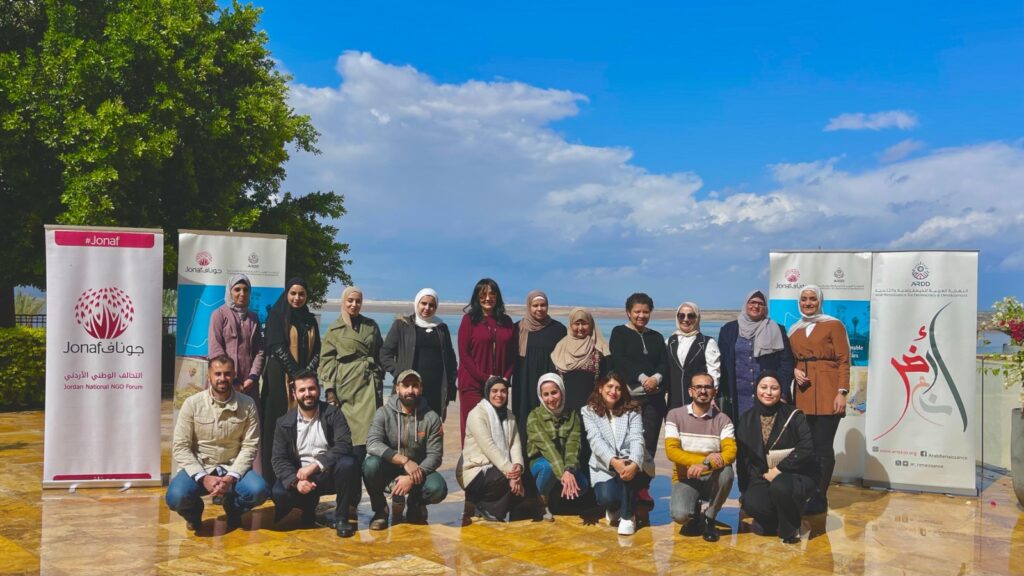
As part of the Jordan NGOs Forum (JONAF) efforts to strengthen its advocacy capacity and enhance members’ skills to better represent and respond to community needs, the Arab Renaissance for Democracy and Development (ARDD) recently concluded a training program for JONAF members. This training built upon discussions from September 2024, where members identified priority community issues and committed to engaging in policy-making to drive sustainable development and social change. The three-day training, held from February 18-20, 2025, titled “Effective Advocacy Techniques in the Livelihood Sector Coaching,” focused on discussing existing policies and legislation related to startups (profit-generating productive projects) in the livelihood sector, exploring available opportunities, analyzing challenges facing the local community, and utilizing both direct and indirect methods of mobilization and advocacy. Participants also learned about best practices for defending issues aligned with the coalition’s work outcomes. The training was delivered by Dr. Sanaa Jalassi, Women and Youth Empowerment Program Advisor at ARDD, as part of the “Future Forward: Unlocking Local Sustainability Opportunities” project, funded by the European Regional Development and Protection Program for Supporting Jordan and Lebanon. It covered key topics such as media campaigns and mobilization, advocacy goals, effective advocacy techniques, SWOT analysis, problem tree analysis, tools used in advocacy campaigns, theory of change, and influence strategies. Representatives from eight organizations within the coalition participated in the training, including Al-Amal Charitable Women’s Development Society, Durra Al-Manal Company for Development and Training, The Jordanian National Women’s Committees Coalition, Child Care Charitable Organization, Step of Hope Charitable Society, Al-Rafeed Agricultural Women’s Society, Women of the Al-Disi Basin Villages, Partners for Better Society, and the Young Women’s Christian Association. Eng. Zainab Khalil, Program Manager at ARDD and Coordinator of the JONAF Coalition, stated that the coalition was established in 2016 and currently includes about 50 organizations covering the central, northern, and southern regions of Jordan. It consists of a diverse range of civil society groups, community-based organizations, and founding partners. She explained that the coalition works on strengthening the advocacy capacities of its members by representing their common issues before official bodies and aid committees. Additionally, it focuses on policy development based on information provided by members to formulate unified positions on key issues. It also contributes to supporting legislation related to NGOs in Jordan, thereby enhancing the independence of civil society and its role in decision-making. Regarding the “Future Forward” project, Lina Halsa, Project Manager at ARDD, emphasized that the project aims to develop a strong governance structure and unified operational procedures to institutionalize JONAF. It also seeks to enhance local ownership of the livelihood sector in Jordan through a multi-faceted approach that focuses on building the capacity of local civil society. During the training, JONAF members engaged in discussions about various issues related to the livelihood sector, sharing experiences and coming up with practical proposals to improve the sector’s operations, identify available opportunities, and address existing challenges. Participants agreed that the coalition serves as a foundation for building improvement plans, highlighting that the key to advocacy campaigns is listening to different perspectives and understanding them broadly. They emphasized that the training fostered meaningful discussions, enhanced their capabilities, and allowed them to learn best practices for advocacy and mobilization. As a step toward strengthening advocacy efforts, work is currently underway to develop a clear strategy focusing on the legal and policy framework for startups. In line with the recommendations of partner organizations, a roundtable discussion will be organized soon, bringing together key stakeholders to discuss startup registration processes, related challenges, and opportunities for policy reforms. Additionally, efforts will be made to expand this initiative by holding similar meetings in northern and southern Jordan, ensuring broader representation and inclusivity among key stakeholders.
Launch of the “ARDD-Europe” in Brussels: Strengthening Dialogue and Cooperation between Europe and the MENA Region
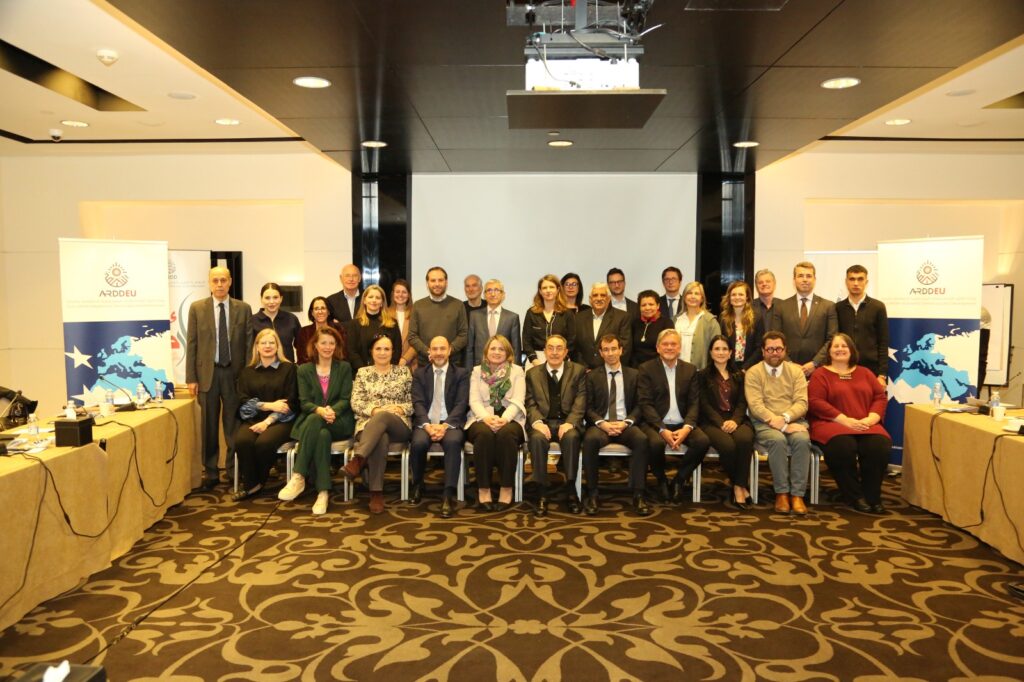
In a significant move to enhance dialogue and cooperation between the Middle East, North Africa, and Europe, the Arab Renaissance for Democracy and Development (ARDD) has launched the “Euro-MENA Initiative for Democracy and Development (ARDD-Europe)” in Brussels. This new platform aims to foster mutual understanding and build bridges between stakeholders and civil society in both regions. To mark this launch, ARDD organized a specialized workshop titled “The Middle East, North Africa, and Europe Post October 7, 2023: Impact and Policy Options” on February 25 and 26, 2025. Organized with the generous support of the Embassy of Ireland and the Embassy of Belgium, the workshop brought together experts from Europe, the Middle East, and North Africa, as well as representatives from civil society organizations, academics, and diplomats, to strengthen collaboration and establish frameworks for mutual understanding. In her opening remarks, Samar Muhareb, Executive Director of ARDD and ARDD-Europe, emphasized the importance of dialogue amidst current geopolitical shifts, highlighting the role of international civil society in promoting peace and stability. She reaffirmed the organization’s commitment to enhancing cooperation and knowledge exchange between the regions. Dominik Bartsch, Chairman of ARDD-Europe and former Country Director of the United Nations High Commissioner for Refugees in Jordan, noted that current global challenges necessitate bolstered international solidarity and respect for the rule of law. He stressed that this initiative is timely in promoting dialogue and cooperation. Pierre-Christophe Chatzisavas, the European Union Ambassador to Jordan, underscored the importance of strengthening relations among Mediterranean countries. He pointed out that close collaboration between civil societies and governments can contribute to achieving stability and prosperity, affirming the EU’s ongoing strategy to support dialogue and initiatives that foster partnerships and enhance relations between both sides. The Irish Ambassador to Jordan, Marianne Bolger, noted that events in a single country can impact the entire region’s stability, underscoring the importance of commitment to dialogue, peace, and human rights. The Belgian Ambassador to Jordan, Serge Dickschen, highlighted the pivotal role of civil society organizations as key actors in creating conducive environments for development, peace, and stability. He emphasized the importance of joint cooperation in addressing shared challenges. Over the two-day workshop, participants discussed various issues, including political transformations in the region, Europe’s role amid geopolitical changes, efforts of international bodies in conflict resolution, refugee and migration issues, and the role of civil society in shaping policies. ARDD and ARDD-Europe reaffirm their commitment to promoting dialogue and cooperation between the MENA region and Europe, focusing on the role of international civil society in achieving sustainable development and peace.
Members of NACNJ Visit the Senate and Call for a National Plan for Treatment and Care
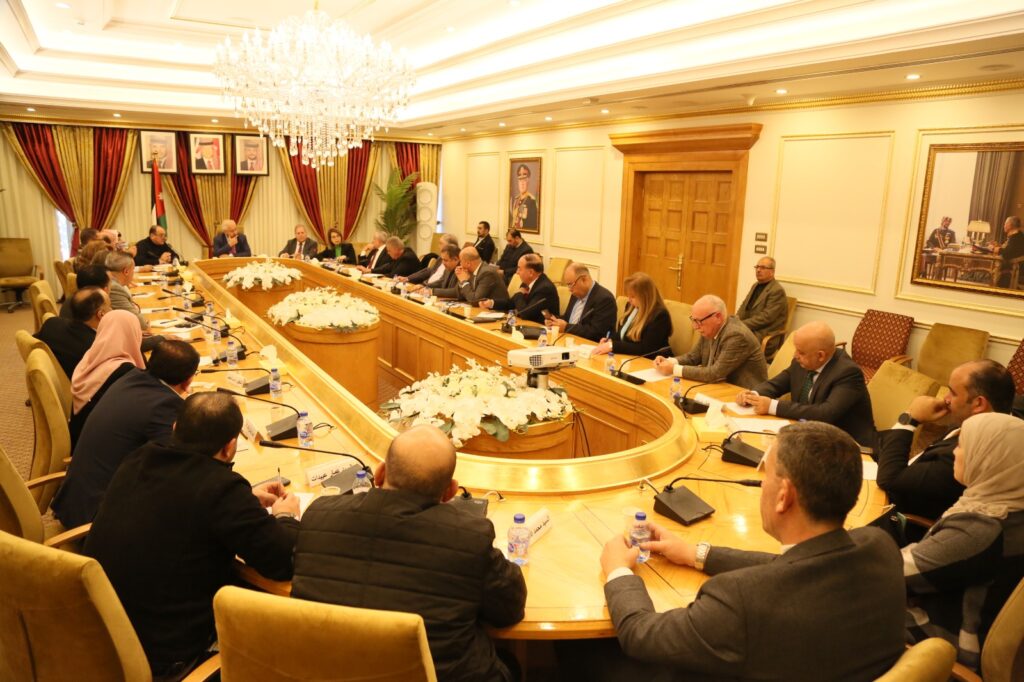
Members of the National Alliance for Combating Narcotics in Jordan, affiliated to ARDD have called for the formulation of a clear national strategy and plan to treat drug addicts and users, aiming to prevent addiction risks and enhance awareness of its dangers among community members. During a meeting with the Media and National Guidance Committee in the Senate on Monday, January 27, 2025, to review their efforts and discuss the issue of drugs and its latest developments locally and regionally, alliance members emphasized the need for collaboration between various government and private entities, as well as civil society organizations, to combat the spread of drugs and psychoactive substances. This is particularly crucial given Jordan’s ongoing confrontation with drug traffickers and promoters. The alliance’s chairman, retired Major General Tayel Al-Majali, highlighted the importance of ensuring that drug use penalties serve as a general deterrent. He suggested implementing a “temporary restriction” on users for a year, for example, which could be lifted if they successfully quit drug use, allowing them to continue improving and reforming their behavior. Al-Majali stressed that Jordan and the region are facing a genuine threat from drugs, describing the current situation as a “real war” against drug smugglers at the northern and southern borders, involving official entities and international gangs using advanced tools and equipment. Meanwhile, the chairman of the Senate’s Media and National Guidance Committee, Senator Mohammad Dawodieh, praised the efforts of the Anti-Narcotics Department in seizing drugs, drying up their sources, apprehending promoters, and referring them to justice. He also commended the collaboration with the Armed Forces/Arab Army in protecting the borders to safeguard Jordanian youth from the destructive impact of this scourge. Deputy Senate President Dr. Zuhair Abu Faris emphasized that the sovereignty, security, and stability of the Kingdom take precedence over all other priorities and considerations. He noted that the illicit drug trade poses a significant threat to youth and society at large, necessitating unified efforts to confront this phenomenon. Regarding drug prevention and limiting its spread, alliance member Senator and retired Major General Dr. Ammar Al-Qudah stressed the need for studies to reveal the extent of drug prevalence and usage in the Kingdom. He pointed out a noticeable increase in crimes committed due to drug use, which requires joint efforts and collaboration across all sectors of society, starting from families, universities, schools, and places of worship, to raise awareness about the dangers of this scourge on youth. The discussions among alliance members underscored the need for unified efforts by security, government, civil society organizations, and media experts, especially given the emergence of drugs containing dangerous chemical substances harmful to human health. They emphasized the importance of providing special care for juveniles, ensuring continued follow-up care for recovering drug users, raising awareness among school and university students, and integrating information on drug risks into educational curricula. In conclusion, the participants stressed the necessity of investing in preventive measures and doubling efforts to combat the drug issue through training relevant personnel, adopting comprehensive measures to counter trafficking, enforcing stricter penalties on promoters, providing psychological and spiritual rehabilitation for addicts, and proposing collective solutions while responding effectively to domestic and regional crises.
Arab Trainers Union Accredits Arab Women’s Leadership Academy (AWLA) Program Regionally
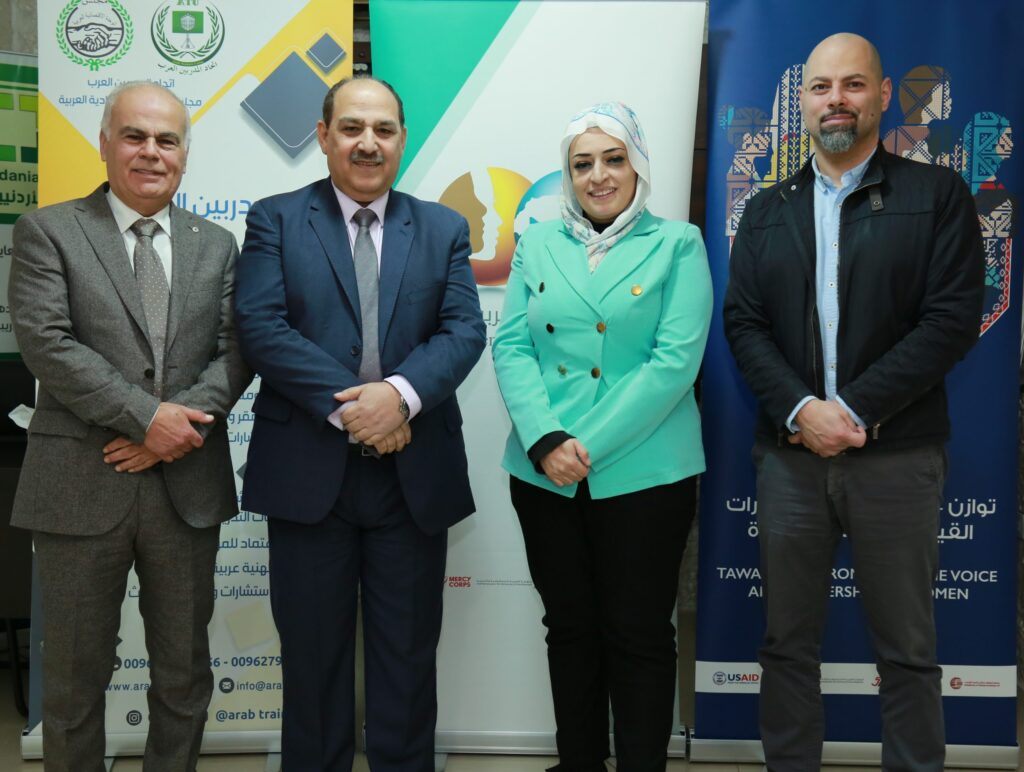
The Arab Trainers Union and Arab Renaissance for Democracy and Development (ARDD) have signed a memorandum of understanding to advance the work of the Arab Women Leadership Academy (AWLA). The academy was developed under the USAID-funded Tawazon – Promoting the Voice and Leadership of Women. ARDD is one of a consortium of organizations implementing the Tawazon project. Under the MOU, the Arab Trainers Union is accrediting the AWLA’s program, which will allow it to issue accredited certificates to its graduates. This milestone aligns with Tawazon’s mission to advance women’s leadership skills in Jordan, support the career growth of the AWLA graduates, expand their opportunities for leadership roles, and increase their participation in the public sphere. The collaboration aims to enhance the quality and reach of AWLA locally and regionally. The Arab Trainers Union is a specialized organization operating under the Council for Arab Economic Unity within the League of Arab States. Its mission is to professionalize the training industry in the Arab region and to develop comprehensive systems for excellence and professional performance that meet international standards. Eng. Malak Suleiman, AWLA project manager, highlighted that “The regional accreditation has a critical role in ensuring the academy’s sustainability and its long-term impact on its’ graduates, while maintaining the program’s core essence, which integrates local contexts with international best practices.” She also noted the Academy’s multi-level training program is designed to cultivate women’s leadership competencies, enabling them to actively participate in civic, political, and governance roles across the public, private, and civil society sectors. It also aims to strengthen women’s ability to lead in both public and private spheres. Tawazon – Promoting the Voice and Leadership of Women, a USAID-funded program, aims to create transformative change to enhance the voice and influence of women by strengthening legislative frameworks, enforcement of those legislations, and the enhancement of the institutional capacity of stakeholders, increasing the adoption of inclusive social norms, enhancing women leadership competencies and removing barriers to women’s participation and leadership.
She leads: Trainings to build the capacity of participants in advocacy and lobbying locally and regionally.
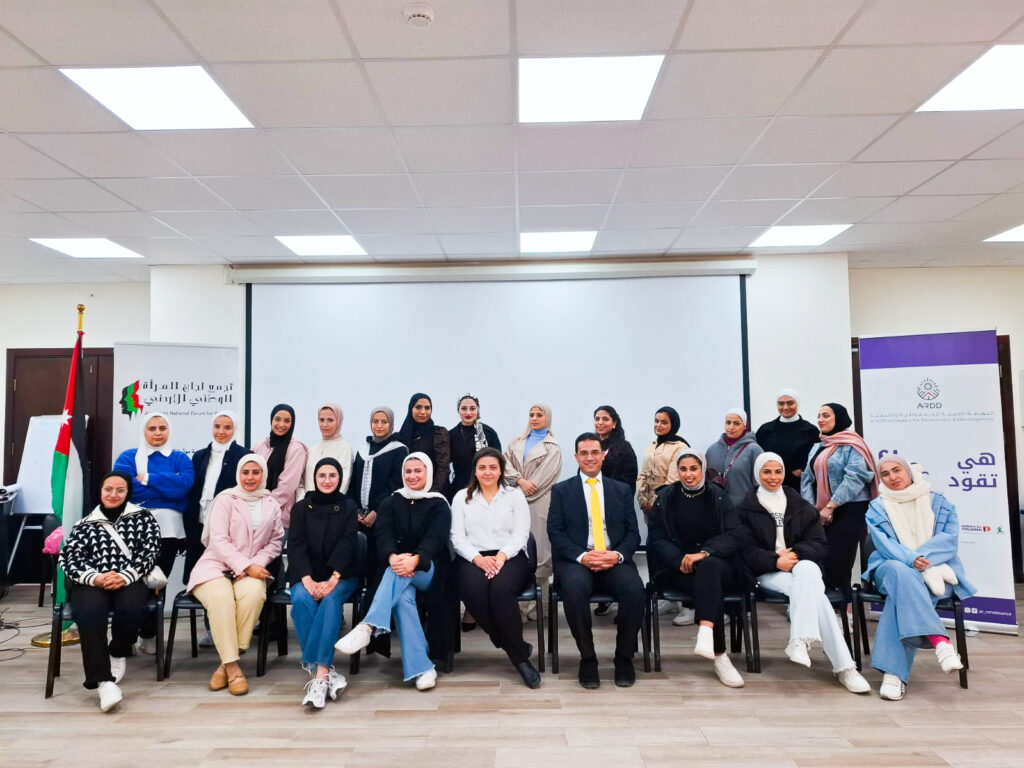
To build the capacity of girls and young women in the field of advocacy and lobbying at the local and regional levels, in addition to developing advocacy strategies on many issues, the Arab Renaissance for Democracy and Development (ARDD), in cooperation with Terre des Hommes, held a training during November and December 2024 for 60 participants within the She Leads program in Egypt (Assiut and Cairo) and Jordan. During the second phase of the She Leads program, ARDD focused on preparing women leaders at the regional level to become influential voices in advocating for their local issues, enhancing their knowledge and skills about advocacy areas, and how to effectively launch advocacy campaigns on the ground, as the program will also provide a platform for dialogue, learning, and innovation to address key issues related to leadership and civic engagement for women. The program trained participants between the ages of (18-24 years), in cooperation with strategic partners at the regional and local levels, namely: “Giving Without Borders Association (Assiut), which aims to achieve sustainable development with the participation of the community in the planning and implementation of programs, and The Association of Egyptian Female Lawyers (Cairo), known for its leading role in empowering women and defending their rights, The Jordanian National Commission for Women (Amman, Jordan), which aims to advance women through awareness and training in the political, legislative, health, economic, and environmental fields. The training presented by expert in advocacy and training, Imad Abu Saleh, sought to promote the idea of women’s effective participation in public life, contribute to building the capacity of women and girls to strategically plan advocacy campaigns and/or awareness campaigns related to a specific human rights problem or issue related to the reality of women, as well as equip them with the necessary skills to build Community initiatives aimed at contributing to solving the problems and challenges facing the community. The trainings focused on several topics, such as an introduction to the concept of lobbying, SWOT analysis, dealing with decision-makers, the Universal Declaration of Human Rights, the concept of public policies, building alliances and coalitions, how to attract support and funding, in addition to introducing the concept of mobilization and its importance, building a media and communication plan, and the challenges/risks that campaigns may face. Regarding what she gained from the training, participant Amira Muhaisen (from Assiut Governorate) said: “At first, I did not know what the meaning of advocacy campaigns was, nor did I know the steps that accompanied these campaigns, but this training made me more aware of these concepts and gave me a better understanding of them. Today, I apply what I’ve learned in my life, and my confidence in myself has increased. It really gave me a new, beautiful, and positively impactful experience.” Participant Mennatullah Ahmed, who is also from Assiut, explained that she learned several things from the training, including: “the ability to communicate effectively between team members or between the coach and the public; planning and how to implement campaigns and develop strategic planning skills and necessary tools, such as events, seminars, conferences, and workshops; potential risk and how to determine their probability, the extent of their impact on the campaign, and how to deal with them should they occur.” For her part, participant Menna Nabil (from Cairo) saw that “this training was enriching, as I learned about the difference between a human rights-based approach and a care-based and needs-based approach, the difference between stakeholders and decision-makers, awareness and lobbying campaigns, and finally the point related to legislation related to the creating, repealing, amending, implementing, or activating legislation. More importantly, it taught me to do more in-depth analysis, because frankly, I lack the virtue of patience and accuracy on this particular point.” Meanwhile, Jordanian participant Raneem Al-Arini believes that this opportunity “was not just a training, but a turning point to support women to become leaders and be able to achieve positive change. Thank you to the team for this great effort and interest in developing future women leaders, and I am excited to apply what I have learned.” Jordanian lawyer Rania Al-Soqour said, “Honestly, it was one of the most beautiful and enjoyable trainings, I gained a lot from it and learned how to identify the problem and the target group, plan, analyze, identify the causes, and work to propose solutions to reduce it. It changed the way I think, and when I started proposing any solution to a problem, I needed to clarify the goals and conduct a clear study to identify the potential risks, all under a chronological and intellectual sequence.” The “She Leads” program aims to support fair representation between men and women to participate more in decision-making processes, through capacity building activities that focus on increasing girls’ and women’s access to education and skills development, promoting women’s economic empowerment, and engaging them in the political process, in addition to building advocacy skills, meaningful interaction, and raising awareness, through a collaborative and inclusive approach at the regional and international levels.