Despite widening humanitarian funding gaps, JONAF and ARDD provide food vouchers to 480 families in Jordan during Ramadan

As humanitarian assistance programs for refugees across the region continue to decline, initiatives led by civil society organizations are becoming increasingly vital to ensure that support continues to reach the most vulnerable families. In this context, the Jordan National NGO Forum (JONAF), in coordination with the Arab Renaissance for Democracy and Development (ARDD), and with support from Secours Islamique France, implemented a humanitarian initiative to distribute 480 food vouchers, each valued at 50 Jordanian Dinars, to vulnerable Syrian refugee families and Jordanian households from host communities across several governorates in Jordan during the holy month of Ramadan. The distribution was carried out through local associations that are members of JONAF across multiple governorates, reflecting the growing importance of localization of humanitarian action and the critical role that civil society organizations play in reaching vulnerable families within their own communities. ARDD commended the important role played by JONAF’s member organizations that contributed transparently to implementing the distribution this year. These include Khawla Bint Al-Azwar Association in Zarqa, Abu Alanda Social Development Association in Amman, Al-Karam Association for Needy Families and Orphans in Mafraq, and Al-Rafid Women’s Agricultural Association in Irbid. The initiative was implemented in coordination between ARDD and relevant national institutions in Jordan, including the Jordanian Ministry of Social Development and the Jordan Hashemite Charity Organization, helping ensure stronger coordination of humanitarian efforts and directing assistance to the families most in need. This initiative comes at a time when the humanitarian sector in Jordan is facing growing challenges due to declining international funding for the Syrian crisis response, forcing many assistance programs to scale back support for refugees in recent years. The World Food Programme has warned in recent reports that funding shortages have already resulted in reductions to food assistance for refugees in Jordan. Meanwhile, the UN High Commissioner for Refugees UNHCR has noted that many of the most vulnerable refugee families have been affected by reductions in cash assistance programs, leaving significant numbers of refugees without direct support during 2025 and 2026. In light of these challenges, humanitarian initiatives led by local civil society organizations, in partnership with international actors, are playing an increasingly important role in helping bridge funding gaps and maintain support for the most affected communities. This project forms part of a long-standing humanitarian partnership between ARDD and Secours Islamique France that began in 2013. Through this collaboration, the two organizations have implemented seasonal relief programs supporting vulnerable refugees and host communities across Jordan. Over the years, the partnership has assisted thousands of families through food parcels and voucher distributions, alongside other seasonal initiatives such as Qurbani (Eid Al-Adha sacrifice) programs. ARDD emphasized that joint humanitarian initiatives are becoming increasingly essential amid the current funding challenges. The organization noted that partnerships between local and international actors are key to sustaining assistance for vulnerable families while strengthening community solidarity. Food vouchers remain an effective tool in humanitarian response, enabling beneficiary families to select their essential food needs with dignity and flexibility, while also supporting local markets and contributing to local economic resilience. During the holy month of Ramadan, such initiatives carry particular significance, helping families meet their basic food needs while reinforcing values of solidarity and social cohesion. In the face of growing humanitarian challenges, ARDD and its partners within JONAF continue working to ensure that assistance reaches the most vulnerable families across Jordan.
Accountability on Stage: A Talk with UN Special Rapporteur oPt
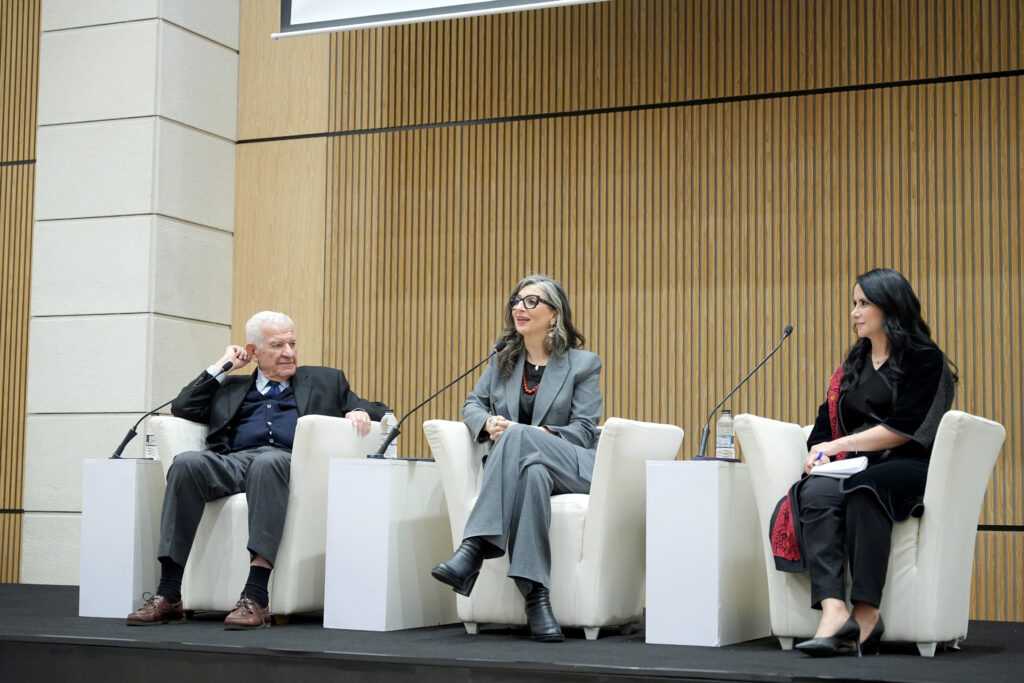
Nearly 1,000 Voices Gather in Amman for a Public Dialogue on International Law, Corporate Responsibility, and Palestine Anchoring Justice, Legal Evidence, Civic Mobilization, and the Future of Accountability Discussing the Stories Behind the Reports and the Book When the World Sleeps: Lived Experience and Collective Memory The Renaissance Strategic Center (RSC) at the Arab Renaissance for Democracy and Development (ARDD), convened “A Talk with Francesca Albanese,” United Nations Special Rapporteur on the situation of human rights in the Palestinian Territory occupied since 1967. Held as part of RSC’s Question of Palestine Program, the event brought together nearly 1,000 participants, including Their Royal Highnesses Princess Basma bint Talal, Princess Ghaida, and Princess Dina Mired, alongside parliamentarians, senators, former ministers, diplomats, academics, civil society leaders, youth representatives, and members of the international community. The dialogue featured international lawyer and Chief Editor of the Palestine Yearbook of International Law, Dr. Anis Kassim, and was moderated by Adv. Samar Muhareb, Executive Director of ARDD, presented by Adv. Mary Nazzal Batayneh, justice activist, barrister, and impact-driven entrepreneur. Opening the evening, Adv. Mary Nazzal Batayneh emphasized the importance of translating legal analysis into collective action and public engagement: “This evening is about understanding the moment we are living in, and how principled legal work can be transformed into meaningful action toward accountability.” Honoring Principled Leadership Moderating the dialogue, Adv. Samar Muhareb underscored that the gathering was also intended as recognition of principled leadership within international human rights work: “Tonight, we gather not only to listen, but to honor Francesca Albanese — a voice of courage and integrity whose work reminds us that international law must remain anchored in justice and human dignity.” Muhareb reaffirmed ARDD’s commitment to sustaining inclusive spaces where legal scholarship, policy dialogue, and civic engagement intersect. Shedding light on economic responsibility and contemporary conflict, Dr. Anis Kassim introduced Albanese’s latest report and reflected on the significance of her contribution to contemporary international legal discourse: “Francesca Albanese stands among the strongest contemporary defenders of dignity, peace, and justice. Her reports present rigorous legal analysis and documented facts that will remain essential to international accountability efforts.” He emphasized the critical role of independent legal documentation in informing judicial processes and preserving the historical record. Albanese’s report From Economy of Occupation to Economy of Genocide, examines the intersection between economic systems and situations of occupation and conflict, raising important discussions regarding corporate responsibility and international legal obligations. Albanese noted that modern conflicts increasingly operate through interconnected global economic and technological structures, shaping realities far beyond traditional political arenas. During her talk, Francesca Albanese reaffirmed the legal foundation of her UN mandate: “My role is to document and monitor violations of international law — no more and no less.” Addressing regional concerns surrounding Israeli expansionist political narratives, she cautioned against interpreting developments solely through territorial frameworks: “If we see this only as territorial expansion, we misunderstand it. It is a project of domination that does not necessarily require boots on the ground.” Her remarks situated the Palestinian question within broader transformations affecting governance, technology, and power relations within the contemporary international system. The evening also marked the Jordan presentation of Albanese’s book When the World Sleeps, written alongside her UN reporting work. Moving beyond technical legal discourse, the book presents Palestine through encounters with individuals whose lived experiences illuminate the human realities behind legal terminology. Reflecting on the book’s purpose, Albanese explained: “I wanted to tell how I came to understand Palestine, not only through law, but through people and their stories.” Now translated into eighteen languages, the publication reflects growing international engagement with accessible approaches linking international law, lived experience, and collective memory. The event concluded with a public book signing attended by participants from diplomatic, academic, and civil society communities. At the conclusion of the discussion, H.R.H. Princess Basma bint Talal expressed appreciation to Ms. Albanese for her steadfast dedication to advancing international legal accountability and for amplifying principled voices working toward justice and human dignity. ARDD also extends its sincere appreciation to the Government of Jordan for its continued support in enabling constructive dialogue and facilitating spaces that bring together international expertise, civil society, and public engagement around issues of regional and global importance. ARDD further extends its gratitude to the Landmark Hotel Amman, partners, and participants whose contributions enabled a meaningful and widely attended exchange.
Breaking Barriers: 300 Men and Boys Engage to Support Women’s Leadership in Jordan
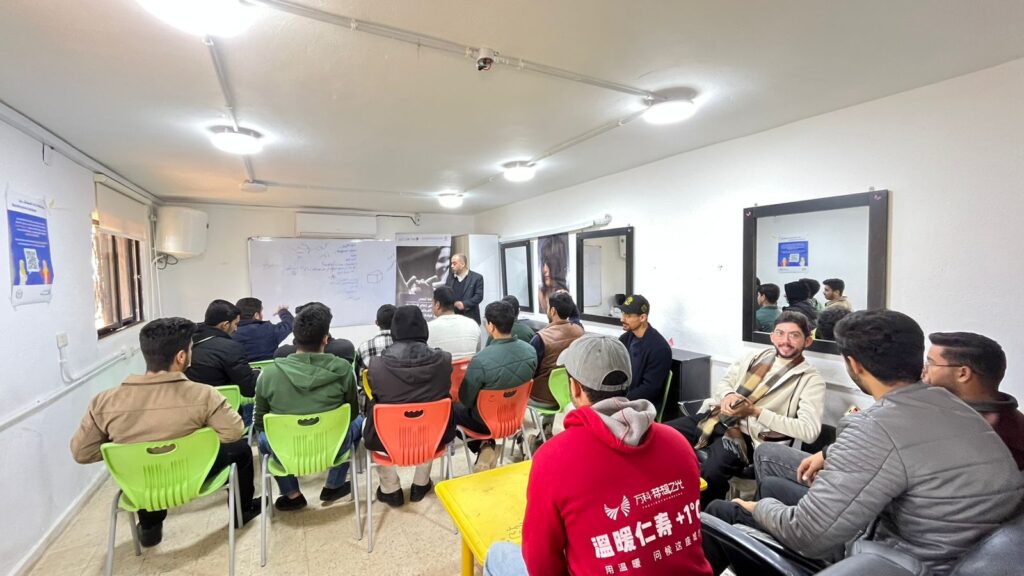
In many communities across Jordan, social norms continue to influence perceptions of leadership and decision-making roles. “Empowering Each Other – Phase 8,” implemented by ARDD in partnership with UN Women, aimed to address these dynamics by engaging men and boys in structured dialogue on women’s leadership and gender roles. Between November 2025 and January 2026, ARDD conducted 11 two-day dialogue sessions at UN Women OASIS centers across Jordan. The sessions focused on examining the social and household-level factors shaping women’s participation in leadership and decision-making, emphasizing the role of men and boys in influencing these spaces. Approximately 300 men and boys from diverse age groups and backgrounds participated in the sessions, which were held across southern, central, and northern governorates. The dialogues provided facilitated spaces for participants to reflect on prevailing norms, discuss community practices, and consider how these norms affect women’s opportunities for leadership at both family and community levels. Facilitators incorporated examples of women leaders in Jordan, including the election of the Eman Futaimat (إيمان فطيمات) as the first female mayor in Khirbet Al-Wahadneh in 1995, to illustrate how leadership roles have evolved. These examples supported discussions on how leadership is shaped by social context rather than gender alone. As noted by Mr. Muath Jaraera, a facilitator in Karak, leadership dynamics are often first negotiated within households, where support for women can influence broader community engagement. The sessions were designed as participatory workshops rather than lecture-based discussions. Participants worked collectively to identify social, economic, and structural barriers affecting women’s participation, and to outline practical actions that could contribute to more inclusive decision-making practices. Several facilitators observed changes in participants’ understanding over the course of the sessions. In Ajloun, Dr. Musa AlZyoud reported that while some participants initially expressed uncertainty about the purpose of the dialogue, many later articulated clearer perspectives on their role in supporting women’s civic engagement. Facilitators also highlighted the contribution of older and retired participants, who provided historical and community-based perspectives that enriched discussions. According to Mr. Omar Abu Bakar, these perspectives underscore that responsibility for supporting women’s leadership spans generations. Participants further noted the importance of education and economic participation as enabling factors for women’s sustained engagement in leadership and public life. Overall, facilitators observed meaningful shifts in participants’ understanding and attitudes regarding women’s leadership, highlighting how the dialogues supported reflection and awareness without attributing individual stories. As the program emphasizes the role of men and boys as partners in change, ARDD highlights that inclusive leadership requires collective responsibility. “Inclusive leadership is reinforced when men and boys actively support women’s participation, contributing to stronger community governance and social cohesion.” Engineer Zainab Alkhalil, ARDD Programs Manager Through Empowering Each Other – Phase 8, ARDD continues to explore approaches beyond women-focused interventions, particularly within family and community structures, positioning men and boys as stakeholders in efforts to expand women’s leadership opportunities. This initiative was implemented in partnership with UN Women and supported by the valued donors, whose contributions have been instrumental in enabling these critical dialogues and community-level interventions.
NAFE Launches AI-Supported Learning Dialogue
The National Alliance for the Future of Education (NAFE), in collaboration with the Arab Renaissance for Democracy and Development (ARDD), held its first stakeholder dialogue on AI-supported learning in Jordanian schools on 3 February 2026. This initial discussion marks the beginning of a series of engagements aimed at formalizing a structured AI network within the existing NAFE governance framework, and under Investing in the Future: Sustainable, AI-Enabled Learning Systems in the Jordanian Education Sector, implemented by ARDD in partnership with Vision Hope International, in collaboration with Branches of Mercy (BOM). In line with ARDD’s Education Program, the online session brought together NAFE members, Ministry of Education representatives, and key project partners to discuss strategies for implementing AI in classrooms and expanding digital learning opportunities for students. Participants explored governance and coordination mechanisms, emphasizing regular, well-documented network meetings, and contributed to shaping strategic priorities for AI integration in education. This dialogue sets the stage for NAFE members to actively advocate for a more widespread evaluation and adaptation of best-practice AI-supported learning across Jordanian schools, raising awareness of promoting innovative approaches to teaching and learning. During the session, plans were shared to launch a dedicated AI Committee within NAFE, which will work closely with the selected research partner, Integrated International, to develop a study assessing AI’s feasibility and impact in classrooms. The Committee will serve as a key advisory and coordination body, ensuring alignment between NAFE members, schools, and project objectives while guiding the research and future interventions. ARDD facilitated the session, highlighting the importance of collaborative approaches, evidence-based programming, and inclusive participation to strengthen educational quality and equity. Participants shared insights and experiences, identifying opportunities for innovative teaching practices, improved student engagement, and future collaboration. The meeting concluded with a roadmap for quarterly follow-up sessions, ensuring continuous dialogue, strategic advocacy, and systematic documentation to reinforce the network’s impact. This first NAFE stakeholder dialogue underscores the commitment of educators, policymakers, and partners to fostering a sustainable, inclusive, and forward-looking learning ecosystem through evaluating AI integration methods and identifying localized best practices in this regard.
Nidaa’ for Change Young Women Launch “Drug Prevention in Schools” Initiative in Collaboration with ARDD
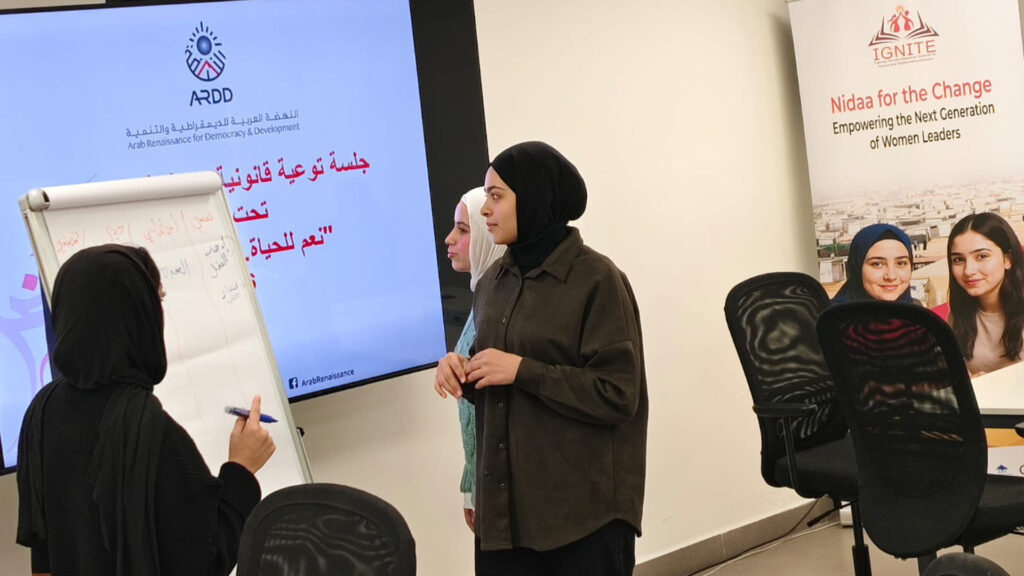
Young women participating in the Nidaa’ for Change project launched the initiative “Drug Prevention in Schools,” marking the sixth youth-led initiative under the project. The initiative comes as part of the project’s efforts to support safer, more inclusive learning environments and strengthen girls’ leadership and community engagement. The initiative began with an interactive awareness session for schoolgirls in Amman. The session focused on drug prevention, as well as appropriate educational and legal approaches for responding to suspected cases within the school setting. Delivered through a participatory approach, the session was facilitated by Adv Rami Quweider, Legal Advisor at the Arab Renaissance for Democracy and Development (ARDD), in collaboration with the young women leading the initiative. The young women also delivered interactive activities aimed at raising awareness and encouraging critical thinking among students. This initiative aligns with ARDD’s Education Strategy and Program, and its efforts to strengthen community partnerships and contribute to national efforts to protect groups most at risk, particularly adolescents and youth. It also supports the implementation of the National Strategy for Drug Prevention (2024–2026) and reflects ARDD’s role as a founding member of The National Alliance for Combating Narcotics in Jordan. Alaa Danoun (18), one of the young women leading the initiative, shared: “This initiative was an important experience for me. It helped me develop my public speaking skills and become more confident, which also had a positive impact on my academic performance.” She added, “Our goal was not only to provide information, but to respond to the concerning signs we have recently observed in schools. We wanted to raise awareness among our peers and strengthen their ability to protect themselves, because we believe awareness is the first line of defense.” The initiative highlights the value of structured youth-led action that connects with national priorities and reinforces the importance of collaboration between civil society and relevant stakeholders to promote safer school environments. Nidaa’ for Change is implemented by ARDD as part of the IGNITE – Inspiring Girls and Grassroots Networks for Inclusive and Quality Education project, supported by the Rene Moawad Foundation (RMF), funded by the French Development Agency (AFD), and supported by the International Rescue Committee (IRC). The project targets girls aged 15–19 from refugee and marginalized communities in Amman and Mafraq.
Nidaa’ for Change Young Women Launch “Drug Prevention in Schools” Initiative in Collaboration with ARDD
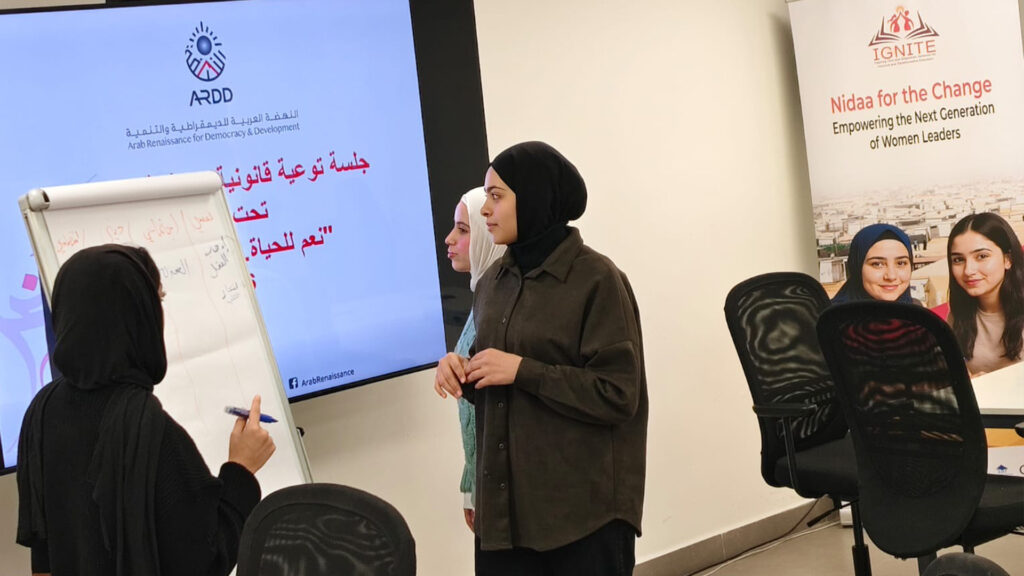
Young women participating in the Nidaa’ for Change project launched the initiative “Drug Prevention in Schools,” marking the sixth youth-led initiative under the project. The initiative comes as part of the project’s efforts to support safer, more inclusive learning environments and strengthen girls’ leadership and community engagement. The initiative began with an interactive awareness session for schoolgirls in Amman. The session focused on drug prevention, as well as appropriate educational and legal approaches for responding to suspected cases within the school setting. Delivered through a participatory approach, the session was facilitated by Adv Rami Quweider, Legal Advisor at the Arab Renaissance for Democracy and Development (ARDD), in collaboration with the young women leading the initiative. The young women also delivered interactive activities aimed at raising awareness and encouraging critical thinking among students. This initiative aligns with ARDD’s Education Strategy and Program, and its efforts to strengthen community partnerships and contribute to national efforts to protect groups most at risk, particularly adolescents and youth. It also supports the implementation of the National Strategy for Drug Prevention (2024–2026) and reflects ARDD’s role as a founding member of The National Alliance for Combating Narcotics in Jordan. Alaa Danoun (18), one of the young women leading the initiative, shared: “This initiative was an important experience for me. It helped me develop my public speaking skills and become more confident, which also had a positive impact on my academic performance.” She added, “Our goal was not only to provide information, but to respond to the concerning signs we have recently observed in schools. We wanted to raise awareness among our peers and strengthen their ability to protect themselves, because we believe awareness is the first line of defense.” The initiative highlights the value of structured youth-led action that connects with national priorities and reinforces the importance of collaboration between civil society and relevant stakeholders to promote safer school environments. Nidaa’ for Change is implemented by ARDD as part of the IGNITE – Inspiring Girls and Grassroots Networks for Inclusive and Quality Education project, supported by the Rene Moawad Foundation (RMF), funded by the French Development Agency (AFD), and supported by the International Rescue Committee (IRC). The project targets girls aged 15–19 from refugee and marginalized communities in Amman and Mafraq.
ARDD Welcomes the EU Ambassador to Jordan
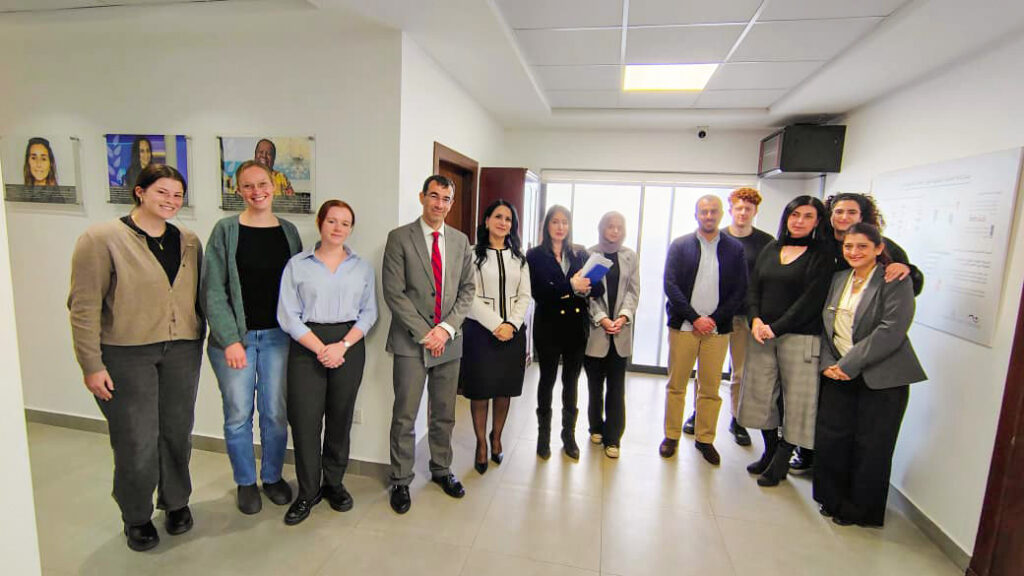
On Thursday, 12 February 2026, ARDD welcomed the EU Ambassador to Jordan, H.E. Pierre-Christophe Chatzisavas, to our headquarters in Amman for a constructive exchange with ARDD’s team. Discussions focused on the evolving civil society landscape in Jordan and across the MENA region, including shrinking funding opportunities and limited frameworks for the institutionalization of civil society in Jordan. The meeting underscored the importance of sustaining strong and meaningful dialogue between the EU and civil society actors in the Arab World, particularly in Jordan. The conversation also covered the newly established Euro-MENA Initiative for Democracy and Development and ARDD’s Brussels office (“ARDD Europe”), registered in 2024. Both aim to strengthen dialogue between European and Arab stakeholders and support the exchange of evidence-based knowledge on key regional priorities, including migration, the question of Palestine, and youth engagement. ARDD appreciates the Ambassador’s continued support for Jordanian civil society and for ARDD’s efforts.
Saudi Fellowship for Community Engagement Visits ARDD in Jordan
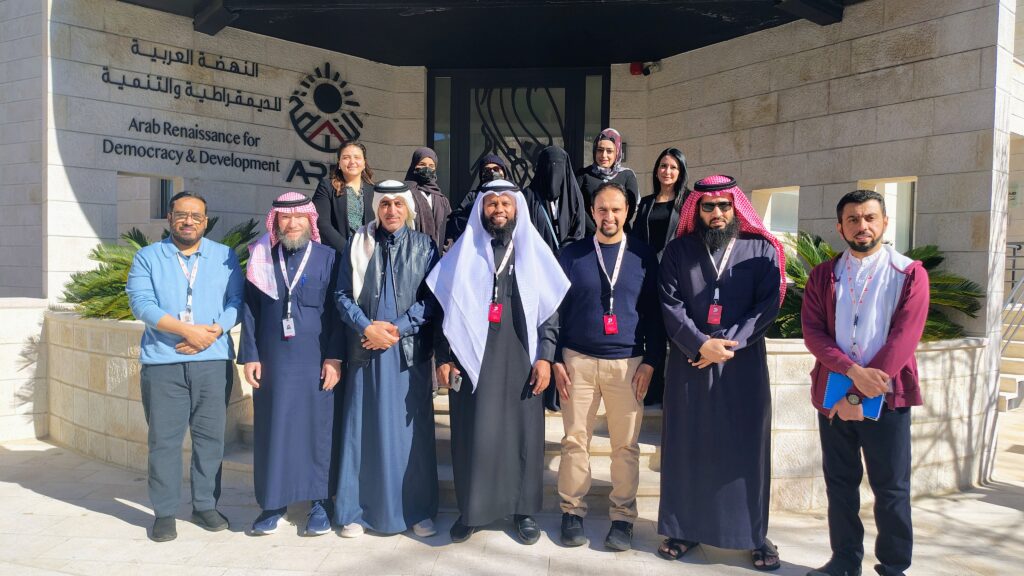
The Arab Renaissance for Democracy and Development (ARDD) hosted a group of participants from the Saudi Fellowship for Community Engagement as part of their field visit to Jordan. The visit aimed to introduce the fellows to the realities of civil society in Jordan and to highlight best practices in promoting civic participation and participatory decision-making. During the visit, the fellows learned about ARDD’s experience and operational frameworks, which focus on activating the localization of humanitarian and development action, strengthening networking and partnership-building, implementing community-based programs and initiatives, and producing evidence-based research through the Renaissance Strategic Center. These efforts contribute to transforming communities from passive recipients of services into active partners and owners of solutions. The role of scientific research constituted a central theme of the discussion, with emphasis placed on the fact that effective humanitarian and development work cannot be sustainable or equitable without relying on scientific research and analysis to understand community needs, design interventions, and assess impact. The fellows expressed particular interest in this approach, noting that their professional practices in the Kingdom of Saudi Arabia are likewise grounded in scientific research and evidence-based policymaking. In this context, Adv. Samar Muhareb, Executive Director of ARDD, affirmed that “genuine civic participation begins at the local level, through engaging communities as partners in diagnosis and decision-making.” She added that “scientific research and local knowledge form the foundation upon which any effective humanitarian or development intervention is built, serving as the compass that guides programs and policies toward more realistic and sustainable responses.” Muhareb further explained that ARDD’s approach is based on “linking field and programmatic work with evidence-based research, proposing policies and solutions, and promoting community and civic participation in this regard, alongside fostering a spirit of community ownership of these solutions.” The meeting was also attended by members of ARDD’s team from various departments, including heads of departments and project managers. An interactive discussion took place on mechanisms for engaging underrepresented groups and the role of participatory governance in building trust between communities and decision-makers. It is worth noting that the Saudi Fellowship for Community Engagement is a specialized professional program aimed at qualifying and empowering Saudi talents to lead community engagement systems across various sectors. It does so by combining theoretical learning, international field experience, and knowledge exchange with leading institutions, contributing to the localization of best practices within the Kingdom in alignment with the objectives of Saudi Vision 2030. At the conclusion of the visit, the fellows expressed their appreciation for the experience, affirming that their direct exposure to the work of ARDD and the Renaissance Strategic Center deepened their understanding of the nature of Jordanian civil society and its pivotal role in achieving sustainable and inclusive development.
ARDD Holds Consultative Meetings for the Jabal Amman Future Committee on Urban Planning and Participatory Governance
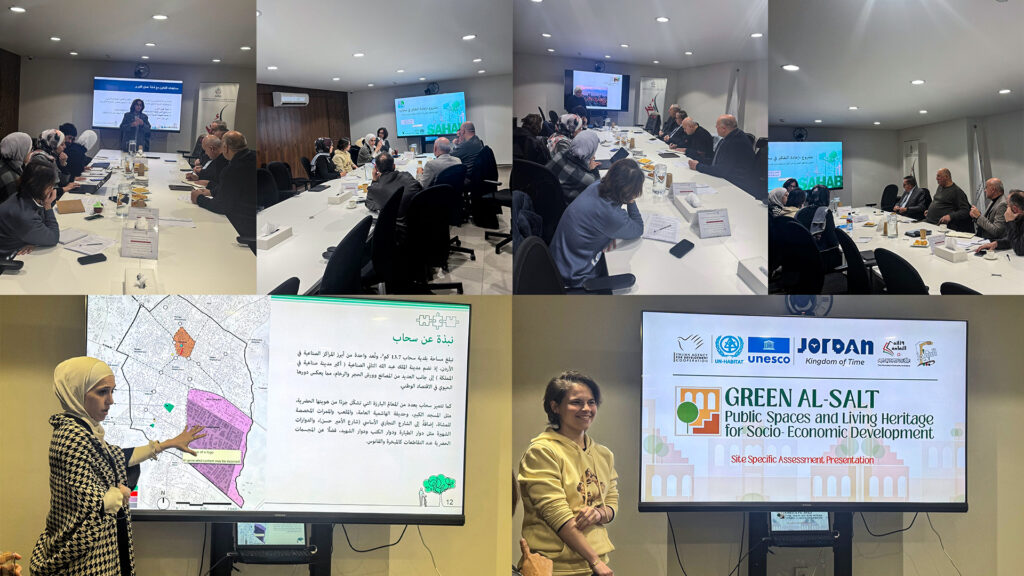
The Arab Renaissance for Democracy and Development (ARDD) convened two meetings of the Jabal Amman Future Committee between 14 and 19 January 2026, in cooperation with the Greater Amman Municipality and the United Nations Human Settlements Programme (UN-Habitat). These meetings were held as part of consultative dialogues aimed at exploring practical pathways to strengthen participatory governance and better align urban planning with the needs of the local community in the Jabal Amman neighborhood. The discussions brought together representatives of public institutions, international organizations, committee members, experts, and local community representatives. They focused on the institutional and regulatory framework governing urban planning. A presentation was delivered on the 2026 Planning and Zoning System, highlighting proposed shifts in planning methodologies—most notably the gradual transition from city-level planning to more detailed, neighborhood-based approaches. The discussions also addressed mechanisms for community engagement, including the use of structured public hearings as a means to enhance transparency and improve the alignment of planning policies with local priorities. In a related context, the ARDD team presented the key features of the project “CLOSER – Connecting LOcal proximity networks Sustaining participatory governance,” emphasizing its role in strengthening communication channels between local communities and public authorities, as well as the contribution of community committees to supporting participatory decision-making processes at the urban level. The meetings also included a presentation by the UN-Habitat team on comparative urban experiences, showcasing planning initiatives in Sahab and Al-Salt. These examples highlighted lessons learned in the repurposing of public spaces and in linking heritage preservation with economic and social development. They provided a basis for discussion on how similar approaches could be adapted to the Jabal Amman context, particularly with regard to the priority of developing a safe, inclusive public community space that responds to residents’ needs while preserving the neighborhood’s historical character. The meetings concluded with the identification of a set of preliminary directions and proposed next steps for the coming phase. These will be further developed through continued coordination among relevant stakeholders and with the active participation of the local community.
ARDD Holds Consultative Meetings for the Jabal Amman Future Committee on Urban Planning and Participatory Governance
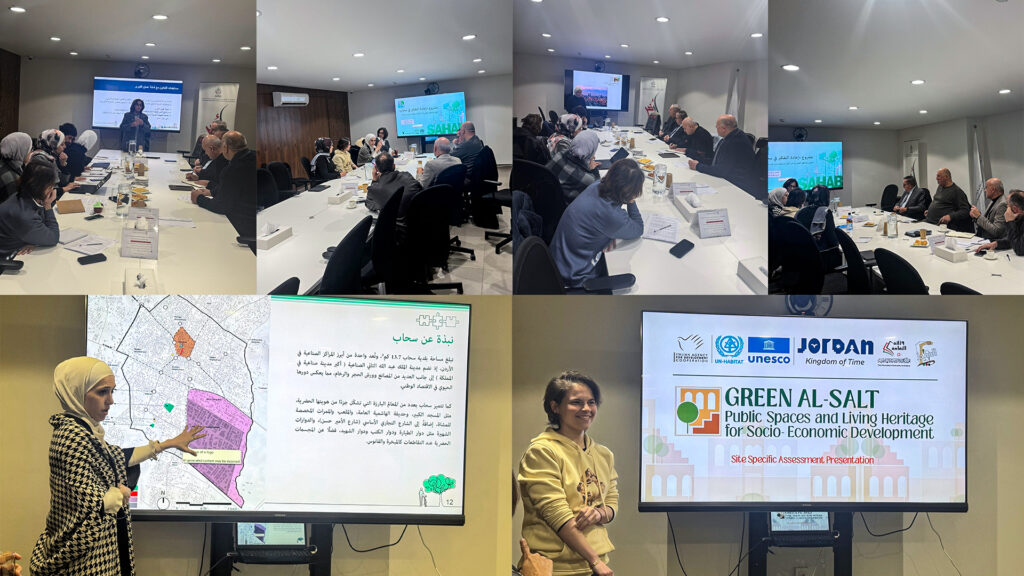
The Arab Renaissance for Democracy and Development (ARDD) convened two meetings of the Jabal Amman Future Committee between 14 and 19 January 2026, in cooperation with the Greater Amman Municipality and the United Nations Human Settlements Programme (UN-Habitat). These meetings were held as part of consultative dialogues aimed at exploring practical pathways to strengthen participatory governance and better align urban planning with the needs of the local community in the Jabal Amman neighborhood. The discussions brought together representatives of public institutions, international organizations, committee members, experts, and local community representatives. They focused on the institutional and regulatory framework governing urban planning. A presentation was delivered on the 2026 Planning and Zoning System, highlighting proposed shifts in planning methodologies—most notably the gradual transition from city-level planning to more detailed, neighborhood-based approaches. The discussions also addressed mechanisms for community engagement, including the use of structured public hearings as a means to enhance transparency and improve the alignment of planning policies with local priorities. In a related context, the ARDD team presented the key features of the project “CLOSER – Connecting LOcal proximity networks Sustaining participatory governance,” emphasizing its role in strengthening communication channels between local communities and public authorities, as well as the contribution of community committees to supporting participatory decision-making processes at the urban level. The meetings also included a presentation by the UN-Habitat team on comparative urban experiences, showcasing planning initiatives in Sahab and Al-Salt. These examples highlighted lessons learned in the repurposing of public spaces and in linking heritage preservation with economic and social development. They provided a basis for discussion on how similar approaches could be adapted to the Jabal Amman context, particularly with regard to the priority of developing a safe, inclusive public community space that responds to residents’ needs while preserving the neighborhood’s historical character. The meetings concluded with the identification of a set of preliminary directions and proposed next steps for the coming phase. These will be further developed through continued coordination among relevant stakeholders and with the active participation of the local community.