Empowering Women in Gaza – Lessons from Global Contexts
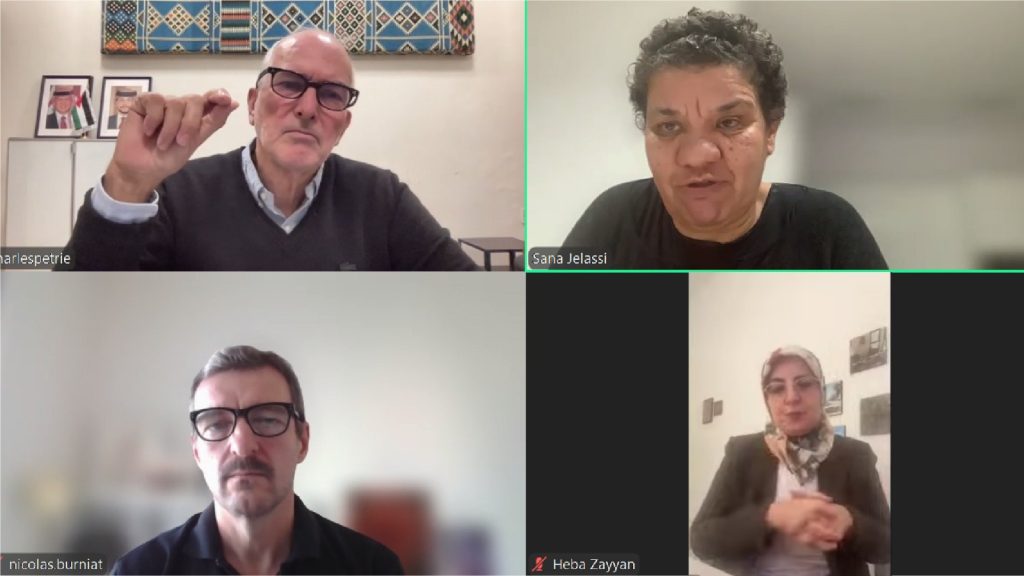
The Renaissance Strategic Center (RSC), as the think-tank hub of the Arab Renaissance for Democracy and Development (ARDD), organized a webinar, titled: Empowering Women in Gaza: Lessons from Global Contexts on Tuesday 11th November within the framework of UNSCR 1325 on Women, Peace and Security, the event highlighted the urgency of integrating women’s leadership into peacebuilding and decision-making processes. Speakers included Sir Charles Petrie( ARDD Senior Advisor and former UN Assistant Secretary General), Mr. Nicolas Burniat(UN Women Country Representative Jordan and Officer-in-Charge UN Women Palestine) and Ms. Heba Zayyan (Regional Advisor, Women, peance, security and humanitarian action for UN women). The discussion was moderated by Dr Sana Jelassi(Senior Advisor for ARDD’s Program on Women and Youth Empowerment ). Sir Charles Petrie opened the webinar by explaining its genesis, noting that preliminary discussions around peace plans for Gaza revealed a common concern: the international community risks sidelining women and local actors, allowing those “with the arms” to define priorities instead of the people sustaining Gaza’s daily survival.Drawing on global experiences, including Syria, Papua New Guinea, Sudan, and Myanmar, he showed how women consistently become the backbone of resilience, leading community responses, mediating social tensions, and sustaining essential services. He emphasized that the purpose of the webinar, aligned with the commitments of UNSCR 1325, is to equip donors and policymakers with concrete arguments for women’s inclusion in peacebuilding. Mr. Nicolas presented the humanitarian situation in Gaza, citing UN estimates that tens of thousands of women and girls have been killed since the start of the war. In line with the Women, Peace and Security agenda, Nicolas stressed that women’s voices must be central to ceasefire negotiations, early recovery discussions, and governance reforms. Local women’s organizations have kept essential services running despite immense exhaustion, and their leadership must guide peacebuilding efforts. Ahead of the recovery conference planned in Egypt, he called for inclusive participation mechanisms that guarantee women’s leadership from the earliest stages. Rebuilding Gaza must include structures that amplify women’s voices and restore transnational governance links essential for long-term peace. Ms. Heba discussed the historical evolution of the Palestinian women’s movement, rooted in the national liberation struggle and deeply connected to political participation. Organizations such as Miftah have long advocated for legal reform and political representation across the West Bank and Gaza. She highlighted how the 2007 political split and the blockade severely disrupted women’s activism, limiting legal space and fragmenting organizational networks. Repeated wars have destroyed infrastructure, erased memory spaces, and undermined community identity. Despite this, Heba emphasized that women remain at the heart of Gaza’s resilience and are indispensable to rebuilding the social fabric. Her intervention underscored a key principle of UNSCR 1325: women’s meaningful participation is inseparable from national rights, sovereignty, and representation. Palestinian women will not accept decision-making processes that exclude Gazan voices. Across all interventions, speakers reaffirmed a unified message, Gaza’s peacebuilding must be rooted in the Women, Peace and Security agenda and the principles of UNSCR 1325. Women’s leadership, community-based resilience, and local governance structures are not secondary considerations, they are essential foundations for sustainable peace, social cohesion, and recovery. The webinar called therefore on the international community to prioritize women’s participation, create institutional space for their leadership, and commit to recovery strategies that reflect the lived realities of Gaza’s communities. Only through inclusive, gender-responsive, resilience-driven approaches can Gaza’s future be rebuilt on a stable and equitable foundation.
ARDD Shares Research on Adaptive Social Protection and Climate Resilience at IDOS International Workshop
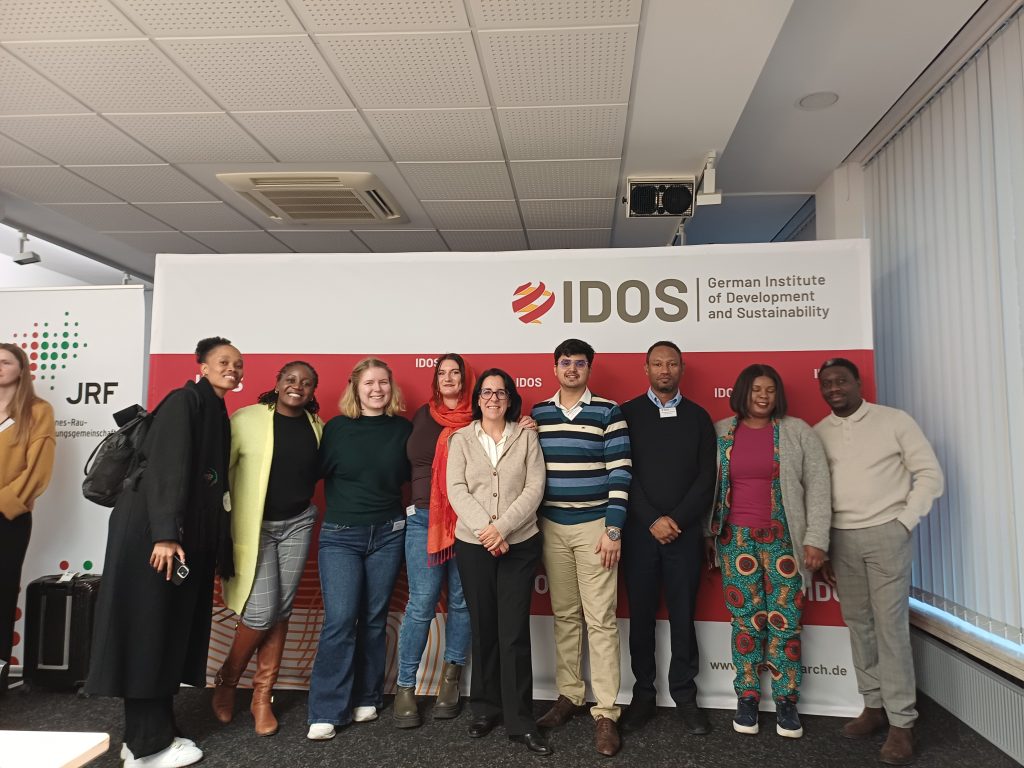
Last week, Dr. María del Mar Logroño Narbona, Senior Advisor at ARDD, presented our recent research on adaptive social protection and climate resilience in Jordan’s refugee camps during the International Workshop “(How) does social protection promote climate change mitigation and adaptation? Empirical evidence and way forward,” organized by the German Institute of Development and Sustainability (IDOS) at the IDOS Campus in Bonn, Germany, from 26 to 28 November 2025. The workshop brought together researchers and specialists from around the world, providing a platform for dialogue on the relationship between climate change, adaptive social protection, and vulnerability. Dr. Logroño Narbona’s presentation, “From Safety Nets to Climate Resilience? Adaptive Social Protection and Governance in Jordan’s Refugee Camps,” shared evidence on how climate risks, such as heatwaves, dust storms, and flooding, interact with governance structures, shelter conditions, and declining humanitarian assistance in Zaatari and Azraq camps. ARDD emphasized the importance of climate-responsive humanitarian safety nets, strengthened health systems, and effective camp governance approaches that support refugee agencies as crucial elements for future climate adaptation efforts. This contribution aimed to inform ongoing global discussions on the intersection of climate change, displacement, and adaptive social protection.
The International Court of Justice Advisory Opinion on Israel’s Obligations Towards UN Agencies, Other International Organizations and Third States: Initial Reflections
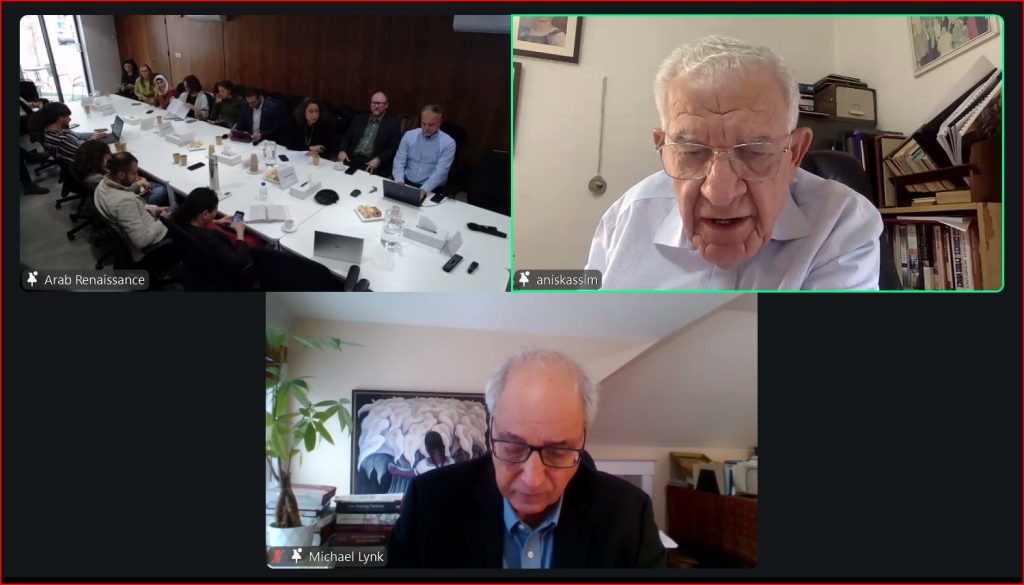
Amman, 17 November 2025 – The Question of Palestine Program at ARDD’s Renaissance Strategic Center (RSC), in partnership with Law for Palestine (L4P), hosted a high-level hybrid event titled “The International Court of Justice Advisory Opinion on Israel’s Obligations Towards UN Agencies, Other International Organizations and Third States: Initial Reflections.” The panel brought together leading experts and practitioners, including Ardi Imseis, who served as part of the legal team contributing to the proceedings that led to the ICJ Advisory Opinion; Michael Lynk, former UN Special Rapporteur on the situation of human rights in the occupied Palestinian territory; Mona Ali Khalil, whose extensive expertise on UN legal frameworks and the law governing international organizations offers a vital lens through which to interpret the Opinion; Anis F. Kassim, a foundational figure in advancing legal scholarship on Palestine’s international legal status and the rights of its people; and Matthew Hoisington, Chief of International Law at UNRWA’s Department of Legal Affairs, whose internal perspective provided a unique reading of the ICJ Advisory Opinion and its implications for UNRWA’s mandate and operational space. The discussion was facilitated by Ihsan Adel, Founder and Chair of Law for Palestine. The event concentrated on the Advisory Opinion the International Court of Justice (ICJ) recently delivered on the 22 of October 2025, as requested by the UN General Assembly in December 2024. The Opinion addresses the responsibilities of states and international organizations in the face of an ongoing genocide and humanitarian catastrophe, and calls out for a third time Israel’s role as an occupying power and as a UN member state. It builds on the ICJ’s earlier 2004 and 2024 Advisory Opinions, and forms part of a growing legal framework addressing the illegality of Israel’s prolonged occupation and its conduct during ongoing hostilities. This coherent legal narrative challenges impunity and centers Palestinian rights. The request indeed, even though it’s not directly addressed in the question, was triggered by Israel’s ban on UNRWA and its escalating restrictions on humanitarian access at a time when Gaza is experiencing unprecedented levels of destruction, famine, forced displacement, and collapse of essential systems. Across the panel, experts highlighted that the Advisory Opinion reaffirms fundamental and binding principles of international humanitarian and human rights law. The Opinion not only restates core legal norms but also provides factual findings, particularly regarding humanitarian obstruction and attacks on UNRWA, that are likely to influence current and future international litigation. The panel stressed that the ICJ decisively rejected allegations questioning UNRWA’s neutrality and found no substantiated evidence supporting Israel’s claims. The Opinion situates UNRWA’s decades-long presence and “unique and sustained connection” with the population of Gaza within the framework of international law, reinforcing the agency’s mandate and highlighting Israel’s obligation to cooperate with it in good faith. Speakers noted that attempts to delegitimize or dismantle UNRWA, through military attacks, legislative bans, withdrawal of immunities, and political pressure, have direct and devastating consequences for Palestinian civilians, and that diminishing the agency’s capacity only increases Israel’s own legal responsibilities as the occupying power. Israel, as an occupying power, must ensure the provision of essential supplies to Palestinians and must facilitate, not obstruct, relief operations by the UN, particularly UNRWA. Under Article 59 of the Fourth Geneva Convention, the occupying power is obligated to provide relief schemes and to refrain from any form of forcible transfer or deportation. Panelists noted that Israel’s sustained attacks on UNRWA’s operations and its obstruction of humanitarian assistance constitute an implied attempt to withhold relief from the population, thereby creating conditions that could pressure residents to leave the territory. The Court explicitly connected the withdrawal of relief schemes to the prohibition on the forcible transfer of the protected population. The Court also clearly reaffirmed that Israel has no claim to sovereignty over any part of the Occupied Palestinian Territory and that its occupation is unlawful, with the UN General Assembly already having set 18 September 2025 as the deadline for Israel’s complete withdrawal. Panelists emphasized that, for years, international debates had centered on managing the occupation within the framework of international law rather than on bringing it to an end. The ICJ’s 2024 Advisory Opinion marked a decisive shift by explicitly determining that Israel’s continued physical presence in the territory is itself unlawful. Yet, the international oversight of the Israeli occupation reveals a persistent gap between the clarity of international law and the lack of meaningful international accountability. While the legal framework governing occupation, humanitarian protection, and the right to self-determination is well-established, the political determination to enforce these norms remains critically lacking. Several panelists noted that Israel’s disregard of its obligations under the UN Charter, as well as its obstruction of UN agencies and humanitarian actors, raises fundamental questions regarding its continued standing within the United Nations. Should Israel persist in defying binding decisions of the General Assembly, the Security Council, and the ICJ, its position and status in the UN system may be challenged, and similar measures adopted for Apartheid South Africa’s membership in 1974 could be considered by the General Assembly. The Advisory Opinion may thus serve as an authoritative legal reference demonstrating that Israel has engaged in sustained violations of its duties to act in good faith, to cooperate with the United Nations, and to respect the privileges and immunities of the UN and its personnel, as its actions aimed at restricting UNRWA’s work are incompatible with its obligations under the UN Charter and the 1946 Convention on the Privileges and Immunities of the United Nations. Panelists underscored that the ICJ’s findings apply equally to Francesca Albanese, the UN Special Rapporteur mandated by the Human Rights Council to monitor and report on the situation in the occupied Palestinian territory, whose functions are likewise protected under international law. The event concluded with a unified message: the ICJ Advisory Opinion provides a clear legal foundation that must now translate into political action, operational protection, and meaningful accountability for a government that has dishonored itself internationally. The
ARDD Participates in Barcelona’s Regional Civic Forums
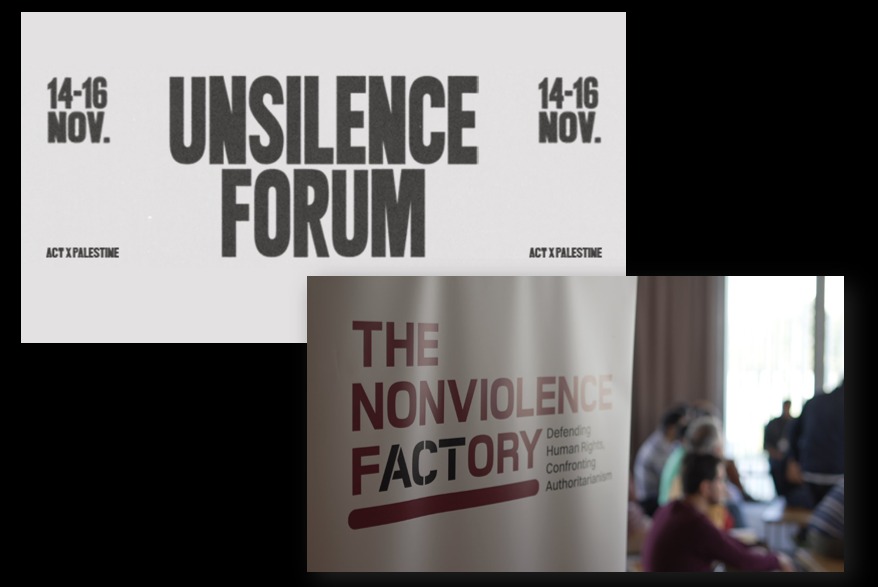
The Arab Renaissance for Democracy and Development (ARDD) participated in the Barcelona meetings held from 12 to 16 November 2025, joining Euro-Mediterranean partners to address rising authoritarianism, shrinking civic space, and the urgent need for collective action on justice and human rights. ARDD’s engagement in the Non-Violence Factory and the UNSILENCE Forum directly supports its mission to strengthen civic actors, advance democratic values, and strengthen international solidarity with Palestine. During the Non-Violence Factory, ARDD joined activists and human rights defenders from across the Euro-Meditarrenean region to explore how prevailing narratives, social tensions, and environmental pressures are shaping new forms of authoritarianism and to identify non-violent strategies to confront them. The collaborative workshops and group reflections aligned with ARDD’s commitment to empowering grassroots leaders, supporting non-violent advocacy, and advancing localization. The exchange of experiences reinforced ARDD’s work on protecting civic space, building community resilience, and strengthening the role of youth and marginalized voices in public life. At the UNSILENCE Forum, ARDD joined panels discussing militarization in Europe, disinformation, and new threats to democratic participation, key themes within ARDD’s regional policy and research agenda. The Forum’s strong focus on Palestine, including the launch of the ActXPalestine campaign, echoed ARDD’s long-standing advocacy for Palestinian rights and its leadership within regional and international solidarity platforms. ARDD’s participation in the Barcelona meetings strengthened its partnerships across the Euro-Mediterranean region and supported its strategic priorities for 2025–2028, particularly its efforts to expand Euro-MENA collaboration, defend civic freedoms, and promote rights-based approaches to peace and development. These engagements reaffirm ARDD’s role as a regional actor dedicated to advancing social justice, protecting civic space, and upholding the rights and dignity of all peoples.
Renaissance Strategic Center Partners with Social Change School
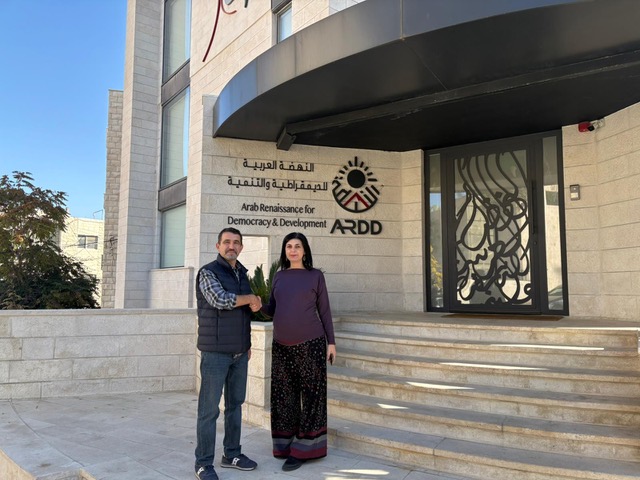
The Renaissance Strategic Centre (RSC) is enthusiastic to announce a partnership with the Social Change School (SCS) [https://www.socialchangeschool.org/en/], formalized through a Memorandum of Understanding (MoU), signed this November. As a pioneering educational institution in Europe, SCS is dedicated to empowering young professionals and managers to lead and innovate nonprofit organizations, driving stronger social impact. The SCS Career Service Coordinator based in Jordan, Bruno Clerici, and our RSC Coordinator, Mariam Abu Samra, recently met to launch this collaboration, which will provide field training periods for SCS students at ARDD/ RSC Jordan, upon completing their SCS master’s programs. Through this initiative, SCS students from Europe will have the opportunity to join our RSC Internship Program in Amman. SCS will cover some of the associated costs, while RSC will offer guidance and mentorship throughout this hands-on experience. SCS students will actively engage in ongoing projects aligned with RSC’s programmatic areas, which are rooted in evidence-based practices and policies. This partnership will expose students to context-specific research, networking strategies, and civic engagement initiatives, enhancing their understanding of the region. This agreement establishes a framework for collaboration and knowledge exchange between Europe and Jordan, aiming to strengthen connections between academic institutions and policy research platforms. It is designed to enrich educational opportunities through hand-on experience, while fostering innovative research outcomes. This partnership reflects ARDD/RSC’s commitment to bridging academic theory with practical applications, promoting knowledge production, and nurturing the next generation of scholars, practitioners, and youth-focused collaborations.
ARDD reaffirms its commitment to child protection and participates in a field visit to the Center for the Care and Rehabilitation of Female Beggars in Al-Dhulail
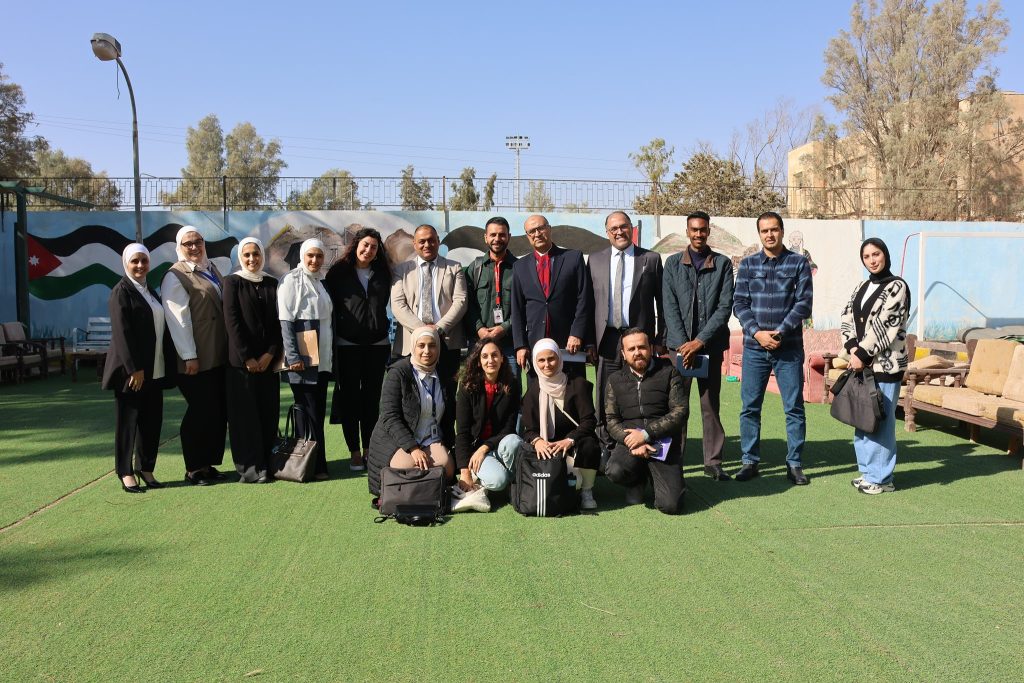
The Arab Renaissance for Democracy and Development (ARDD),as one of the founding members of the National Working Group to Combat Child Labour established in 2022—took part in a field visit organized by the National Council for Family Affairs (NCFA) to the Center for the Care and Rehabilitation of Female Beggars in Al-Dhulail District. The visit coincided with Universal Children’s Day and the World Day for the Prevention of Child Abuse. The visit was carried out in coordination with the Ministry of Social Development and Plan International, with the participation of representatives from government bodies, international organizations, and civil society institutions. It aimed to review the services provided to children at the center and to discuss updates on national efforts addressing child labour and begging, as part of the Working Group’s regular meeting agenda. During the visit, ARDD was represented by lawyer Mousa Al-Zyoud. Participating entities presented key national priorities and achievements in reducing child labour, including: the adoption of the Juvenile Protection Regulation No. 36 of 2024 concerning working and begging children, aligned with the Juvenile Law No. 32 of 2014; the establishment of a National Coordinating Committee to develop a database for child labour cases and to follow up on outcomes of related projects and conferences; and the review of the Ministry of Social Development’s 2025 internal procedures manual for handling cases of working children and children in need of protection. In this context, ARDD stresses that since the Working Group was founded in 2022, it has participated in all meetings and national efforts led by the committee, and has contributed to supporting its outputs aimed at strengthening the national child-protection system and ensuring complementarity between governmental and non-governmental roles. Regarding ARDD’s efforts to reduce child labour and enhance child protection, Al-Zyoud explained that the organization’s participation in the visit reflects its ongoing approach to safeguarding children through a wide range of programs and initiatives. These include, notably: Education and child protection projects: delivering awareness and training sessions for children and parents on educational and behavioral challenges; and implementing the “Investing in the Future” project in partnership with Vision Hope International e.V. to integrate artificial-intelligence technologies into education, strengthen student and teacher engagement, and contribute to reducing school dropout and learning gaps, vocational training grants including providing support to adolescents and youth most in need, alongside implementing the “Student Support (Ma‘ounat Taleb)” initiative to supply schoolbags, tablets, and stationery to students, in addition to free legal services: offering legal awareness sessions in the field and online, legal consultations, mediation, and courtroom representation for all nationalities. ARDD also conducts regular monthly visits to juvenile care and rehabilitation centers (from September 2024 through June 2026) to provide legal-awareness sessions for children and to build the capacities of staff. On advocacy and national policies, Al-Zyoud noted that ARDD continues its leadership on the right to education through founding the National Alliance for the Future of Education in Jordan (NAFE), which strengthens efforts to protect educational rights for all, including refugees. The organization also publishes studies, research, and position papers through its Renaissance Strategic Center, addressing child protection and rights, learning loss, accountability, and governance in the education sector. In conclusion, ARDD reiterates its firm commitment to supporting national efforts to protect children, reduce child labour, and promote a safe environment that guarantees children’s rights in Jordan.
ARDD and Amna Amplify Community Perspectives Through the “PhotoVoice” Initiative
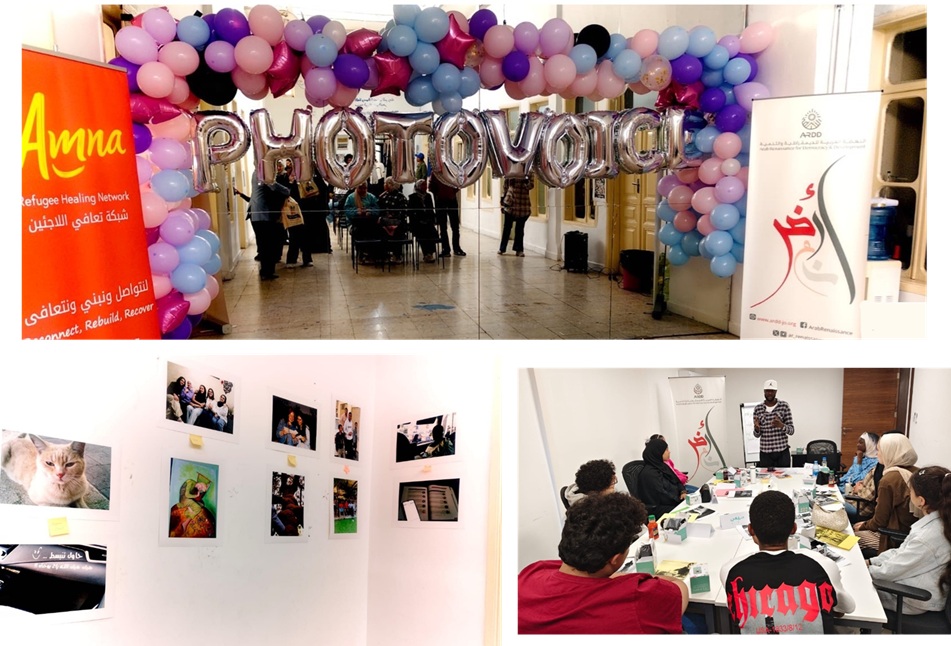
As part of its ongoing Prevention and Protection Interventions project with Amna – Refugee Healing Network, ARDD has successfully implemented the PhotoVoice Initiative—a creative and participatory tool designed to monitor and evaluate the project’s impact on local communities. Delivered in collaboration with Amna’s partner in Jordan, the Collateral Repair Project (CRP), this youth-centered initiative empowers young people to document and express their lived experiences through photography, providing a safe and engaging platform for expression, reflection, and dialogue. As an internationally recognized participatory methodology, PhotoVoice enables individuals to communicate their perspectives through photographs accompanied by guided group discussions. By capturing meaningful images, participants highlight the issues that matter most to them, share their aspirations for the future, and spark conversations within their communities. Within this initiative, PhotoVoice serves two intertwined purposes. It enhances the evaluation of the Community Partnership Program (CPP) by generating deeper, human-centered insights into the daily experiences of participants. At the same time, it encourages youth expression and strengthens community engagement by fostering creativity, confidence, and constructive dialogue among adolescents. ARDD and CRP engaged 20 young participants aged 12–18, who took part in an introductory training delivered by an Amna expert and focused on the basics of photography and storytelling. Throughout the project, participants captured photographs in response to thematic prompts such as “What makes you feel safe?” and “Where do you feel you belong?”. They also participated in reflective group discussions to explore the meanings behind their images and selected a series of photos and personal narratives to be featured in a final public exhibition. This process encouraged young people to observe their surroundings more closely, think critically about their experiences, and express their stories in impactful and visually compelling ways. Importantly, several parents accompanied and supported their children during the sessions, and they, too, are direct beneficiaries of the Prevention and Protection Interventions project implemented by ARDD. The initiative culminated in a PhotoVoice Exhibition co-organized by ARDD and CRP at CRP’s community space, where selected participants proudly presented their photographs and stories. The event welcomed families, partners, and community members into an inclusive and warm atmosphere that encouraged conversation and connection. Attendees explored the visual narratives, listened to youth reflections, and engaged in meaningful dialogue inspired by their artwork. Through the PhotoVoice initiative, ARDD reaffirms its commitment to amplifying community voices, particularly the voices of youth and children, and ensuring that their perspectives help shape future programs, narratives, and opportunities. The initiative stands as a testament to ARDD’s dedication to fostering creativity, strengthening dialogue, and ensuring that the lived realities of young people are seen, heard, and valued.
ARDD Signs a Memorandum of Understanding to Organize the Winter Bazaar in Support of Artisans and Small Business Owners
The Arab Renaissance for Democracy and Development (ARDD) has signed a Memorandum of Understanding with the Committee of Love to organize the “Season’s Market Winter Bazaar” as part of the Christmas Village activities, which will take place at the Hyatt Amman Hotel from 27 to 29 November 2025. This collaboration comes as part of the ongoing efforts of ARDD and the Jordan National NGO Forum (JONAF) in advocacy to strengthen livelihoods and promote economic empowerment. It aims to establish economic and social platforms that enable artisans and small business owners from refugee and host communities to showcase their products, while fostering joint action between civil society organizations, the private sector, and the local community. Under the Memorandum of Understanding, the Committee of Love will allocate a dedicated space for participants within the “Season’s Market” initiative to display their products and take part in the Christmas Village activities. This will provide them with a real opportunity to generate income, broaden their access to new markets, and open direct sales channels. It also ensures fair visibility for small business owners to work with dignity, strengthen their presence in the local market, and support the sustainability of their enterprises. The bazaar initiative serves as a key platform for supporting the local economy, offering small businesses and informal enterprises the opportunity to market their products directly to the public. This contributes to enhancing livelihoods by creating real sales opportunities that lead to sustainable income, enabling them to integrate into the market and expand their businesses. The initiative also builds bridges of communication between the local community and entrepreneurs, reinforcing values of social solidarity. It is worth noting that this collaboration takes place within the framework of the project “Future Forward: Unlocking Local Sustainable Opportunities,” implemented by ARDD with funding from the EU Regional Development and Protection Programme.
Tawasol Governance Workshop: Strengthening Women’s Leadership and Network Governance in Jordan
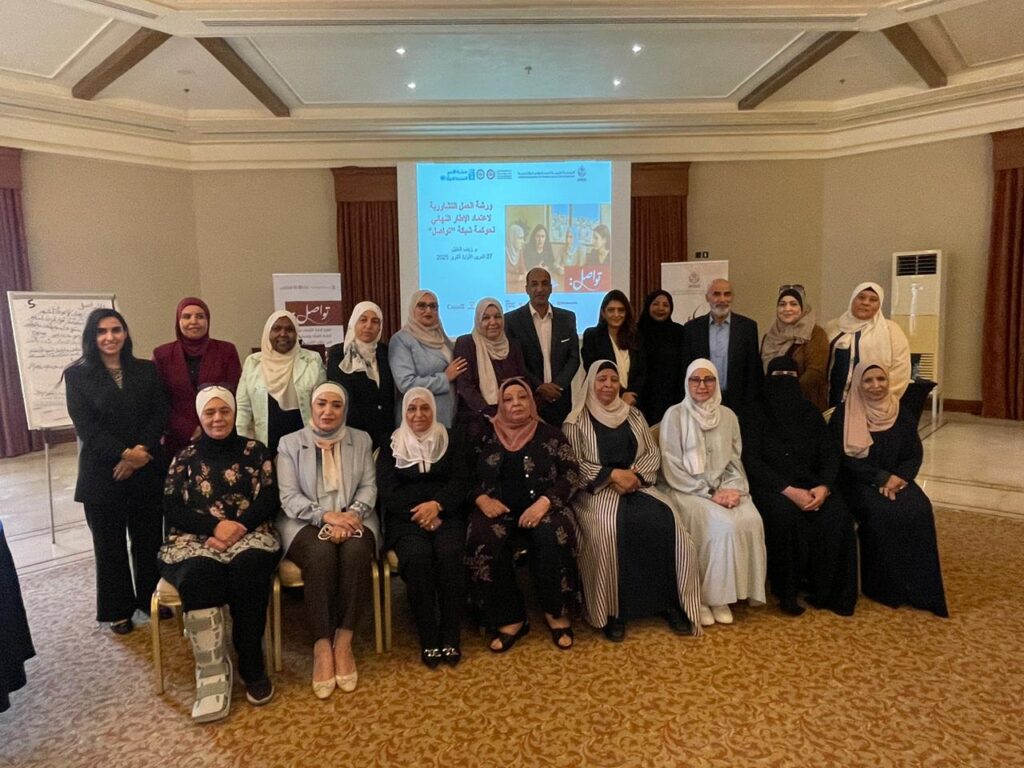
On Monday, October 27, 2025, the Tawasol Network, a coalition of women- and youth-led organizations focused on gender-responsive crisis management and emergency preparedness under the Women, Peace, and Security (WPS) agenda, conducted a governance workshop to present and validate its final governance structure. Organized by the Arab Renaissance for Democracy and Development (ARDD), in partnership with UN Women, the workshop brought together leaders from 20 member organizations across southern Jordan and those working with people with Disability in Amman to enhance understanding of roles, responsibilities, and operational mechanisms and ensure inclusive, participatory, and effective governance. The Tawasol Network is addressing institutional, technical, and financial challenges faced by women and youth-led CSOs and CBOs, particularly in Jordan’s southern region. The network now serves as a collaborative platform connecting diverse local actors, promoting crisis preparedness, enhancing women’s leadership, and strengthening decision-making processes and operating to expand outreach, reinforce coordination, and amplify advocacy on women, peace, and security. During the workshop, participants engaged in presentations, group exercises, and open discussions, which allowed them to clarify governance concepts, exchange experiences, and contribute to the network’s operational planning. Members expressed appreciation for the interactive methodology, which helped simplify complex concepts, encouraged reflection, and promoted knowledge sharing. Discussions focused on defining the network’s vision, mission, and core values, emphasizing gender equality, climate adaptation, social cohesion, and community empowerment. Participants also examined the scope of work, highlighting the need to reach diverse groups, including persons with disabilities and the elderly, and stressed the importance of partnerships with the national actors and private sector, proactive crisis management planning, and integration of digital tools for communication and coordination. The workshop also addressed governance roles, decision-making mechanisms, membership criteria, and codes of conduct. Members emphasized the importance of clear roles, effective communication, and participatory decision-making processes to ensure transparency, inclusivity, and collective ownership. Participants noted that personal visits and active engagement with member organizations foster a deeper understanding of capacities, promote equitable participation, and enhance community impact. The workshop provided opportunities to share success stories, including instances where women participants established their own community organizations, advanced to leadership positions in municipal councils, and expanded programs to support local communities. Reflecting on the workshop, ARDD’s programs manager, Engineer Zainab AlKhalil, said: “Establishing a strong governance framework is not just a structural necessity, but it is the foundation for ensuring that women-led and youth-led organizations can fully contribute to decision-making, crisis response, and sustainable community development. Governance ensures accountability, fosters trust, and empowers members to collectively shape the network’s future.” Feedback from participants emphasized the value of learning from other organizations and strengthening professional networks. The facilitation team ensured smooth discussions, equitable participation, and clear documentation of outcomes, which will inform future planning and network activities. With the governance structure finalized, the network is set to operationalize the framework, disseminate relevant documents, and implement the agreed-upon actions. This structured approach strengthens ownership, accountability, and collective engagement among members, enhancing Tawasol’s capacity to empower local organizations, reinforce women’s leadership, and promote resilient, inclusive communities across Jordan.
Equal Opportunities through Empowering Each Other: Women and Girls Strengthen Their Roles in Leadership and Community Engagement
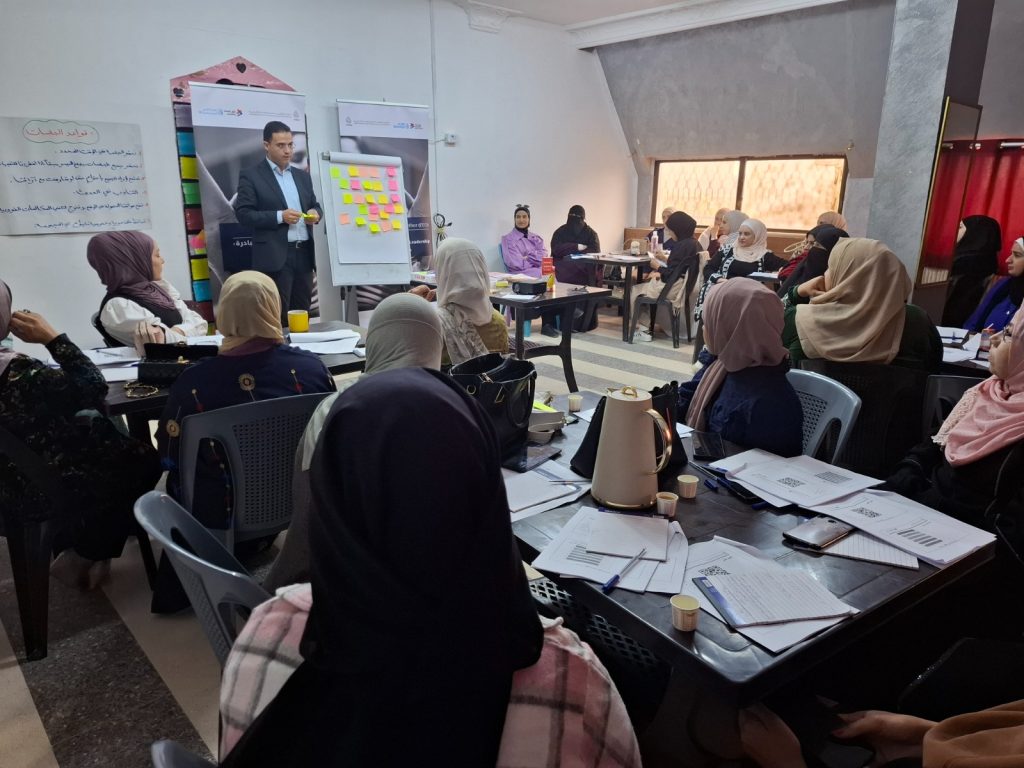
From remote villages to the Badia, areas often overlooked by traditional training initiatives, a different kind of journey unfolded. It was not only a series of trainings, but a space for connection, learning, and inspiring stories shared by women and girls driven by passion and a desire for change. In this spirit, the Arab Renaissance for Democracy and Development (ARDD), in partnership with UN Women, successfully concluded the second phase of training under the Women and Girls Oasis program, implemented as part of the Empowering Each Other project. The sessions ran from 12th October to 2nd November 2025. Led by a distinguished team of experts, including Dr. Haifa Haidar and lawyer Imad Abu Saleh, the training phase spanned 18 centers across 11 governorates, reaching approximately 500 women and girls. Their expertise and human-centered approach enriched every session, creating a meaningful learning experience for all participants. Dr. Haifa Haidar reflected on the experience, saying: “The journey of learning is a passion without limits. With every training, I begin a new story and a new path of awareness with each participant. In the villages and the Badia, my determination grows stronger; every woman I meet holds a treasure of experiences and a remarkable desire to contribute. Together, we can unlock our collective potential to build a fair and equitable society.” She added that each training revealed women with the potential to become national leaders “if they are given access to the right support and opportunities.” Coach Imad Abu Saleh highlighted the impact of the trainings: “The civic participation sessions helped plant the idea that women and girls play a central role in society. They discovered abilities they didn’t know they possessed and learned the value of community engagement and self-discovery. It was a clear message: every girl has a voice capable of creating change.” He noted the importance of reaching underserved communities: “The selection of training locations was exceptional. These areas, though far from city centers, are full of life and energy. Despite modest facilities, they were more valuable than any luxury venue. Bringing training directly to people, despite challenges, is powerful in itself.” Participants echoed these sentiments. Sajaa Al-Jaafreh shared:ؤ“We used to believe opportunities never reached our areas. Today, we learned that empowerment begins within us. This training opened a new door, one that helped us see our abilities and believe there are no limits to what we can achieve.” Participant Hadeel Al-Aloun added that the sessions were “very useful, we learned problem-solving strategies and how to apply them in our daily lives and communities.” Similarly, Rahma Al-Abadi noted that the intensive training helped participants overcome their fear of speaking in front of others: “It was truly a rich and inspiring experience.” For Hala Al-Zoubi, the experience stood out: “The best training I’ve attended recently. I learned self-confidence, the importance of balance, and how to be an active member of my community.” The Empowering Each Other project aims to equip women and girls with leadership and community-engagement skills, enabling them to become trainers and influential leaders in their governorates. The program covers civic participation, leadership, public speaking, social protection, psychosocial support, and the prevention of violence against women and girls. Participants agreed that the trainings revealed a genuine desire among women to engage, learn, and lead—and that what they need most is guidance, motivation, appreciation, follow-up, and a supportive environment to nurture their ideas and ambitions. This initiative represented a journey of meaningful outreach to remote communities that had long been underserved. There, ARDD found strong, ambitious women, ready to lead and make an impact whenever the opportunity arises. This stands as a testament to what Empowering Each Other truly represents: expanding equal opportunities, supporting women’s leadership, and strengthening civic participation, from the heart of the community and back to it.